Tag Archives: April 2022

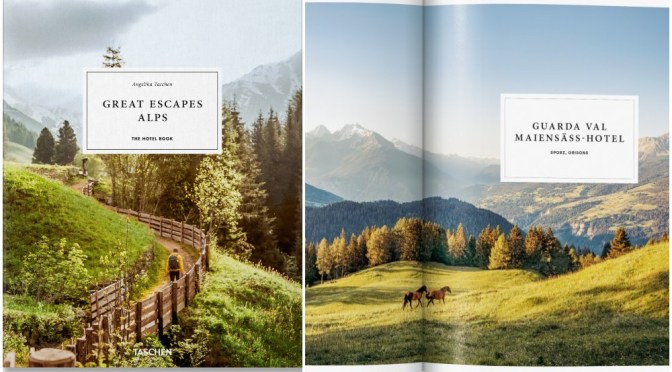
Preview: ‘Great Escapes Alps. The Hotel Book’

Flowering mountain slopes and traditional meadows. Icy glaciers and majestic summits. With their untouched nature and raw beauty, the Alps have always been a source of fascination. Angelika Taschen presents the best accommodation for Alpinists – historic inns, guesthouses, monasteries, mountain huts, chalets, palazzi, design hotels, even a youth hostel.

A Mountain Tour of the Alps

The Alps are Europe’s biggest and greatest mountain range. Formed millions of years ago, they became a popular destination for travelers in the late eighteenth century – first for adventurers and explorers, then for artists and writers, and finally for everyone who wanted to spend summer in the fresh air of this wonderful scenery or take part in winter sports. Angelika Taschen has followed in their footsteps and collected the finest hotels in the Alpine nations of Germany, Austria, Switzerland, France, and Italy.

They include the Kranzbach near Garmisch-Partenkirchen, built for a British aristocrat, Gasthof Hirschen in the Bregenzerwald, where art-loving visitors have been welcomed since 1755, and the Seehof near Salzburg with its emphasis on contemporary art and fine cuisine. The journey goes to Waldhaus Sils in Sils Maria, where many creative guests have found inspiration, to the Schatzalp in Davos, which Thomas Mann immortalized in literature in “The Magic Mountain”, and to picturesque bed & breakfasts with a personal touch such as Brücke49 in Vals and Maison Bergdorf in Interlaken.

High above Chamonix, mountaineers have stayed overnight for more than 140 years at Refuge du Montenvers with its view of the Mer de Glace, the largest glacier in France. In the exclusive Megève, too, which Baroness Noémie de Rothschild put on the tourist map, travelers experience the Alps à la française in the chalet hotel L’Alpaga; and a bit of Italian dolce vita is provided by stunning addresses in the South Tyrol such as the Ottmangut in Merano, Villa Arnica in Lana with its nostalgic atmosphere, and Pension Briol near Barbiano, constructed in 1928 in the Bauhaus style and extended in 2021 with the addition of two extremely modern buildings.

This opulent book of photographs presents the Alpine range and accommodation in large-format images, short texts, and useful details on prices and how to get there. Walkers, skiers, gourmets, and lovers of good living will find valuable tips and very special accommodation: former monasteries where guests still find peace and seclusion, a mountain hut at the heart of the Dolomites, and a youth hostel occupying what was once a sanatorium, a rare example of modern architecture in Switzerland that was declared a heritage monument in 2002.

Read more

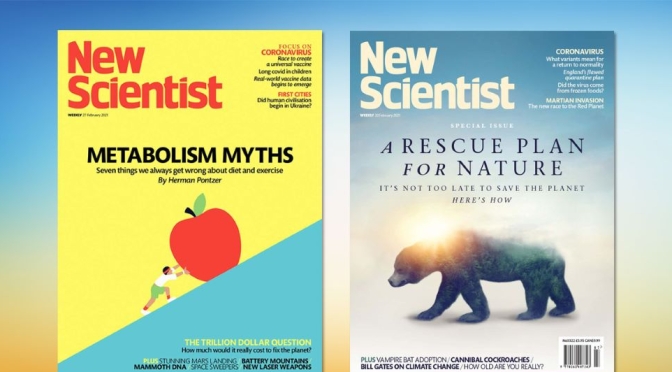
Preview: New Scientist Magazine – April 23, 2022

New Scientist Default Image
  • COVER STORIES
  • FEATURES What psychology is revealing about ‘ghosting’ and the pain it causes
  • FEATURES How four big industries are driving the exploitation of our oceans
  • NEWS MS reversed by transplanted immune cells that fight Epstein-Barr virus
  • NEWS Blind Mexican cave fish are developing cave-specific accents
  • NEWS Rediscovered orchid was presumed extinct for almost a century
  • NEWS Tiny structures in rock may be fossils of earliest known life on Earth

Science: Global Warming Pledges, Energy Storage, Leeches And Biodiversity

What COP26 promises will do for climate

At COP26 countries made a host of promises and commitments to tackle global warming. Now, a new analysis suggests these pledges could limit warming to below 2˚C — if countries stick to them.

03:48 Efficiency boost for energy storage solution

Storing excess energy is a key obstacle preventing wider adoption of renewable power. One potential solution has been to store this energy as heat before converting it back into electricity, but to date this process has been inefficient. Last week, a team reported the development of a new type of ‘photothermovoltaic’ that increases the efficiency of converting stored heat back into electricity, potentially making the process economically viable.

Science: ‘Thermal batteries’ could efficiently store wind and solar power in a renewable grid

07:56 Leeches’ lunches help ecologists count wildlife

Blood ingested by leeches may be a way to track wildlife, suggests new research. Using DNA from the blood, researchers were able to detect 86 different species in China’s Ailaoshan Nature Reserve. Their results also suggest that biodiversity was highest in the high-altitude interior of the reserve, suggesting that human activity had pushed wildlife away from other areas.

ScienceNews: Leeches expose wildlife’s whereabouts and may aid conservation efforts

11:05 How communication evolved in underground cave fish

Research has revealed that Mexican tetra fish are very chatty, and capable of making six distinct sounds. They also showed that fish populations living in underground caves in north-eastern Mexico have distinct accents.

New Scientist: Blind Mexican cave fish are developing cave-specific accents

14:36 Declassified data hints at interstellar meteorite strike

In 2014 a meteorite hit the Earth’s atmosphere that may have come from far outside the solar system, making it the first interstellar object to be detected. However, as some of the data needed to confirm this was classified by the US Government, the study wasn never published. Now the United States Space Command have confirmed the researchers’ findings, although the work has yet to be peer reviewed.

LiveScience: An interstellar object exploded over Earth in 2014, declassified government data reveal

Vice: 

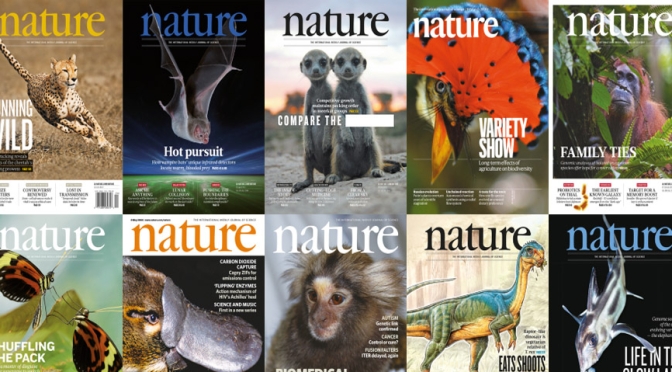
Cover Preview: Nature Magazine – April 21, 2022

Life speed

Cells acquire mutations throughout life, a process that is known to give rise to cancer and has been proposed to contribute to ageing. There is little knowledge, however, about the rate at which mutations accumulate in species other than humans, and whether this rate is influenced by biological traits such as lifespan or body size. In this week’s issue, Alex Cagan, Adrian Baez-Ortega and colleagues address these questions. The researchers studied the speed at which mutations accumulate during life in 16 mammalian species and found that the number of mutations increases by a roughly constant amount each year. They also observed that the molecular processes causing mutations are broadly similar across species. Crucially, the team identified a strong anticorrelation between lifespan and mutation rate: longer-lived species accrue mutations at a slower pace than shorter-lived ones, such that different species have roughly the same number of mutations by the end of their respective lifespans.

Previews: Times Literary Supplement – April 22, 2022

@TheTLS reviewing Robert Trumball’s From Life to Survival, and discussing those two rude boys of modern thought, Sigmund Freud and Jacques Derrida.

Read more

Morning News: Sri Lanka Debt Crisis, Pakistan’s PM, Australian Blue Plaques

The latest on Russia’s all-out assault on east Ukraine. Plus: Sri Lanka’s debt crisis, Pakistan’s new prime minister and Australia’s new blue plaque scheme.

Morning News: Russia Hits East Ukraine, Elections In Philippines, Air Transport

Ukrainian MP Lesia Vasylenko gives us the latest on the ground in Kyiv and we hear an update on Russia’s military strategy. Plus: the Philippines prepares for next month’s presidential elections, and transport news.

Political Views: China Gets It Wrong, Ukraine Stakes, Crypto Utopias

A selection of three essential articles read aloud from the latest issue of The Economist. This week, what is China getting wrong? Also, why the world should stand up to Putin (10:43). And, crypto and web3: libertarian dream, or socialist Utopia? (18:27).