

As President Joe Biden manages the evacuation of Americans in Afghanistan, his domestic policy agenda hangs in the balance on Capitol Hill. To analyze both, Judy Woodruff is joined by Lisa Lerer of The New York Times, and Errin Haines of The 19th.

Cover Previews: The New Yorker – August 30, 2021

Art Exhibitions: ‘Jasper Johns – Mind/Mirror’ In Philadelphia & New York
September 29, 2021–February 13, 2022 – Few artists have shaped the contemporary artistic landscape like Jasper Johns. With a body of work spanning seventy years, and a roster of iconic images that have imprinted themselves on the public’s consciousness, Johns at ninety-one is still creating extraordinary artworks.
This vast, unprecedented retrospective—simultaneously staged at the Philadelphia Museum of Art and the Whitney Museum of American Art in New York—features a stunning array of the artist’s most celebrated paintings, sculptures, drawings, and prints as well as many lesser-known and recent works. Each a self-contained exhibition, the two related halves mirror one another and provide rare insight into the working process of one of the greatest artists of our time.
Jasper Johns is an American painter, sculptor and printmaker whose work is associated with abstract expressionism, Neo-Dada, and pop art. He is well known for his depictions of the American flag and other US-related topics.

Covid-19: Patients Dying In Name Of Vaccine Freedom
In the video above, Alexander Stockton, a producer on the Opinion Video team, explores two of the main reasons the number of Covid cases is soaring once again in the United States: vaccine hesitancy and refusal. “It’s hard to watch the pandemic drag on as Americans refuse the vaccine in the name of freedom,” he says. Seeking understanding, Mr. Stockton travels to Mountain Home, Ark., in the Ozarks, a region with galloping contagion and — not unrelated — abysmal vaccination rates. He finds that a range of feelings and beliefs underpins the low rates — including fear, skepticism and a libertarian strain of defiance. This doubt even extends to the staff at a regional hospital, where about half of the medical personnel are not vaccinated — even while the intensive care unit is crowded with unvaccinated Covid patients fighting for their lives. Mountain Home — like the United States as a whole — is caught in a tug of war between private liberty and public health. But Mr. Stockton suggests that unless government upholds its duty to protect Americans, keeping the common good in mind, this may be a battle with no end.

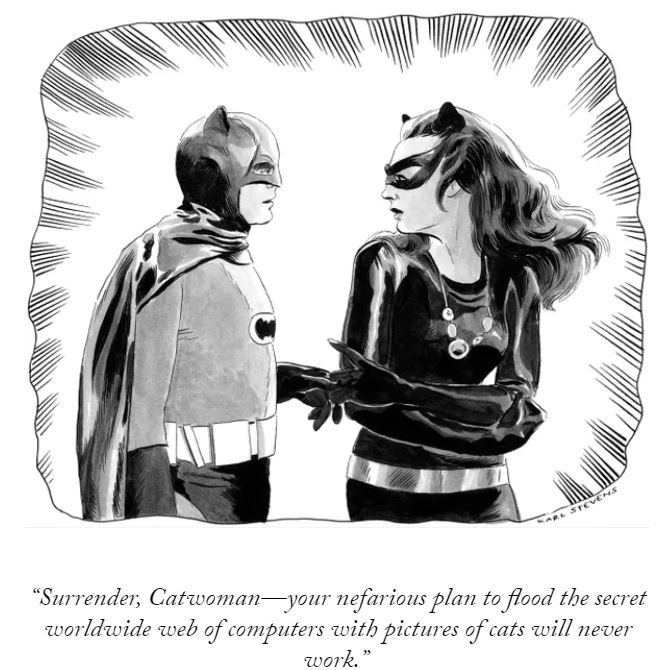
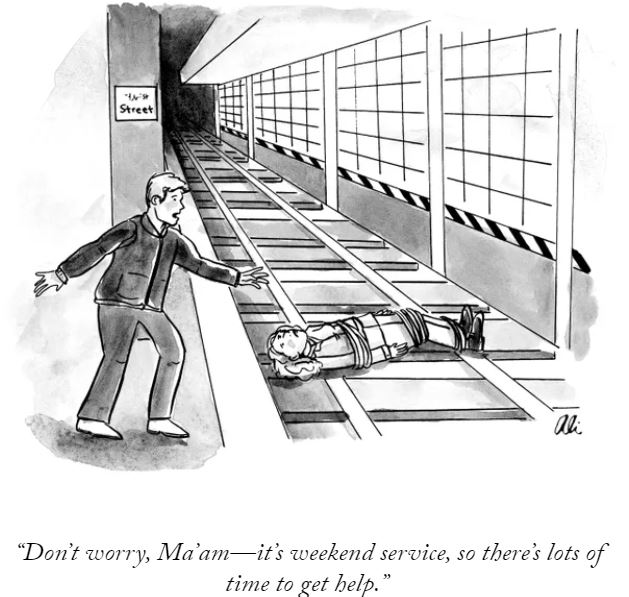
Views: Top New Yorker Cartoons – August 2021



Renewable Energy: The Political Backlash (WSJ)
Political battles at the most local levels are slowing the pace of decarbonization Property owners in the windy and sunny parts of the U.S. are pushing back against large-scale renewable energy development, opposition that researchers say could slow the transition to a cleaner economy. Photo: Aaron Yoder/WSJ

Concept Camper Vans: Renault Electric ‘2022 Hippie Caviar Hotel’ (Video)

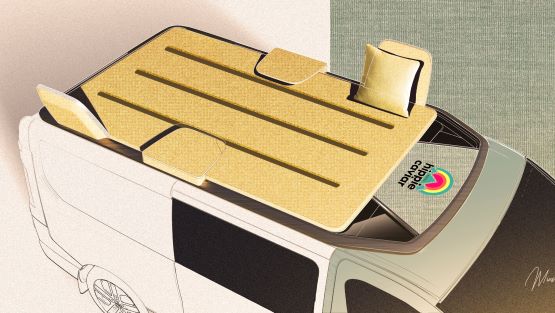

Traffic SpaceNomad: THE “READY-TO-GO” CAMPER. With its four or five seats and its compact size, the SpaceNomad can be used as a normal passenger car for everyday use.
▪ Renault resented at the CARAVAN SALON in Düsseldorf, All-new Trafic SpaceNomad will be added to the Renault catalogue at the beginning of 2022. After Switzerland, it will be marketed in five other European countries
▪ Converted by French campervan manufacturer Pilote, All-new Trafic SpaceNomad is available in two lengths with four or five seats. Its pop-up roof creates space for two large beds as well as a shower and kitchenette so travellers can set off on their journeys without having to worry about accommodations
▪ Renault will share its hippie-chic vision of the campervan with its Hippie Caviar Hotel show car, alongside the iconic Estafette campervan ▪ All-new SpaceClass Escapade and Master Campervan will complete the Renault offer at the Düsseldorf Motor Show
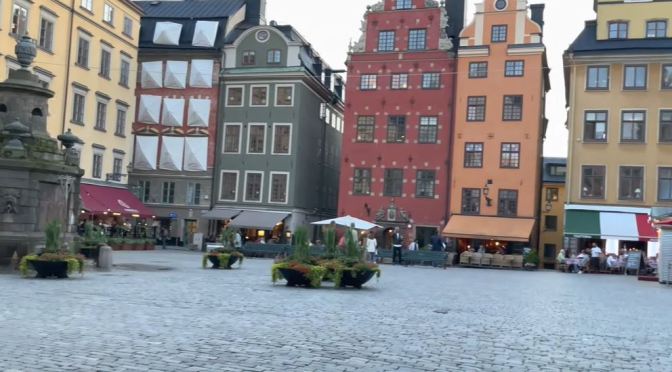
Walking Tours: Old Town Stockholm, Sweden (4K)
The bustling, compact island of Gamla Stan is the city’s old town, with cobbled streets and colorful 17th- and 18th-century buildings. It’s home to the medieval Storkyrkan cathedral and the Royal Palace, the king’s official residence. Stylish bistros serve New Nordic cuisine, while night spots include old-school pubs and chic cocktail bars. On adjoining Riddarholmen island, Riddarholmen Church hosts summer concerts.
Stockholm, the capital of Sweden, encompasses 14 islands and more than 50 bridges on an extensive Baltic Sea archipelago. The cobblestone streets and ochre-colored buildings of Gamla Stan (the old town) are home to the 13th-century Storkyrkan Cathedral, the Kungliga Slottet Royal Palace and the Nobel Museum, which focuses on the Nobel Prize. Ferries and sightseeing boats shuttle passengers between the islands.
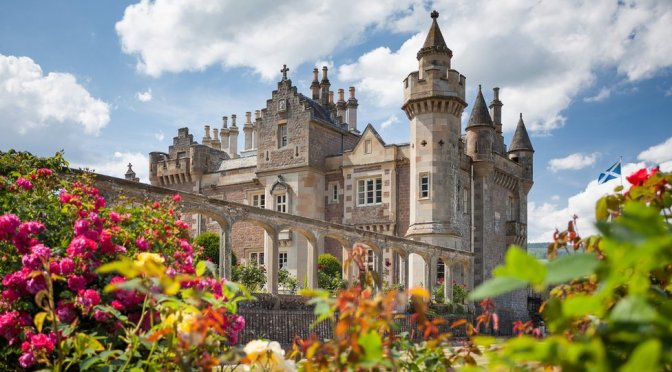
Scottish Baronial Estates: Abbotsford House – Built By Sir Walter Scott (1820’s)
Damian Barr explores Sir Walter Scott’s impressive home, Abbotsford, which is full of a fascinating mix of items owned by the famed Scottish novelist, poet, playwright, and historian.
Abbotsford House was built by Sir Walter Scott as his grand home in the Scottish Borders. The property, set on the banks of the River Tweed, was bought in 1811 and then modified to the tastes of Sir Walter Scott. The writer died here in 1832, and the house was opened to the public just five months after his death.
The rooms that you visit today have been left virtually untouched since his death and a visit to Abbotsford House gives you an intimate insight into the personality and interests of this great man. Some of the most interesting aspects of the house are the personal collections of Sir Walter Scott which include unusual items such as the weapons of Rob Roy, the case book of Napoleon, and even a bullet and piece of oatcake taken from the site of Culloden Battlefield.
Visitors can see Sir Walter Scott’s Study, Library, Drawing Room, Entrance Hall, small Armoury, and the Dining Room where he died on 21st September 1832. The dining room contains paintings of several generations of the Scott family. Unfortunately, the last of his bloodline died in 2004 and the care of the house has now been taken over by the Abbotsford Trust.

Design: Migma Hydrogen-Powered Catamaran By RUMA In Madrid, Spain

Migma is the greek word for mixture, an evocation to the life of the sea through structural bionic elements where the rationality of the technique is mixed with the fluidity of nature, represented by this noiseless Hydrogen-powered 180 feet electric Catamaran as a living entity that furrows the seas with zero emissions.





Migma catamaran is based on a minimalist and high-end aesthetic, creating a new way to understand spaces within a catamaran, where the core structure is located in the middle and all elements grow from it.
 Boomers Daily