The Woodland Trust – River woodland is key to tackling
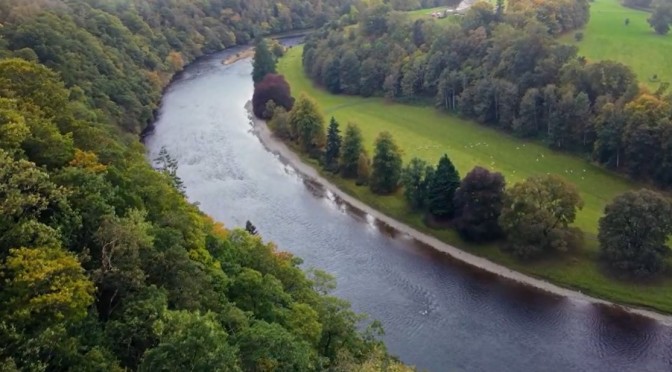
thetwin climate and biodiversity crises – reducing flooding, improving river health and restoring the ecosystem. We’re working in England, Scotland, Wales and Northern Ireland to plant and restore river woodland for people and wildlife.
In Scotland, this particularly means fish. Salmon, to be exact. Whole upland river catchments devoid of trees are seeing Scotland’s rivers warm to a point that could see salmon disappear in just 20 years. These fish need clean, cold water to thrive, and river woodland is the way to return it to them. The Woodland Trust is working across river catchments to expand native woodland alongside rivers and burns.
Trees provide shade and cover for young salmon and trout, stabilize riverbanks, slow the flow of water downstream and create wildlife corridors. A key part of this work involves working with landowners to plant and restore river woodland on their land, advising on the initial planting and empowering them to monitor their river woods into the future.
With the passage of time the island may have changed, but we can still feel the spirit of a distant glorious past. Its rich multi-cultural heritage, its historic monuments, its stunning natural landscape, its crystal clear seas, and its excellent weather all year round explain why Corfu is one of the most cosmopolitan Mediterranean destinations weaving a powerful spell on its visitors.
Corfu (Kerkyra in Greek), unlike the rest of Greece, never fell under the Ottoman oppression. Due to the successive dominations of the Venetians, the French and the British over the centuries, the island has primarily become part of the Western rather the Levantine world. Their culture wielded strong influence in the city: it was here that the first Greek University (the Ionian Academy), the first Philharmonic Orchestra and the First School of Fine Arts were founded.
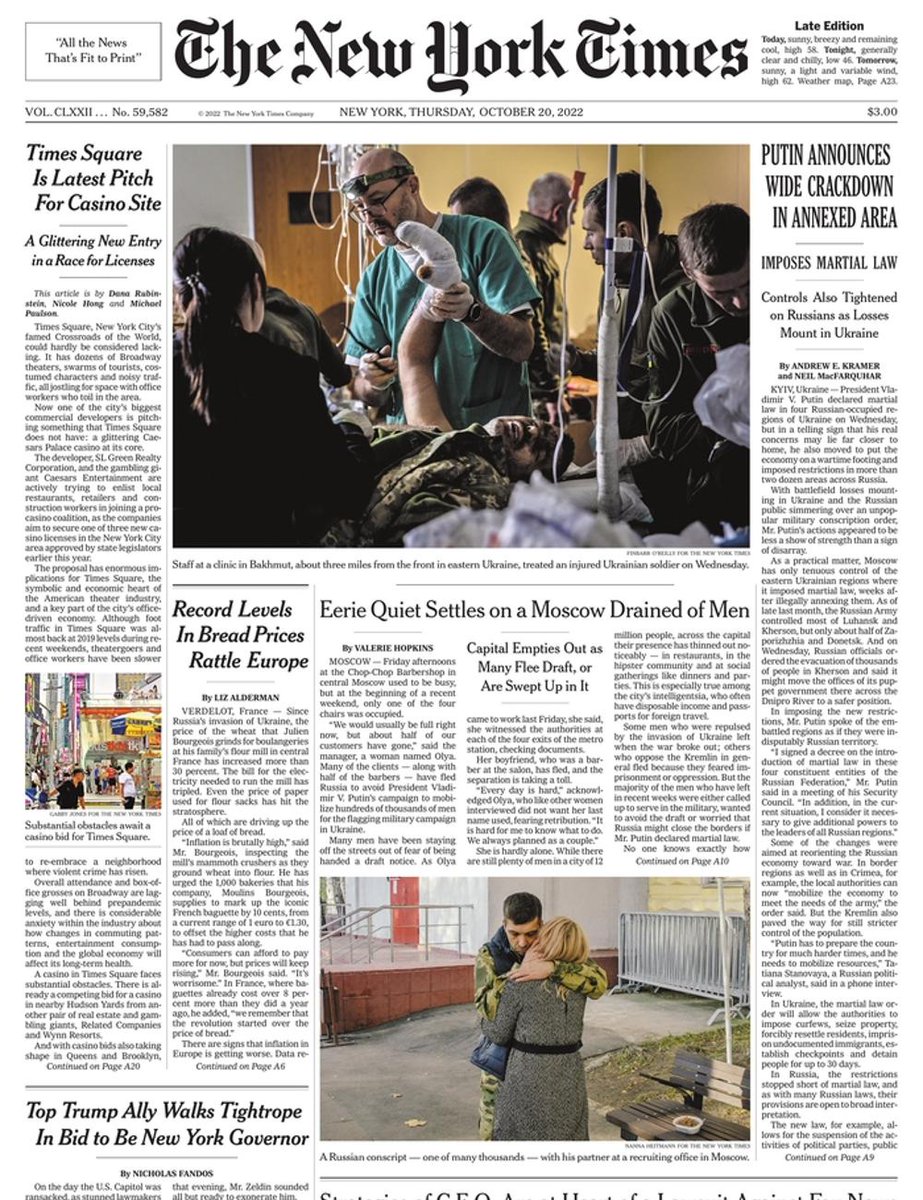
Across the capital, there are noticeably fewer men at restaurants, stores and social gatherings. Many have been called up to fight in Ukraine. Others have fled to avoid being drafted.
Paris+, par Art Basel is the fourth event of its kind in the portfolio of Art Basel, the world’s biggest art fair. Other, related editions are regularly held in Hong Kong, Miami Beach, and the Swiss city of Basel, where its tentpole fair is held. Expect big sales and even bigger crowds, as has long been the case with Art Basel’s other editions.
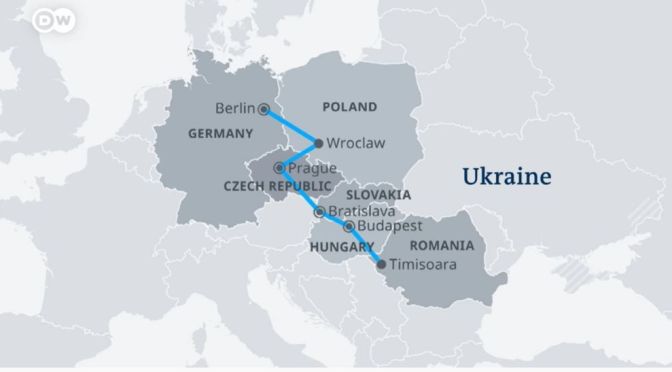
From Germany via Poland, the Czech Republic, Slovakia and Hungary to Rumania – that’s the route our two DW reporters Shabnam Surita and Laila Abdalla took. They travelled all the way through Central and Eastern Europe to find out how the Russian war against Ukraine is affecting tourism in its neighboring countries.
Cities visited: Wroclaw, Prague, Bratislava, Budapest and Timisoara.
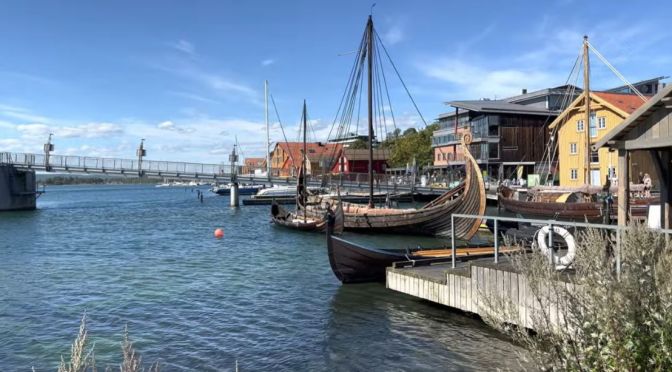
Tønsberg, town, southeastern Norway, at the head of Tønsbergfjorden. Considered to be the oldest town in Norway, Tønsberg was founded c. AD 871 and became an important trading centre. In the 13th century King Håkon Håkonsson built his castle, Tønsberghus, there.
The town was destroyed by fire in 1536 and only in the 18th and 19th centuries did it become a major port and one of Norway’s major shipping and whaling centres. Until the late 1960s it was Norway’s third largest maritime town. Tønsberg remains an industrial and shipping centre, with such diverse concerns as metal shops, shipyards, paper mills, leather processing, and breweries; it is noted especially for its silverware.
Tourist sites include ruins of the Tønsberghus, St. Michael’s Church (c. 1150), the ruins of the Royal Castle (1276), Sem Church (c. 1100), and the Vestfold Museum.
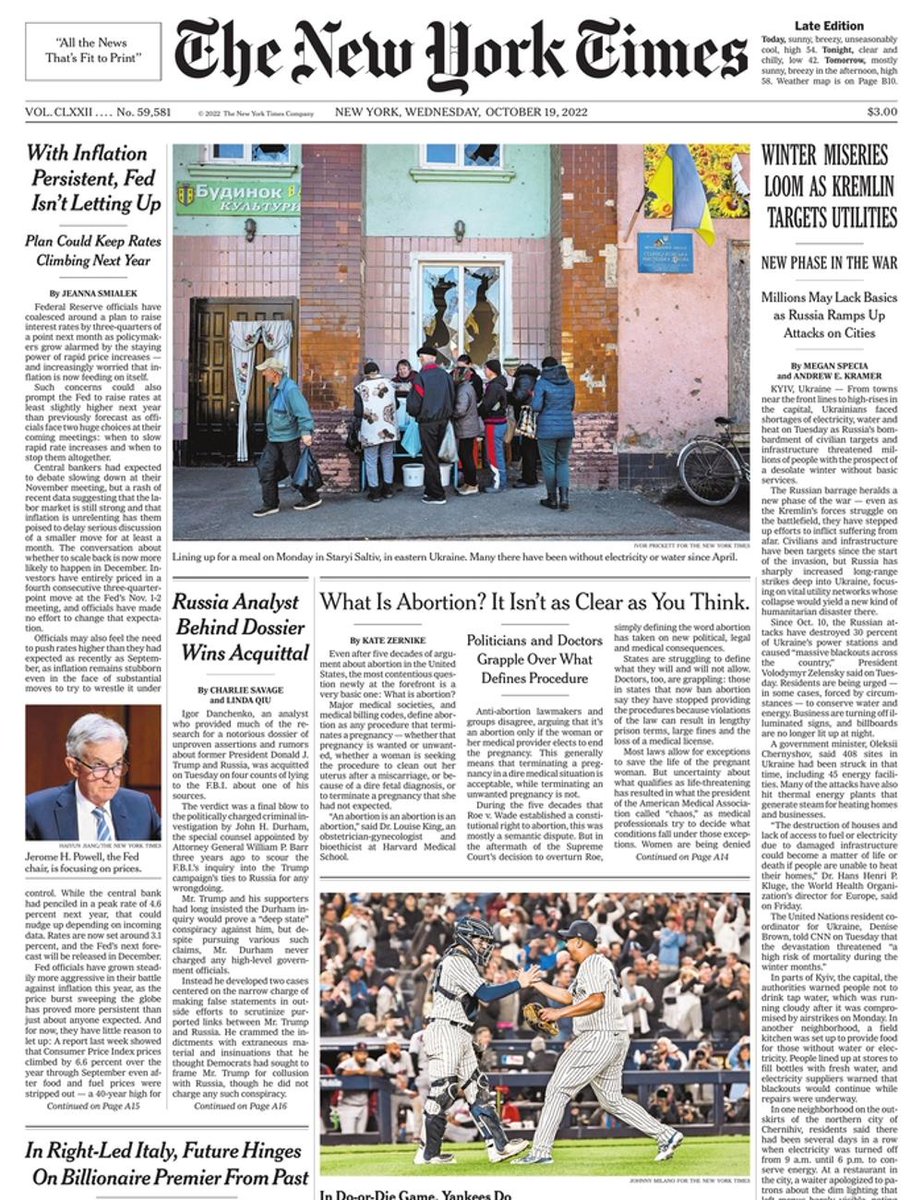
The stepped-up attacks on cities, including through the heavy use of Iranian-made exploding drones, threaten a new sort of humanitarian crisis for Ukrainians this winter.
John H. Durham, the special counsel who investigated the Russia inquiry for more than three years, failed to develop any cases that resulted in convictions.
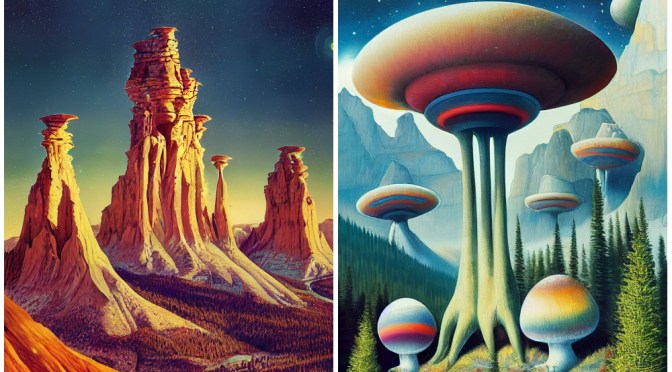
Yongwook Seong created a Sci-Fi themed architecture series (Title: Banff Extraterrestrial Park) by experimenting AI-generated images via Midjourney. The project unfolds from Extraterrestrial 006 visiting Banff and terraforming it to construct a tourist park as part of the Earth revitalization project.
During research, 006 saw Mycelium fungi as an ideal local building material, experimenting it with their stardusts. Sky lounges grow themselves at the extraterrestrial-level strength and stability.
High-Rise Hoodoos became one of the main attractions at Banff Extraterrestrial Park.
Stardust drones are constructing (Ex) terrestrial town. These drones are autonomous builders under the direction of Extraterrestrial Architect.
Yongwook Seong [ joŋuk sʌŋ ] is a designer, holding a Master of Architecture degree from University of British Columbia, Vancouver. His interest lies in various fields including architecture, furniture design, lighting design, visual arts and etc. He lives in Banff, AB, Canada.
Sitting on the edge of Parramatta River, Fisherman’s House is a unique underground home with a sense of the unexpected. Without revealing all at once, the waterfront house is a unique underground home by Studio Prineas that instils moments of awe within every level.
Video Timeline: 00:00 – Introduction to the Underground Home 00:30 – The Waterfront Location of the Home 00:45 – The Original Timber Cottage 01:04 – A Minimalistic View On Arrival 01:35 – A Longstanding Friendship Between Architect and Client 02:05 – Working with an Open Design Brief for the Home 02:33 – The Original Steel Cladding 02:46 – Restoring and Reusing Original Materials from the House 03:28 – Careful Contrast of the New Wing to The Cottage 04:08 – Taking Pride in Preservation and Creation 04:30 – The Swimming Pool
Fisherman’s House is one of the last remaining timber cottages in the area that sits nine metres below the road, hidden from the public eye and offering a serene escape from the city. The client – an engineer and family friend of the architects – delivered an open design brief and sense of freedom for Studio Prineas to organically explore what the unique underground home could become.
The main desire for the client was to have the living spaces facing the water; while there was no desire to keep the original cottage, this was something that Studio Prineas knew they needed to maintain. Throughout the restoration process, removing previous cladding revealed the original weather boards underneath; inside the home, the original timber flooring and lining boards were saved to bring back the lightness of the architecture. With waterfront views from the kitchen, living and dining spaces and entertainment deck, the interior design of the original cottage defers from the new wing.
Additionally, the glazed link is a vertical connection from the original cottage to the private living spaces above. From the lightness of the timber cottage below, the upper levels speak to the rockface behind whilst offering a more grounded appearance with darker timbers. Employing concrete ceilings with rough sawn Oregon formworks that brought a timber look and imprint on the concrete, Studio Prineas established a differentiating space that still feels connected through minute details.
Conserving the history of the cottage whilst creating a contemporary unique underground home for the clients, Studio Prineas were able to embody many design ideas that they have been establishing over many years. As one of the more memorable aspects, the pool acts as one of the last additions of the unique underground home. Unexpected and holding much of the original cottage’s history, the pool offers an enchanting place to sit and watch as the sun sets over the home.
News, Views and Reviews For The Intellectually Curious


 The New Yorker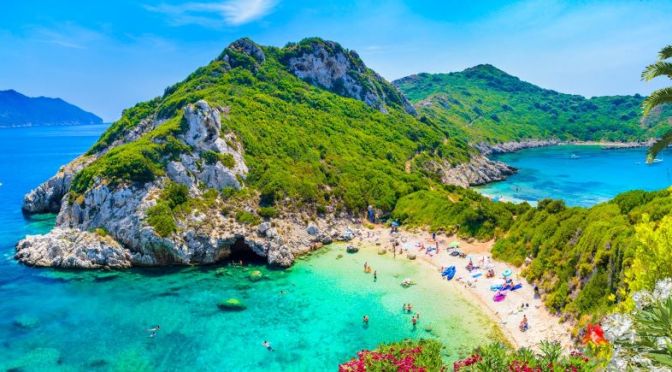






 Boomers Daily