

Can smart gardens really grow delicious vegetables inside your apartment? WSJ asked Timothy Hammond, an urban gardener and educator in Houston, to test out Rise Gardens hydroponic smart garden to see how the vegetables compare with his own outdoor garden. Photo: Ben Hallock for The Wall Street Journal
Category Archives: Technology

Technology: Zero-Carbon Hyrdrofoil Ferries (WSJ)
The America’s Cup, the world’s oldest sailing competition, has a reputation for fostering innovation. In 2013, contestants began to use hydrofoils-underwater wings on the hull-to lift their boats out of the water during the race, allowing them to reach highway speeds and revolutionizing the sport.
An Olympic sailor and a billionaire oil trader are now reimagining the technology to make passenger ferries faster and more eco-friendly. Newest Oldest Longest Shortest Random

Money & Investments: Bitcoin – Explained (Video)
Bitcoin and other cryptocurrencies set out to upend the financial order and replace conventional money. Bitcoin has certainly disrupted the global financial system, but can it ever live up to the hype? Read our latest report on cryptocurrency: https://econ.st/3wnYfRr
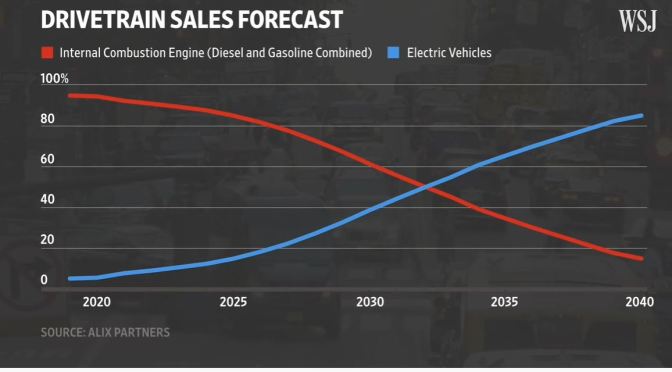
VW: Engine Factories Turn Into EV Battery Plants
Volkswagen is investing in electric vehicles more than other legacy car makers in the U.S. WSJ goes inside an engine factory that is being transformed into a battery plant as the German giant looks to change its image and become a rival to Tesla. Photo illustration: George Downs
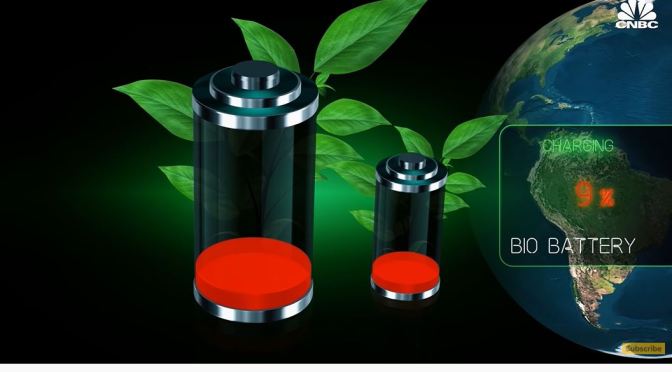
Green Energy: Using Soil To Generate Electricity
Bioo is generating electricity from the organic matter in soil and creating biological batteries to power agricultural sensors, a growing $1.36 billion global market. Eventually, Bioo envisions a future where biology could help to power our largest cities.

Analysis: United Airline’s Bet On Supersonic Flight
United Airlines’ announcement that it plans to buy 15 supersonic aircraft from the startup Boom Supersonic is raising questions about the future of ultra-fast plane travel. In this video, WSJ speaks with an industry analyst to better understand what’s next for faster-than-sound air travel. Photo: Boom Supersonic

Technology: Quantum Computers, Explained
Quantum computers aren’t the next generation of supercomputers—they’re something else entirely. Before we can even begin to talk about their potential applications, we need to understand the fundamental physics that drives the theory of quantum computing. (Featuring Scott Aaronson, John Preskill, and Dorit Aharonov.) For more, read “Why Quantum Computers Are So Hard to Explain”: https://www.quantamagazine.org/why-is…

Analysis: China’s XPeng Vs Tesla In EV Tech Race (WSJ)
Chinese automaker XPeng is betting that driving assistance features and other tech will be the key to winning new customers. WSJ travels to its research and development lab to see how its rivalry with Tesla could reshape how we drive. Photo: XPeng
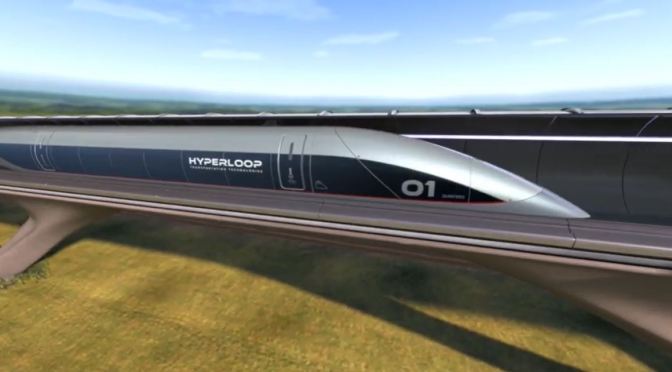
Design: Hyperloop Italia & Zaha Hadid Architects
Zaha Hadid Architects (ZHA) has signed an agreement with Hyperloop Italia to jointly design its next phase of work.
Using passive magnetic levitation technology powered entirely by renewable energy, Hyperloop propels passenger and cargo capsules through low pressure tubes to minimize friction, requiring only a fraction of the energy required to power the modes. traditional public transport.
The combination of energy from renewable sources and regenerative braking systems allows Hyperloop’s infrastructure to produce more energy than it consumes. Air-conditioned passenger capsules travel in sealed tubes and are unaffected by external conditions.

Analysis: The Future Of Modern Warfare (Video)
The world is entering a new era of warfare, with cyber and autonomous weapons taking center stage. These technologies are making militaries faster, smarter, more efficient. But if unchecked, they threaten to destabilize the world. DW takes a deep dive into the future of conflict, uncovering an even more volatile world.
Chapters 00:00 – Introduction 02:37 – The Cyber Nuclear Nightmare 17:05 – Flash Wars And Autonomous Weapons 30:12 – Trading Markets And Flash Crashes 31:45 – Time To Act
Where a cyber intrusion against a nuclear early warning system can unleash a terrifying spiral of escalation; where “flash wars” can erupt from autonomous weapons interacting so fast that no human could keep up. Germany’s Foreign Minister Heiko Maas tells DW that we have already entered the technological arms race that is propelling us towards this future. “We’re right in the middle of it. That’s the reality we have to deal with.” And yet the world is failing to meet the challenge. Talks on controlling autonomous weapons have repeatedly been stalled by major powers seeking to carve out their own advantage. And cyber conflict has become not just a fear of the future but a permanent state of affairs. DW finds out what must happen to steer the world in a safer direction, with leading voices from the fields of politics, diplomacy, intelligence, academia, and activism speaking out.
 Boomers Daily