Category Archives: Science

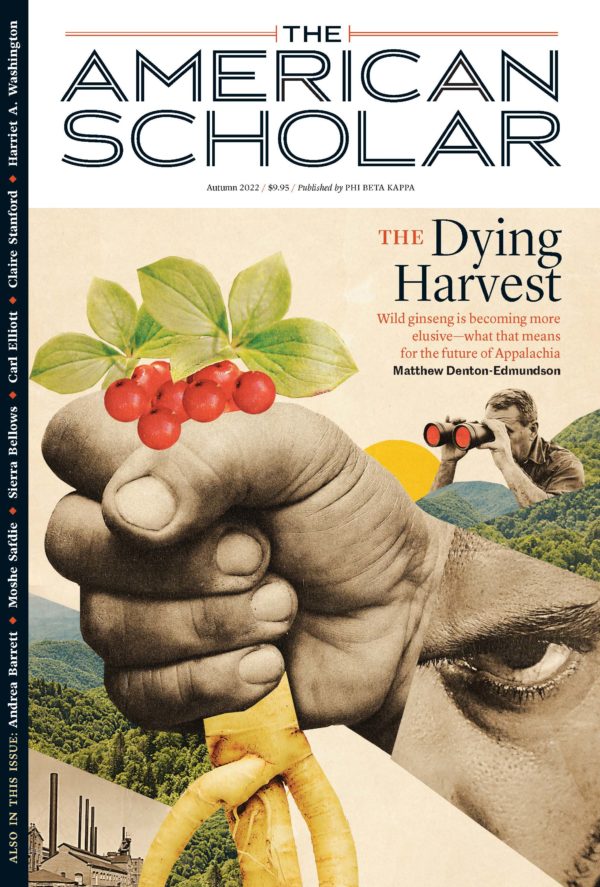
Previews: The American Scholar – Autumn 2022

Autumn 2022

The Root Problem

Harvesting wild ginseng has sustained Appalachian communities for generations—so what will happen when there are no more plants to be found?

The Degradation Drug

A medication prescribed for Parkinson’s and other diseases can transform a patient’s personality, unleashing heroic bouts of creativity or a torrent of shocking, even criminal behavior

Why We Are Failing to Make the Grade

Covid-19 has contributed to a crisis in America’s classrooms, but the problems predate the pandemic and are likely to outlast it

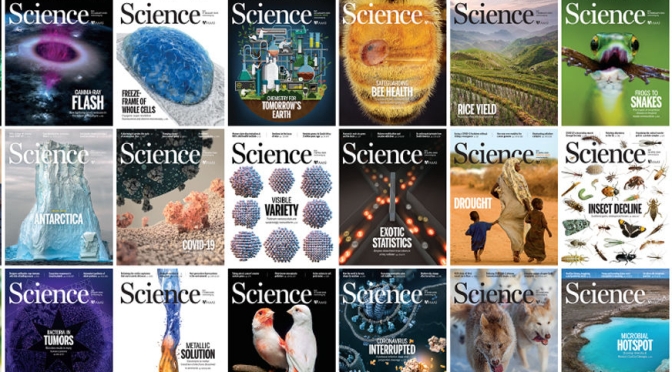
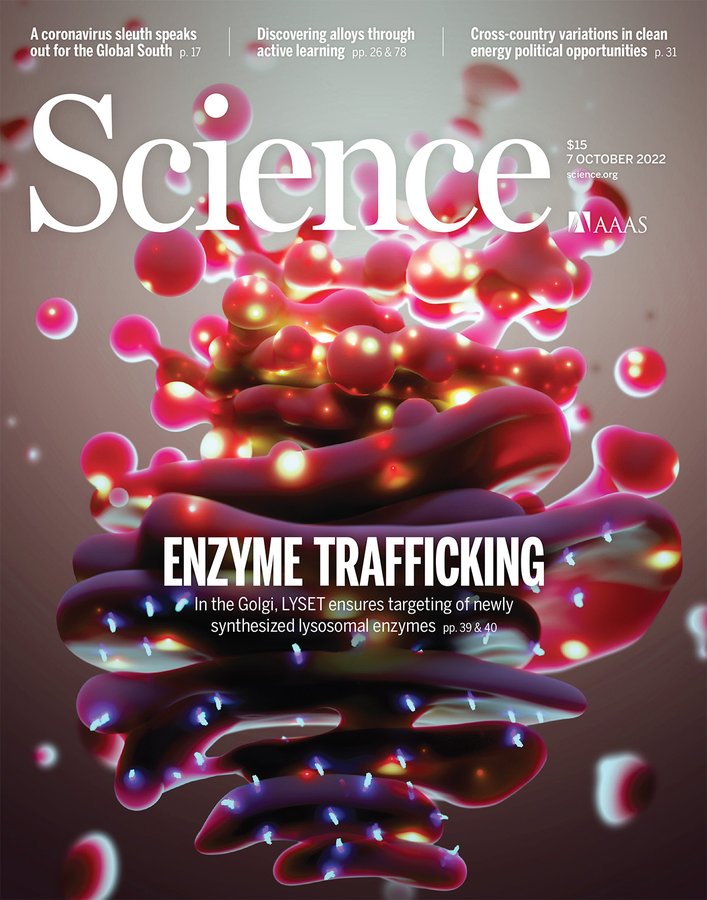
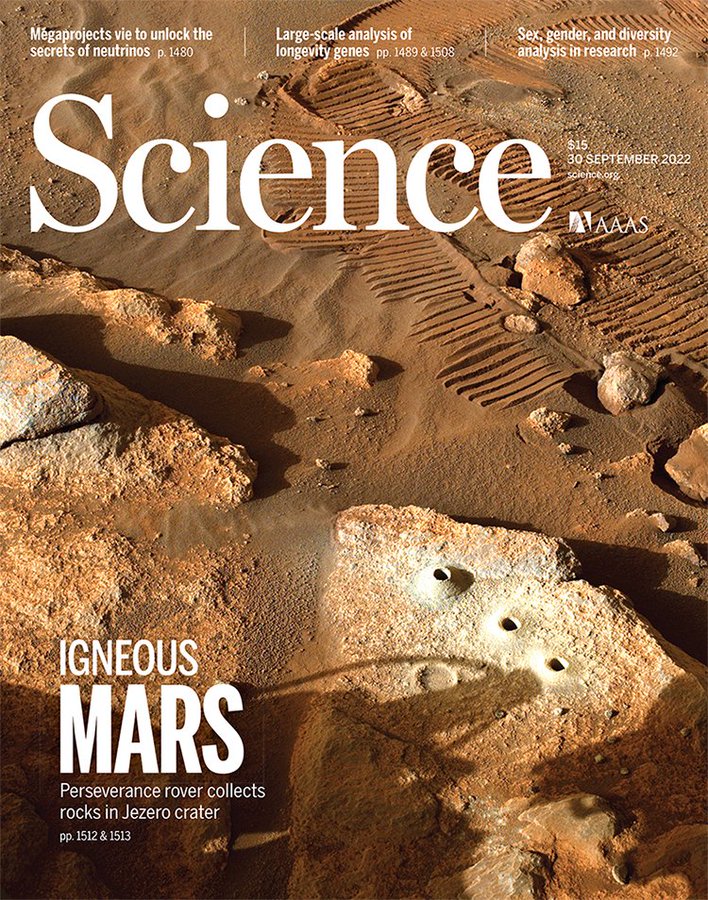
Research Preview: Science Magazine – Sept 30, 2022

Image

The genetics of a long life

Genetically diverse mice and cross-species comparison uncover links to longevity

New Omicron strains may portend big COVID-19 waves

Emerging subvariants are more immune evasive than ever

Room-temperature superconductor claim retracted

After doubts grew, blockbuster Nature paper is withdrawn over objections of study team

University pandemic policies raise equity worries

Tenure delays and pandemic impact statements could backfire, some fear

Signs of state meddling seen in Russian academy election

Leader of Russia’s largest chipmaker elected president after incumbent’s sudden withdrawal

Fraud charges crumble in China Initiative cases

Judges reject claims that defendants defrauded agencies by not disclosing China ties

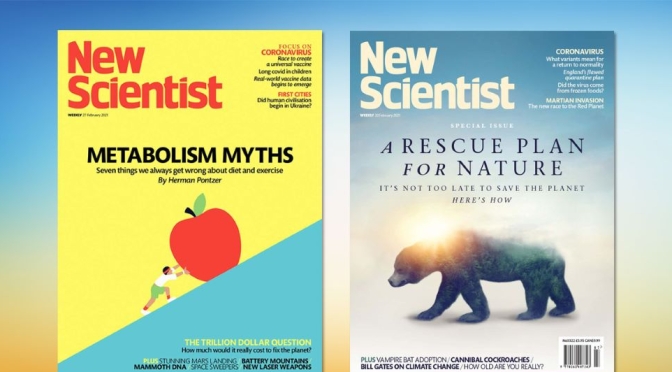
Previews: New Scientist Magazine – October 1, 2022

New Scientist Default Image

New Scientist Magazine – October 1, 2022:

We are finally waking up to the causes of insomnia and how to treat it

Millions of people struggle with insomnia, but the sleep disorder is now a solvable problem – and the most effective therapy might involve your smartphone rather than sleeping pills

Rebecca Wragg Sykes on the objects that reveal the Neanderthal mind

A third of scientists working on AI say it could cause global disaster

What’s the best recipe for bubble mixture? Scientists have the answer

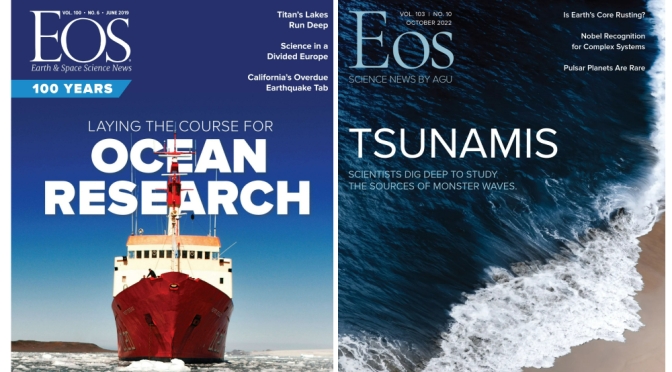
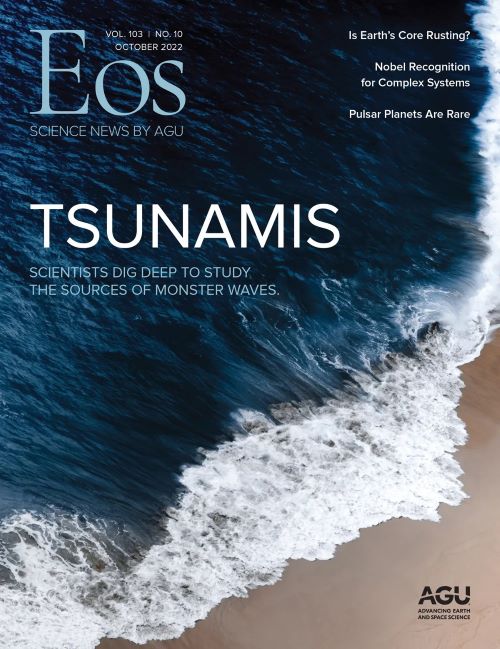
October 2022 Preview: EOS Magazine – Tsunami Waves

EOS Magazine October 2022 Issue:

Seismic Sources in the Aleutian Cradle of Tsunamis

Research over the past decade in Alaska’s Aleutian Islands has offered surprising insights into the pulses of great earthquakes that generate dangerous, often long-distance tsunamis.

Is Earth’s Core Rusting?

“Landslide Graveyard” Holds Clues to Long-Term Tsunami Trends

Muography Array Under Tokyo Bay Spots Meteotsunami Waves

Making Waves

Books: ‘The Biggest Ideas in the Universe – Space, Time, And Motion’ (2022)

The Biggest Ideas in the Universe

Vol. 1: SPACE, TIME, AND MOTION

The Biggest Ideas in the Universe

Vol. 1: SPACE, TIME, AND MOTION

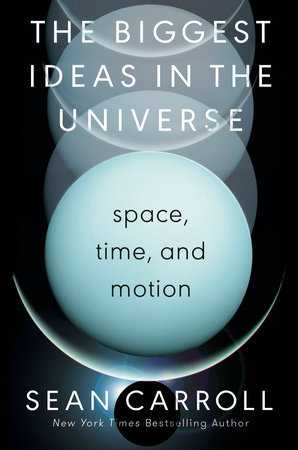
Book cover for Sean Carroll's "The Biggest Ideas in the Universe"

Dutton Books, 20 September 2022

The goal of The Biggest Ideas in the Universe is to bridge the gap between popular-science treatments of modern physics and true expert knowledge. This is the real stuff — equations and all — presented in a way that presumes no prior knowledge other than high-school algebra. Readers will come up to speed about exactly what professional physicists are talking about, with an emphasis on established knowledge rather than speculation.

Volume One, Space, Time, and Motion, covers the domain of classical physics, from Newton to Einstein. We get introduced to Spherical Cow Philosophy, in which complications are stripped away to reveal the essence of a system, and the Laplacian Paradigm, in which the laws of physics take us from initial conditions into the future by marching through time. We learn the basic ideas of calculus, where we can calculate rates of change and how much of a quantity has accumulated. We think about the nature of space and time, separately and together. Finally we are introduced to the mysteries of non-Riemannian geometry and Einstein’s theory of curved spacetime, culminating into a dive into black holes.

Read more

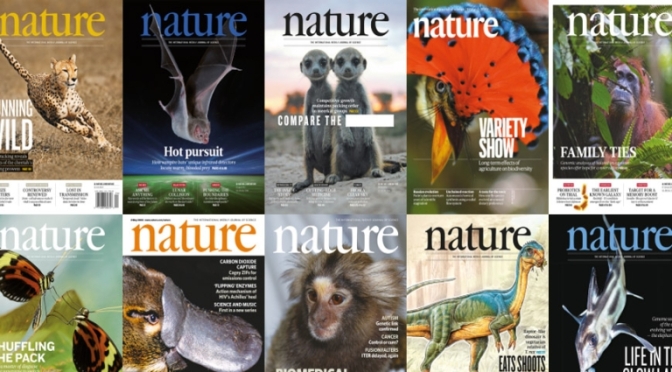
Research Preview: Nature Magazine – Sept 22, 2022

Volume 609 Issue 7928


A gentle lick or nibble makes this brain circuit buzz

Scientists identify a neuronal pathway in rats that drives ‘social grooming’, a behaviour that helps to hold animal communities together.

Warming Arctic brings jet-stream waviness and extreme weather

As high-level winds shift, heat and heavy rain can persist.

A diamond sensor shines at ‘seeing’ voltages

Crystalline device could be used to visualize voltages with high resolution, speed and stability.

A chocoholic’s best friends are the birds and the bats

The trees that provide the raw material for chocolate have a higher yield when the groves are accessible to certain species.

How did the sea cow cross the Pacific? At a ponderous paddle

A family tree of sea cows suggests that the dugong traversed an ocean to reach its present habitat.

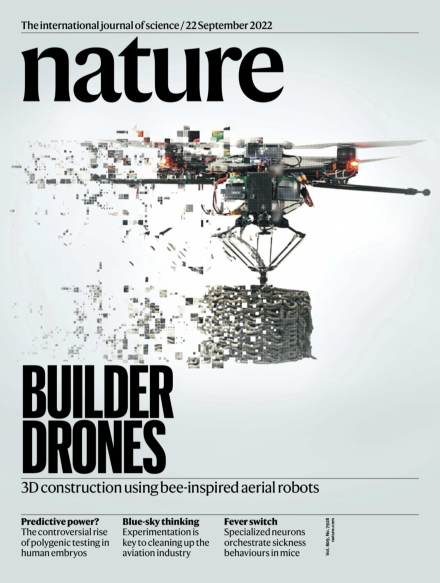
Builder drones

Ground-based robots have potential for helping in the construction industry, but they are limited by their height. In this week’s issue, Mirko Kovac, Robert Stuart-Smith and their colleagues introduce highly manoeuvrable aerial robots that can perform additive 3D construction tasks. Inspired by natural builders such as wasps and bees, the researchers created BuilDrones (as shown on the cover) that can work in an autonomous team to perform 3D printing tasks using foam- or cement-based materials. They also created ScanDrones to assess the quality of the structures

 being built. The team hopes that this approach of ‘aerial additive manufacturing’ could help to build structures in difficult to access areas.

Research Preview: Nature Magazine – Sept 15, 2022

Volume 609 Issue 7927

Monkeypox, COVID-19, AIDS: have we progressed so little?

Deaths and sufferings are not a failure of technology or knowledge, but a failure of will.

The world’s reservoirs are ageing — and belching out more methane

But carbon dioxide emissions resulting from the global reservoir-building spree in the 1960s and 1970s are falling.

The Jurassic vomit that stood the test of time

A fossilized pile of small bones is probably a meal that an animal heaved up 150 million years ago.

Rarest of elements yield their secrets with help from mighty metals

Surrounding an ion of curium with radiation-resistant clusters of other ions allows scientists to study the scarce substance.

Why some female hummingbirds mimic males: it’s all about nectar

Some female white-necked jacobins nab good feeding spots by adopting the flashy plumage of their bigger, brasher male counterparts.

A sugary diet wrecks gut microbes — and their anti-obesity efforts

A high-sugar diet unbalances the microbiome, so the body makes fewer of the gut immune cells that help to prevent metabolic disorders.

Research Preview: Science Magazine – Sept 9, 2022

Image

Twisty device explores alternative path to fusion

Revamped German stellarator should run longer, hotter and compete with tokamaks

New tech law offers billions for research

CHIPS act will fund microelectronics innovation and training through large partnerships

Warming of 1.5°C carries risk of crossing climate tipping points

Scientists call for concerted effort to forecast points of no return for ice, weather patterns, and ecosystems

California EV rules jolt battery science

Move to phase out gas-powered cars will force progress toward faster charging batteries

Fauci looks back—and ahead

Loved and hated, NIAID’s chief plots life after government

Previews: New Scientist Magazine – Sept 10, 2022

New Scientist Default Image

COVER STORIES

  • FEATURES – Beyond tired: Why fatigue sets in and how to tackle it
  • FEATURES – Quantum batteries: Strange technology that could provide instant power
  • FEATURES – The Pope’s AI adviser on ensuring algorithms respect human dignity
  • NEWS

Research Preview: Nature Magazine – Sept 8, 2022

Volume 609 Issue 7926

Dinosaur distribution

The cover shows an artist’s impression of Mbiresaurus raathi, a newly discovered species of herbivorous dinosaur found in Zimbabwe and dating to around 230 million years ago.

Avalanches in remote peaks are revealed with old satellites’ aid

Archived data from Landsat 5, launched in 1984, and two newer sensors allow scientists to chart dangerous flows in Afghanistan.

Quick-dried Lystrosaurus ‘mummy’ holds clues to mass death in the Triassic

Reptiles that perished during a severe drought 250 million years ago are preserved as spreadeagled and mummified fossils.