We start our first episode of the new year looking at future trends in policy and research with host Joel Goldberg and several Science News writers. Jeffrey Mervis discusses upcoming policy changes, Kelly Servick gives a rundown of areas to watch in the life sciences, and Ann Gibbons talks about potential advances in ancient proteins and DNA.
In research news, host Meagan Cantwell talks with Beatriz Pinto-Goncalves, a postdoctoral researcher at the John Innes Centre, about carnivorous plant traps. Through understanding the mechanisms that create these traps, Pinto-Goncalves and colleagues elucidate what this could mean for how they emerged in the evolutionary history of plants.
Cellular Cleanup Crew Fasting and caloric restriction both can ramp up autophagy, a kind of cellular housekeeping. When cells are in famine mode and don’t have to break down food, they pause their usual tasks and stop dividing. Instead, they work on repairing and recycling damaged components, and cleaning out dead or harmful cell matter. Alison Mackey/Discover
…It seems fasting triggers a dramatic switch in the body’s metabolism, according to a paper Mattson and colleagues published in February in the experimental biology journal FASEB. In humans, fasting for 12 hours or more drops the levels of glycogen, a form of cellular glucose. Like changing to a backup gas tank, the body switches from glucose to fatty acids, a more efficient fuel. The switch generates the production of ketones, which are energy molecules that are made in the liver. “When the fats are mobilized and used to produce ketones, we think that is a key factor in accruing the health benefits,” says Mattson.
The podcast team share some of their highlights from the past 12 months: A sole sensation, The make up of the far side of the Moon, Growth Mindset, ‘Manferences’ and Q&A with Nobel Prize winner John Goodenough.
In this episode:
00:33 A sole sensation
A study of people who do and don’t wear shoes looks into whether calluses make feet less sensitive. Nature Podcast: 26 June 2019; Research article: Holowka et al.; News and Views: Your sensitive sole
08:56 The make up of the far side of the Moon
Initial observations from the first lander to touch down on the far side of the Moon. Nature Podcast: 15 May 2019; Research article: Li et al.
15:43 Growth Mindset
How a one hour course could improve academic achievement. Nature Podcast: 07 August 2019; Research article: Yeager et al.
We talk to John Goodenough, who was jointly awarded the 2019 Nobel Prize in Chemistry for his role in the development of the lithium-ion battery. Podcast Extra: 09 October 2019
Memory sits at the core of both literature and lives. Yet forgetting is also a part of our brains’ daily working, bringing its own human truths and a necessary path for moving forward. Lewis Hyde’s new _A Primer for Forgetting: Getting Past the Past_, provides inspiration for a deep-dive discussion of memory’s other side, with this august panel of writers and neuroscientists: poets Jane Hirshfield and Margaret Gibson, author Lewis Hyde, and UCSF neuroscientists Aimee Kao, Bruce Miller, and Virginia Sturm.
Co-hosted by Litquake, San Francisco’s Literary Festival
Jane Hirshfield’s ninth poetry collection, Ledger (Knopf), appears in 2020. Chancellor emerita of the Academy of American Poets and recently elected into the American Academy of Arts & Sciences, she works frequently at the intersection of poetry and science. Her work appears in The New Yorker, Atlantic, Poetry, et al.
Listen to Poet and Professor Margaret Gibson below:
Margaret Gibson, current Connecticut Poet Laureate, is the author of 12 books of poetry, including Not Hearing the Wood Thrush (2018) and Broken Cup (2014), centered on memory loss from Alzheimer’s disease and the gifts of sustaining presence through lament, acceptance, and love. She is Professor Emerita at the University of Connecticut.
Listen to author Lewis Hyde below:
Lewis Hyde’s recent book, A Primer for Forgetting (FSG, 2019), explores the many situations in which forgetfulness is more useful than memory—in myth, personal psychology, politics, art and spiritual life. A MacArthur Fellow, Hyde taught for many years at Kenyon College.
Imagine you’re paralyzed and can’t move or speak. How would you communicate with the world? This video describes the principles of early brain-computer interfaces (BCIs) designed to read electrical brain signals, analyze how brain activity patterns contribute to vocal tract movements, and reproduce the sound patterns as speech. The model is a first step toward one day restoring paralyzed individuals’ natural rate of communication and quality of life.
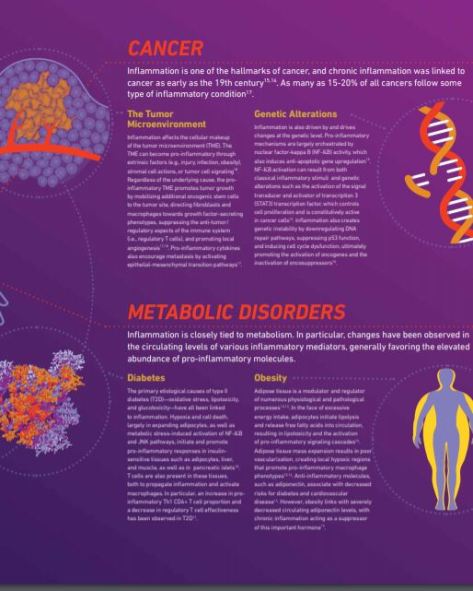
“When fat cannot be safely stored under the skin, it is then stored inside the liver, and over-spills to the rest of the body including the pancreas. This ‘clogs up’ the pancreas, switching off the genes which direct how insulin should effectively be produced, and this causes Type 2 diabetes.”
This latest paper builds on previous Newcastle studies supported by Diabetes UK showing exactly why Type 2 diabetes can be reversed back to normal glucose control. Those studies led to the large DiRECT trial which showed that Primary Care staff can achieve remission of Type 2 diabetes by using a low calorie diet with support to maintain the weight loss.
A quarter of participants achieved a staggering 15 kg or more weight loss, and of these, almost nine out of 10 people put their Type 2 diabetes into remission. After two years, more than one third of the group had been free of diabetes and off all diabetes medication for at least two years.
In 2020, this approach to management of short duration Type 2 diabetes is to be piloted in the NHS in up to 5,000 people across England, and a similar programme is being rolled out in Scotland.
Through the prisms of behavioral neurology and cognitive neuroscience, Scott Grafton brilliantly accounts for the design and workings of the action-oriented brain in synchronicity with the body in the natural world, and he shows how physical intelligence is inherent in all of us—and always in problem-solving mode. Drawing on insights gleaned from discoveries by engineers who have learned to emulate the sophisticated solutions Mother Nature has created for managing complex behavior, Grafton also demonstrates the relevance of physical intelligence with examples that each of us might face—whether the situation is mundane, exceptional, extreme, or compromised.
Elegantly written and deeply grounded in personal experience—works by Oliver Sacks come to mind—Physical Intelligence gives us a clear, illuminating examination of the intricate, mutually responsive relationship between the mind and the body as they engage (or don’t engage) in all manner of physical action.
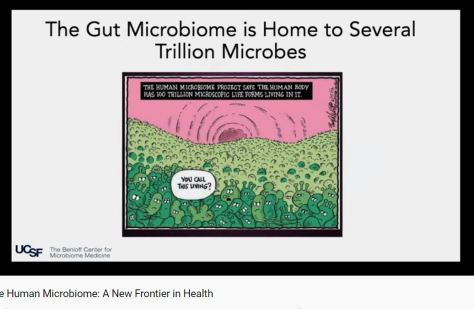
Microbiome expands the genetic and functional capacity of its human host. Susan Lynch explains that human microbiome develops early in life and that gut microbes shape immune function and relate to disease outcomes in childhood.
She also explores next-generation microbiome therapeutics and research.

 We start our first episode of the new year looking at future trends in policy and research with host Joel Goldberg and several Science News writers. Jeffrey Mervis discusses upcoming policy changes, Kelly Servick gives a rundown of areas to watch in the life sciences, and Ann Gibbons talks about potential advances in ancient proteins and DNA.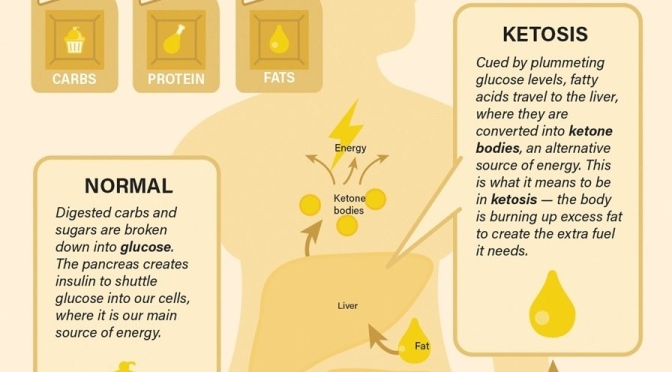
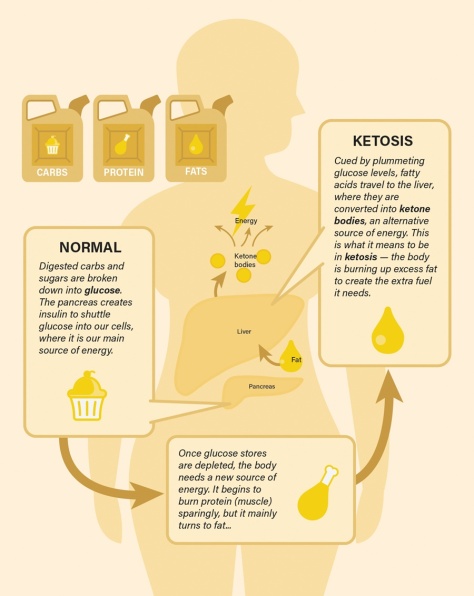
 to a paper Mattson and colleagues published in February in the experimental biology journal FASEB. In humans, fasting for 12 hours or more drops the levels of glycogen, a form of cellular glucose. Like changing to a backup gas tank, the body switches from glucose to fatty acids, a more efficient fuel. The switch generates the production of ketones, which are energy molecules that are made in the liver. “When the fats are mobilized and used to produce ketones, we think that is a key factor in accruing the health benefits,” says Mattson.
 The podcast team share some of their highlights from the past 12 months:
 This latest paper builds on previous Newcastle studies supported by
 Through the prisms of behavioral neurology and cognitive neuroscience, Scott Grafton brilliantly accounts for the design and workings of the action-oriented brain in synchronicity with the body in the natural world, and he shows how physical intelligence is inherent in all of us—and always in problem-solving mode. Drawing on insights gleaned from discoveries by engineers who have learned to emulate the sophisticated solutions Mother Nature has created for managing complex behavior, Grafton also demonstrates the relevance of physical intelligence with examples that each of us might face—whether the situation is mundane, exceptional, extreme, or compromised.


 Boomers Daily