

Inside this week’s issue of The New Yorker: https://t.co/REbgPIccJz pic.twitter.com/KKruM8R98o
— The New Yorker (@NewYorker) October 4, 2021
Category Archives: Reviews

Treating Depression: Deep Brain Stimulation (UCSF)
UCSF Health physicians have successfully treated a patient with severe depression by tapping into the specific brain circuit involved in depressive brain patterns and resetting them using the equivalent of a pacemaker for the brain.
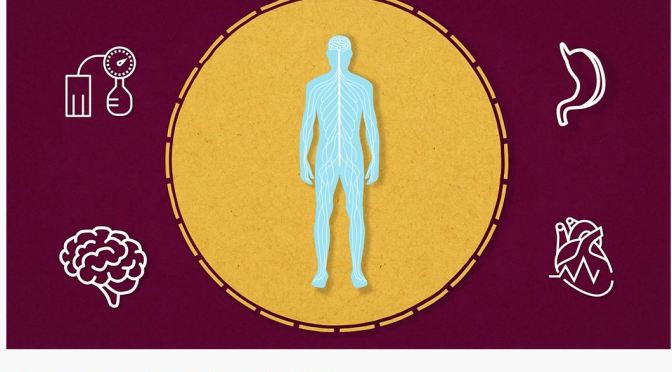
Science Of The Brain: What Is Interoception? (Scripps)
Your brain is keenly aware of what’s going on inside your body at all times. Some things are obvious – like when you feel hungry or thirsty. But some things you never notice – like how blood vessels all over your body simultaneously contract as you stand up, so you don’t lose blood flow to your brain. But how does your brain know when to send the signal to squeeze? It’s all part of concept scientists call interoception – the dialogue between your brain and the rest of your body.
Interoception is involved in everything from keeping us balanced while we walk, to keeping our blood pressure and heart rate steady. It even appears to influence our moods and emotions. And thanks to recent discoveries, we’re learning more about how interoception works. Researchers identified two special channels in neurons that react to touch and named them PIEZO1 and PIEZO2. Since first identifying these pressure sensors, researchers have found PIEZOs in internal organs like the heart, lungs, and blood vessels lining the stomach… suggesting many physiological functions involve mechanical forces that our brain and other parts of our nervous system must monitor and influence. As the study of interoception grows, scientists are hopeful the field could lead to breakthroughs in treating heart disease, controlling blood pressure, relieving anxiety and depression, and treating a number of other disorders. Learn more about Scripps Research at scripps.edu.
Medicine: How To Tell If It’s The Flu Or Covid-19
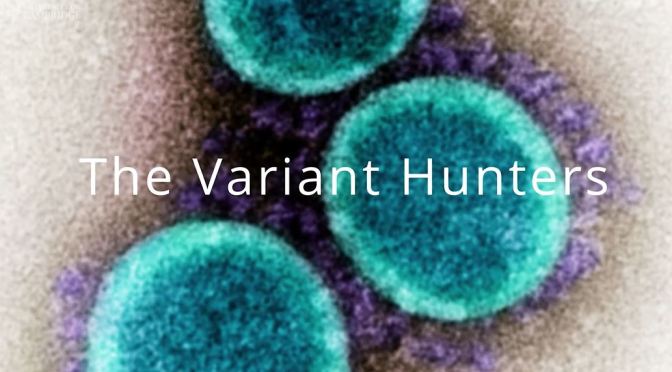
Covid-19: ‘The Variant Hunters’ – Understanding Its Spread (Cambridge)
The variant hunters are helping us to understand how and why the COVID-19 virus is spreading, allowing us to fight back against the COVID-19 pandemic.
Hear from some of the scientists behind the UK’s nationwide sequencing effort to track SARS-CoV-2. Sir Patrick Vallance (the government’s Chief Scientific Adviser) also describes how the expertise that came together during the pandemic is now recognised across the world – and why it’s crucially important to continue to sequence to be ready for future pandemics.
This pioneering work is being carried out by the COVID-19 Genomics UK (COG-UK) consortium, which comprises numerous academic institutions, four public health agencies and the Wellcome Sanger Institute, and is administered by the University of Cambridge.
“Incredibly impressive, incredibly high quality and incredibly focused on the mission to make sure that as many people benefited from the science as possible,” Sir Patrick Vallance.
Read more: https://www.cam.ac.uk/stories/variant…

Infographics: The $3.5T Infrastructure Bill
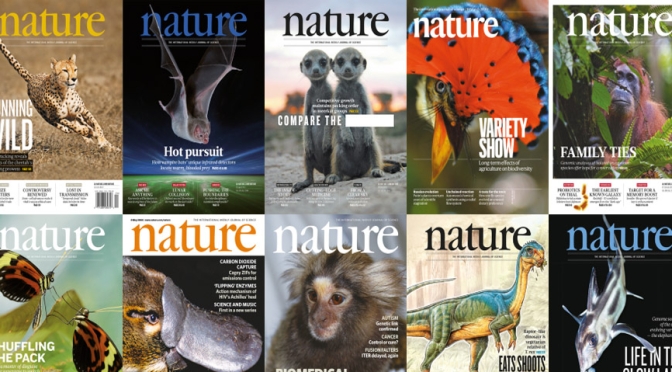
Front Covers: Nature Magazine – September 30
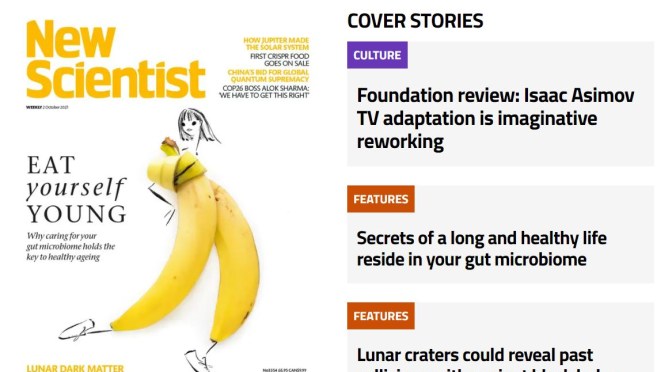
Previews: New Scientist Magazine – October 2

Science: Whole-Genome Screening For Newborns, Active Learning For STEM
Today, most newborns get some biochemical screens of their blood, but whole-genome sequencing is a much more comprehensive look at an infant—maybe too comprehensive?
Staff Writer Jocelyn Kaiser joins host Sarah Crespi to discuss the ethical ins and outs of whole-genome screening for newborns, and the kinds of infrastructure needed to use these screens more widely. Sarah also talks with three contributors to a series of vignettes on the importance of active learning for students in science, technology, engineering, and math. Yuko Munakata, professor in the department of psychology and Center for Mind and Brain at the University of California, Davis, talks about how the amount of unstructured time and active learning contributes to developing executive function—the way our brains keep us on task. Nesra Yannier, special faculty at Carnegie Mellon University and inventor of NoRILLA, discusses an artificial intelligence–driven learning platform that helps children explore and learn about the real world. Finally, Louis Deslauriers, senior preceptor in the department of physics and director of science teaching and learning at Harvard University, laments lectures: why we like them so much, why we think we learn more from lectures than inquiry-based learning, and why we’re wrong.
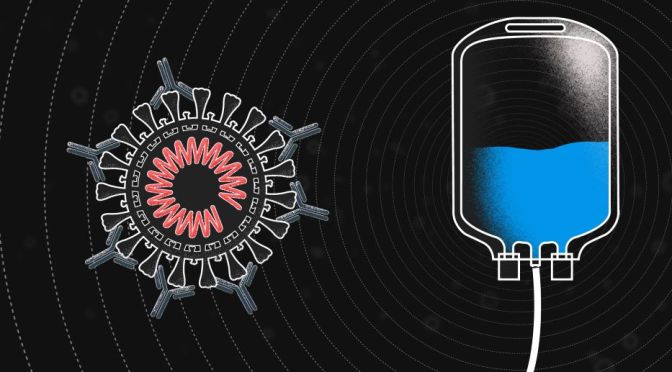
Monoclonal Antibodies: How They Are Saving Lives
Doctors are increasingly turning to monoclonal-antibody drugs to treat high-risk patients who get sick with Covid-19. WSJ takes a look at how the therapies work and why they’re important for saving lives. Illustration: Jacob Reynolds/WSJ
 Boomers Daily