
Predicting the past. Using #AI deep neural networks to more accurately restore Ancient Greek inscriptions and human history @Naturehttps://t.co/klmnFCl1O2
— Eric Topol (@EricTopol) March 9, 2022
@DeepMind @iassael @TSommerschield @BrendanShilling @itpavlopoulos @ionandrou
@jonprag @NandoDF pic.twitter.com/cbT6pRvx3J
Category Archives: Reviews
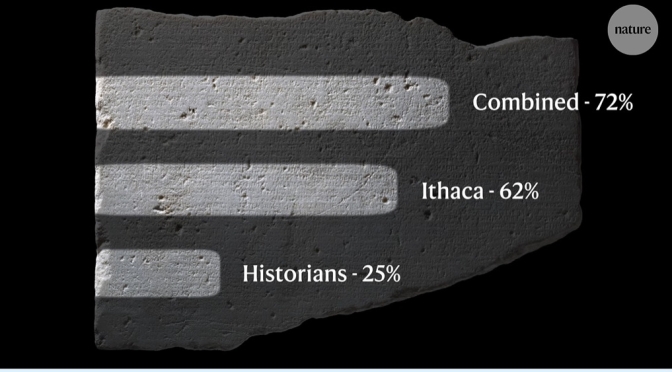
History & Science: Ancient Texts Deciphered With AI
The origins of ancient inscriptions are often shrouded in mystery. Writing carved into stone millennia ago can be hard to read and is often missing entire sections of the text. Now a neural network, trained on thousands of existing inscriptions, could help historians figure out when and where a piece of writing comes from – as well as fill in missing words and characters.
Read the paper: https://www.nature.com/articles/s4158…

Science: 2021 Top ‘Flash Fiction’ Short Stories

Political Analysis: Putin’s War Escalates, Climate Change, French Debate
A selection of three essential articles read aloud from the latest issue of The Economist. This week: the horror ahead in Ukraine, why climate change must be adapted to as well as opposed (11:25) and why France needs a proper debate ahead of its presidential election (15:40).
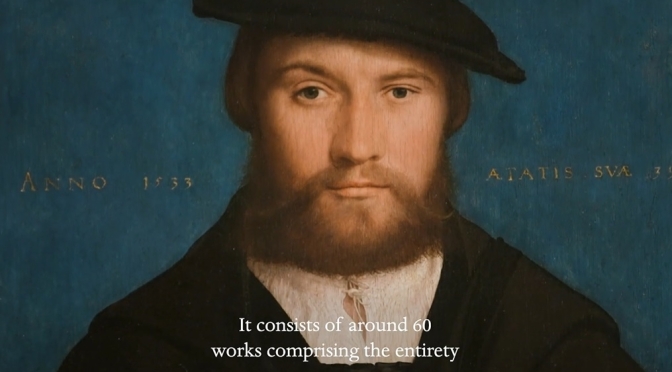
Morgan Library: ‘Holbein – Capturing Character’
Hans Holbein the Younger (1497/98–1543) was among the most skilled, versatile, and inventive artists of the early 1500s. He created captivating portraits of courtiers, merchants, scholars, and statesmen in Basel, Switzerland, and later in England, and served as a court painter to Tudor King Henry VIII (1491–1547). Enriched by inscriptions, insignia, and evocative attributes, his portraits comprise eloquent visual statements of personal identity and illuminate the Renaissance culture of erudition, self-fashioning, luxury, and wit. February 11 through May 15, 2022

Science: Nuclear War Threat, Climate Change, Coronavirus Origins
As the war in Ukraine intensifies, Vladimir Putin raised Russia’s nuclear readiness level. The team discusses what this means about the likelihood of nuclear war. They also explore the unfolding humanitarian crisis in the country.
The latest Intergovernmental Panel on Climate Change report is out, and it focuses on impacts, adaptation and vulnerability. We hear from Swenja Surminski, head of adaptation research at the Grantham Research Institute on Climate Change and the Environment.
New studies into the start of the coronavirus pandemic are confirming what we’ve long suspected – that the virus originated at the Huanan food market in Wuhan. The team discusses the latest findings.
Moles – the animals that make holes in your lawn – are non-binary. Just one of a number of amazing facts to come out of the new book ‘BITCH: A Revolutionary Guide to Sex, Evolution & the Female Animal’. Hear from the author Lucy Cooke, who is challenging the sexist basis of much of the thinking about female animals.
Stonehenge may have been built as a giant calendar. Though the claim itself isn’t new, the team explores a new theory from the archaeologist Tim Darvill which explains how it would’ve worked.
Cover Preview: Science Magazine – March 4
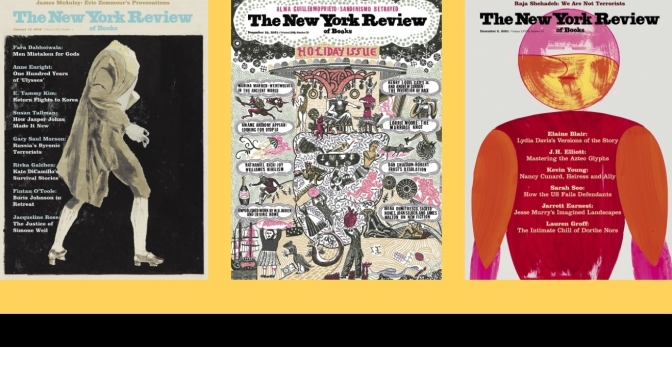
Preview: New York Review Of Books – March 24

Cover Preview: Nature Magazine – March 3
This Week
- Editorial | 28 February 2022Wanted: better systems for turning evidence into actionThe pandemic created a colossal demand for scientific evidence to inform decision-making. Now researchers are mapping out what went wrong and what needs to change.
- Editorial | 01 March 2022Nature is trialling transparent peer review — the early results are encouragingLast year, nearly half of Nature authors agreed to publish anonymous referee reports. We hope that more will consider doing so this year.

 Boomers Daily