
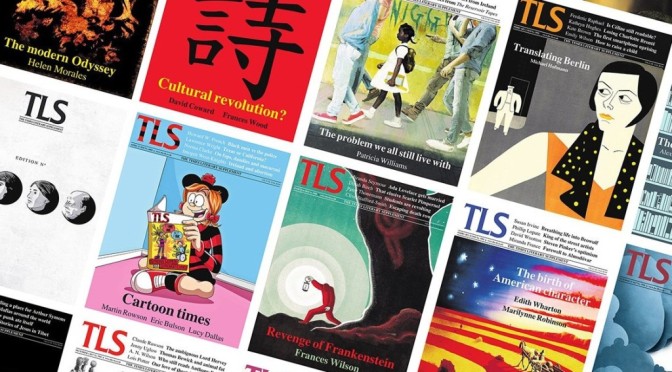
This week’s @TheTLS, featuring @EmilyRCWilson on death; Zachary Leader on Kingsley Amis at 100; @MiriERubin on the Virgin Mary; @Francespalding on Postwar Modern at the Barbican; Damon Galgut on Sarah Manguso; @itsamule on Louise Glück – and more pic.twitter.com/LXBZhdCDlY
— George Berridge (@George_Berridge) April 13, 2022
Category Archives: Reviews
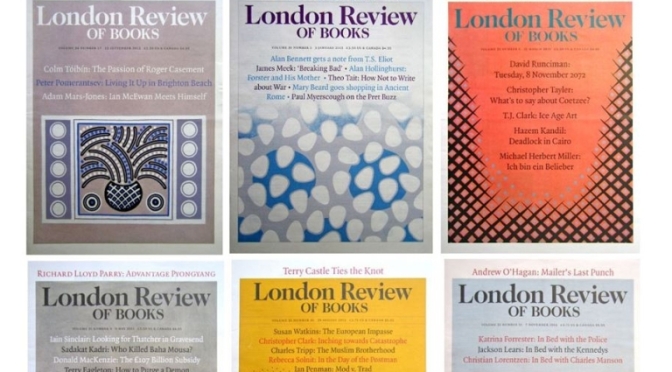
Previews: London Review Of Books – April 21, 2022
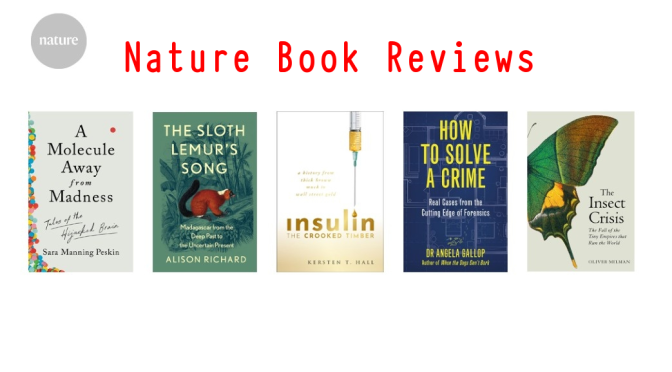
Reviews: Top New Science Book Picks (Nature)
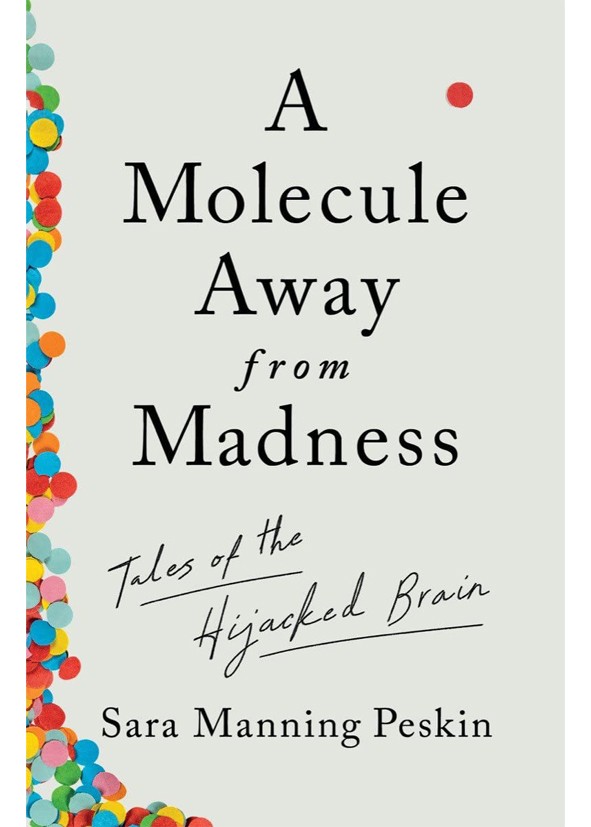
A Molecule Away from Madness
Sara Manning Peskin W. W. Norton (2022)
Even before COVID-19 increased the risks of cognitive impairments, it had been estimated that 152.8 million people globally would be living with dementia by 2050. Yet treatment for Alzheimer’s disease has hardly improved since it was discovered in 1901, notes neurologist and dementia specialist Sara Manning Peskin. Now, most clinical trials tackling dementia are “deeply rooted in molecular data”. Peskin’s powerful study — immersed in her patients’ stories — analyses neurology’s attempt to reach oncology’s molecular understanding.
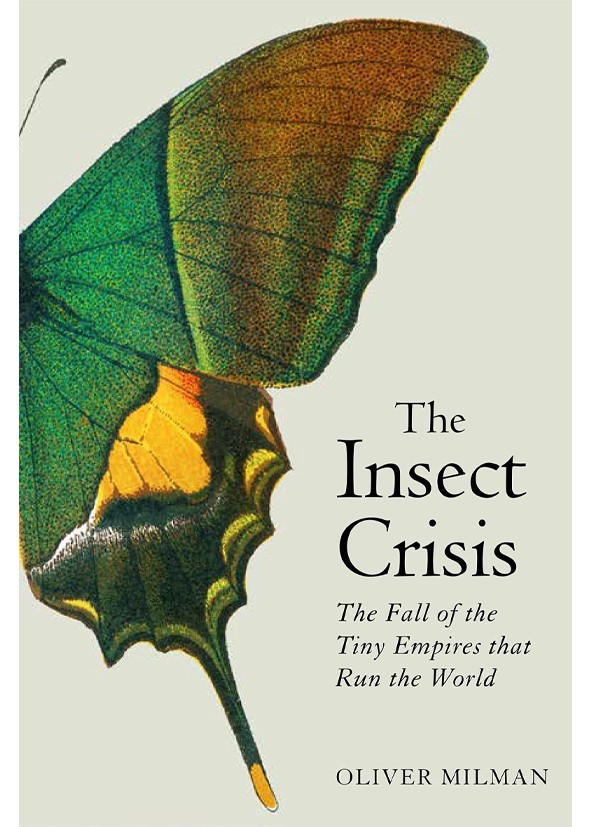
The Insect Crisis
Oliver Milman Atlantic (2022)
Insect decline is obvious — but hard to quantify. Environmental journalist Oliver Milman suggests a drop of more than 90% in some places, in his vivid alarm call. The causes are unclear, but include habitat destruction by intensive farming, pesticide use and climate change. Insects’ “intricate dance” with Earth’s environment makes them crucial to human food supplies. We should learn to eat them, not meat, suggests Milman: that will help to save them by freeing farmland from crops needed to feed livestock.
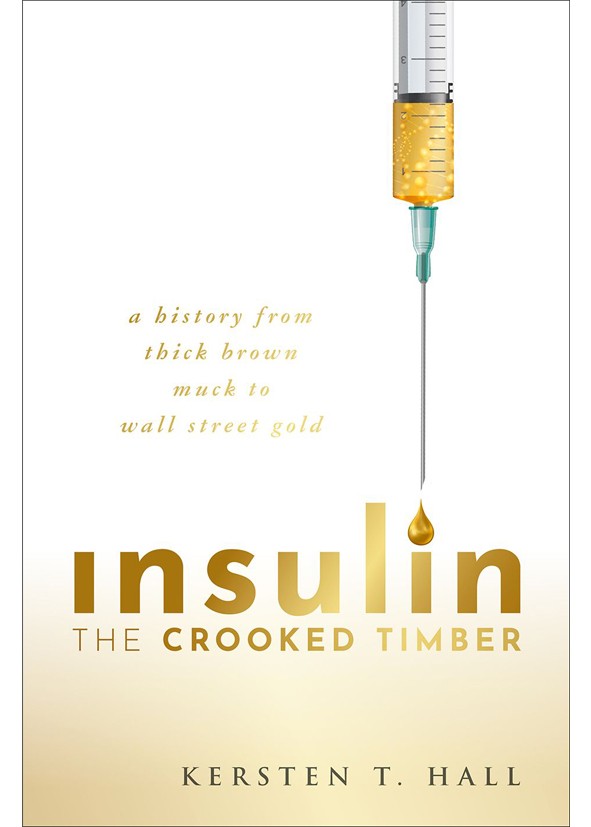
Insulin — The Crooked Timber
Kersten T. Hall Oxford Univ. Press (2022)
Insulin was first used to treat human diabetes 100 years ago, after it was isolated by two medical scientists in 1921. Historian of science Kersten Hall describes this transformative event, together with insulin’s development as the first drug produced by genetic engineering and its lucrative exploitation — using a blend of profound research, lively writing and personal knowledge of diabetes. He argues that the history is a tale not of geniuses or saints, but rather one of “monstrous egos, toxic insecurities and bitter career rivalry”.
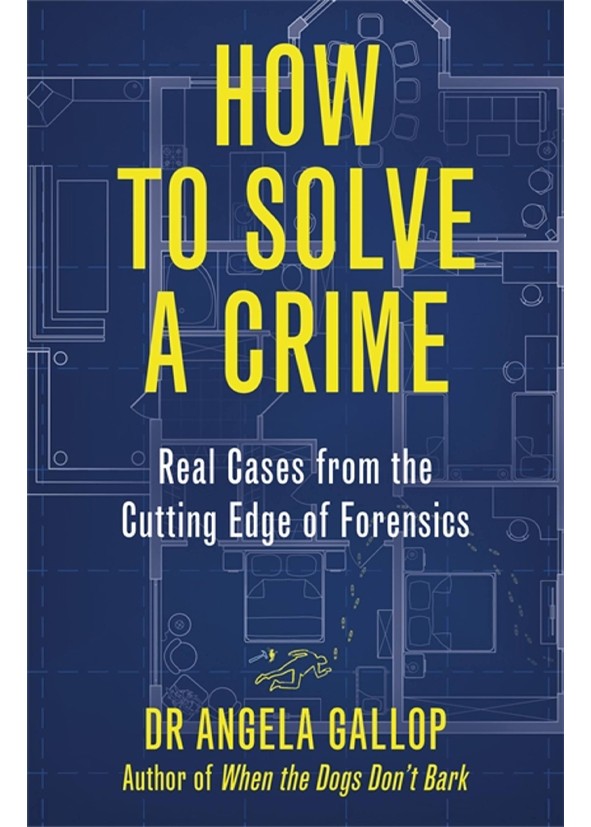
How to Solve a Crime
Angela Gallop Hodder & Stoughton (2022)
More than a century ago, criminologist Edmond Locard established forensic science on the principle that “every contact leaves a trace”. The field’s current sophistication and contribution to justice would be beyond his “wildest imaginings”, writes forensic scientist Angela Gallop. She tells gripping stories from her own and others’ experience, beginning with thirteenth-century Chinese investigator Sung Tz’u. He identified a farmer’s killer by asking fellow villagers to put their sickles on the ground; flies alighted on one blade bearing traces of blood.
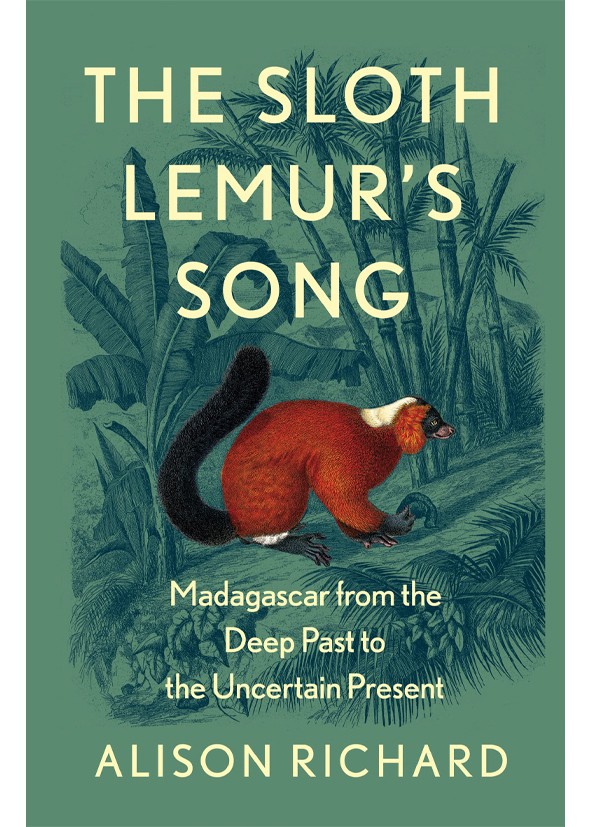
The Sloth Lemur’s Song
Alison Richard William Collins (2022)
Anthropologist and conservationist Alison Richard has been absorbed by Madagascar for half a century. She writes that the country’s “animals and plants offer a wonderful array of rabbit holes down which a person fascinated by the natural world could disappear for a lifetime”. Why, for example, does its largest lemur sing spellbindingly across the treetops with its mate for many minutes? And what environmental conditions created the island’s unique — now disastrously threatened —
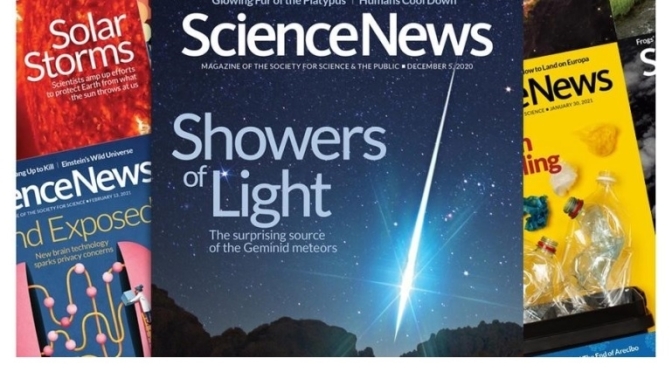
Previews: Science News Magazine – April 9, 2022
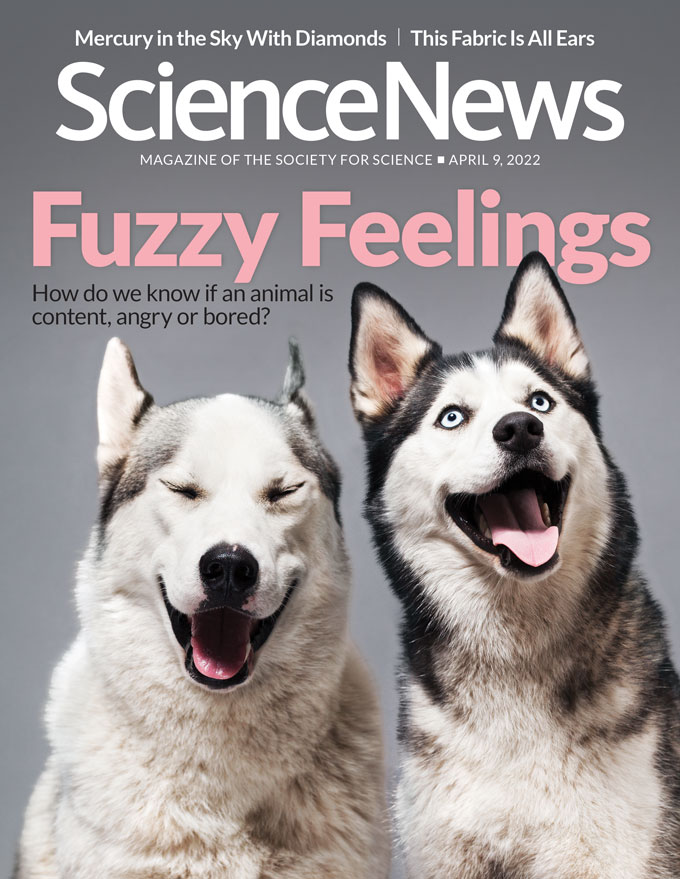
COVER STORY
How do we know what emotions animals feel?
Animal welfare researchers are studying the feelings and subjective experiences of horses, octopuses and more.
Diamonds may stud Mercury’s crust
By Nikk Ogasa
This fabric can hear your heartbeat
Science: New W Boson Particle Measurement, Marine RNA Viruses
On this week’s show: A new measurement of the W boson could challenge physicists’ standard model, and an abundance of marine RNA viruses.
Staff Writer Adrian Cho joins host Sarah Crespi to discuss a new threat to the standard model of particle physics—a heavier than expected measurement of a fundamental particle called the W boson. They chat about how this measurement was taken, and what it means if it is right.
Next, Sarah talks about the microscopic denizens of Earth’s oceans with Ahmed Zayed, a research scientist in the department of microbiology at Ohio State University, Columbus. They talk about findings from a global survey of marine RNA viruses. The results double the number of known RNA viruses, suggesting new classifications will be needed to categorize all this viral diversity.
World Economic Forum: Top Stories – April 8, 2022
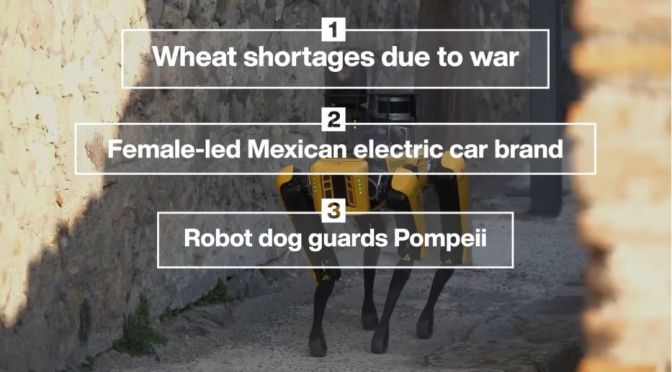
This week The World Economic Forum are highlighting 4 top stories – wheat shortages due to war, a female-led Mexican electric car brand, a robot dog guards Pompeii, and a plane fuelled by cooking oil.
Video timeline: 00:00 – Intro 00:15 – Wheat shortages due to war 02:17 – Female-led Mexican electric car brand 03:34 – Robot dog guards Pompeii 05:00 –
Plane fueled by cooking oil The World Economic Forum is the International Organization for Public-Private Cooperation. The Forum engages the foremost political, business, cultural and other leaders of society to shape global, regional and industry agendas. We believe that progress happens by bringing together people from all walks of life who have the drive and the influence to make positive change.
Reviews: The Week In Art
This week: Quiet as It’s Kept, the 80th edition of the Whitney Biennial, is now open to the public at the Whitney Museum of American Art in New York.
The Art Newspaper’s associate editor Tom Seymour, Americas editor Ben Sutton and staff reporter Gabriella Angeletti gather to discuss it. As the latest incarnation of the show Afro-Atlantic Histories is unveiled at the National Gallery of Art in Washington DC, we speak to its curator, Kanitra Fletcher, about the gallery’s approach to this complex subject. And the National Gallery in London’s long-planned Raphael blockbuster, postponed due to the pandemic, is finally open, so for this episode’s Work of the Week, we speak to Tom Henry, one of the curators of the show, about the Self-Portrait with Giulio Romano (1519-20), one of the Renaissance master’s final paintings.
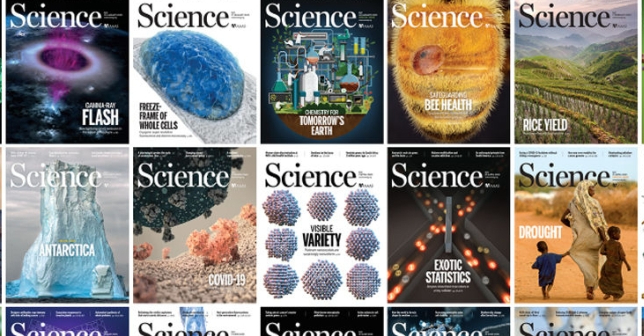
Cover Preview: Science Magazine – April 8, 2022
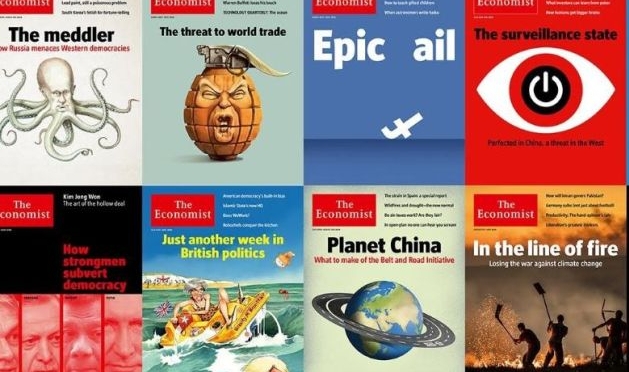
Previews: The Economist Magazine – April 9, 2022
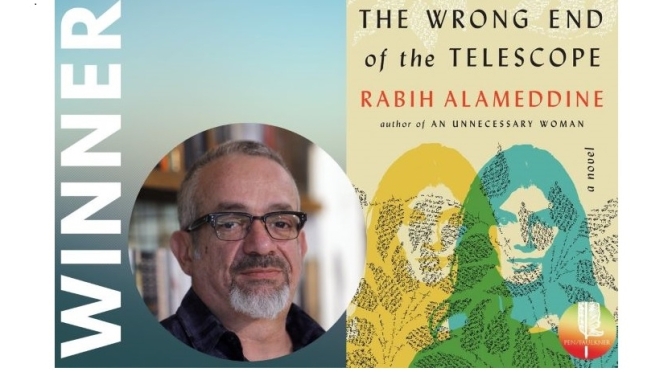
2022 Pen/Faulkner: Rabih Alameddine’s ‘The Wrong End Of The Telescope’
WINNER OF THE 2022 PEN/FAULKNER AWARD FOR FICTION
Mina Simpson, a Lebanese doctor, arrives at the infamous Moria refugee camp on Lesbos, Greece, after being urgently summoned for help by her friend who runs an NGO there. Alienated from her family except for her beloved brother, Mina has avoided being so close to her homeland for decades. But with a week off work and apart from her wife of thirty years, Mina hopes to accomplish something meaningful, among the abundance of Western volunteers who pose for selfies with beached dinghies and the camp’s children. Soon, a boat crosses bringing Sumaiya, a fiercely resolute Syrian matriarch with terminal liver cancer. Determined to protect her children and husband at all costs, Sumaiya refuses to alert her family to her diagnosis. Bonded together by Sumaiya’s secret, a deep connection sparks between the two women, and as Mina prepares a course of treatment with the limited resources on hand, she confronts the circumstances of the migrants’ displacement, as well as her own constraints in helping them.
 Boomers Daily