


Nearly 50 years ago, the Supreme Court legalized abortion. The decision has since divided the country. Now that the court has overturned Roe v. Wade, here are 10 books that outline the history and the terms of the debate.
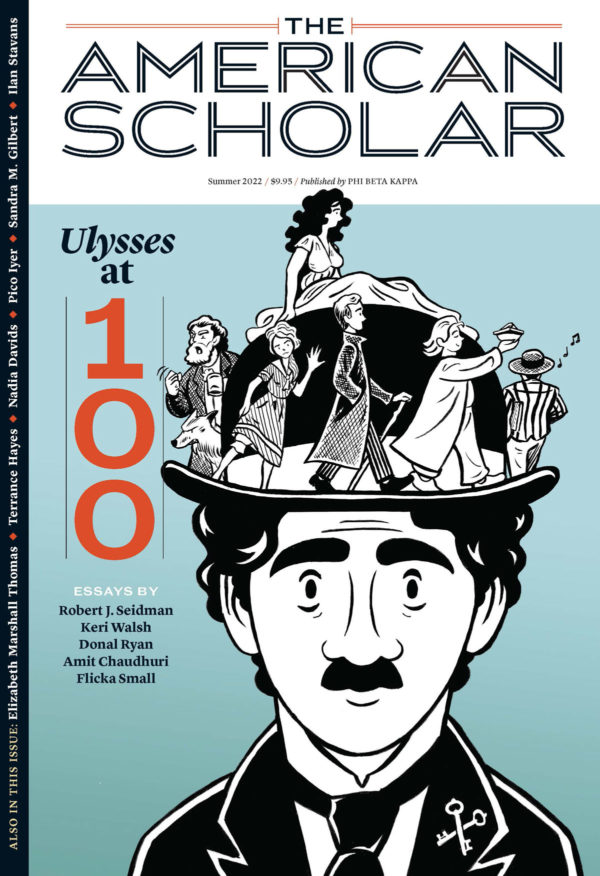
Is there a novel more revered—and more famously unread—than James Joyce’s Ulysses? Despite its complexities, this love letter to Dublin, published a century ago, is a very readable chronicle of everyday life and everyday struggles. It’s a book about marriage, sex, religion, food, art, loneliness, companionship, and so much else. It’s a book, that is, about life. We hope that the following essays will send you on a quest to discover, or rediscover, this most staggering of epics.
The divine, stark photographs of Robert Adams
On this week’s show: Whether biofuels for planes will become a reality, mitigating climate change by working with nature, and the second installment of our book series on the science of food and agriculture.
First this week, Science Staff Writer Robert F. Service talks with producer Meagan Cantwell about sustainable aviation fuel, a story included in Science’s special issue on climate change. Researchers have been able to develop this green gas from materials such as municipal garbage and corn stalks. Will it power air travel in the future?
Also in the special issue this week, Nathalie Seddon, a professor of biodiversity at the University of Oxford, chats with host Sarah Crespi about the value of working with nature to support the biodiversity and resilience of our ecosystems. Seddon emphasizes that nature-based solutions alone cannot stop climate change—technological approaches and behavioral changes will also need to be implemented.
Finally, we have the second installment of our series of author interviews on the science of food and agriculture. Host and science journalist Angela Saini talks to Jessica Hernandez, an Indigenous environmental scientist and author of Fresh Banana Leaves: Healing Indigenous Landscapes Through Indigenous Science. Hernandez’s book explores the failures of Western conservationism—and what we can learn about land management from Indigenous people.
This week’s episode was produced with help from Podigy.
[Image: USDA NCRS Texas; Music: Jeffrey Cook]
[alt: cows in a forest]
Authors: Meagan Cantwell; Robert Service, Sarah Crespi, Angela Saini
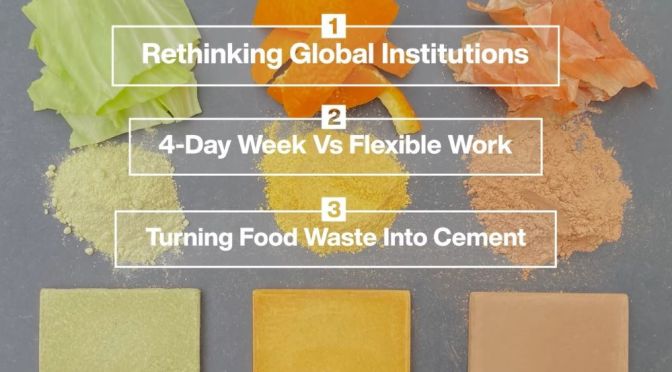
This week the World Economic Forum are highlighting 4 top stories – rethinking global institutions, 4-day week vs flexible work, turning food waste into cement and income loss for UK mothers.
The World Economic Forum is the International Organization for Public-Private Cooperation. The Forum engages the foremost political, business, cultural and other leaders of society to shape global, regional and industry agendas. We believe that progress happens by bringing together people from all walks of life who have the drive and the influence to make positive change.

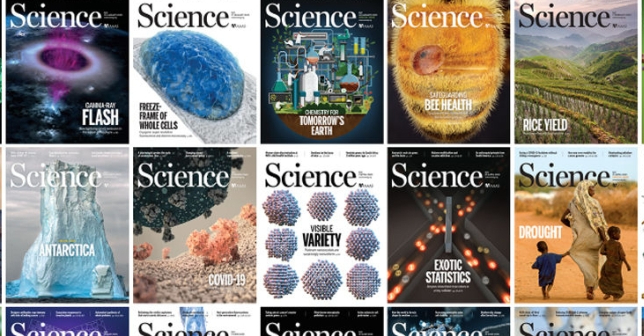
COVER: Humanity’s actions have committed us to a warming climate and limited our options for mitigation. Although there is no turning back, some paths are still open to avoid catastrophic climate change and reduce its impacts. We must act now to drastically reduce greenhouse gas emissions and change our approaches to growing food, consuming products, and managing ecosystems to avoid a dire future. See page 1392.
Illustration: Myriam Wares
CAROLINE ASH
JAMES MORTON TURNER
Times Literary Supplement for June 24, 2022: @TheTLS, featuring our annual Summer Books feature; Michele Pridmore-Brown on transhumanism; @zoesqwilliams on the Oxford chumocracy; a newly discovered response to the Wilde trials by George Egerton; Claire Lowdon on the new Ottessa Moshfegh – and more.
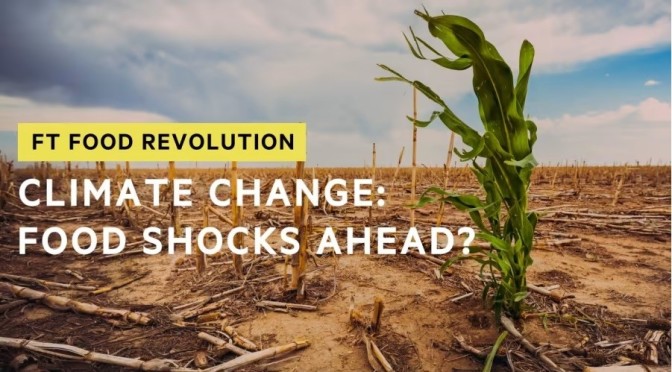
Recent crises such as the pandemic and Russia’s invasion of Ukraine have thrown the vulnerability of supply chains, and with them, food supplies, into sharp focus. But as the FT’s Camilla Hodgson reports, a landmark UN report says climate-related shocks such as extreme weather events will become more common and severe and could further upend food supply chains. But what can we do about it?
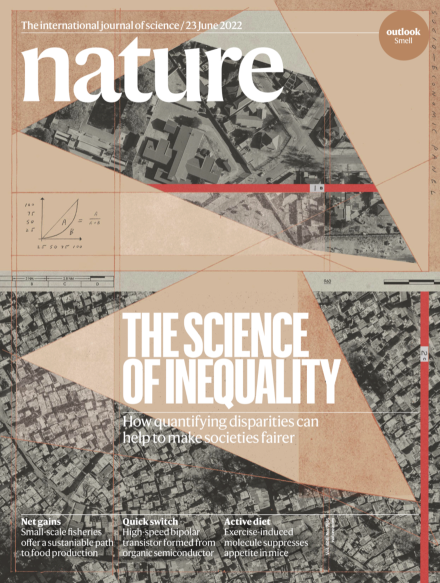
To study inequality is to confront a world of contrasts: excessive wealth next to palpable poverty; sickness abutting health. The COVID pandemic has exposed and worsened many such disparities. This week, Nature presents a special collection of articles focusing on the researchers trying to quantify and reduce inequality. Whether they are measuring the effects of the pandemic or testing interventions to lift people out of poverty, the message is simple: gathering the right information will help to mitigate the harm caused by inequality.
Cover image: Mike McQuade.
Table of Contents


 Boomers Daily