

LITERARY REVIEW : The latest issue features ‘Mysteries of Marlowe’

LITERARY REVIEW : The latest issue features ‘Mysteries of Marlowe’
How an asynchronous presidency exploits the gap between platform time and constitutional time to bend institutions before the law can catch up.

By Michael Cummins, Editor, August 30, 2025
On a sweltering August afternoon in Washington, the line to the federal courthouse wraps around the block like a nervous necklace. Heat shimmers off the stone; gnats drift in lazy constellations above the security checkpoint. Inside, air-conditioning works harder than dignity, and the benches fill with reporters who’ve perfected the face that precedes calamity. A clerk calls the room to order. The judge adjusts her glasses. Counsel step to the lectern as if crossing a narrow bridge over fast water. Then the question—plain, improbable—arrives: can a president’s social-media post count as legal notice to fire a governor of the Federal Reserve?
What does it mean when the forum for that answer is a courtroom and the forum for the action was a feed? The gulf is not merely spatial. One realm runs on filings, exhibits, transcripts—the slow grammar of law. The other runs on velocity and spectacle, where a single post can crowd out a dozen briefings. The presidency has always tested its borders, but this one has learned a new technique: act first in public at speed; force the law to catch up in private at length. It is power practiced asynchronously—governance that unfolds on different clocks, with different rewards.
Call it latency as strategy. Declare a cause on a platform; label the declaration due process; make the firing a fact; usher the lawyers in after to domesticate what has already happened. The point is not to win doctrine immediately. The point is to harvest the days and weeks when a decision stands as reality while the courts begin their pilgrimage toward judgment. If constitutional time is meticulous, platform time is ruthless, and the space between them is policy.
In the hearing, the administration’s lawyer stands to argue that the Federal Reserve Act says “for cause” and leaves the rest to the president’s judgment. Why, he asks, should a court pour old meanings into new words? The statutory text is lean; executive discretion is broad. On the other side, counsel for Lisa Cook speaks a language almost quaint in the rapid glare of the moment: independence, notice, a chance to be heard—dignities that exist precisely to slow the hand that wields them. The judge nods, frowns, asks what independence means for an institution the law never designed to be dragged at the pace of a trending topic. Is the statute a rail to grip, or a ribbon to stretch?
When the hearing breaks, the stream outside is already three headlines ahead. Down the hill, near the White House, a combat veteran strikes a match to the hem of a flag. Fire crawls like handwriting. Two hours earlier, the president signed an executive order urging prosecutions for acts of flag “desecration” under “content-neutral” laws—no frontal attack on the First Amendment’s protection of symbolic speech, only an invitation to ticket for the flame, not the message. Is that a clever accommodation to precedent, or a dare?
The veteran knows the history; anyone who has watched the long argument over Texas v. Johnson does. The Supreme Court has repeatedly said that burning the flag as protest, however detestable to many, is speech. Yet symbolic speech lives in real space, and real space has ordinances: no open flames without a permit, no fires on federal property, no damage to parks. The order makes a temporal bet: ticket now; litigate later. The government may lose the grand constitutional fight, but it may win smaller battles quick enough to chill an afternoon’s protest. In the gap between the moment and the merits, who blinks first?
Back at the courthouse, a reporter asks a pragmatic question: even if the president can’t fire a Fed governor for mere allegations, will any of this matter for interest rates? Not in September, the expert shrugs. The committee is larger than one vote, dissent is rare. But calendars have leverage. February—when reappointments can shift the composition of the body that sets the price of money—looms larger than any single meeting. If the decision remains in place long enough, the victory is secured by time rather than law. Isn’t that the whole design?
Administration lawyers never say it so plainly. They don’t have to. The structure does the talking. Announce “cause” in a forum that rewards proclamation; treat the announcement as notice; act; then invite the courts to reverse under emergency standards designed to be cautious. Even a win for independence later may arrive late enough to be moot. In the arithmetic of acceleration, delay is not neutral; it is bounty.
If this sounds like a single episode, it is not. The same rhythm animates the executive order on flag burning. On paper, it bows to precedent; in practice, it asks police and prosecutors to find neutral hooks fast enough to produce a headline, a citation, an arrest photo. Months later, the legal machine may say, as it must, that the burning was protected and the charge pretextual. But how many will light a match the next day, knowing the ticket will be instant and the vindication slow?
And it animates something quiet but immense: the cancellation of thousands of research grants at the National Institutes of Health because proposals with words like “diversity,” “equity,” or “gender” no longer fit the administration’s politics. A district judge calls the cuts discriminatory. On the way to appeal, the litigation splits like a river around a rock: one channel to test the legality of the policy guidance, another to ask for money in a tribunal known mostly to contractors and procurement lawyers. The Supreme Court steps in on an emergency basis and says, for now, the money shouldn’t flow. Why should taxpayers pay today for projects that might be unlawful tomorrow?
Because science does not pause on command. Because a lab is not a spreadsheet but a choreography of schedules and salaries and protocols that cannot be put on ice for a season. Because a freeze that looks tidy in a docket entry becomes layoffs and abandoned lines of research in ordinary rooms with humming incubators. The Court’s concern is neat—what if the government cannot claw back dollars later?—but the neatness ignores what time does to fragile ecosystems. What is a remedy worth when the experiment that needed it has already died?
It is tempting to divide all this along ideological lines, to tally winners and losers as if the story were primarily about whose agenda prevails. But ideology is not the tool that fits. Time is. One clock measures orders, posts, firings, cancellations—the moves that define a day’s narrative. Another measures notice, hearing, record, reason—the moves by which a republic persuades itself that force has been tamed by law. When the first clock is always fast and the second is always slow, acceleration becomes a kind of authority in itself. Isn’t that the simplest way to understand what’s happening—that speed is taking up residence where statute once did?
Consider again the hearing. The administration’s brief is lean, the statute is shorter still, and the claim is stark: “for cause” is what the president says it is. To demand more—to import the old triad of “inefficiency, neglect of duty, or malfeasance in office,” to insist on a pre-removal process—is, in this telling, to romanticize independence and hobble accountability. Yet independence is not romance. It is architecture—an effort to keep central banking from becoming another branch of daily politics. If “for cause” becomes a slogan that can be made true after the fact by the simple act of saying it early and everywhere, what remains of the cordon the law tried to draw?
The judge knows this, and also knows the constraints of her role. Emergency relief is meant to preserve the status quo, not rewrite the world. But what is the status quo when the action has already been taken? How do you freeze a river that has been diverted upstream? The presidency practices motion, and then asks the judiciary for patience. Can a court restore a person to an office as easily as a timeline restored a post? Can an injunction rewind a vote composition that turned while the case wound its way forward?
Meanwhile, in the park across from the White House, the veteran’s fire has gone out. The citations are not for speech, officials insist, but for the flame and the scarring of public property. Somewhere between these statements and the executive order that prompted them sits the puzzle of pretext. If a president announces that he seeks to stop a type of speech and urges prosecutors to deploy neutral laws to do so, isn’t the neutrality already contaminated? The doctrine can handle the distinction. But the doctrine’s victory will arrive, at best, months later, and the message lands now: the state is watching, and the nearest hook will serve.
The research world hears its own version of that message. Grants are not gifts; they are contracts, explicit commitments that enable work across years. When a government cancels them mid-stream for political reasons and the courts respond by asking litigants to queue in separate lines—legality here, money there—the signal is not subtle. A promise from the state is provisional. A project can become a pawn. If the administration can accelerate the cut, and the law can only accelerate the analysis, who chooses a life’s work inside such volatility?
There are names for this pattern that sound technocratic—“latency arbitrage,” “platform time versus constitutional time”—and they are accurate without being sufficient. The deeper truth is simpler: a republic’s most reliable tools to restrain power are exactly the tools an accelerated executive least wants to use. Notice means warning; hearing means friction; record means reasons; reason means vulnerability. If you can do without them today and answer for their absence tomorrow, why wouldn’t you?
Well, because the institutions you bend today may be the ones you need intact when the wind shifts. A central bank nudged toward loyalty ceases to be ballast in a storm and becomes a sail. A public square patrolled by pretext breeds fewer peaceful protests and more brittle ones. A research ecosystem that learns that politics can zero out the future will deliver fewer cures and more exits. Isn’t it a curious form of victory that leaves you poorer in the very capacities that make governing possible?
Which brings the story back, inevitably, to process. Process is dull in the way bridges are dull—unnoticed until they fail. The seduction of speed lies in its drama: the crispness of the order, the sting of the arrest, the satisfying finality of a cancellation spreadsheet. Process is the opposite of drama. It is the insistence that power is obliged to explain itself before it acts, to create a record that can be tested, to bear, on the front end, the time it would rather push to the back. Why does that matter now? Because the tactic on display is not merely to defeat process, but to displace it—to make its protections arrive as afterthoughts, paper bandages for facts on the ground.
There are ways to close the gap. The law can require that insulated offices come with front-loaded protections: written notice of cause, an opportunity to respond, an on-the-record hearing before removal becomes effective, and automatic temporary relief if the dispute proceeds to court. The Department of Justice can be made to certify, in writing and in real time, that any arrest touching expressive conduct was green-lighted without regard to viewpoint, and courts can be given an expedited path to vacate citations when pretext is shown—not in a season, but in a week. Mid-cycle grant cancellations can trigger bridge funding and a short status-quo injunction as the default, with the government bearing the burden to prove genuine exigency. Even the Supreme Court can add small guardrails to its emergencies: reasoned, public minutes; sunset dates that force merits briefing on an actual clock rather than letting temporary orders congeal into policy by inertia. Would any of this slow governance? Yes. That is the point.
These are technical moves to answer a political technique, temporal fixes for a temporal hack. They do not hobble the presidency; they resynchronize it with the law. More than doctrine, they aim to withdraw the dividend that acceleration now pays: the days and weeks when action rules unchallenged simply because it happened first.
The images persist. A clerk emerges from chambers carrying two cardboard boxes heavy enough to bow in the middle: motions, exhibits, transcripts—the record, dense and unglamorous, the way reality usually is. The clerk descends the marble steps carefully because there is no other way to do it without spilling the case on the stairs. Across town, another draft order blinks on a screen in a bright room. One world moves on arms and gravity; the other moves on keystrokes and publish buttons. Which will shape the country more?
It is easy to say the law can win on the merits—often, it can. It is harder to say the law can win on time. If we let the presidency define the day with a cascade of acts and then consign the republic’s answer to months of briefs and polite argument, we will continue to confuse the absence of immediate correction with consent. The choice is not between nimbleness and stodginess; it is between a politics that cashes the check before anyone can read it and a politics that pauses long enough to ask what the money is for.
And so, one more question, the kind that lingers after the cameras have left: in a government becoming fluent in acceleration, can we persuade ourselves that synchronization is not obstruction but care? The future of independence, of speech, of public knowledge may turn less on who writes the next order than on whether we are willing to match speed with proportionate process—so that when power moves fast, law is not a distant echo but a present tense. Outside the courthouse, the air is still hot. The boxes are still heavy. The steps are still steep. There is a way to carry them, and there is a way to drop them, and the difference, just now, is the measure of our self-government.
THIS ESSAY WAS WRITTEN AND EDITED UTILIZING AI

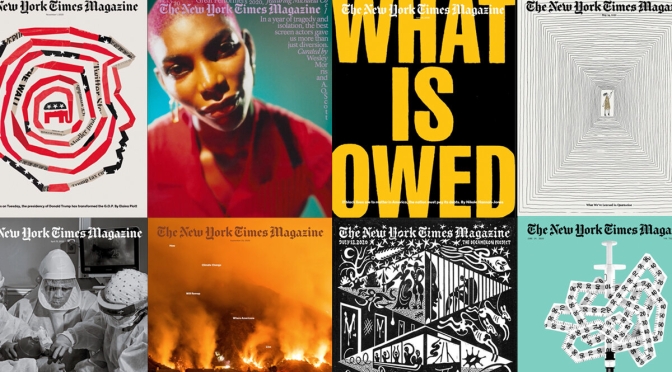
THE NEW YORK TIMES MAGAZINE: The 8.31.25 Issue features Nathiel Rich on the Calabasas landfill following the Los Angeles fires; Scott Anderson on Georgia’s turn toward Russia; Marcela Valdes on in-home care for disabled Americans; and more.
Men in the United States live around five years less than women. One clinic is trying to persuade men that getting checked out could save their life. By Helen Ouyang
What do men and women really want in our fraught new mating economy?
Amid pitched debates about masculinity, the “himbo” stands stoically above it all. By Casey Michael Henry

SCIENCE MAGAZINE: The latest issue features ‘Return of The Herd’ – Ecosystem effects of migrating bison.
Bison move through Yellowstone’s Lamar Valley at sunrise. Their movements and grazing accelerate the nitrogen cycle, increasing the annual nutrition that plants provide to herbivores. After decades of recovery, bison now add heterogeneity that sustains soil nutrient storage and plant productivity while allowing plant communities to become more diverse, highlighting the importance of restoring native grazers in large numbers and with freedom to move. See page 904.
Lab study shows how RNA could have helped amino acids join up—without preexisting protein machinery
Earth’s mantle is peeling from the crust in the eastern Atlantic, a possible sign of the ocean’s eventual closure

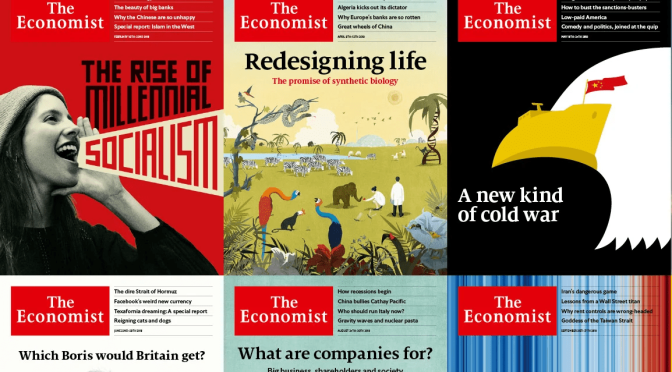
THE ECONOMIST MAGAZINE: The latest issue features ‘What Brazil Can Teach America’
It is a test case for how countries recover from a populist fever
Trump has triggered a trade and defence crisis: how should Modi respond?
Whether Lisa Cook stays or goes, important norms have been broken
Emmanuel Macron looks likely to lose another prime minister over an attempt to curb public debt
China’s industrial policy attracts fans abroad, critics at home

Two Long Island UFO hunters have been called upon by some domestic law enforcement to investigate unexplained phenomena.
President Trump has proposed building an antimissile “golden dome” around the United States. But do cinematic spectacles actually enhance national security?
As space rock 2024 YR4 became more likely to hit Earth than anything of its size had ever been before, scientists all over the world mobilized to protect the planet.
Semiconductor powerhouse TSMC is under increasing pressure to expand abroad and play a security role for the island. Those two roles could be in tension.

THE NEW YORKER MAGAZINE: The latest cover features ‘Cindy Sherman’s and Rea Irvin’s Eustace Tilley – A special nod to celebrate a centenary of cultural coverage.
Ahead of next year’s two-hundred-and-fiftieth anniversary of the Declaration of Independence, the White House has issued a directive to the Smithsonian. By Jill Lepore
We’re used to algorithms guiding our choices. When machines can effortlessly generate the content we consume, though, what’s left for the human imagination? By Joshua Rothman
Patrick Drahi made a fortune through debt-fuelled telecommunications companies. Now he’s bringing his methods to the art market. By Sam Knight

THE NEW YORK TIMES MAGAZINE: The 8.24.25 Issue features Shane Bauer writes about the disappeared children of Syria; Lauren Larson on the difficulties of setting a Guinness World Record in the modern era, Linda Kinstler on why wars no longer end; David Marchese interviews the negotiation expert Chris Voss; and more.
Two decades after the Rose Revolution, the former Soviet satellite is turning away from the West and back toward Russia. What happened?
In Syria, the Assad regime took hundreds of children away from their parents. A Times investigation reveals the workings of the operation — and how one family fought to reunite. By Shane Bauer and Jim Huylebroek
This summer’s blockbusters leave behind the era of dark, “edgy” champions for heroes who can’t help but listen to their consciences. By Mike Mariani

THE ECONOMIST MAGAZINE: The latest issue features ‘All-American silicon‘…
To remain the world’s foremost technological power, America needs its friends
Ahmed al-Sharaa, the new president, needs to bring his critics closer
The problem with Donald Trump’s fast-moving, unpredictable diplomacy
As temperatures rise, so must understanding of the risks
How Arizona’s microschool boom is reshaping the American classroom—and reviving old questions about freedom, equity, and the gaze of the state.

By Michael Cummins, Editor, August 21, 2025
Jeremy Bentham never saw his panopticon built. The English philosopher imagined a circular prison with a central watchtower, where a single guard could observe every inmate without being seen. Bentham saw it as a triumph of efficiency: if prisoners could never know when they were being watched, they would behave as though they always were. A century later, Michel Foucault seized on the design as metaphor. In Discipline and Punish, he argued that the panopticon revealed the true mechanics of modern institutions—not brute force, but the internalization of surveillance. The gaze becomes ambient. The subject becomes self-regulating.
This, in many ways, is the story of the American public school. The common school movement of the mid-nineteenth century, led by Horace Mann, sought standardization: children from Boston to St. Louis would recite the same lessons, read the same primers, and adopt the same civic habits. As cities grew, schools scaled up. By the twentieth century, especially in the wake of A Nation at Risk, the classroom had become a site of discipline. Bells regulated time. Grades ranked performance. Administrators patrolled hallways like wardens. Testing regimes quantified ability. The metaphor was not lost on Foucault. Brown University notes that his vision of the panopticon extended beyond prisons to schools: a “system of surveillance where individuals internalize the feeling of being constantly watched, leading to self-regulation of behavior” (Brown University).
Every American child knows this regime. The bell rings. The roll is called. The test is bubbled and scanned. Hall passes are signed like parole slips. Cameras blink in cafeteria corners. Laptops carry software that tracks keystrokes. Even silence becomes an instrument of order.
Bentham saw efficiency. Foucault saw discipline. Students often see only the weight of the watchtower.
What happens when families walk out of the circle?
In the far suburbs of Phoenix, on the edge of the White Tank Mountains, a converted casita serves as the Refresh Learning Center. Founded in 2023 by a pastor and his wife, it doesn’t look like much—aluminum siding, recycled chairs, a wall chart that places the birth of the universe at 4004 B.C. Yet, as Chandler Fritz wrote in the September 2025 issue of Harper’s Magazine, the little school has become an emblem of a movement reshaping American education.
Its existence rests on a radical policy shift. In 2022, Arizona launched the nation’s most expansive Empowerment Scholarship Account (ESA) program. Unlike traditional vouchers, which could be redeemed only at approved institutions, ESA funds flow directly to parents—roughly $7,500 per student, sometimes more. Families can spend the money on almost anything that counts as “educational”: a cello, a VR headset, a trampoline, or, increasingly, a place in one of the microschools sprouting across the state.
The metaphor of the frontier clings naturally to Arizona. Here, in the desert’s glare, families are homesteading education in much the same spirit as settlers once claimed land. A garage becomes a classroom. A supply closet, a high school. A church basement, an academy. In his Harper’s piece, Fritz describes a child attending class in a room where chickens wandered the yard outside, and another high-school seminar meeting in a closet stacked with supply boxes. Parents pull their children not only for ideology but for intimacy, pace, or simple safety. “Without ESA, this school would not—could not—exist,” one founder told him.
For advocates, the program represents liberation from a failing system. For critics, it siphons resources from public schools already parched of funding. But for the families gathered in little schoolhouses like Refresh, the stakes feel simpler: children freed from the gaze of bureaucracy, from endless testing and administrative oversight, given room to learn like human beings again.
Microschools are not new. Before the rise of the common school, most American children learned in homes, barns, or one-room cabins where a single teacher instructed a dozen children of all ages. Reformers dismissed those spaces as unsystematic, unjust. The standardized school, they argued, would correct inequities and prepare citizens for democracy.
Today, the pendulum swings back. Inside Refresh’s aluminum-sided room, teenagers do crafts next to six-year-olds. Grade levels blur: a thirteen-year-old may still be in second grade; another, the same age, reads at a high school level. Students spend mornings mucking chicken coops and afternoons in shop class. A boy named Aaron, dyslexic and restless in traditional schools, thrives in the workshop, building desks and repairing tools. He dreams of becoming an Air Force mechanic. One teacher observed that he learned fractions by cutting lumber and measuring shelves—mathematics discovered in wood grain and sawdust.
Another student, Hailey, is quick with skepticism. She listens to indie rock from her AirPods between classes, balances her faith with her friendships, and rolls her eyes at biblical literalism. “Stop comparing everything to religion,” she wrote in a survey. “I know it’s a Christian school, but it’s annoying learning about history when it’s asking about the Bible.”
And then there is Canaan, a foster child, the oldest in the room. During a discussion of To Kill a Mockingbird, he startled his peers by pressing the point of segregation. “What if everyone were actually given the same resources?” he asked. The question, naïve and profound, echoed the legal logic of Brown v. Board of Education, though he had never heard of it. His teachers had worried about whether he was “ready” for a seminar text. Yet here he was, articulating the problem of equality with more clarity than many adults.
Their stories recall sepia-toned photographs of America’s one-room schoolhouses, where a teacher might balance a baby on one hip while drilling older students in long division. Nostalgia clings to such places, but for children like Aaron and Hailey and Canaan, the sense of being known—of not being lost in the machinery of standardization—is more than nostalgia. It is survival.
The ESA marketplace, though, has the volatility of a boomtown. Alongside earnest shop classes and backyard literature circles, Fritz encountered vendors offering tongue-posture therapy for ADHD, pirate-themed cooking classes tied to multilevel marketing schemes, even sword-making courses. In one Tucson suburb, a “Kids in the Kitchen” class doubled as an advertisement for a health supplement brand. Fraud has siphoned hundreds of thousands of dollars from taxpayers (Arizona Central).
More troubling is fragmentation. Public schools, for all their flaws, force pluralism: children from different families, faiths, and incomes learning together under one roof. In microschools, communities splinter. Wealthier families claim ESA funds for private tuition; poorer families scrape together what they can. Evangelical churches convert Sunday schools into full-time academies. A Southern Baptist initiative now urges every church with a basement to consider opening a weekday school. For some, ESAs represent not escape from the panopticon, but an opportunity to build new watchtowers of ideological oversight.
And yet—the children remain. Their stories suggest that the most powerful escape is not from testing regimes or surveillance, but from anonymity. In a one-room schoolhouse, a teacher cannot forget you. Your hands matter. Your questions land. You are not a datapoint in a dashboard but a voice in a circle.
The paradox of the new homestead is that it is subsidized by the very state it seeks to escape. Every ESA contract is drawn from public funds, even as public schools wither under declining enrollment and teacher shortages. Arizona’s superintendent warned in 2024 that the state’s teacher shortage, already in the thousands, could “eventually lead to zero teachers” (Arizona Policy). Meanwhile, parents swipe ESA debit cards for pianos, VR headsets, or ski passes.
But the deeper paradox is philosophical. The panopticon teaches that institutions discipline by watching. Yet children, it turns out, discipline themselves when unseen, too. In one seminar, Canaan insisted that segregation was the true injustice, not just a false verdict. Without oversight, a conversation about reparations and justice unfolded around plastic tables in a desert conversation.
Could it be that the very fragmentation critics fear might also produce unexpected awakenings? That freedom from the gaze of the state could allow children to stumble, clumsily but genuinely, into civic consciousness?
The question is not whether microschools should exist—they already do, enrolling as many students as Catholic schools nationwide. The question is how to balance their intimacy with the democratic promise of education for all. Some states experiment with guardrails: Georgia ties funds to low-performing districts; Iowa requires accreditation and assessments. Arizona, the boldest frontier, remains laissez-faire. The experiment is still young, and the stakes enormous.
Bentham dreamed of efficiency. Foucault warned of discipline. But neither accounted for what happens when the watchtower is abandoned, when families strike out into the desert to build little schools of their own. The panopticon dissolves, and in its place rises the homestead, the one-room schoolhouse, the handmade desk, the boy who lights up in shop class.
Public education was once America’s grandest democratic experiment: the poor man could reach into the rich man’s pocket and demand an education, as Emerson put it, “not as you will, but as I will” (Ralph Waldo Emerson, Education). That dream is endangered—not only by privatization, but by the creeping sense that children are means rather than ends, data points rather than persons.
The frontier metaphor cuts both ways. It can justify privatization, sectarianism, inequality. But it also gestures toward freedom, self-reliance, discovery. The challenge now is to reclaim the best of the homestead spirit—education as intimate, child-centered, alive—without abandoning the pluralistic commons that democracy requires.
Wallace Stegner once called life on the frontier a “homemade education.” He meant not only the Bible lessons of pioneer families but the curriculum of the land itself—children learning resilience from drought, ingenuity from scarcity, curiosity from the wide sky. The graduates of such an education—Lincoln, Twain, Cather, John Wesley Powell—proved that learning could be stitched together from books, rivers, and conversation. Powell, chastised in school for his parents’ abolitionist views, was pulled from the classroom and tutored privately. He learned geology by picking up stones, ornithology by watching birds, justice by watching neighbors turn cruel. The lessons carried him down the Colorado River, into history.
Perhaps the future lies not in the panopticon or the homestead alone, but in something more fluid: a system where every child is seen not from above, but up close. Where accountability measures ensure equity without strangling individuality. Where the workshop and the test, the prayer and the debate, the child who loves Jesus and the child who loves indie rock can share the same fragile, human classroom.
Education is not a prison, nor a frontier settlement. It is, at its best, a river: wide enough to carry all, winding enough to follow curiosity, strong enough to shape the land it touches. The question is whether we will keep damming it with watchtowers—or whether we will learn, finally, to let it flow.
THIS ESSAY WAS WRITTEN AND EDITED UTILIZING AI




 Boomers Daily