Category Archives: Profiles

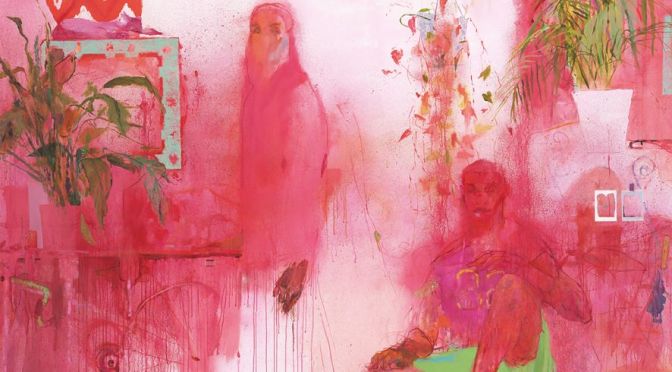
Artists: Thao Nguyen Phan – ‘My Reflections On The History Of Vietnam’ (Tate)

Step inside the studio of artist Thao Nguyen Phan and discover her mesmerising, poetic work. Through video, paintings and sculpture, Phan explores the historical and ecological issues facing her homeland Vietnam, while speaking to broader ideas around tradition, ideology, ritual and environmental change.

Her recent projects have expanded on ‘the beauty and suffering’ of the Mekong River, which runs through Tibet, China, Myanmar, Thailand, Laos and Cambodia before meeting the sea on the coast of Vietnam. Phan’s latest moving image work First Rain, Brise Soleil continues this exploration of the Mekong, proposing a new way of being that draws on indigenous knowledge and respect for the ecosystem.

You can see Phan’s artworks on display at Tate St Ives until 2 May 2022 https://www.tate.org.uk/whats-on/tate…

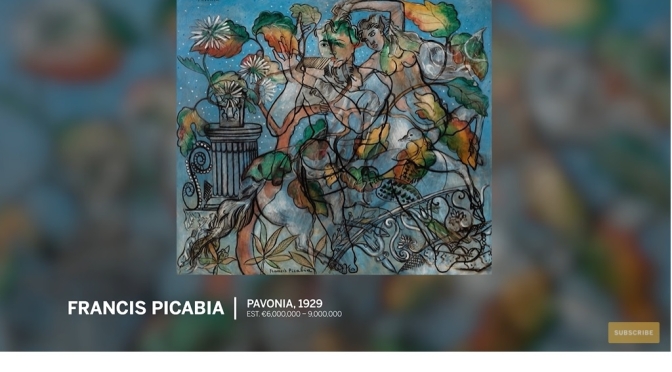
Profiles: French Painter Francis Picabia (1879-1953)

Sotheby’s explores two Picabia masterpieces: ‘Pavonia’, a cinematic example from his ‘Transparencies’ series, and ‘Nu de Dos’, a striking and controversial female nude.

Francis Picabia, (born January 22, 1879, Paris, France—died November 30, 1953, Paris), French painter, illustrator, designer, writer, and editor, who was successively involved with the art movements CubismDada, and Surrealism.

Picabia was the son of a Cuban diplomat father and a French mother. After studying at the École des Arts Décoratifs (1895–97), he painted for nearly six years in an Impressionist mode akin to that of Alfred Sisley. In 1909 he adopted a Cubist style, and, along with Marcel Duchamp, he helped found in 1911 the Section d’Or, a group of Cubist artists. Picabia went on to combine the Cubist style with its more lyrical variation known as Orphism in such paintings as I See Again in Memory My Dear Udnie (1913–14) and Edtaonisl (1913). In these early paintings he portrayed assemblages of closely fitted, metallic-looking abstract shapes. As Picabia moved away from Cubism to Orphism, his colours and shapes became softer.

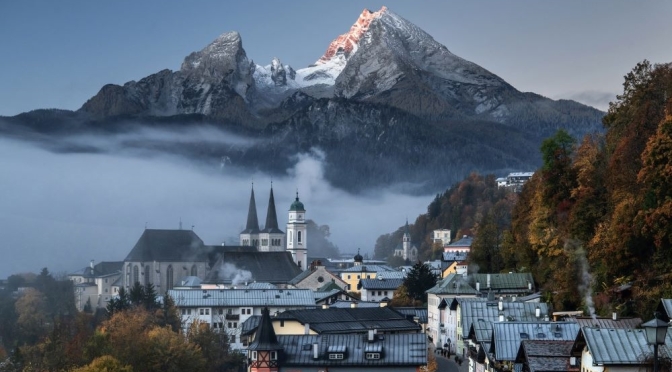
Photography: Killian Schönberger’s Morning Fog & Frost In Germany

Kilian Schönberger – I’m a professional photographer & geographer from Germany; born in 1985. My aspiration was always to cut my path as a photographer with an own creative perspective – despite beeing colourblind. I recognized that I could turn this so-called disadvantage into a strength, too and developed my own unique photographic view: E.g. while getting a picture of a chaotic forest scene, I can’t clearly distinguish the different green and brown tones. Brushing aside this “handicap” I don’t care about those tones and just concentrate on the patterns of the wood to achieve an impressive image structure. Currently I have two residences: One in Cologne and one near Ratisbona in Bavaria. My photographic work concerns the whole range of topics from natural landscapes to cityscapes. Remote rural areas are photographically as interesting as the lifestyle and architecture of urban melting pots. Both worlds fascinate me and so I try to capture my individual view of these changing and challenging environments. For landscape photography I prefer temperate and high latitudes and alpine landscapes. I like the harsh beauty of those areas and the peculiar melancholy that surrounds them. Regions which I am interested in are Norway, Iceland, the Alps, Scotland, the Pacific Northwest, Saxon Switzerland, Kamchatka, Patagonia, New Zealand, the Altai Mountains, Canada and Siberia. After a dozen years in the Rhineland (Bonn & Cologne) I’ve moved to the Bavarian Alps close to Lake Chiemsee in 2021. So large parts of the Alps like the Dolomites, but also my home region in Eastern Bavaria is easier to reach for me now.

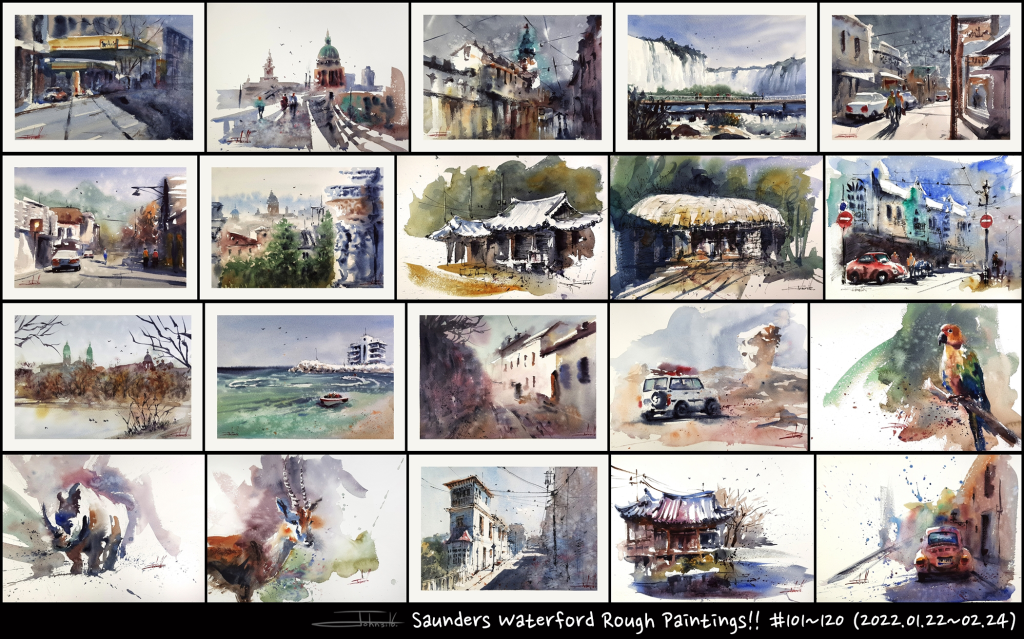
Artists: The Watercolor Drawings Of John Yun

Design & Style: Fornasetti ‘Sun Star’ Tapestries (2022)

Fornasetti presents a series of 12 hand-knotted tapestries named ‘twelve months and twelve suns’ as well as a previously unseen 13th tapestry.

Fornasetti: precious porcelain, refined furniture and home accessorize illustrate the Atelier’s creativity. The decorations play with shapes and turn everyday objects into multiples of art. The world of Fornasetti floats between imagination and reality, enriched by cultural references and artistic allusions. This is why a Fornasetti object is not simply something to possess, it is something to live and be inspired by.

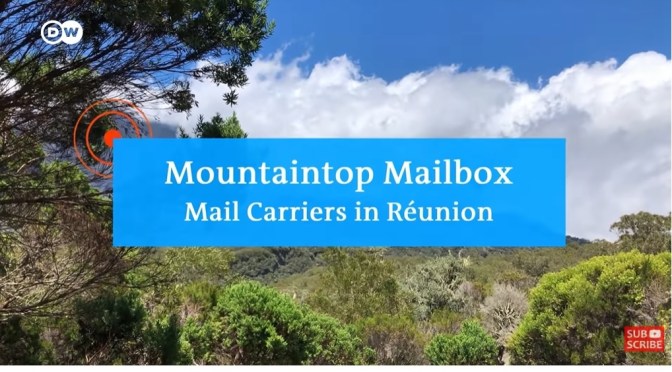
Views: The Mail Carriers Of Réunion Island, France

Cyril Maillot is a mail carrier in Réunion – in the most literal sense. On the tropical island in the Indian Ocean, some villages can’t be reached by road. So Maillot hikes to remote areas with a backpack full of mail. He travels by foot to places not accessible by car, deep into the mountainous region of Mafate.

A hike of several days over narrow paths and steep ascents – and in all kinds of weather. When it rains, the streams sometimes swell into a raging river. But Cyril Maillot loves his job. It’s his personal yoga: “You switch off completely and leave city life behind.” And for many of the local people in the mountains, the weekly visit by Cyril the mail carrier is their only regular contact with the outside world. A report by Lisa Louis.

Réunion Island, a French department in the Indian Ocean, is known for its volcanic, rainforested interior, coral reefs and beaches. Its most iconic landmark is Piton de la Fournaise, a climbable active volcano standing 2,632m (8,635 ft.). Piton des Neiges, a massive extinct volcano, and Réunion’s 3 calderas (natural amphitheaters formed by collapsed volcanoes), are also climbing destinations.

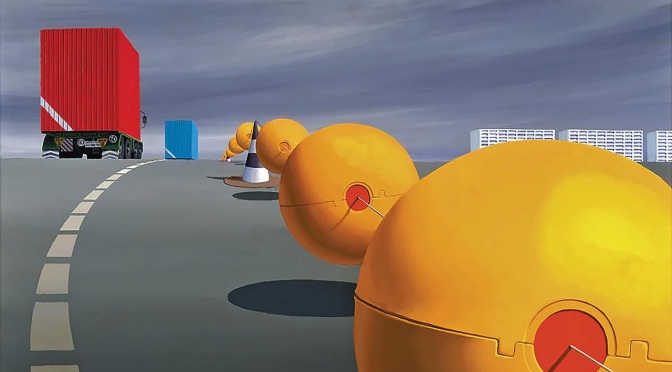
Art Exhibits: Australian Painter Jeffrey Smart

‘Suddenly I will see something that seizes me – a shape, a combination of shapes, a play of light or shadows, and I send up a prayer because I know I have seen a picture.’

JEFFREY SMART The year 2021 marks one hundred years since the birth of acclaimed Australian artist Jeffrey Smart. This major exhibition celebrates and commemorates this significant centenary. One of Australia’s most celebrated artists, Smart sought inspiration from the world around him – looking to the environment of urban and industrial modernity – which he transformed through his imaginative sense of theatre and intimate understanding of geometry and composition.

These potent and intriguing images have become emblematic of 20th and 21st century urban experience. Building on the foundational work already undertaken on Smart, this exhibition will bring fresh perspectives to his artistic contribution so that his remarkable legacy will be kept alive in the present. Curators: Dr Deborah Hart, Henry Dalrymple Head of Australian Art and Dr Rebecca Edwards, Sid & Fiona Myer Curator of Ceramics and Design

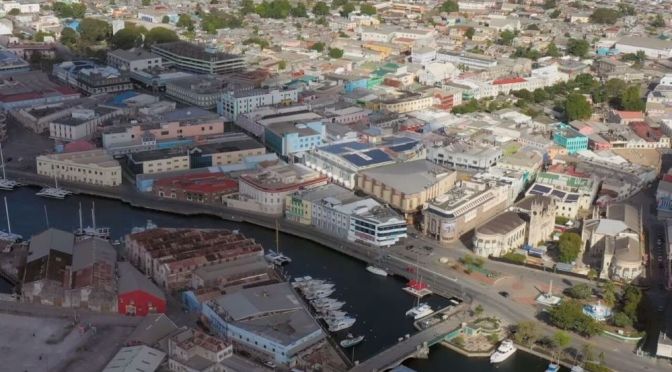
Views: Barbados – World’s Youngest Republic (Video)

On November 30, 2021, #Barbados became the world’s youngest #republic, cutting historic ties with the British monarchy. In the 17th century, the #Caribbean island state became a British colony dedicated to sugar production. Some 90 percent of its population are descended from slaves. Since independence in 1966, Barbados had long been ambivalent about its colonial heritage. But today, Prime Minister Mia Amor Mottley is taking the country into a new era. Our team reports.

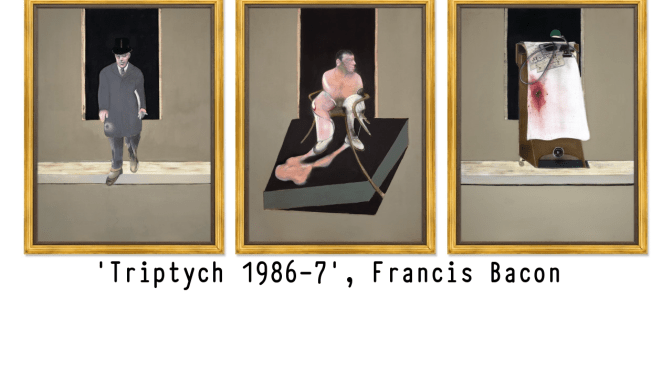
20th Century: Was Francis Bacon The Best Painter?

Is Francis Bacon really the greatest painter of the 20th century?

Triptych 1986-7 (detail)

It was not an enormous surprise that an exhibition of works by Francis Bacon at the Royal Academy that is supported by Christie’s should swiftly be followed by an announcement of the auction house offering a large work for sale. Triptych 1986-7, whose central panel depicts the artist’s partner John Edwards, with Woodrow Wilson on one side and the assassinated Trotsky’s study on the other, is being offered in the sale that takes place on 1 March with an estimate of £35m–£55m. Nor is it a surprise that an auction house should drum up interest in one of their lots using superlatives. But Rakewell was a little taken aback by the claim on Instagram from a Christie’s specialist that ‘Francis Bacon is unmistakably on of the greatest painters of the 20th century.’

Read more

Museum Insider : ‘Wheat Fields After The Rain’ By Vincent Van Gogh (1890)

Wheat Fields after the Rain (The Plain of Auvers) – 1890

Wheat Fields is a series of dozens of paintings by Dutch Post-Impressionist artist Vincent van Gogh, borne out of his religious studies and sermons, connection to nature, appreciation of manual laborers and desire to provide a means of offering comfort to others. The wheat field works demonstrate his progression as an artist from the drab Wheat Sheaves made in 1885 in the Netherlands to the colorful and dramatic 1888–1890 paintings from ArlesSaint-Rémy and Auvers-sur-Oise in rural France.