THE NEW YORK TIMES MAGAZINE (February 9, 2024): The new issue features ‘The Untold Story Of How Trump’s Former Chief Of Staff Rose From Cash-Strapped Roots To Washington Prominence, Before Becoming Embroiled In The Prosecutions That May Determine The 2024 Election….
Members of Congress, and candidates for their seats, have been drawn into bitter political clashes over the Israeli-Palestinian conflict.
When George Santos, the indicted fabulist, was expelled from Congress in December, Nassau County Republicans scrambled to hunt up a new nominee. Santos was a catastrophe, but he had also flipped a New York Democratic stronghold, and party leaders wanted the best of him — the charisma, the conservatism and the history-making potential — with none of the debilitating drawbacks.
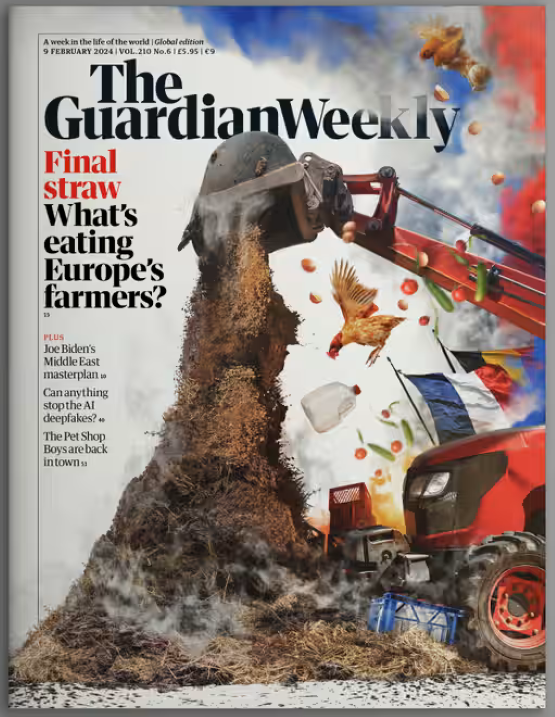
The Guardian Weekly (February 8, 2024) – The new issue features ‘Final Straw’ – What’s eating Europe’s Farmers?; Joe Biden’s Middle East masterplan; Can anything stop the AI deepfakes? and The Pet Shop Boys are back in town…
If you live in France, Germany, Belgium, the Netherlands, Poland or Greece, you may well have already run into one of the numerous roadblocks or protests formed in recent weeks by furious farmers. If you’re in Spain and Italy, take cover – because they are coming to you soon, if not already.
In this week’s cover story, we explore what has proved to be the final straw for Europe’s farmers. A combination of rising costs, environmental rules and grievances over EU policies, coupled with more localised complaints, seem to be the factors driving the convoys of tractors. But far-right and anti-establishment parties, who could make major gains in forthcoming European parliament elections, have also picked up on the protests as part of their agenda against EU influence.
Paris correspondent Angelique Chrisafis and Europe correspondent Jon Henley delve into the protests (if not the piles of steaming dung being dumped on the continent’s roads, as illustrated wonderfully by Neil Jamieson on this week’s cover), and ask what can be done to placate them.
The blockbuster medications that reduce body weight also reduce inflammation in organs such as the brain, raising hopes that they can treat Parkinson’s and Alzheimer’s diseases.
Times Literary Supplement (February 7, 2024): The latest issue features ‘Cancel Culture’ – The limits of academic free speech; An Auschwitz memoir; Wittgenstein’s bombshell; Horrible legions and Dutch artobiography…
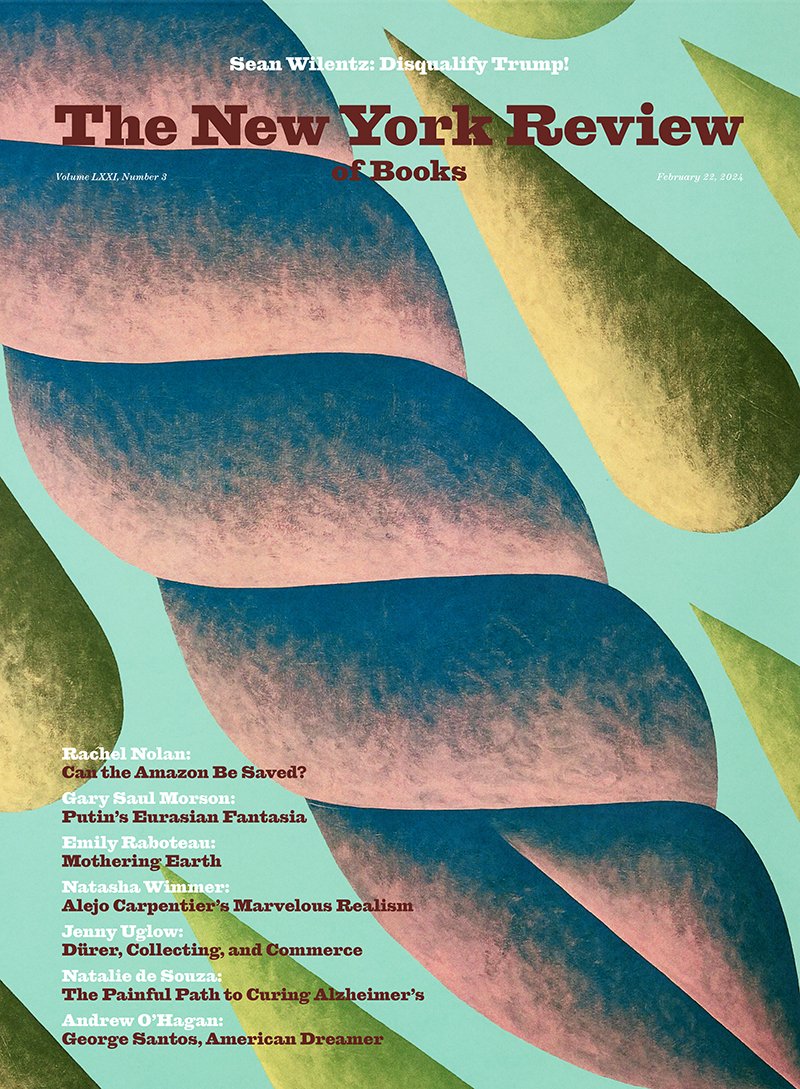
The Supreme Court must decide if it will honor the original meaning of the Fourteenth Amendment and bar Donald Trump from holding public office or trash the constitutional defense of democracy against insurrections.
In Dürer’s Lost Masterpiece, Ulinka Rublack traces the global connections of the merchants who were the creative agents of the European art market in the sixteenth and early seventeenth centuries.
Dürer’s Lost Masterpiece: Art and Society at the Dawn of a Global World by Ulinka Rublack
In 2017, the Brazilian journalist Eliane Brum moved from São Paulo to a small city in the Amazon. Her new book vividly uncovers how the rainforest is illegally seized and destroyed.
Banzeiro Òkòtó: The Amazon as the Center of the World by Eliane Brum, translated from the Portuguese by Diane Whitty
Country Life Magazine – February 6, 2024: The latest features The Travel Issue – View the world from the very best hotels; The map-makers who broadened our horizons; Out of the ashes – Chillingham Castle rescued and Waxwing explosions and snowdrop heaven….
Travel
Richard MacKichan rides with the eagle hunters of Mongolia
Jo Rodgers asks what makes a good hotel great as we introduce Country Life’s inaugural list of the world’s top establishments
All the latest travel news and new openings with Rosie Paterson
Nigel Tisdall tails the elusive jaguar in Belize
Catherine Fairweather is on the strait and narrow in Istanbul
Richard MacKichan puts the fun back into flying
Pamela Goodman swims with pigs in the Caribbean
A castle of curiosities
The history of Chillingham Castle in Northumberland is a turbulent and memorable one, peppered with family disputes, imprisonments and a live toad. John Goodall explores
Windows on the world
The urge to chart our surroundings is centuries old. With map in hand, Matthew Dennison ventures forth in search of mammoth tusks and globes
Irruption of the waxwings
Mark Cocker marvels at the exquisite plumage of this European songbird as it flocks to our shores to feed on a glut of its favoured winter berries
Get down on your knees
James Alexander-Sinclair joins the wandering throng as snow-drop lovers descend on Thenford in Northamptonshire to luxuriate in 900 varieties of Galanthus
Joanna Jensen’s favourite painting
The founder of Childs Farm chooses a rural scene to sum up ‘a picture of my England’
Groundhog day
The shortest month can also feel like the longest, delaying the arrival of spring, but what can February tell us about the year ahead? Lia Leendertz reveals all
Thunderous waterfalls and torrents hoarse
From the most dramatic plumes to the calmest cascades, we seek out the corners of the kingdom where water and gravity collide to magical effect
The good stuff
Hetty Lintell says green for go with a selection of stylish and useful khaki travel accessories
Interiors
Sally Stephenson on the secrets of illuminating period houses and Amelia Thorpe’s lighting picks
London Life
Russell Higham on piazza plans for the Docklands
Carla Passino meets the man who shaped Mayfair
Martin Fone reveals the saga of ‘London’s Eiffel Tower’
Kitchen garden cook
Melanie Johnson harnesses the delicious flavours of rosemary
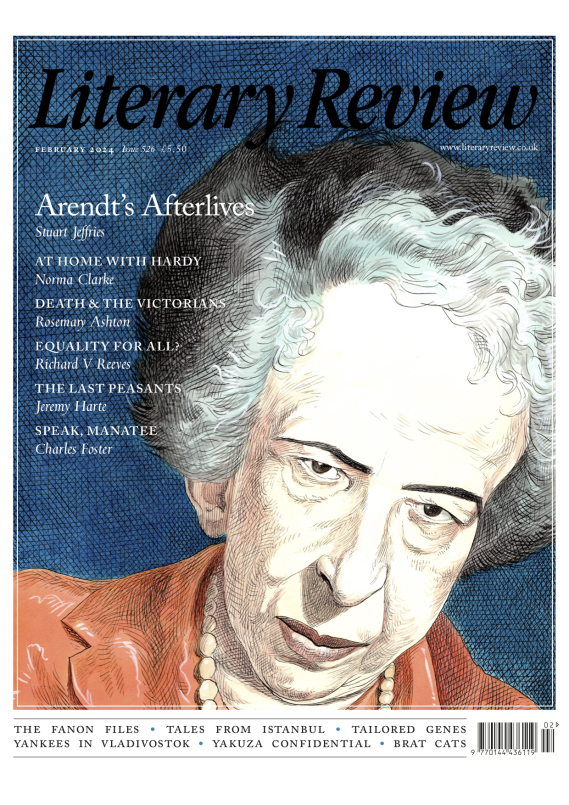
We Are Free to Change the World: Hannah Arendt’s Lessons in Love and Disobedience By Lyndsey Stonebridge
When Hannah Arendt looked at the man wearing an ill-fitting suit in the bulletproof dock inside a Jerusalem courtroom in 1961, she saw something different from everybody else. The prosecution, writes Lyndsey Stonebridge, ‘saw an ancient crime in modern garb, and portrayed Eichmann as the latest monster in the long history of anti-Semitism who had simply used novel methods to take hatred for Jews to a new level’. Arendt thought otherwise.
Hardy Women: Mother, Sisters, Wives, Muses By Paula Byrne
The title of Paula Byrne’s Hardy Women is a pun on Thomas Hardy’s name and a gesture to the enthusiasm that greeted Hardy’s fictional women. Bathsheba Everdene in Far from the Madding Crowd, Tess Durbeyfield in Tess of the d’Urbervilles and Sue Bridehead in Jude the Obscure were new kinds of women, and Hardy’s fame, which was immense and began with the publication of Far from the Madding Crowd, rested to a large extent on the heroines he created. One young reader wrote to him of Tess, ‘I wonder at your complete understanding of a woman’s soul.’ Hardy’s discontented wife Emma wondered at it too. She observed, ‘He understands only the women he invents – the others not at all.’
News, Views and Reviews For The Intellectually Curious










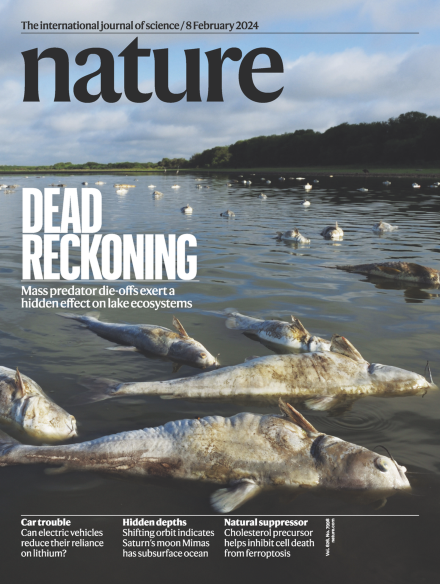
 Nature Magazine – February 7, 2024: The latest issue cover

 The New York Review of Books (February 6, 2024)







 Boomers Daily