The Globalist Podcast (November 9, 2023) –European trade unions are refusing to handle Israeli arms, while in the US, the House of Representatives has voted to censure its only Palestinian-American member for her comments on the conflict.
We speak to Guy Hedgecoe in Madrid as protests ramp up over acting prime minister Pedro Sánchez’s attempts to negotiate with Catalan separatists. Plus: the latest culture news and how Paris’s business district is hoping that students will take over empty office blocks.
The Globalist Podcast (November 8, 2023) –The history of Israel and Palestine’s changing borders with former Gaza correspondent James Rodgers.
Also, France’s self-styling as international peace negotiators and Portugal’s prime minister, António Costa, resigns. We also examine how poetry is being weaponised by Russia in Ukraine with the president of Pen Ukraine, Volodymyr Yermolenko.
The Globalist Podcast (November 7, 2023) –Fiona O’Brien, UK bureau director for Reporters Without Borders, explains how the conflict in Israel and Gaza has been the deadliest for journalists.
Also, the US keeps its laser-sharp focus in Southeast Asia, an update on Poland’s future government and the luxury market leaves China for India.
The New Yorker – November 13, 2023 issue: The new issue‘s cover features Kadir Nelson’s “Dumbo” – The artist discusses the seasonal energy of the city, and his sources of inspiration.
On the morning of the Battle of Waterloo, Napoleon Bonaparte was full of catastrophic confidence. His seventy-three thousand troops were camped on a ridge near a tavern called La Belle Alliance. His nemesis, the Duke of Wellington, occupied a slope across the fields, with a mere sixty-seven thousand troops. Over breakfast, Napoleon predicted, “If my orders are well executed, we will sleep in Brussels this evening.” When his chief of staff offered a word of caution, Napoleon snapped, “Wellington is a bad general and the English are bad troops. The whole affair will not be more serious than swallowing one’s breakfast.”
Some people think that we can’t be held responsible for what we do, given that our actions are the inevitable consequence of the laws of nature. They’re only half right.
The Globalist Podcast (November 6, 2023) –Israel-Hamas conflict tensions flare at Israel’s northern border with Lebanon; the experience of medics working under bombardment in Gaza; a look at the papers with journalist Vincent McAviney; and Joe Biden’s unexpected challenger.
Plus: we look ahead to Cop 28, hear the headlines from the Balkans and find out about a bevy of new K-pop boy bands.
Monocle on Sunday, November 5, 2023– Emma Nelson, Juliet Linley, Oliver Strijbis and Simon Brooke on the weekend’s biggest talking points. We also speak to Monocle’s Istanbul correspondent, Hannah Lucinda Smith.
Monocle on Saturday, November 4, 2023: Georgina Godwin hosts with Latika Bourke on Anthony Blinken’s visit to Jordan today, the Australian PM Anthony Albanese’s historic visit to China, and the mushroom murder case in Australia that is cripp;ing the world.
Also, Monocle’s Robert Bound speaks to the founder of C2C festival taking place in Turin this weekend, and Honestly Tasty’s co-founder, Michael Moore, proves that vegan can, in fact, be very tasty.
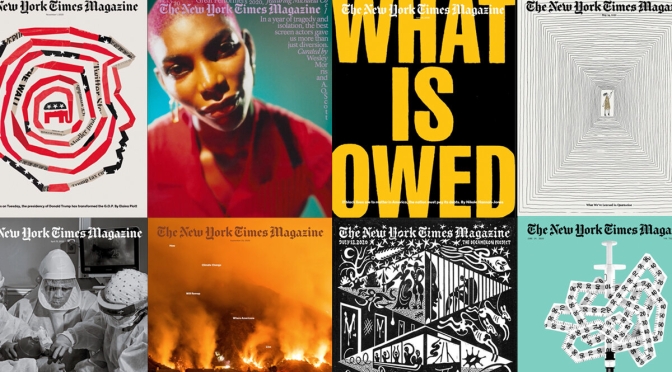
THE NEW YORK TIMES MAGAZINE (November 3, 2023): The latest issue features Bariatric Surgery at 16 – If childhood obesity is an ‘epidemic,’ how far should doctors go to treat it?; Some Ukrainians Helped the Russians. Their Neighbors Sought Revenge; The Eternal Life of the ’90s Supermodel -How did a small group of models manage to stay on top for so long?, and more…
If childhood obesity is an ‘epidemic,’ how far should doctors go to treat it?
By Helen Ouyang
Last fall, Alexandra Duarte, who isnow 16, went to see her endocrinologist at Texas Children’s Hospital, outside Houston. From age 10, she had been living with polycystic ovary syndrome and, more recently, prediabetes. After Alexandra described her recent quinceañera, the doctor brought up an operation that might benefit her, one that might help her lose weight and, as a result, improve these obesity-related problems.
For people in Bilozerka, the invasion began a cat-and-mouse game of collaboration and resistance.
By James Verini
Andriy Koshelev steered his car into the driveway of his home on Pushkin Street in Bilozerka, a lakeside town in Ukraine’s Kherson region. Leaving the car on, Koshelev got out and walked to the entrance gate. He reached down to loosen the latch. When he pulled it, the gate exploded. Koshelev’s parents, who lived on the same property, rushed outside as acrid smoke filled their driveway and the street. The explosion resounded across town.
The Globalist Podcast (November3, 2023) –Sari Bashi, programme director of Human Rights Watch in West Bank, and journalist Robin Lustin join Georgina Godwin to discuss the leaked Israeli government proposal for Gaza and the new emergency radio station for the territory.
We also examine public trust in the Ukrainian government and why Latin America’s aviation industry is booming. Plus: Andrew Mueller’s wry musings on the past week.
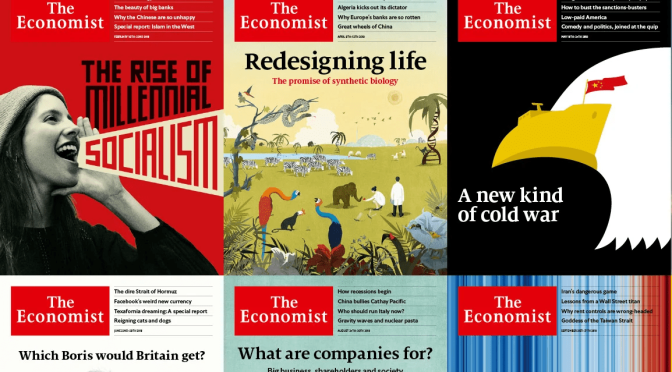
The Economist Magazine (November 2, 2023): The latest issue features The contradiction at the heart of the world economy – Threats abound, including higher-for-longer interest rates; Why Israel must fight on – Unless Hamas’s power is broken, peace will remain out of reach; unless Hamas’s power is broken, peace will remain out of reach; Donald Trump’s tariff plans would inflict grievous damage on America and the world – You may think his worst ideas won’t get far. Sadly, on trade he has been singularly influential…
The world economy is defying gravity. That cannot last. Threats abound, including higher-for-longer interest rates
Even as wars rage and the geopolitical climate darkens, the world economy has been an irrepressible source of cheer. Only a year ago everyone agreed that high interest rates would soon bring about a recession. Now even the optimists have been confounded. America’s economy roared in the third quarter, growing at a stunning annualised pace of 4.9%. Around the world, inflation is falling, unemployment has mostly stayed low and the big central banks may have stopped their monetary tightening. China, stricken by a property crisis, looks likely to benefit from a modest stimulus. Unfortunately, however, this good cheer cannot last. The foundations for today’s growth look unstable. Peer ahead, and threats abound.















 Boomers Daily