
August 27, 2023 – Monocle’s editorial director, Tyler Brûlé, is joined by Emma Nelson, Eemeli Isoaho and Chandra Kurt to discuss the weekend’s hottest topics.
Plus: check-ins with our friends and correspondents in London, Ljubljana and Berlin.
August 27, 2023 – Monocle’s editorial director, Tyler Brûlé, is joined by Emma Nelson, Eemeli Isoaho and Chandra Kurt to discuss the weekend’s hottest topics.
Plus: check-ins with our friends and correspondents in London, Ljubljana and Berlin.
Monocle on Saturday, August 26, 2023: The week’s news and culture with Vincent McAviney. Terry Stiastny looks through the morning’s papers and Monocle’s Madrid correspondent, Liam Aldous, asks why female artists in Spain are going topless on stage.

THE NEW YORK TIMES MAGAZINE (August 27, 2023) – In this week’s cover story, Jen Percy reports on what people misunderstand about rape. Plus, the case that could unravel an art dynasty and a Harvard professor who is also an alien hunter.

Sexual assault often goes unpunished when victims fail to fight back. But investigators, psychologists and biologists all describe freezing as an involuntary response to trauma.
By Jen Percy
There’s a lingua franca that women use, a repeated vocabulary to describe what they experience and think during a sexual assault. Variations of “freezing” are often part of that vocabulary. But the word has so many referents in its colloquial usage that it’s hard to know precisely what it means to each person saying it.
“I just absolutely froze,” Brooke Shields said in the documentary “Pretty Baby,” describing how she felt when being raped. “And I just thought, Stay alive and get out.”

How a widow’s legal fight against the Wildenstein family of France has threatened their storied collection — and revealed the underbelly of the global art market.
By Rachel Corbett
Twenty years ago, a glamorous platinum-blond widow arrived at the Paris law office of Claude Dumont Beghi in tears. Someone was trying to take her horses — her “babies” — away, and she needed a lawyer to stop them.
The Globalist Podcast, Friday, August 25: After the suspected death of Yevgeny Prigozhin, we look at the history of Russia’s relationship to its dissidents with Charles Hecker and the knock-on effect for African nations with Mark Galeotti.
We also discuss Donald Trump’s surrender to authorities in Atlanta, Georgia and examine the rise of country music in the US. Plus: the newspapers from Zürich and the latest fashion and TV news.
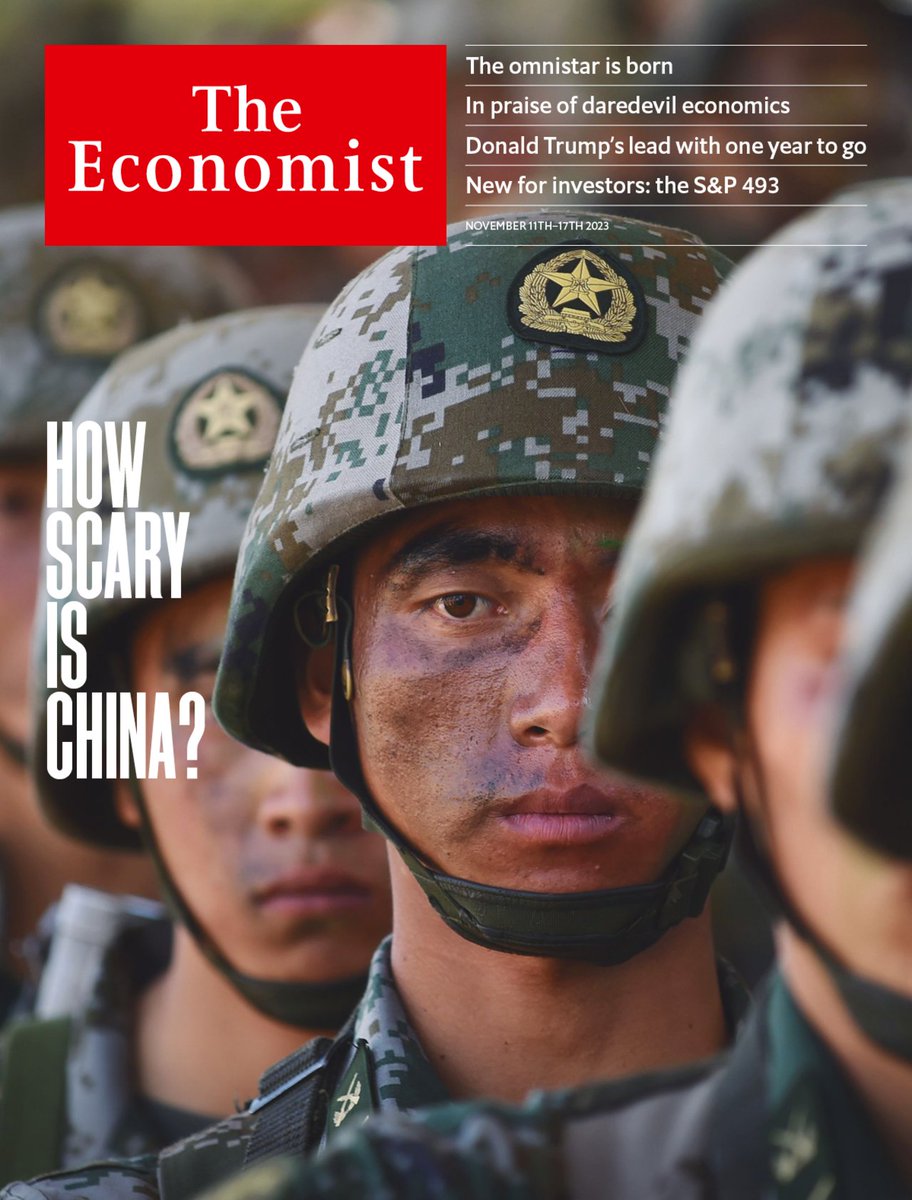
The Economist Magazine (August 26, 2023): This week’s issue features Xi’s failing model: Why he won’t fix China’s economy; Biden’s Asian alliance-building; Prigozhin’s death shows that Russia is a mafia state and more….
An increasingly autocratic government is making bad decisions

Whatever has gone wrong? After China rejoined the world economy in 1978, it became the most spectacular growth story in history. Farm reform, industrialisation and rising incomes lifted nearly 800m people out of extreme poverty. Having produced just a tenth as much as America in 1980, China’s economy is now about three-quarters the size. Yet instead of roaring back after the government abandoned its “zero-covid” policy at the end of 2022, it is lurching from one ditch to the next.
A healthy country uses justice to restore order. Mr Putin uses violence instead

As we published this editorial, it was not certain that Yevgeny Prigozhin’s private jet was shot down by Russian air-defences, or that the mutineer and mercenary boss was on board. But everyone believes that it was and that his death was a punishment of spectacular ruthlessness ordered by Russia’s president, Vladimir Putin. And that is the way Mr Putin likes it.
The Globalist Podcast, Thursday, August 24: Republican presidential candidates have their first debate in Milwaukee without Donald Trump, the latest from the BRICS summit in South Africa, after Putin addresses the bloc leaders virtually.
Plus: the Zimbabwe elections, a literary celebration of Ukrainian Independence Day and a Scandinavian shortage in Brussels.
Wall Street Journal (August 23, 203) – India became the first country to successfully land on the moon’s south pole with its Chandrayaan-3 spacecraft, just days after Russia’s Luna-25 crashed in the same region.
Video timeline: 0:00 India lands on the south pole of the moon 0:53 Why the south pole? 2:37 Why Russia and India want to be first 4:32 New space race
Both countries launched rockets in recent weeks, hoping to be the first to successfully complete the mission. Why were they racing to reach the lunar south pole? WSJ explains the significance of both missions for Moscow and New Delhi.

The Guardian Weekly (August 25, 2023) – The issue features ‘Fever Pitch’ – The unstoppable rise of women’s football; ‘Trust me, I’m a nurse’ – How a British child serial killer went undetected, and Art, where you least expect it…
The conviction and sentencing of Lucy Letby, who murdered seven babies while working as a hospital nurse, shocked Britain this week. As she becomes only the country’s fourth woman to receive a whole-life imprisonment term, Josh Halliday recounts her dreadful crimes and why she was not investigated for so long, despite several colleagues’ suspicions.
Sports writer Paul MacInnes reports from Jeddah on Saudi Arabia’s bid to buy up chunks of world sport using its $600bn public investment fund, a makeover project that is particularly pertinent in the light of allegations in a Human Rights Watch report this week.
Culture catches up with Devo, the new wave band from Akron, Ohio, who are hanging up their curious “energy dome” hats after 50 years. And there’s a lovely feature by Claire Armitstead about hidden art, from underwater sculpture parks to pinhole dioramas concealed inside traffic bollards.
The Globalist Podcast, Tuesday, August 22: We discuss the Brics summit in Johannesburg, the US sale of Tomahawk missiles to Australia and why Georgians are frustrated with Russian business owners.
Also, the latest developments in technology, a round-up of the news from Zürich and the backlog of ships in the Panama Canal.