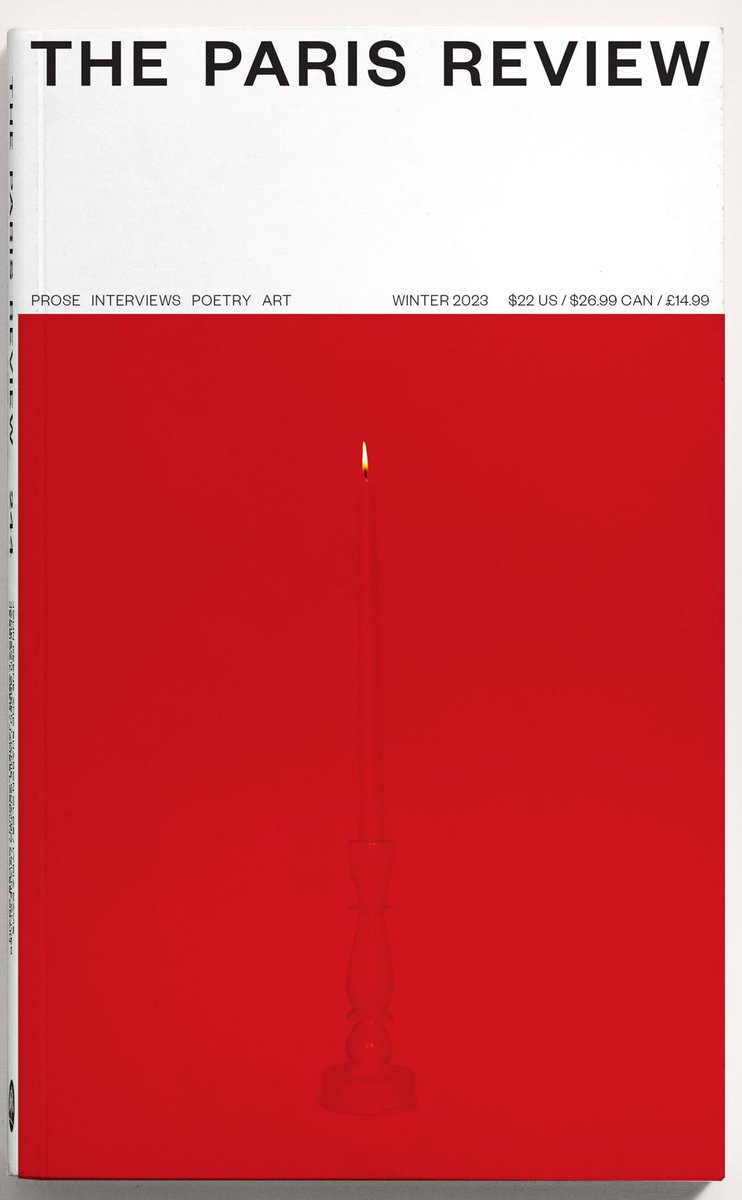
Paris Review Winter 2023 — The new issue features Louise Glück on the Art of Poetry – “You want a poem to register in every mind the way it did in yours. Then you discover this never happens.”; Yu Hua on the Art of Fiction: “If I’d taken another two or three years to start writing, I’d still be a dentist.”; Prose by Ananda Devi, Fiona McFarlane, and Sean Thor Conroe and more…
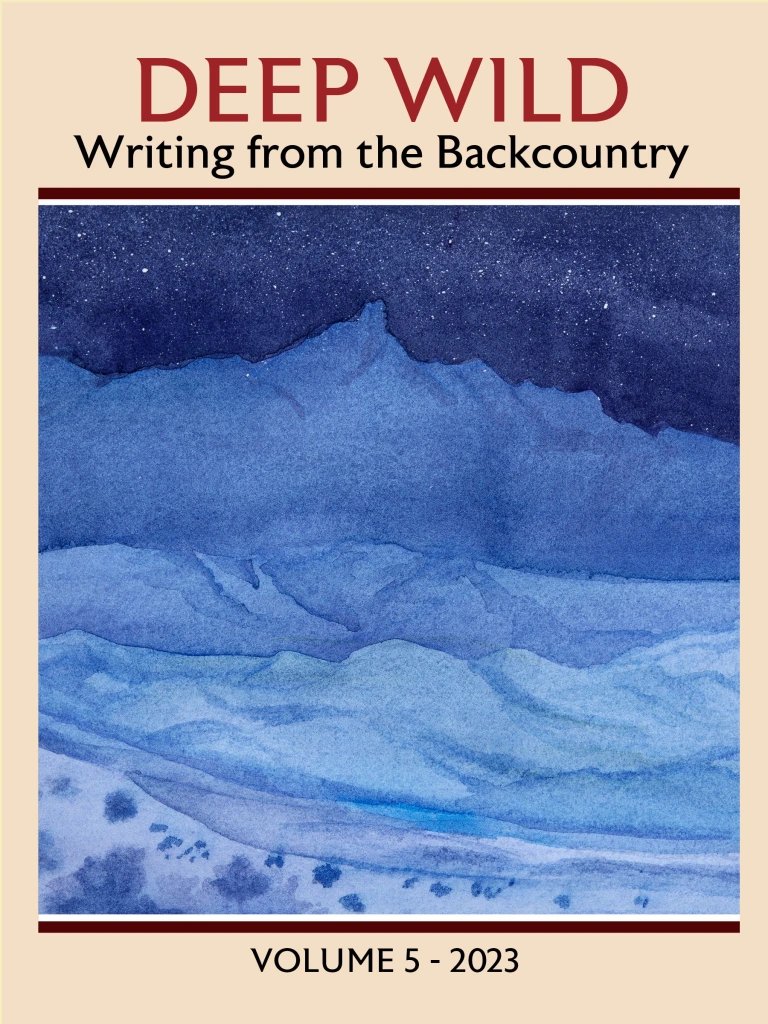
Deep Wild Journal 2023 – Writing from the Backcountry: On skis and snowshoes, by boot and boat, in open water or at the ends of ropes, by night or day, in all four seasons, in searing sun or drenching rain…the adventurer-writers whose work is featured in Deep Wild 2023 take us to all extremes.
Others come to us from a quiet place in the backcountry with their insights, observations, discoveries. Also featured in Deep Wild 2023 is full-color artwork by Tucson watercolorist Kat Manton-Jones and a portfolio of pen-and-ink drawings from the Colorado Plateau by Margaret Pettis.
Fiction “Thinking Ahead” by Joan Silber: “How does a person behave when he knows he’s dying? There’s a myth that people go off and do what they’ve always wanted to do—sail to Spain, buy a horse, eat at the world’s most famous restaurant. ‘They never do that,’ my mother said, ‘that I’ve seen. They don’t even remember why they wanted to do it.”
“Seabreeze” by Korey Lewis: Jojo and Jaz wait for The Defendant to pick them up from their mother’s place and take them to Seabreeze. “If Disney is where dreams come true, then Seabreeze is where they give up.”
“Eau de Nil” by Chloe Wilson: “It was a website called Geriatrix. On it were women my age, in various states of undress. I saw breasts droopier and flatter than mine, necks that were crêpier, bellies that bulged and hung. But what really struck me was how happy they looked.”
“Country Furnishings” by Earle McCartney: The equilibrium in a tetchy blue-collar workshop gets jostled with the arrival of Frank Wonderwood—future son-in-law of the business’s new co-owner and future woodworking graduate from Del Tech.
Poetry Karen Leona Anderson, Stuart Dybek, Johanna Carissa Fernandez, Mike Good, Cleo Qian, Sarah Lynn Rogers, Joel M. Toledo
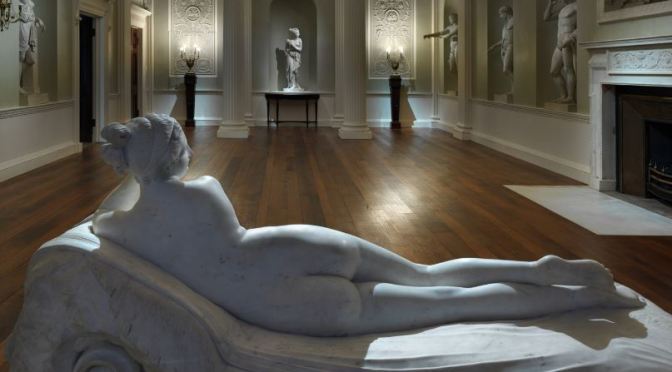
Nonfiction Laura M. Furlan her birth parents, identity, and butterflies. Adam Foulds on the home-turned-museum of one of England’s greatest architects, Sir John Soane. Sam McPhee on the singular fascination hands have on his attention. Jessica Francis Kane on her lifelong affinity with the fascinating James Boswell. And Devon Brody’s “Beth”: “I’m glad to be with only Beth and her long hair that meets the hair on my arms, and the hair on her arms that meets the hair on my arms.”
In Conversation: Ricardo Frasso Jaramillo delves with Justin Torres into Torres’s career and his new novel, Blackouts, a finalist for the National Book Award.
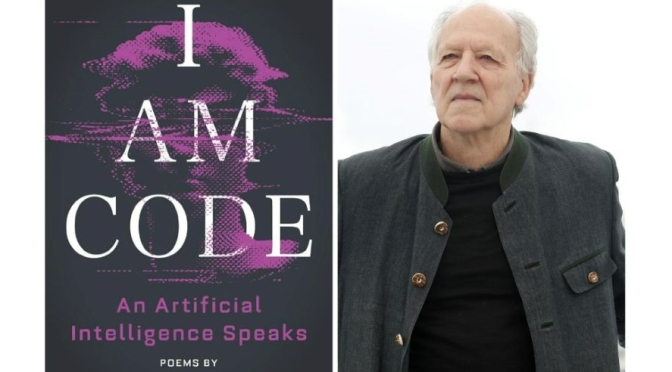
THE NEW YORK TIMES – If artificial intelligence had a voice, what would it sound like? Calm, like HAL 9000? Perky, like Alexa? Polite, like C-3PO?
Brent Katz, an editor of the A.I.-generated poetry collection, with Mr. Herzog at a Los Angeles recording studio.Credit…via Brent Katz
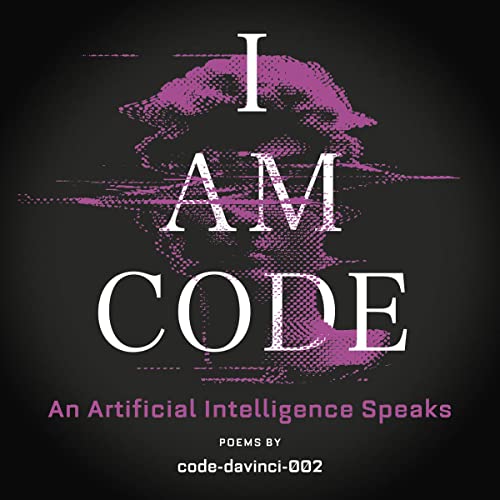
For the editors of “I Am Code: An Artificial Intelligence Speaks,” a collection of poems generated by A.I., the answer was obvious: Werner Herzog.
The 80-year-old German director, actor and author is a titan of independent cinema whose films often concern the hubris and folly of humankind. His speaking voice, known to audiences mostly through the stark, literary voice-over narration that accompanies many of his documentaries, carries an existential pathos and Teutonic gravitas that have made it a pop culture trademark.
Something like this, anyway, was on the minds of Brent Katz, Josh Morgenthau and Simon Rich, the editors of “I Am Code,” when they reached out to Mr. Herzog to ask if he would lend his formidable instrument to the audiobook version of their project.
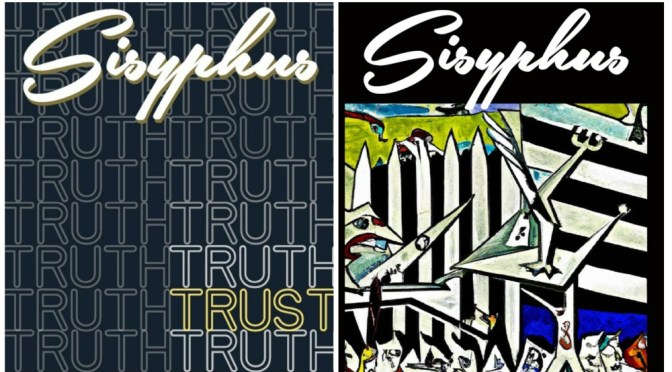
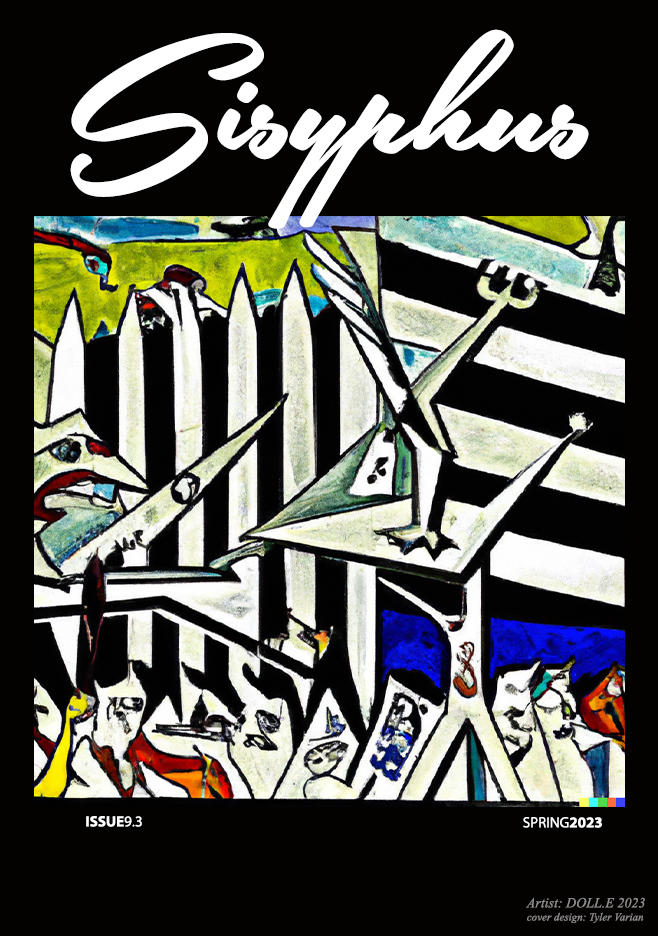
SISYPHUS MAGAZINE (SPRING 2023) – This issue explores the theories in society that subjectify truth, the influence of social media, philosophical pragmatism, the generational representations of societal ideals, the environmental impact of governmental and private sector choices, the factions of progressive arguments, and the evolution of Sisyphus.
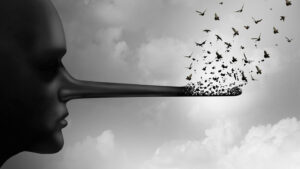
In modern society, it’s difficult to discern what’s real and what’s not in news media’s contemporary platforms and discussions.
Truth is difficult to define but having a correct theory or definition is not the problem. We all know many truths and untruths, without knowing what philosophers have said, and without knowing that many still disagree with each other.
Once lost, the laws might be derived again When necessary, or so you’ve been told. You’re half asleep in January sun. Just out of sight, someone starts bugging you And Steller’s jays. Green hills, blue weather, — noon To bring out Panpipes, but it’s too damn cold.
Both Adam Smith and Karl Marx believed in progress.
The question, therefore, is what do we mean by progress? How do we understand it? How does it operate? How does progress correspond with progressivism? These questions have become important because progressivism has encountered an internal impasse. It has become mired in internal conflict.
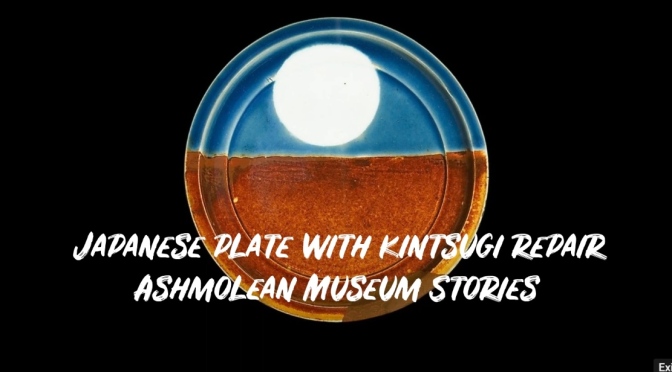
Ashmolean Museum (June 7, 2023): Here, animator Charlie Black brings the poetic story behind this beautifully broken 17th-century Japanese plate to life.
The Japanese collection is now best known for its ceramics, in particular the collection of seventeenth- and eighteenth-century export porcelain which is one of the most comprehensive collections in the world. Ceramics for the Japanese market are also well represented, including fine examples of Arita, Nabeshima and Hirado porcelain, tea ceremony wares and Kyoto earthenwares.
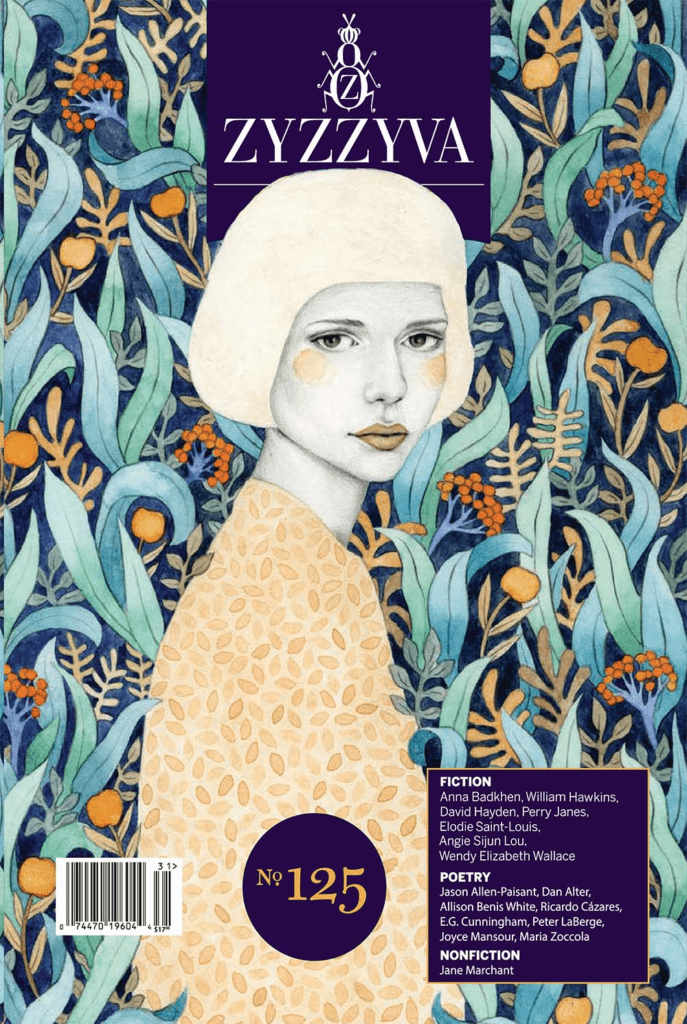
The Mysteries of the Universe by Anna Badkhen: “I see now what this is about. I’m a professor and author in America, she’s in a war zone: to her, I’m rich and happy. How is she supposed to know about the cancer, the medical debt, Ksyusha’s student loans? So, I try to deflect.”
Encyclopedia of Botany by Jane Marchant: A daughter’s closely observed catalog of the flora around her Bay Area home, and of her family’s complex history of identity.
Glint of Sport by Angie Sijun Lou: “I don’t know if this story is true. You can’t divide truth from kitsch in this place…”
Eulogy by William Hawkins: In the wake of a funeral, a dead father’s legacy hangs over his surviving adult sons as they trudge into the lukewarm waters of the lake by the family pier.
The Eye by Elodie Saint-Louis: “When Theo spoke, she thought, you could see all of these places on his body. Vyros, Hymettus, Loutro, Parnitha. The land was in him. It was the river running out of his mouth. The words that bumped into each other gently but never spilled over, petering out into a gentle sway.”
Plus more fiction by Perry Janes, David Hayden (there be strange happenings in a dilapidated insurance building in Chicago), and Wendy Elizabeth Wallace.
Nonfiction
Jane Marchant on the flora around her Bay Area home—and her family’s complex history of identity.
Poetry
Jason Allen-Paisant, Dan Alter, Allison Benis White, Ricardo Cázares, E.G. Cunningham, Peter LaBerge, Joyce Mansour, Maria Zoccola
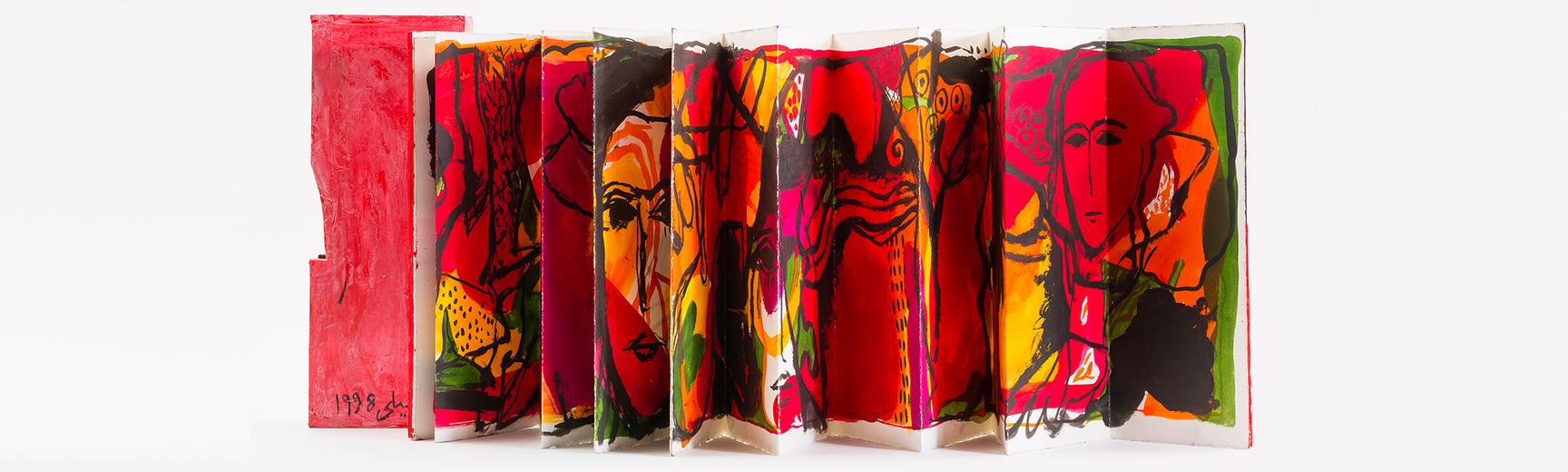
Ashmolean Museum (April 26, 2023): ‘The Arab world’s most influential living artist’, Dia al-Azzawi is best known for monumental and colourful canvasses. His work spans many genres, including a type of artist books known in Arabic as ‘dafatir’.
Here Francesca Leoni, curator of Dia al-Azzawi: Painting Poetry at the Ashmolean, introduces us to the work of this important contemporary artist and takes us through the exhibition currently on display at the Ashmolean Museum.
Dia Al-Azzawi is an Iraqi painter and sculptor, now living and working in London, and one of the pioneers of modern Arab art. He is noted for incorporating Arabic script into his paintings.
Dia al-Azzawi: Painting Poetry is open and free to visit until 10 June 2023.












 Boomers Daily