The hedge-fund titan is an unabashed big spender—from pièds-a-terre to politics. By Gary Sernovitz
Inside the Ludicrous, Deadly Serious Plan to Take Over Greenland
“We want Greenland,” Trump said. Four men sprang into action to make fantasy a reality. By Ben Taub
When Did White-Collar Work Start to Look So Bleak?
In the nineteen-eighties, an office job promised security and fulfillment. For graduates starting careers today, the prospect is often tinged with dread. By Molly Fischer
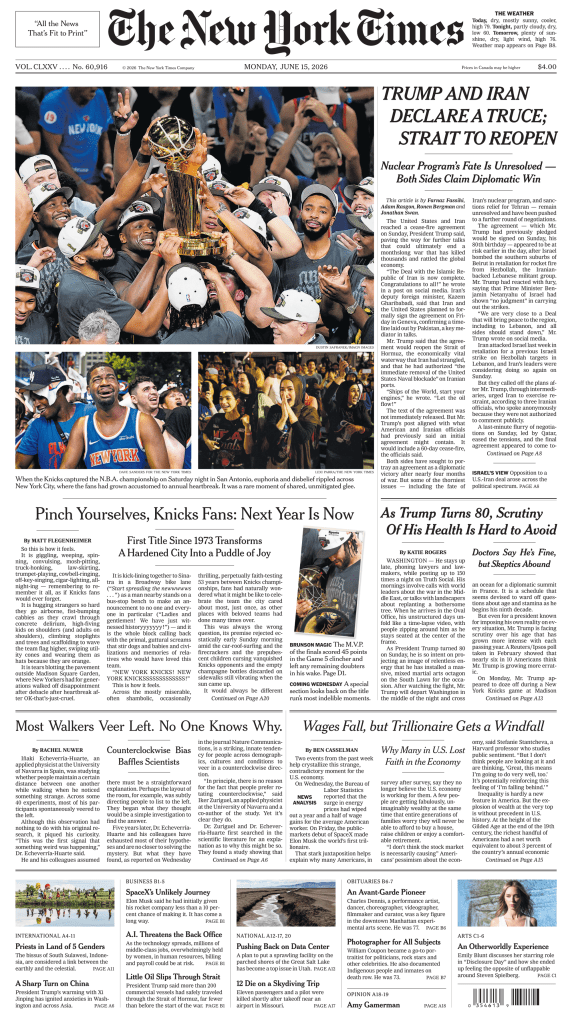
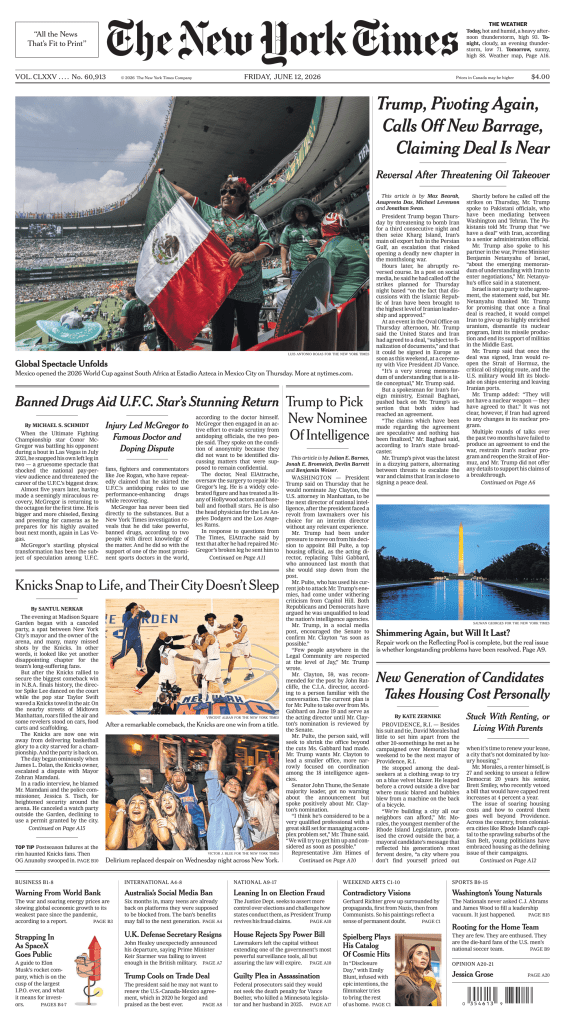
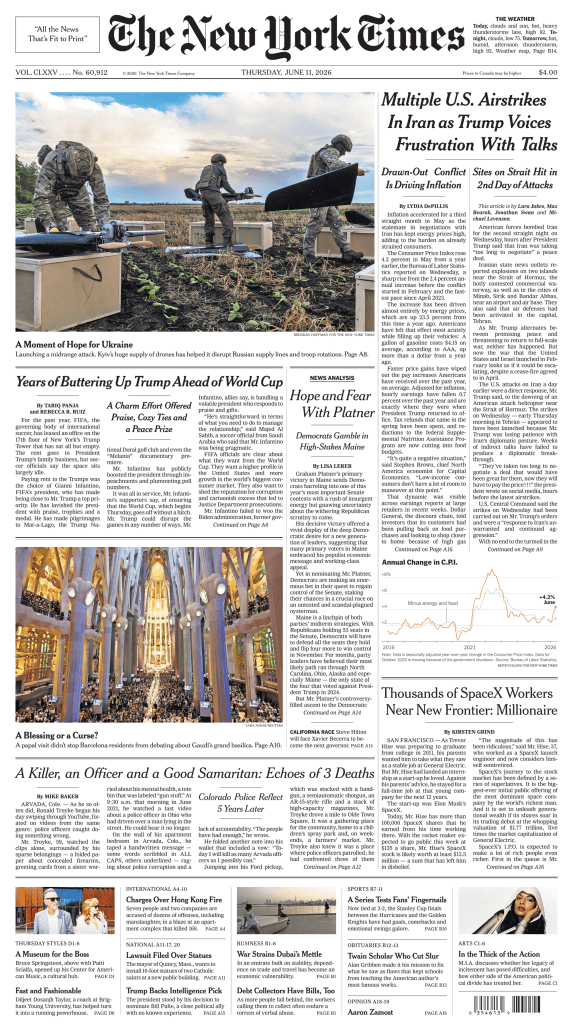
The United States and Iran reached a preliminary deal that was expected to open the Strait of Hormuz. But it defers the toughest issues to further talks.
Frustrated by Courts, Trump Weighed Suspending a Constitutional Right
Secret memos show that the White House debated, to a greater degree than previously known, whether to limit habeas corpus rights for undocumented immigrants.
Russia and the U.S. projected their own views onto Ukraine and Iran, analysts said. As a result, the smaller countries trapped larger ones in a confrontation.
Israel’s military said it attacked the southern outskirts of Beirut, the Lebanese capital, after accusing Hezbollah, the Iran-backed armed group, of violating a cease-fire.
Britain’s defense ministry said it was the first time that British forces had acted alone to stop a ship in the fleet, a collection of vessels that Russia uses to move fuel and evade sanctions.
Group of 7 meetings once embodied the effort to sustain the global diplomatic order. This year’s gathering, starting on Monday, symbolizes its fragmentation.
The prime minister of Pakistan, a key intermediary between the U.S. and Iran, said a deal was “likely expected.” Officials on each side have also expressed optimism, but it still could be derailed.
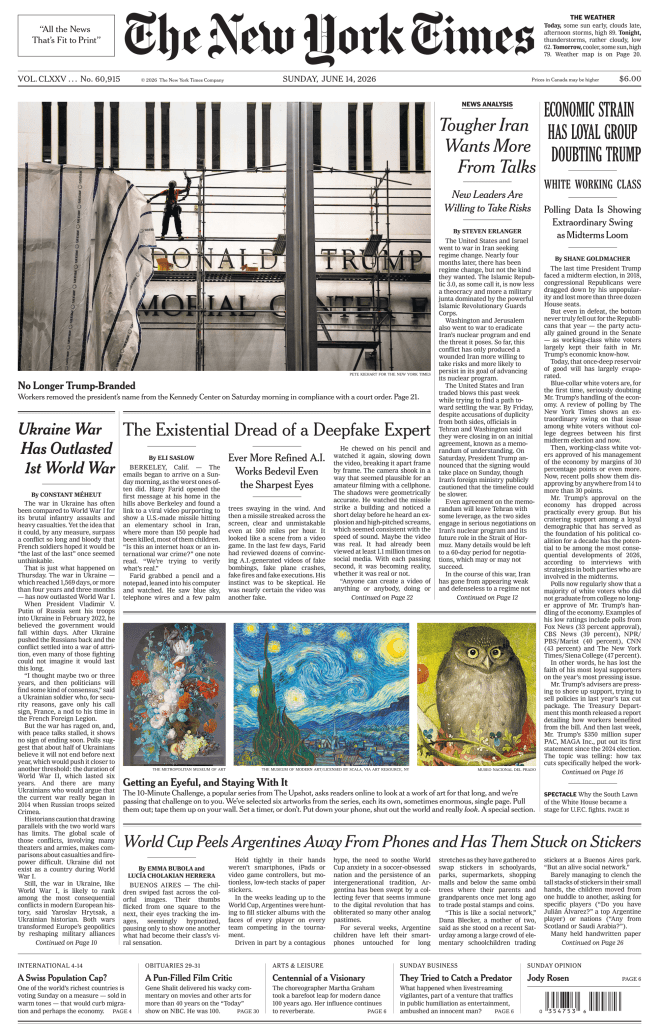
The arts institution followed a judge’s order to take down President Trump’s name after seeking a 12-hour extension, attributing the delay to thunderstorms.
Since announcing a nominal cease-fire two months ago, Iran, Israel and the U.S. have remained locked in low-intensity violence that has become a new normal.
In his first extensive interview since his defeat by a challenger backed by President Trump, John Cornyn said the Senate was in for a “bumpy ride.”
U.S. Plan Is Said to Significantly Reduce Air Support for NATO in Europe
The plan, outlined in a written document, provides rare clarity about the extent to which the Trump administration intends to reduce its commitment to NATO.
Some young millennial and Gen Z politicians have centered their campaigns this year on housing costs, and the divide is more generational than partisan.
Mexico and Canada have faced significant recent tension in their relations with the United States. But in their historic World Cup bid, the three countries promoted teamwork.
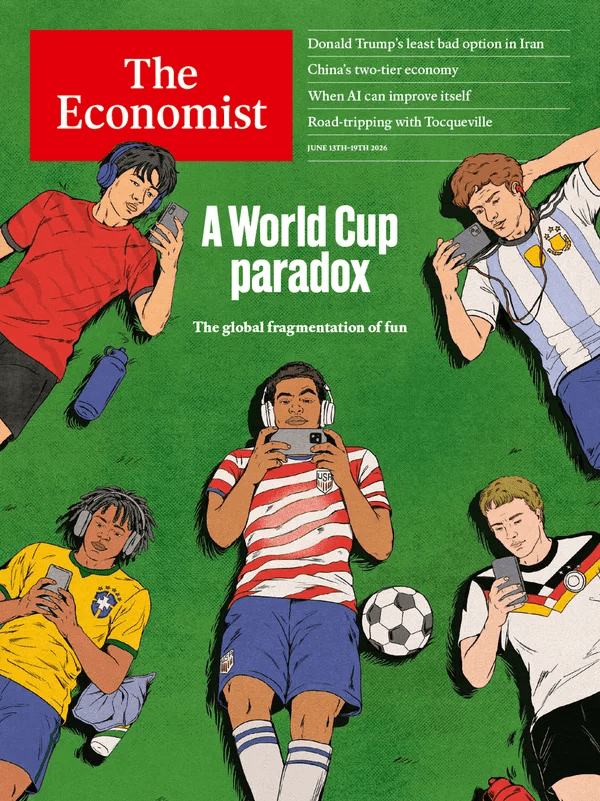
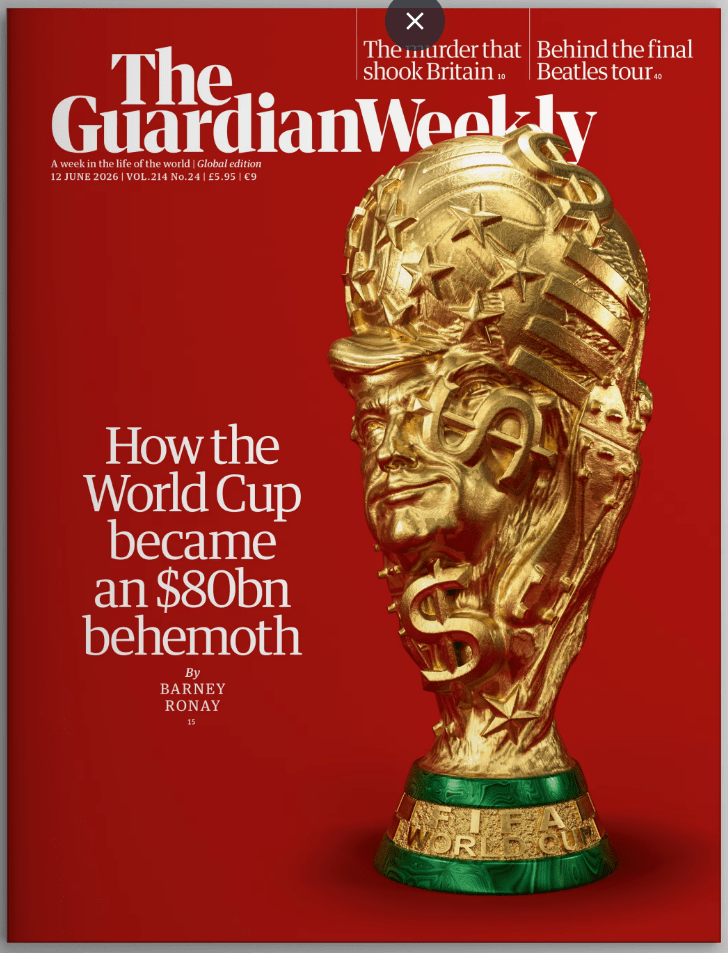
It’s long been a golden rule of sport that football World Cups get bigger and badder every four years. The latest edition of the tournament, however, may put that universal law to the test after a six-week journey through Trump’s America, which is expected to generate $80bn of global economic output through its full timeline.
As the world’s biggest sporting event meets the world’s biggest market, it’s hard to see how even the World Cup can get much more bloated than this. But if anyone can make it happen it’s Gianni Infantino, the opportunist Fifa overlord who has schmoozed with the planet’s most divisive leaders to extract maximum gains from his travelling global roadshow. As Barney Ronay says in his tournament scenesetter for our cover story this week, welcome to the heart of darkness.
The big story | How the murder of Henry Nowak shook Britain The aftermath of a tragedy revealed a country grappling with how easily such events can be co‑opted into a far-right rallying cry. Libby Brooks reports
Technology | Can autonomous AI killer drones be taught morality? While the technology is set to play a growing role in modern warfare, there remains an unresolved ethical challenge. Dan MilmoandAisha Down size up the terrain
Feature | Hello, goodbye: inside the final Beatles tour By the mid-1960s, the Beatles were ready to quit touring for good. A new collection of pictures by rock photographer Jim Marshall captures their last gigs. With a foreword by Ian Leslie
Opinion | Trump’s failure to maintain ceasefires is part of the new world disorder The US president brags about ending wars but look at Ukraine, Gaza, Iran and Lebanon to see what his casual disregard for diplomacy and obsession with instant results have achieved, argues Simon Tisdall
Culture | The ruthlessness and redemption of Rupert Everett The 67-year-old actor lied to his partners, disrespected his audiences and betrayed his friends. But has this indiscreet, unreliable heartbreaker finally grown up and settled down? Simon Hattenstone went to find out
News, Views and Reviews For The Intellectually Curious




 Boomers Daily