

 March 21, 2020 – The Rogers family is sad to announce that Kenny Rogers passed away last night at 10:25PM at the age of 81. Rogers passed away peacefully at home from natural causes under the care of hospice and surrounded by his family.
.
In a career that spanned more than six decades, Kenny Rogers left an indelible mark on the history of American music. His songs have endeared music lovers and touched the lives of millions around the world. Chart-topping hits like “The Gambler,” “Lady,” “Islands In The Stream,” “Lucille,” “She Believes In Me,” and “Through the Years” are just a handful of Kenny Rogers’ songs that have inspired generations of artists and fans alike.
.
Rogers, with twenty-four number-one hits, was a Country Music Hall of Fame member, six-time CMA Awards winner, three-time GRAMMY® Award winner, recipient of the CMA Willie Nelson Lifetime Achievement Award in 2013, CMT Artist of a Lifetime Award honoree in 2015 and has been voted the “Favorite Singer of All Time” in a joint poll by readers of both USA Today and People.
.
The family is planning a small private service at this time out of concern for the national COVID-19 emergency. They look forward to celebrating Kenny’s life publicly with his friends and fans at a later date.
.
From the Kenny Rogers Facebook page

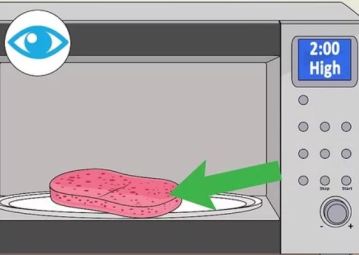 Microwaves are used in medicine for disinfection of soft contact lenses, dental instruments, dentures, milk, and urinary catheters for intermittent self-catheterization925-931. However, microwaves must only be used with products that are compatible (e.g., do not melt) 931. Microwaves are radio-frequency waves, which are usually used at a frequency of 2450 MHz. The microwaves produce friction of water molecules in an alternating electrical field. The intermolecular friction derived from the vibrations generates heat and some authors believe that the effect of microwaves depends on the heat produced while others postulate a nonthermal lethal effect932-934. The initial reports showed microwaves to be an effective microbicide. The microwaves produced by a “home-type” microwave oven (2.45 GHz) completely inactivate bacterial cultures, mycobacteria, viruses, and G. stearothermophilus spores within 60 seconds to 5 minutes depending on the challenge organism933, 935-937. Another study confirmed these resuIts but also found that higher power microwaves in the presence of water may be needed for sterilization932. Complete destruction of Mycobacterium bovis was obtained with 4 minutes of microwave exposure (600W, 2450 MHz)937. The effectiveness of microwave ovens for different sterilization and disinfection purposes should be tested and demonstrated as test conditions affect the results (e.g., presence of water, microwave power). Sterilization of metal instruments can be accomplished but requires certain precautions.926. Of concern is that home-type microwave ovens may not have even distribution of microwave energy over the entire dry device (there may be hot and cold spots on solid medical devices); hence there may be areas that are not sterilized or disinfected. The use of microwave ovens to disinfect intermittent-use catheters also has been suggested. Researchers found that test bacteria (e.g., E. coli, Klebsiella pneumoniae, Candida albicans) were eliminated from red rubber catheters within 5 minutes 931. Microwaves used for sterilization of medical devices have not been FDA cleared.
 On this week’s show, host Joel Goldberg talks with science journalist Andrew Curry about archaeological finds from thousands of years ago along the shores of Northern Europe. Curry outlines the rich history of the region that scientists, citizen scientists, and energy companies have helped dredge up.




 Listen to the latest from the world of science, brought to you by Benjamin Thompson and Nick Howe. This week, Nautre speaks to Rosamund Pike about her experience portraying Marie Skłodowska Curie, and we find out how science in Russia is changing after years of decline.
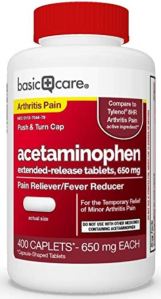 “The finding in two randomised trials that advice to use ibuprofen results in more severe illness or complications helps confirm that the association seen in observational studies is indeed likely to be causal. Advice to use paracetamol (acetaminophen) is also less likely to result in complications.”
 Ian Jones, a professor of virology at the University of Reading, said that ibuprofen’s anti-inflammatory properties could “dampen down” the immune system, which could slow the recovery process. He added that it was likely, based on similarities between the new virus (SARS-CoV-2) and SARS I, that covid-19 reduces a key enzyme that part regulates the water and salt concentration in the blood and could contribute to the pneumonia seen in extreme cases. “Ibuprofen aggravates this, while paracetamol does not,” he said.
 Boomers Daily