Wall Street Journal – The U.S. operates hundreds of foreign military bases. China has only one, but military experts say Beijing is also leveraging over 90 commercial ports. WSJ unpacks what’s on these bases and the countries’ differing strategies to expand their global footprint.
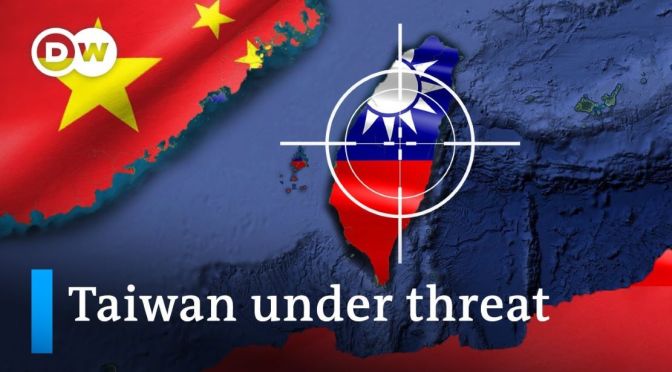
Taiwan is a democracy with a strong human rights record and a high standard of living. But despite the country’s economic strength and elected government, the island state struggles to receive international recognition. Even in terms of corruption, Taiwan’s track record is better than that of some European states.
The problem is that Beijing regards democratic Taiwan, which seceded from the mainland in 1949, as a renegade province rather than an independent state. China is trying to isolate it internationally. Many fear that China has plans to attack Taiwan in the near future: The President of the People’s Republic of China, Xi Jinping, has made it clear that his country is prepared to claim the island by military means. Beijing has been adopting this threatening stance for decades.
Thus far, the goal has been to annex the island to the mainland at some undefined point in the future. China’s historically questionable worldview would see this as reunification; from Taiwan’s perspective, it would be annexation. Both countries are highly armed – a war would inevitably cost many people their lives.
The film throws open a window on a nation that has been in a state of existential threat for decades; a country that is home to people who will defend their freedom at all costs – and also those who yearn for an imminent annexation with China.
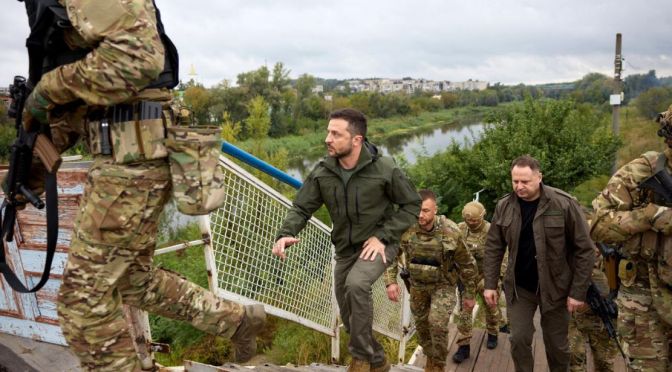
Ukrainian forces have reclaimed large swaths of territory in the Kharkiv region. WSJ’s Stephen Kalin reports from the liberated city of Izyum, where Ukrainian President Volodymyr Zelensky traveled to assess damage on Wednesday.
Izyum, also spelled Izium, city, eastern Ukraine. Izyum is located 75 miles (120 km) southeast of Kharkiv on the Donets River. The earliest historical mention of it dates as early as 1571; it has been a city since 1639. Izyum is linked with Kharkiv and Luhansk by rail. Industries have included railroad repair, brick making, brewing, and optical equipment manufacture.
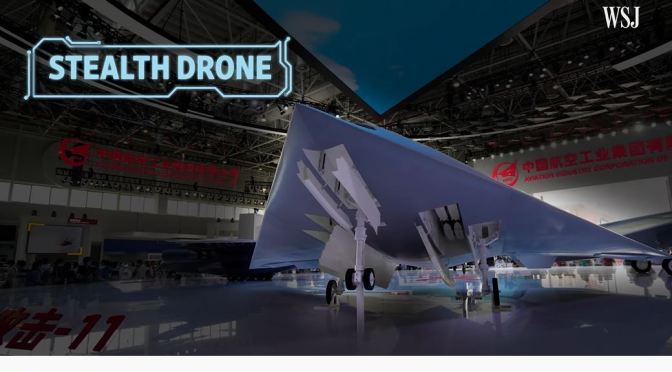
China is expanding its military arsenal with new drones, including stealth versions and those that can swarm and drop bombs. WSJ compares the tech and design of these drones with their U.S. counterparts to see how Beijing is equipping its military for possible future conflict. Photo composite: Sharon Shi
Twenty years of war for the United States and coalition partners in Afghanistan ended with the collapse of the Afghan government after U.S. troops withdrew from most of the country. The rapid advance of the Taliban forced an evacuation of more than 100,000 people from Afghanistan over the course of the last few weeks, and led to the deaths of 13 U.S. service members. Here’s how the fall of Afghanistan happened so quickly, and what’s next for the war-torn country.
The Taliban seized power in Afghanistan, with fighters entering the presidential palace, and gunshots broke out at Kabul’s airport as thousands tried to flee the country. The collapse of the Afghan government creates an uncertain future for civilians and challenges for the U.S. Photo: Stringer/Reuters
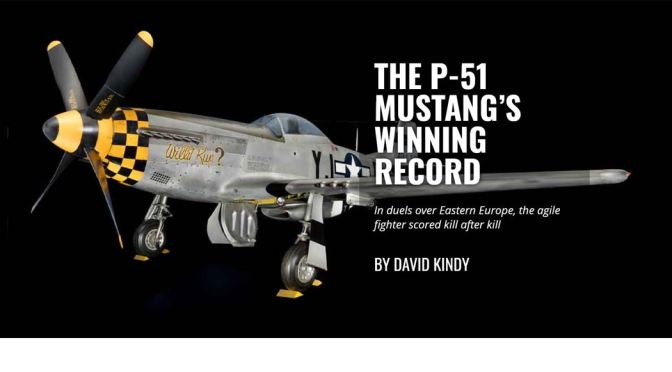
The P-51 was the darling of the Army Air Forces. Aerodynamically agile and acrobatic, the Mustang was fast and furious in its effectiveness in downing enemy aircraft. A latecomer to World War II, it first saw combat over Europe near the end of 1943. The long-range fighter proved to be just what the Allies needed to escort bombers to and from Germany as they hammered enemy targets.
Aug. 2, 2021, 6 a.m.
“In terms of the air war over Europe with the strategic bombing campaign, the P-51 was a war-winning weapon,” says Jeremy Kinney, associate director of research and curatorial affairs at the Smithsonian’s National Air and Space Museum. “As a fighter escort, it enabled the successful bombing of targets deep in Nazi Germany from bases in England and Italy. That was a crucial component in the destruction of strategic sites such as factories and munition plants.”
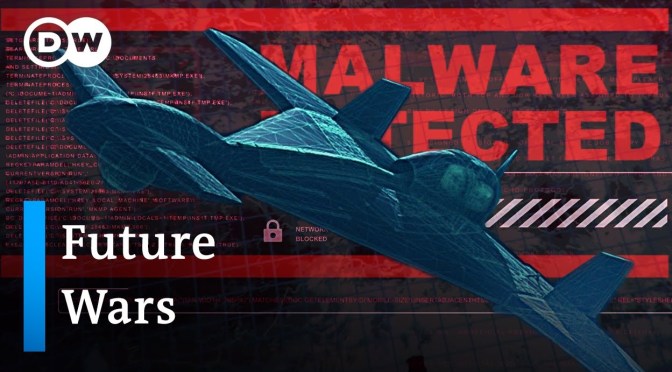
The world is entering a new era of warfare, with cyber and autonomous weapons taking center stage. These technologies are making militaries faster, smarter, more efficient. But if unchecked, they threaten to destabilize the world. DW takes a deep dive into the future of conflict, uncovering an even more volatile world.
Chapters 00:00 – Introduction 02:37 – The Cyber Nuclear Nightmare 17:05 – Flash Wars And Autonomous Weapons 30:12 – Trading Markets And Flash Crashes 31:45 – Time To Act
Where a cyber intrusion against a nuclear early warning system can unleash a terrifying spiral of escalation; where “flash wars” can erupt from autonomous weapons interacting so fast that no human could keep up. Germany’s Foreign Minister Heiko Maas tells DW that we have already entered the technological arms race that is propelling us towards this future. “We’re right in the middle of it. That’s the reality we have to deal with.” And yet the world is failing to meet the challenge. Talks on controlling autonomous weapons have repeatedly been stalled by major powers seeking to carve out their own advantage. And cyber conflict has become not just a fear of the future but a permanent state of affairs. DW finds out what must happen to steer the world in a safer direction, with leading voices from the fields of politics, diplomacy, intelligence, academia, and activism speaking out.
News, Views and Reviews For The Intellectually Curious



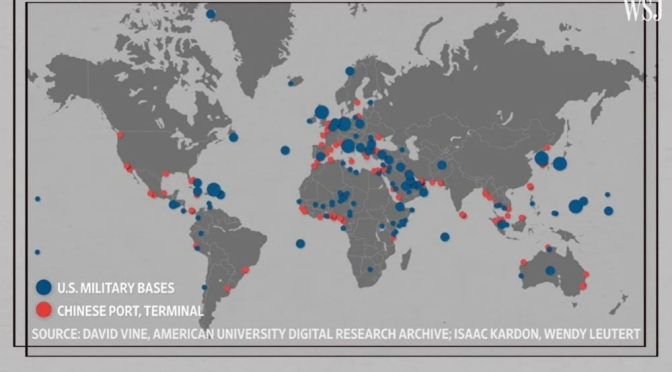
 Wall Street Journal – The U.S. operates hundreds of foreign military bases. China has only one, but military experts say Beijing is also leveraging over 90 commercial ports. WSJ unpacks what’s on these bases and the countries’ differing strategies to expand their global footprint.



 Boomers Daily