


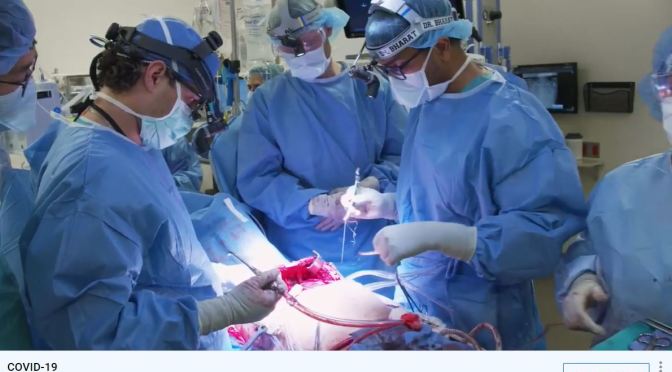
Earlier this year, Nightline shared Leo’s story and his groundbreaking COVID-19 double-lung transplant. Now, go “Inside the OR” to see what happened during the procedure that made headlines around the world.
Leo was flown to Northwestern Medicine for a double-lung transplant after COVID-19 left him on a ventilator, struggling to survive. Join us “Inside the OR” for part two of Leo’s story as the Northwestern Memorial Hospital thoracic team races against the clock to save his life.
Almost 2 billion doses of Covid-19 vaccine have been administered worldwide to date. But is it enough to wipe out Sars-CoV-2? Of course, those shots are not evenly spread across all continents. In terms of sheer numbers,
North America and Europe managed about 370 million shots each. South America with Covid-stricken countries like Brazil has a lot of catching up to do. Africa and its more than 1.3 billion people only received 34 million doses so far while Asia is storming ahead with more than 1 billion shots. But that doesn’t mean Asia is fully vaccinated. Far from it.
There are huge gaps, like in Vietnam, a country that has long been praised for its response to the pandemic. Now it is faced with new outbreaks and a new variant.


We’re already integrating Adaptive Intelligence-powered applications into our MR systems, improving workflow and patient comfort, increasing diagnostic confidence, and increasing speed.
We’re already integrating Adaptive Intelligence-powered applications into our MR systems, improving workflow and patient comfort, increasing diagnostic confidence, and increasing speed.
Our Ingenia digital MR portfolio integrates Adaptive Intelligence-driven SmartExam analytics for automatic planning, scanning and processing of exams, helping improve the entire MR workflow, from image acquisition to reading preference.
Professor Ashani Weeraratna has been studying the cancer microenvironment in her lab for the past 17 years. Taking into account that the tissues in our bodies change as we age is important when researching cancer biology. She hopes that gaining a better understanding of how the growth of cancer cells is affected by their direct cellular ‘neighbourhood’, especially when we age, could be key to developing better treatments for patients with cancer. Read more in https://www.nature.com/immersive/d428…
For many people, depression turns out to be one of the most disabling illnesses that we have in society. Despite the treatments that we have available, many people are not responding that well. It’s a disorder that can be very disabling in society. It’s also a disorder that has medical consequences. By understand the neurobiology of depression we hope to be able more to find the right treatment for the patient suffering from this disease. The current standard of care for the treatment of depression is based on what we call the monoamine deficiency hypothesis. Essentially, presuming that one of three neurotransmitters in the brain is deficient or underactive. But the reality is, there are more than 100 neurotransmitters in the brain. And billions of connections between neurons. So we know that that’s a limited hypothesis. Neurotransmitters can be thought of as the chemical messengers within the brain, it’s what helps one cell in the brain communicate with another, to pass that message along from one brain region to another. For decades, we thought that the primary pathology, the primary cause of depression was some abnormality in these neurotransmitters, specifically serotonin or norepinephrine. However, norepinephrine and serotonin did not seem to be able to account for this cause, or to cause the symptoms of depression in people who had major depression. Instead, the chemical messengers between the nerve cells in the higher centers of the brain, which include glutamate and GABA, were possibilities as alternative causes for the symptoms of depression. When you’re exposed to severe and chronic stress like people experience when they have depression, you lose some of the connections between the nerve cells. The communication in these circuits becomes inefficient and noisy, we think that the loss of these synaptic connections contributes to the biology of depression. There are clear differences between a healthy brain and a depressed brain. And the exciting thing is, when you treat that depression effectively, the brain goes back to looking like a healthy brain, both at the cellular level and at a global scale. It’s critical to understand the neurobiology of depression and how the brain plays a role in that for two main reasons. One, it helps us understand how the disease develops and progresses, and we can start to target treatments based on that. We are in a new era of psychiatry. This is a paradigm shift, away from a model of monoaminergic deficiency to a fuller understanding of the brain as a complex neurochemical organ. All of the research is driven by the imperative to alleviate human suffering. Depression is one of the most substantial contributors to human suffering. The opportunity to make even a tiny dent in that is an incredible opportunity.SHOW LESS
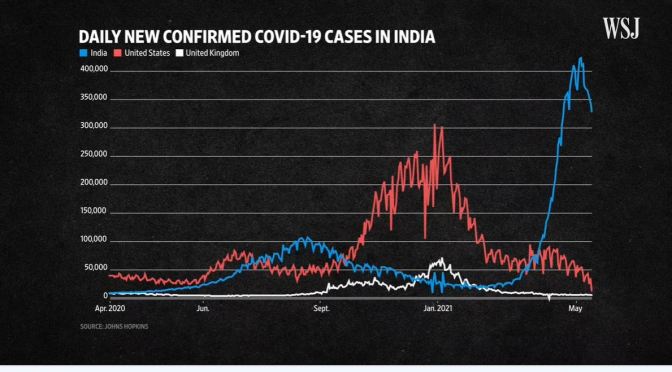
India’s Covid-19 crisis has resulted in record numbers of cases and deaths. WSJ breaks down the chain of events that led to the fastest-growing wave of infection since the pandemic started, and what it means for the world. Photo: Samuel Rajkumar/Reuters
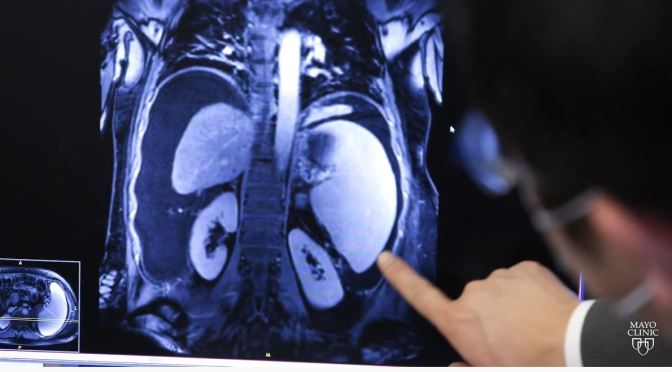
Colorectal cancer is a leading cancer among men and women around the world. Many colorectal cancers are likely to spread to other organs, with the most common site of metastases being the liver. In this Mayo Clinic Minute, Dr. Sean Cleary, a hepatobiliary and pancreas surgeon at Mayo Clinic explains what this means to patients.
In 2018, Michael Lewis published “The Fifth Risk,” which argued, in short, that the federal government was underprepared for a variety of disaster scenarios. Guess what his new book is about? Lewis visits the podcast this week to discuss “The Premonition,” which recounts the initial response to the coronavirus pandemic.
“It wasn’t just Trump,” Lewis says. “Trump made everything worse. But there had ben changes in the American government, and changes in particular at the C.D.C., that made them less and less capable of actually controlling disease and more and more like a fine academic institution that came in after the battle and tried to assess what had happened; but not equipped for actual battlefield command. The book doesn’t get to the pandemic until Page 160. The back story tells you how the story is going to play out.”
The historian Annette Gordon-Reed visits the podcast to talk about her new book, “On Juneteenth,” which combines history about slavery in Texas and Juneteenth with more personal, essayistic writing about her own family and childhood.
“This is a departure for me, but it is actually the kind of writing that I always thought that I would be doing when I was growing up, dreaming about being a writer,” Gordon-Reed says. “I’ve always been a great admirer of James Baldwin, and Gore Vidal’s essays I thought were wonderful, better than the novels, and that’s the kind of thing that I wanted to do. So it was sort of a dream come true for me to be able to take this form and talk about some things that were very important to me.”
Also on this week’s episode, Tina Jordan looks back at Book Review history during this year of its 125th anniversary; Alexandra Alter has news from the publishing world; and Parul Sehgal and John Williams talk about the latest in literary criticism. Pamela Paul is the host.
Here are the books discussed by the critics this week:
“The Secret to Superhuman Strength” by Alison Bechdel
“Jackpot” by Michael Mechanic




 Boomers Daily