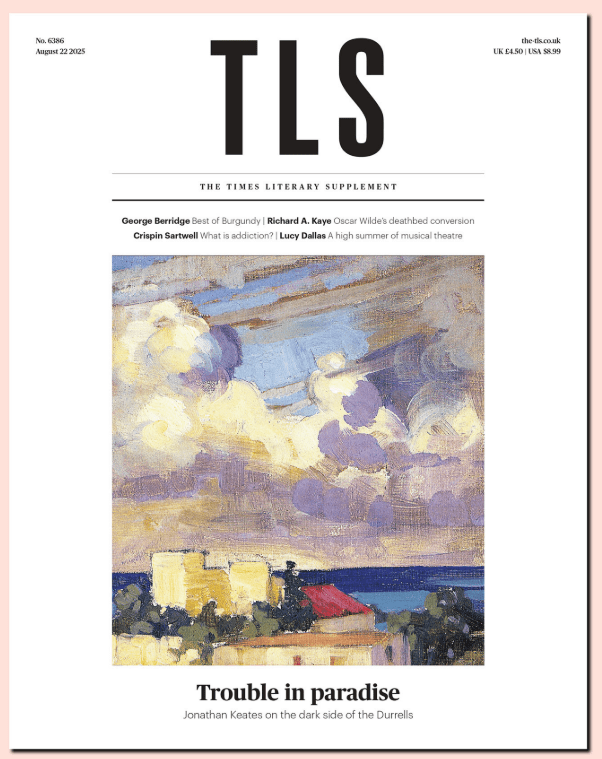
TIMES LITERARY SUPPLEMENT: The latest issue features Lawrence Durrell, “so many towns” that could “become Alexandria” – “founded”, as indeed so many were, “At the doors of Africa”, “Upon a parting”. Yet what other town could boast of anything to compare with that “last pale / Lighthouse”, the Pharos of Alexandria, “like a Samson blinded”?
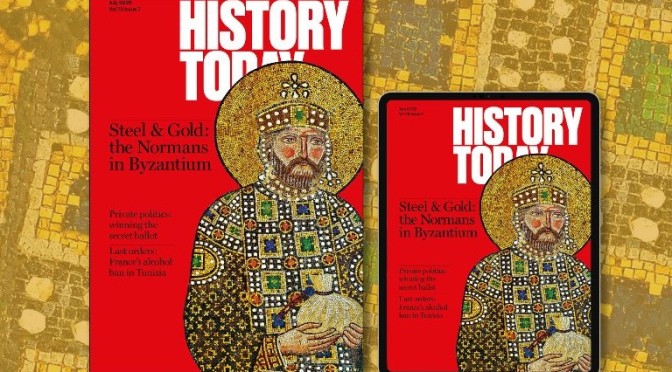
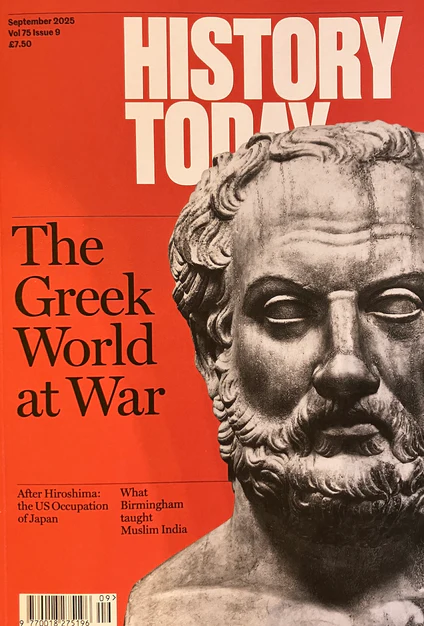
For the ancient Greeks, the Peloponnesian War was a conflict involving the entire world. For Thucydides, it was a lesson in the realities of human nature. Robin Waterfield
The Invention of the Eastern Question: Sir Robert Liston and Ottoman Diplomacy in the Age of Revolutions by Ozan Ozavcı offers the ‘sick man of Europe’ a second opinion.
Donald Trump now has the Attorney General he always wanted—an ally willing to harness the law to enable his agenda. By Ruth Marcus
Trump Sends in the National Guard
Is the President’s takeover of D.C. a dry run for other cities? By Margaret Talbot
Bill Belichick Goes Back to School
Can the legendary former Patriots coach transform U.N.C. football? By Paige Williams
The Family Fallout of DNA Surprises
Through genetic testing, millions of Americans are estimated to have discovered that their parents aren’t who they thought. The news has upended relationships and created a community looking for answers. By Jennifer Wilson
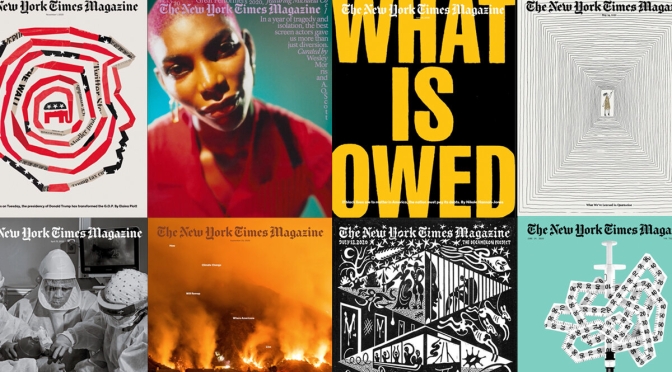
THE NEW YORK TIMES MAGAZINE: The 8.17.25 Issue features Trevor Quirk on how Hurricane Helene disconnected his community around Asheville, North Carolina from modern communication; Ben Austen on how Trump’s war on higher education is hitting community colleges; Bruce Schoenfeld on Stu Sternberg, the owner of the Tampa Bay Rays; and more.
When Helene disconnected my part of North Carolina for weeks, my neighbors and I had to relearn old ways of knowing what was happening — and what wasn’t. By Trevor Quirk
Federal Reserve Chair Jerome Powell will offer an economic outlook at the central bank’s annual symposium. The subtext of this year’s speech is more important.











 Boomers Daily