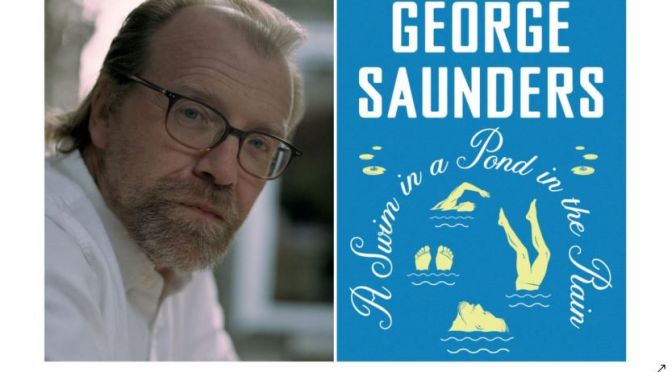
On a special LARB Book Club episode of the Radio Hour, Boris Dralyuk and Medaya Ocher are joined by George Saunders, author of four collections of virtuosic short stories and of the novel Lincoln in the Bardo, which won the 2017 Man Booker Prize.
His latest work is A Swim in a Pond in the Rain: In Which Four Russians Give a Master Class on Writing, Reading, and Life. Examining individual works by Leo Tolstoy, Anton Chekhov, Ivan Turgenev, and Nikolai Gogol from a variety of angles, Saunders teases out lessons for writers and readers alike. During the conversation, he discusses what fiction can teach us about ourselves and each other, shares his experiences teaching these stories over the past two decades, and reflects on the role of humor in his work.
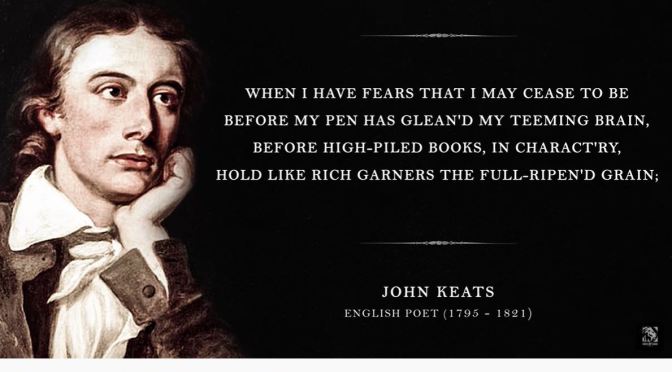
Read by James Smillie – John Keats was a revered English poet who devoted his short life to the perfection of poetry.
John Keats was an English Romantic poet. He was one of the main figures of the second generation of Romantic poets, along with Lord Byron and Percy Bysshe Shelley, despite his works having been in publication for only four years before his death from tuberculosis at the age of 25.
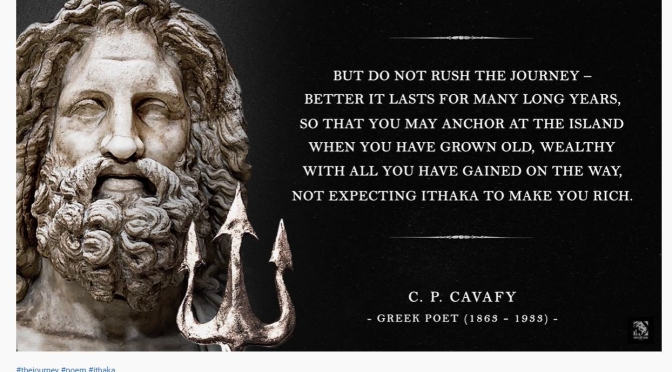
Constantine Peter Cavafy was an Egyptiot Greek poet, journalist and civil servant. His consciously individual style earned him a place among the most important figures not only in Greek poetry, but in Western poetry as well. Cavafy wrote 155 poems, while dozens more remained incomplete or in sketch form.
As you set out for Ithaka hope your road is a long one, full of adventure, full of discovery. Laistrygonians, Cyclops, angry Poseidon—don’t be afraid of them: you’ll never find things like that on your way as long as you keep your thoughts raised high, as long as a rare excitement stirs your spirit and your body. Laistrygonians, Cyclops, wild Poseidon—you won’t encounter them unless you bring them along inside your soul, unless your soul sets them up in front of you.
Hope your road is a long one. May there be many summer mornings when, with what pleasure, what joy, you enter harbors you’re seeing for the first time; may you stop at Phoenician trading stations to buy fine things, mother of pearl and coral, amber and ebony, sensual perfume of every kind— as many sensual perfumes as you can; and may you visit many Egyptian cities to learn and go on learning from their scholars.
Keep Ithaka always in your mind. Arriving there is what you’re destined for. But don’t hurry the journey at all. Better if it lasts for years, so you’re old by the time you reach the island, wealthy with all you’ve gained on the way, not expecting Ithaka to make you rich.
Ithaka gave you the marvelous journey. Without her you wouldn’t have set out. She has nothing left to give you now.
And if you find her poor, Ithaka won’t have fooled you. Wise as you will have become, so full of experience, you’ll have understood by then what these Ithakas mean.
In the latest episode in their series of Close Readings, Seamus Perry and Mark Ford look at the life and work of Robert Frost, the great American poet of fences and dark woods.
(August 4, 2020)
They discuss Frost’s difficult early life as an occasional poultry farmer and teacher, his arrival in England in 1912 amid the flowering of Georgian poetry, and his emergence as the first 20th-century professional poet, whose version of the American wilderness myth, full of mischief and foreboding, took him to packed concert halls and a presidential inauguration.
An apprentice writer has an entirely unexpected encounter with literary genius Jorge Luis Borges that will profoundly alter his life and work. A poignant and comic literary coming-of-age memoir. “This is a jewel of a book.” –Ian McEwan
In 1971 Jay Parini was an aspiring poet and graduate student of literature at University of St Andrews in Scotland; he was also in flight from being drafted into service in the Vietnam War. One day his friend and mentor, Alastair Reid, asked Jay if he could play host for a “visiting Latin American writer” while he attended to business in London. He agreed–and that “writer” turned out to be the blind and aged and eccentric master of literary compression and metaphysics, Jorge Luis Borges. About whom Jay Parini knew precisely nothing. What ensued was a seriocomic romp across the Scottish landscape that Borges insisted he must “see,” all the while declaiming and reciting from the literary encyclopedia that was his head, and Jay Parini’s eventual reckoning with his vocation and personal fate.
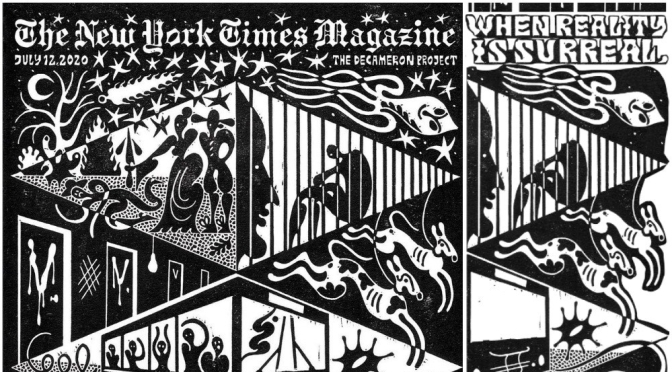
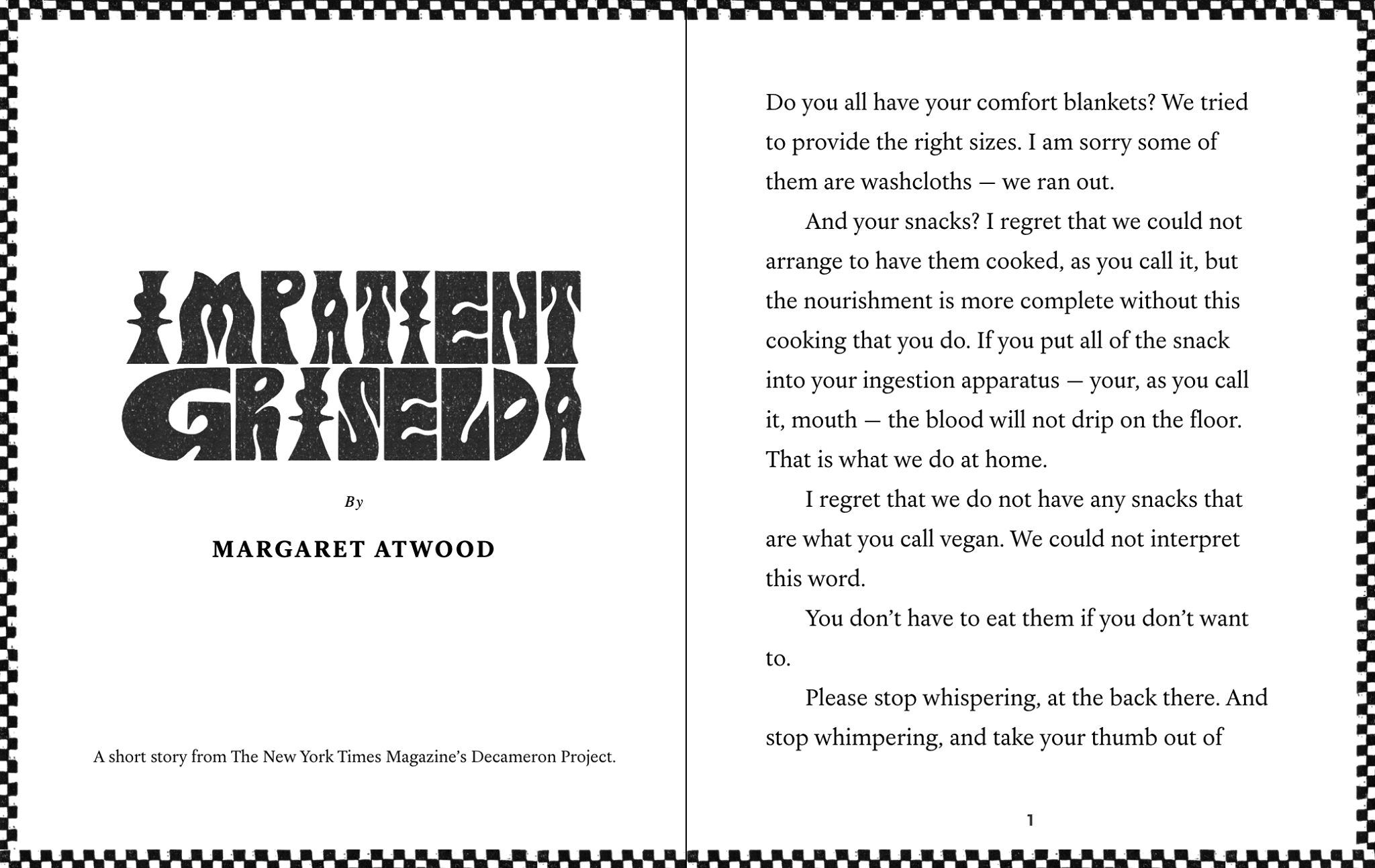
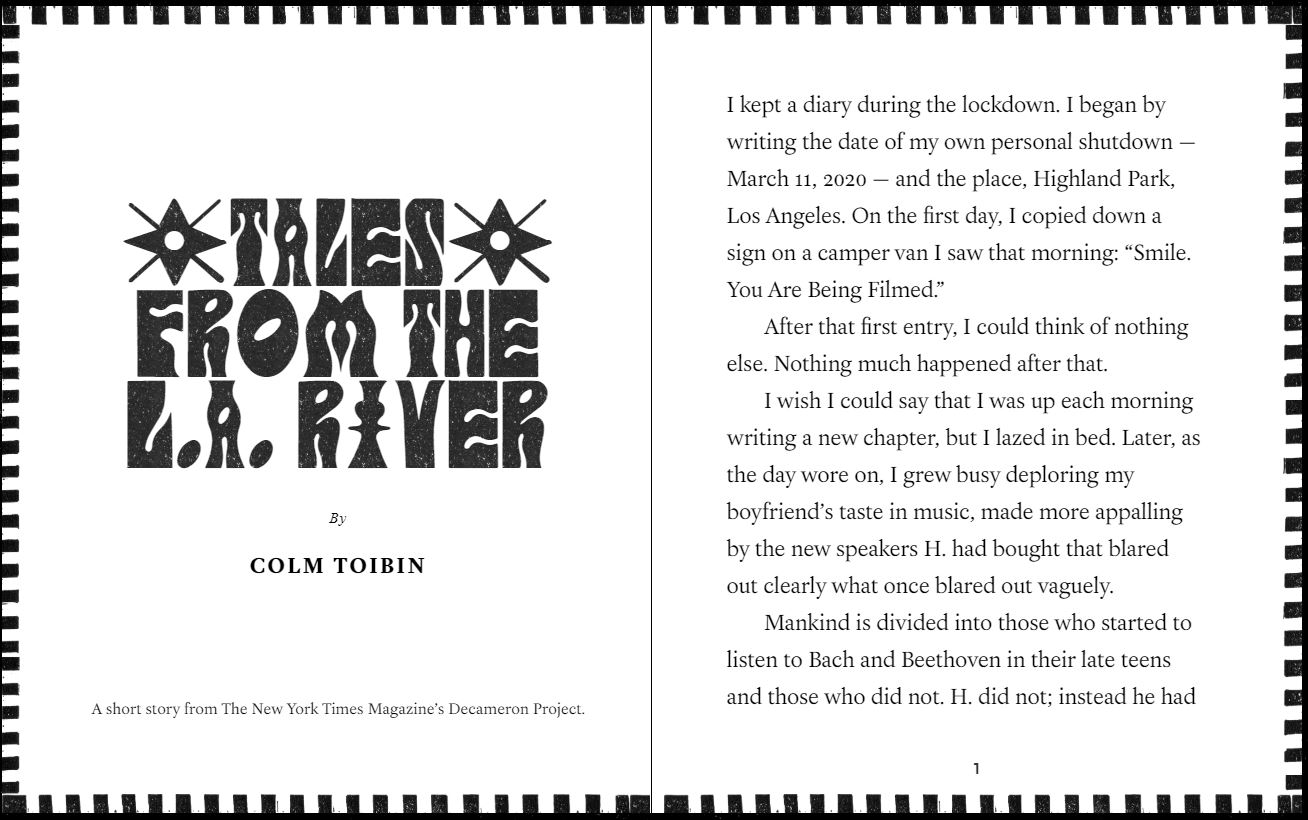
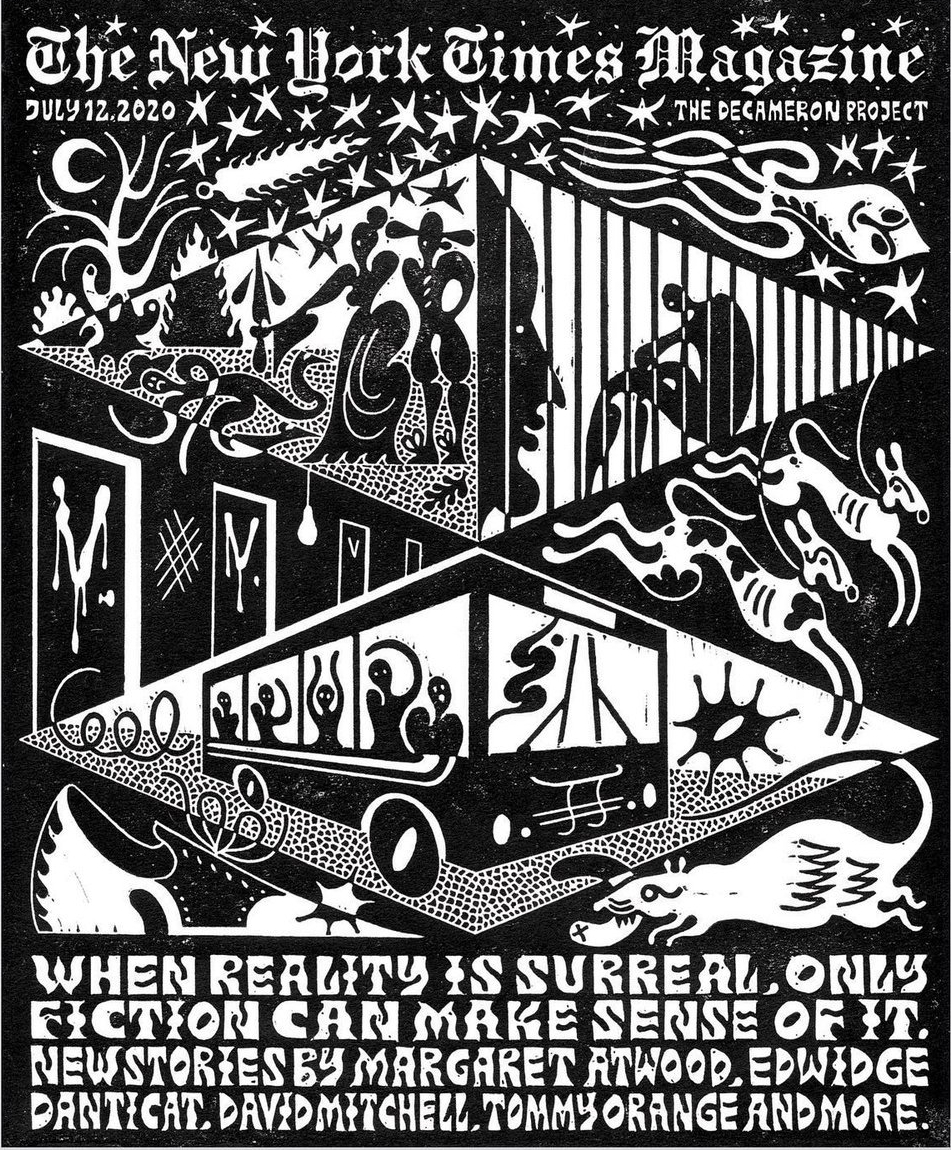
AS THE COVID-19 PANDEMIC SWEPT THE WORLD, WE ASKED 29 AUTHORS TO WRITE NEW SHORT STORIES INSPIRED BY THE MOMENT. WE WERE INSPIRED BY GIOVANNI BOCCACCIO’S “THE DECAMERON,” WRITTEN AS THE PLAGUE RAVAGED FLORENCE IN THE 14TH CENTURY.
Gaby Wood reads her diary from the latest issue of the LRB, in which she tries to draw an albatross using a camera lucida.
By the time I used the camera lucida in the museum, I’d spent several months grappling with the strange proposition offered by its prism. I’d read that the image was sharper if you held it over a dark drawing surface, but that didn’t make any sense to me until the smoked metal etching plate was beneath my hand. Suddenly the albatross skeleton appeared on it: bright, spectral. The process was different from the way I’d imagined it. There was a drag, almost a dance, under the needle – a tiny jump of resistance in the copper. Without seeing what you were doing, you could feel it more keenly. It wasn’t like ice-skating at all.
A camera lucida is an optical device used as a drawing aid by artists. The camera lucida performs an optical superimposition of the subject being viewed upon the surface upon which the artist is drawing. The artist sees both scene and drawing surface simultaneously, as in a photographic double exposure.
In his paintings we see books on their own, or books in the company of people or other objects; small, lonely ziggurats of books, or a book beside a candle. That last juxtaposition is telling in the extreme. Vincent had a reverence for books. They were sacred ground. They have a kind of inner glow about them.
He reverenced books for their intellectual and emotional content.
He read Dickens, Carlyle, Flaubert, Balzac, Maupassant, and Zola in the original. Dickens and Carlyle were never very easy to read, then or now, but this Dutchman did so. He even read English poetry – John Keats, for example.
Mariella Guzzoni is an independent scholar and translator living in Bergamo. She has been collecting editions of the books that Vincent van Gogh read and loved for many years, and curated the exhibition ‘Van Gogh’s Passion for Books’ at the Sormani Library, Milan, in 2015.
With every sparkling joke, every well-meaning and innocent character, every farcical tussle with angry swans and pet Pekingese, every utopian description of a stroll around the grounds of a pal’s stately home or a flutter on the choir boys’ hundred yards handicap at a summer village fete, he wanted to whisk us far away from our worries.
If we’re talking about culture that makes people happy, we have to start with the works of PG Wodehouse. There are two reasons why. One reason is that making people happy was Wodehouse’s overriding ambition. The other reason is that he was better at it than any other writer in history.
The author of almost a hundred books and the creator of Jeeves, Blandings Castle, Psmith, Ukridge, Uncle Fred and Mr Mulliner, P. G. Wodehouse was born in 1881 and educated at Dulwich College. After two years with the Hong Kong and Shanghai Bank he became a full-time writer, contributing to a variety of periodicals including Punch and the Globe. He married in 1914.
As well as his novels and short stories, he wrote lyrics for musical comedies with Guy Bolton and Jerome Kern, and at one time had five musicals running simultaneously on Broadway. His time in Hollywood also provided much source material for fiction.
At the age of ninty-three, in the New Year’s Honours List of 1975, he received a long-overdue knighthood, only to die on St Valentine’s Day some forty-five days later.
In this interview, Peter Boxall answers questions about his new title, The Prosthetic Imagination: A History of the Novel as Artificial Life. If the novel has helped to give our world a human shape, it also contains forms of life that elude our existing human architectures: new amalgams of the living and the non-living that are the hidden province of the novel imagination.
.
These latent conjunctions, Boxall argues, are preserved in the novel form, and offer us images of embodied being that can help us orient ourselves to our new prosthetic condition.


 In the latest episode in their series of Close Readings, Seamus Perry and Mark Ford look at the life and work of Robert Frost, the great American poet of fences and dark woods.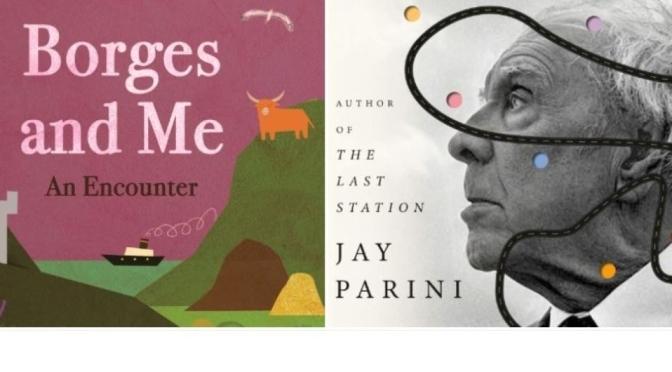
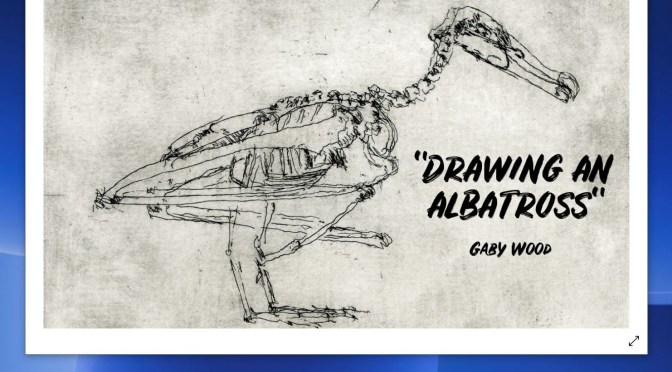
 By the time I used the camera lucida in the museum, I’d spent several months grappling with the strange proposition offered by its prism. I’d read that the image was sharper if you held it over a dark drawing surface, but that didn’t make any sense to me until the smoked metal etching plate was beneath my hand. Suddenly the albatross skeleton appeared on it: bright, spectral. The process was different from the way I’d imagined it. There was a drag, almost a dance, under the needle – a tiny jump of resistance in the copper. Without seeing what you were doing, you could feel it more keenly. It wasn’t like ice-skating at all.
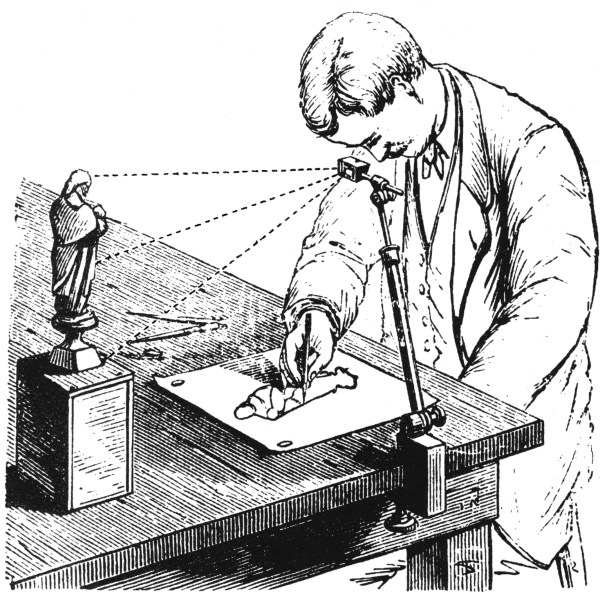 A camera lucida is an optical device used as a drawing aid by artists. The camera lucida performs an optical superimposition of the subject being viewed upon the surface upon which the artist is drawing. The artist sees both scene and drawing surface simultaneously, as in a photographic double exposure.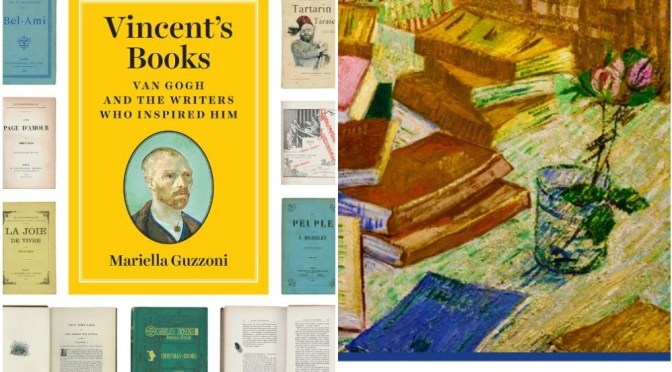
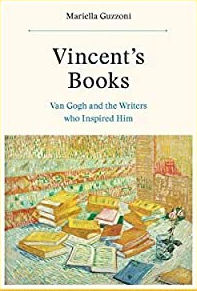 In his paintings we see books on their own, or books in the company of people or other objects; small, lonely ziggurats of books, or a book beside a candle. That last juxtaposition is telling in the extreme. Vincent had a reverence for books. They were sacred ground. They have a kind of inner glow about them.
 With every sparkling joke, every well-meaning and innocent character, every farcical tussle with angry swans and pet Pekingese, every utopian description of a stroll around the grounds of a pal’s stately home or a flutter on the choir boys’ hundred yards handicap at a summer village fete, he wanted to whisk us far away from our worries.
 T
T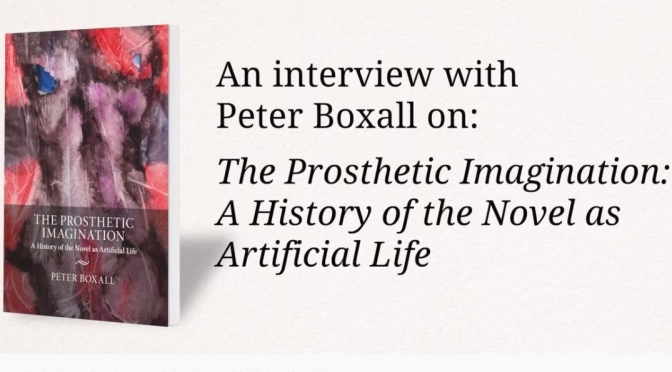
 Boomers Daily