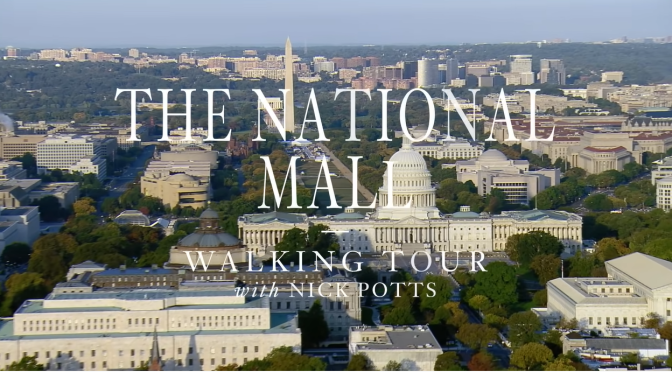
Architectural Digest takes you to Washington, D.C. for a walking tour of The National Mall with architect Nicholas Potts, highlighting some complex architectural details hidden in plain sight. The development of our nation’s capitol was drastically reimagined by 1902’s McMillan plan, implemented primarily to improve the design of the city’s monuments and parks.
Nick Potts brings this evolution to life, highlighting some remaining vestiges of 19th century D.C. while explaining how the city changed around them – including the White House itself.
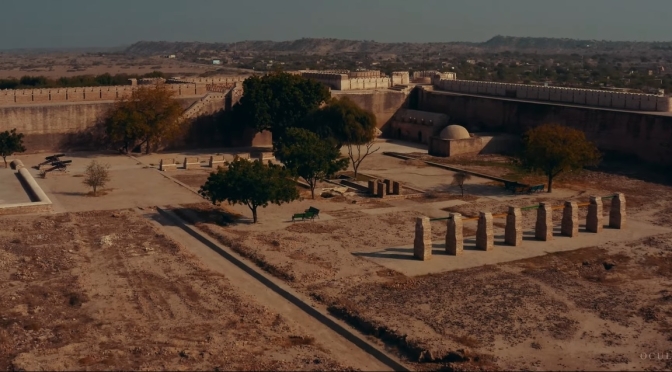
A cinematic travel video of Thar Desert Fort known as Naukot Fort in Tharparkar, Sindh Pakistan.
Naukot Fort is a fortification that was established by Mir Karam Ali Khan Talpur in 1814. It is situated in Mithi Taluka, Tharparkar District, approximately 64 km in the south of Mirpur Khas town, Sindh. Its location gave it its other common name, “The Gateway to the Thar Desert”.
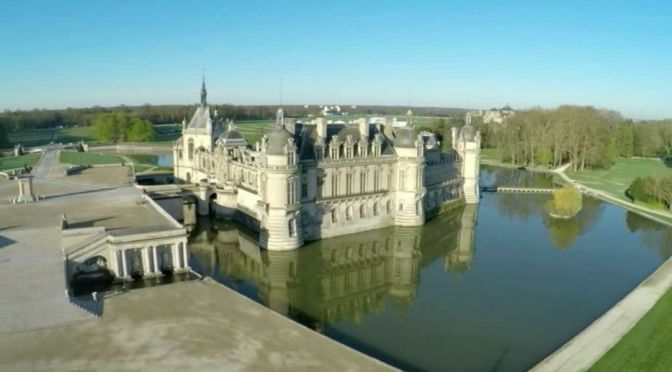
Every year, almost half a million visitors flock to Chantilly, one of France’s most beautiful castles. Located an hour from Paris and built in 1358, its princes greeted Louis XIV for sumptuous banquets. In the 19th century, Henri D’Orléans, Duke of Aumale, restored the château and turned it into an exceptional museum, containing the second-largest collection of paintings in France after the Louvre and more than 45,000 books. From restorers to gardeners and horseriders: behind the scenes, more than 100 people work every day on the upkeep of Chantilly. FRANCE 24 takes you to meet them.
India, country that occupies the greater part of South Asia. Its capital is New Delhi, built in the 20th century just south of the historic hub of Old Delhi to serve as India’s administrative centre. Its government is a constitutionalrepublic that represents a highly diverse population consisting of thousands of ethnic groups and likely hundreds of languages. With roughly one-sixth of the world’s total population, India is the second most populous country, after China.
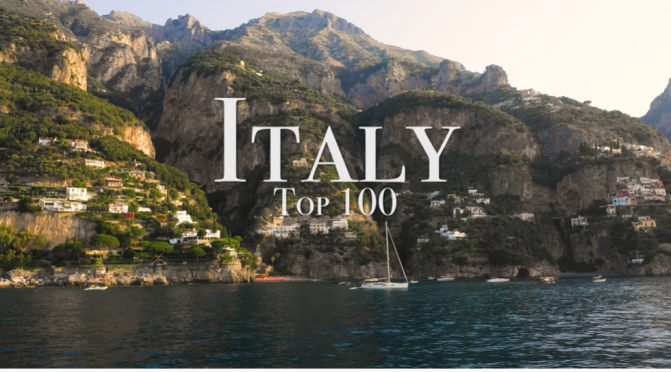
Italy, a European country with a long Mediterranean coastline, has left a powerful mark on Western culture and cuisine. Its capital, Rome, is home to the Vatican as well as landmark art and ancient ruins. Other major cities include Florence, with Renaissance masterpieces such as Michelangelo’s “David” and Brunelleschi’s Duomo; Venice, the city of canals; and Milan, Italy’s fashion capital.
0:00 – Intro 0:39 – Sardinia & Cala Goloritze 1:45 – Lake Como, Varenna, & Bellagio 2:43 – Italian Riviera & Cinque Terre 4:10 – Portofino & San Fruttuoso 4:54 – Venice 5:22 – Valdobbiadene 5:46 – Lake Garda & Monte Baldo 6:27 – Madonna Santuario 6:53 – Verona & Bologna 7:58 – Milan 8:40 – Lake Maggiore & Lake Lugano 9:31 – Aosta 9:45 – Cervinia 10:13 – Great St. Bernard Pass 10:42 – Stelvio Pass, Tirano, & Fellaria Glacier 11:44 – Piedmont Region 12:59 – Ponza & Chiaia di Luna 13:55 – Porto Flavia, Tavolara Island, & Cala Spinosa 14:57 – Dolomites & Seceda 15:32 – Alpe di Siusi & Sassolungo 16:14 – Gardena Pass & Val di Funes 16:50 – Lago di Braies & Passo Giau 17:30 – Cinque Torri & Lago Federa 18:05 – Vajolet Towers & Lago Sorapis 18:41 – Tre Cime di Lavaredo 19:20 – Rome & Vatican City 20:43 – Calcatta Vecchia 21:08 – Civita di Bagnoregio 21:35 – Naples & Pompeii 22:21 – Ischia & Procida 22:53 – Amalfi Coast & Fiordo di Furore 24:12 – Positano & Amalfi 25:20 – Atrani, Ravello, Praiano 27:18 – Capri 27:53 – Umbria & Perugia 28:32 – Spoleto & Assisi 29:18 – Spello & San Marino 30:21 – Vieste & Gargano National Park 30:46 – Tremiti Islands 31:26 – Puglia & Bari 31:45 – Polignano a Mare 32:15 – Alberobello & Matera 33:20 – Locorotondo & Martina Franca 33:50 – Taranto & Ostuni 34:40 – Calabria & Capo Vaticano 35:13 – Tropea & Scilla 35:58 – Gerace & Bova 36:44 – Sicily & Palermo 37:05 – Cefalu & Catania 37:40 – Taormina & Syracuse 38:36 – Valley of the Temples 39:14 – Aeolian Islands 39:30 – Lampedusa 39:54 – Tuscany & San Gimignano 41:09 – Siena & Monteriggioni 42:04 – Val d’Orcia & Pienza 42:45 – Montepulciano & Saturnia 43:58 – Pitilignano & Carrara 44:40 – Pisa 45:12 – Florence 46:26 – Outro
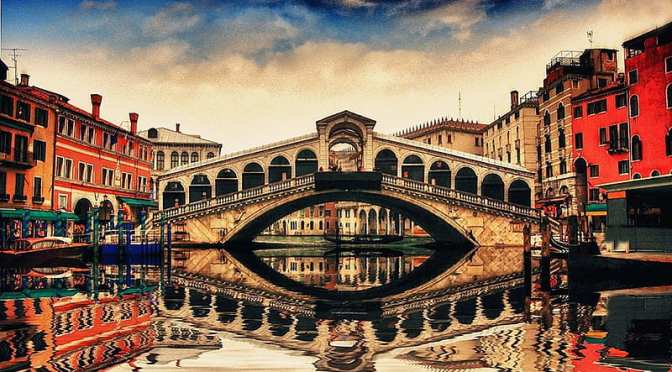
The Rialto bridge is one of the four bridges, together with the Accademia bridge, the Scalzi bridge and the Constitution bridge, that cross the Grand Canal, in the city of Venice. Of the four, the Rialto bridge is the oldest. According to the chronicles, the first passage on the Grand Canal consisted of a bridge of boats.
The growing importance of the Rialto market, on the eastern bank of the canal, increased the traffic on the floating bridge. Around 1250, it was replaced by a wooden bridge. In the first half of the 15th century, two rows of shops were built along the sides of the bridge; the proceeds from the rents, collected by the State Treasury, contributed to the maintenance of the bridge.
In 1310 the bridge was damaged during the retreat of the rioters led by Bajamonte Tiepolo. In 1444, however, it collapsed under the weight of the large crowd gathered to witness the passage of the procession of the bride of the Marquis of Ferrara. In 1503 the construction of a stone bridge was proposed for the first time.
In the following decades, several projects were evaluated. The work was completed in 1591, with the help of the architects Antonio and Tommaso Contin, who were his nephews, as sons of his son-in-law Bernardino Contin.
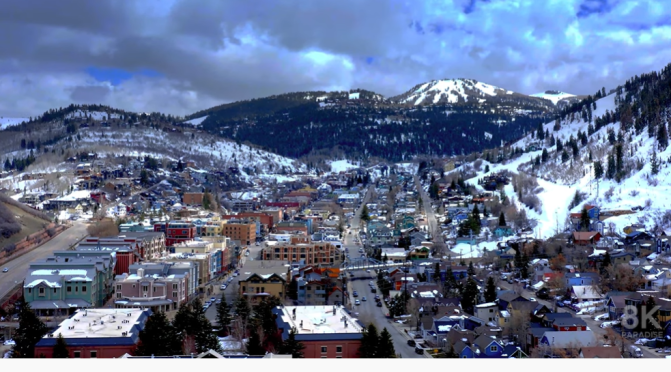
Utah is a state in the Mountain West subregion of the Western United States. Utah is a landlocked U.S. state bordered to its east by Colorado, to its northeast by Wyoming, to its north by Idaho, to its south by Arizona, and to its west by Nevada. Utah also touches a corner of New Mexico in the southeast.
Video timeline: 0:00 1. Salt Lake City skyline at sunset with mountains behind 0:08 2. Park City Mountain Resort, Utah 0:16 3. Utah mountain landscape 0:22 4. Park City Mountain Resort 0:30 5. Horses at Zion National Park 0:38 6. Road through the desert and mountains of Utah 0:47 7. Amazing rock formations in Utah 0:56 8. Salt Lake City at night 1:03 9. Amazing rock formations in Utah 1:11 10. Utah Arches National Park on a sunny day 1:18 11. Stormy desert buttes and river near Moab, Utah 1:26 12. Butte landscape, Utah 1:34 13. Salt Lake City, Utah 1:40 14. Pink cliffs in Snow Canyon State Park, Utah 1:49 15. Salt Lake City capital building 1:57 16. Stunning red sandstone hoodoos in Bryce Canyon National Park 2:07 17. Colorado river highway 128, Utah 2:18 18. Salt Lake City skyline and cathedral 2:29 19. The Mars Desert Research Station (MDRS) in Utah 2:36 20. Colorado river highway 128, Utah 2:46 21. Sunny dry desert towards big rocky mountains and clear blue sky in Utah 2:55 22. Salt Lake City capitol building city skyline 3:03 23. Peaceful reflective water between canyons in Lake Powell 3:13 24. Salt Lake City Assembly Hall from Latter-day Saints 3:23 25. Mountain landscape in Utah 3:42 26. Cliff edge in Southern Utah 3:48 27. Utah Arches National Park at sunrise 3:58 28. Lake Powell rock formations and canyon walls 4:10 29. Salt Lake City skyline at sunset with mountains 4:20 30. Butte factory in Utah 4:30 31. Mexican Hat rock formation in Utah 4:41 32. Red Rock Mesa mountain cliffs in Red Rock desert, Utah 4:48 33. Utah Arches National Park on a sunny day 5:02 34. Lake Powell with canyons in the background 5:13 35. Salt Lake City capitol building 5:25 36. The Mars Desert Research Station (MDRS) in Utah 5:34 37. Utah mountain landscape 5:50 38. Winding road leading to unique Bears Ears, Utah 6:01 39. Rock formations in Paria, Utah 6:12 40. Texas Gulf Potash Pond One in Utah 6:28 41. Juniper trees in a vast desert in Central Utah 6:35 42. Red rock buttes and cliffs in Utah 6:49 43. Colorado river in the desert, Utah 7:04 44. Salt Lake City, Utah 7:27 45. Road in beautiful desert, Burr Trail canyon 7:33 46. Antelope Island, Utah 7:47 47. Empty desert road at sunrise in Monument Valley, Utah 7:59 48. Stunning red sandstone hoodoos in Bryce Canyon National Park 8:14 49. Utah Arches National Park on a sunny day 8:20 50. The Mars Desert Research Station (MDRS) in Utah 8:34 51. Utah Arches National Park at sunrise 8:41 52. Texas Gulf Potash Pond One in Utah 8:58 53. Utah Arches National Park at sunrise 9:06 54. Grand Canyon at Utah border 9:20 55. Rock formations in Paria, Utah 9:39 56. Famous sunny American desert highway road in Monuments Valley 9:53 57. Salt Lake City, Utah
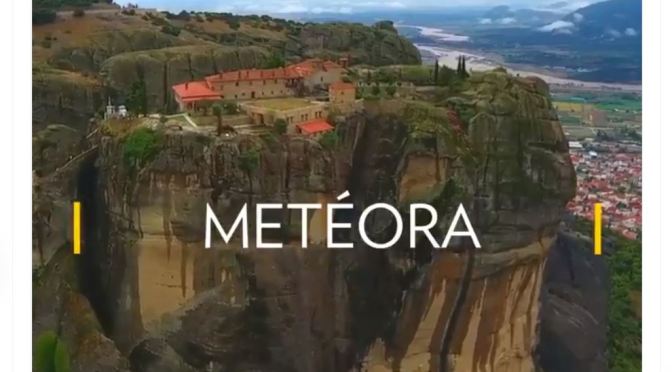
The Meteora is a rock formation in central Greece hosting one of the largest and most precipitously built complexes of Eastern Orthodox monasteries, second in importance only to Mount Athos. The six monasteries are built on immense natural pillars and hill-like rounded boulders that dominate the local area.
The word “meteora,” means “hovering in the air” which, whist a literal description of the famous monasteries, also shows just how otherworldly they seem.
The complex is made up of twenty-four Eastern Orthodox monasteries that were built on giant sandstone rock pillars between the 14th and 16th centuries.
A timeless treasure, nearly lost forever. Without the UNESCO‘s unprecedented rescue operation, future generations might have only seen the stunning temples of Ramses II and Cleopatra in the pages of history books. Majestic stone colossi rising from the desert sands, structures like these kept their secrets for generations.
For centuries, Abu Simbel, Dendur, Amada and other monuments faced threats from looters, earthquakes, and floods. Ultimately, it was the waters of the Aswan Dam that nearly sealed their fate. In 1960, then Egyptian President Nasser ordered the dam‘s construction. In order to save the temples of Ramses II and Cleopatra, among others, UNESCO reached out to over 50 countries, and raised $80 million.
After receiving multiple proposals to save the structure, it was one from Sweden that proved successful. The plan: dismantling the complex and rebuilding it on higher ground. Between November 1963 and September 1968, saws were used to cut the two temples into 1,036 blocks, each weighing between seven and 30 tons.
Their new location was 64 meters above the old site and 180 meters further inland. After five years of construction, this major undertaking was completed on September 22, 1968. The Nubian temples of Abu Simbel are now a UNESCO World Heritage Site.
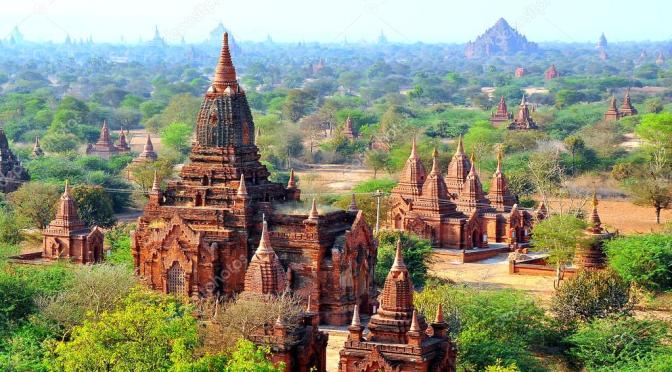
“Bagan is actually a splendid site. You can imagine in only in this, like, fifty square kilometers, they have more than 3,000 monuments. And then all the monuments have different styles and different architecture”.
The ancient past of Bagan, Myanmar, is still visible today in the more than 3,000 temples, monasteries, and works of art and architecture that remain at the site. Beginning around 1000 CE, Bagan served as the capital city of the Pagan Kingdom. Many of the surviving monuments date from the 11th to 13th centuries. A number of these temples are still used by worshippers and pilgrims today. A 2016 earthquake, which damaged over 400 structures, brought renewed international attention to Bagan and its future.
In February 2020, a team from the Getty Conservation Institute (GCI) returned from doing intensive preparatory work with international and local colleagues in Bagan to launch a long-term conservation project there. Soon after, the worldwide outbreak of COVID-19 closed borders and halted travel. In February 2021, a coup d’état staged by the Burmese Military plunged the country into further uncertainty.
In this episode, Susan Macdonald, head of Buildings and Sites at the GCI, and Ohnmar Myo, the GCI’s consultant in Myanmar, discuss the history of Bagan, the demands and challenges of conservation there, and their hopes for the future of the site. Myo is a former project officer of the Cultural Unit, UNESCO, and was a principal preparator of the report that confirmed Bagan’s World Heritage Site status in 2019. This conversation was recorded in January 2021, under very different circumstances, but it captures the curiosity, ambitions, optimism, and collaborative spirit that guided the project at that time.
News, Views and Reviews For The Intellectually Curious


 Boomers Daily