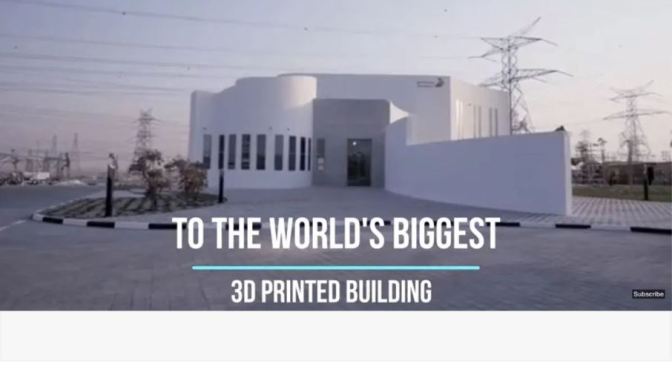
Robotic construction company Apis Cor has used its technology to build the world’s largest 3D-printed building, a two-storey administrative office in Dubai.
Measuring 9.5 metres high with a floor area of 640 square metres, Apis Cor built the record-breaking structure for the Dubai Municipality. Apis Cor developed a gypsum-based material to run through the printer and sourced a local producer. The printing took place out in the open, to prove that the technology could handle a harsh environment without humidity and temperature control.
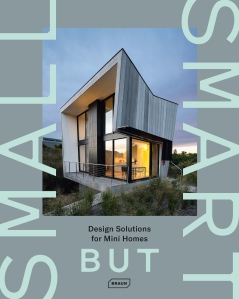
This volume presents a large variety of sophisticated solutions for mini houses in terms of architectural style, construction method and interior design. Whether portable or prefabricated, newly built or reused, rural or urban, they all meet the highest technological and sustainable standards to literally reduce their owners’ ecological footprint.
By living in a large ceramic tub, Ancient Greek philosopher Diogenes was one of the first people to promote a simple lifestyle as a protest against a corrupt society – one could call him an unwitting pioneer of the current tiny-house movement.
However, today small living is not necessarily connected to an alternative or even anarchic lifestyle – it simply makes things easier, more economic and eco-friendly to focus on what is really needed in life without compromising quality.
“Research suggests that as we age, Americans will spend more of our hard-earned retirement assets on health care, such as insurance, prescription drugs, in-home care and other services that help us remain independent,” says NRMLA’s President Steve Irwin. “A retirement plan that includes the responsible use of home equity may be the best option that can help ensure healthcare spending doesn’t become a financial burden for many retired couples.”
(December 17, 2019) – Homeowners 62 and older saw their housing wealth grow by 0.3 percent or $24 billion in the third quarter to a record $7.19 trillion from Q2 2019, the National Reverse Mortgage Lenders Association reported today in its quarterly release of the NRMLA/RiskSpan Reverse Mortgage Market Index.
The RMMI rose in Q3 2019 to 259.19, another all-time high since the index was first published in 2000. The increase in senior homeowners’ wealth was mainly driven by an estimated 0.5 percent or $40.7 billion increase in senior home values, offset by a one percent or $16.5 billion increase of senior-held mortgage debt.
For seven years, Ikea has treated the smart home as a hobby. That’s changing now that Björn Block’s Home Smart division has been promoted to the same importance as Living Room, Bedroom, and all the other Ikea businesses that have come to define the company.
Ikea faces the challenge of teaming up with Google, Amazon, Apple, and other tech giants while also battling them for primacy in the home.
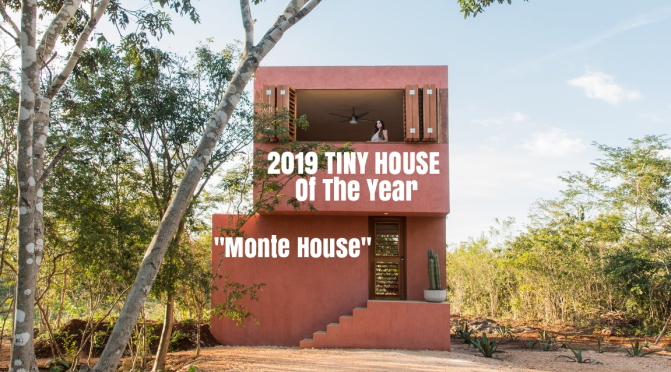
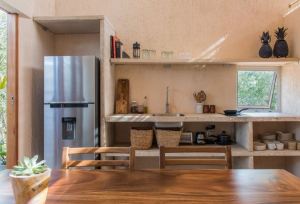
Situated on a sweeping two-acre lot, this 452-square-foot abode is just right for two.
In order to create a small yet comfortable vacation home for a young couple, the multidisciplinary workshop TACO, or Taller de Arquitectura Contextual, sited it in the corner of a two-acre lot, then employed built-in elements for an “intuitive” interior layout.
Rough stucco mixed with artisanal paint conveys warmth and texture, while precisely placed apertures connect the interior to the remote setting. “The objective was to achieve a reflective and contemplative place that links the occupant with the surrounding wild landscape,” said the firm.
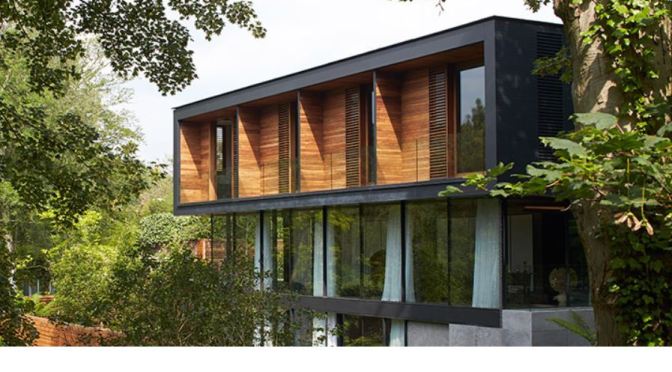
Fitzroy Park, London N6 A stunning 6,200 sq ft space, this remarkable and sprawling house rises up through its surrounding landscaped gardens. Described by the Architects’ Journal as having a “beguilingly cave-like relationship to the outside world”, it is a bold vision of contemporary architecture in which the natural world has been thoroughly entwined with the design.
Recline by the pool, listen to the artificial stream winding its way through the gardens, meander across the footbridge: this home was conceived for those long, dreamy summer days.
…the Yō no Ie re-imagines a life in suburban-rural areas, rather than urban-suburban. This reflects quiet yet significant social changes – or rather, shifts in life priorities of people and how they define happiness. In the 20th century, when society was excited about economic growth, everyone dreamed of living in cities, working at big companies by navigating a world of fierce competition, either spending an eye-popping amount of money on a small urban condo that quickly became a norm, or traveling hours to commute from a more affordable home in rapidly sprawling suburbs.
MUJI House released the “陽の家 (Yō no Ie, or Sun House)” in September, 2019, its 4th product since it debuted the “木の家 (Ki no ie, or Wood House) in 2004. Upon the release, they opened its model house at a glamping site called “Forest Living” in Isumi-City, Chiba which is about a 2-hour drive from Tokyo.
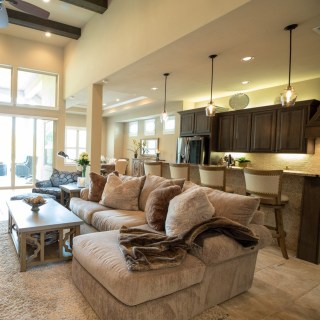
The single-level home has high windows and travertine floors throughout.PHOTO: AMY MIKLER FOR THE WALL STREET JOURNAL
The jewel-box home—small, but loaded with amenities and costly finishes—is luring more home buyers. An analysis by Home Innovation Research Labs, a subsidiary of the National Association of Home Builders, found that the number of new-construction luxury homes at 3,000 square feet or less has increased nearly 20% since 2013—with a corresponding decline in larger-size, high-price homes.
Changing demographics might be driving the trend. More than half of all households now consist of single people or couples, U.S. Census Bureau data shows—with traditional nuclear families accounting for just 20%.
“Empty-nesters want to downsize, but they want luxury homes not starter homes—luxury kitchens, marble surfaces, all the latest and greatest,” said Tim Costello, CEO of Builder Homesite, a consortium whose New Home Source website—an online clearing house for new-construction homes—tracks home buyers’ preferences.
From the Tiny Home Industry Association (Dec 11, 2019):
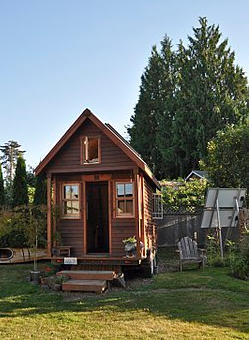
The City of Los Angeles has given the Green Light to Movable Tiny Homes as ADUs! The Accessory Dwelling Unit (ADU) ordinance has been APPROVED today by the LA City Council. This ordinance permits Movable Tiny Houses as permissible and permanently habitable accessory dwelling units (ADU). The ordinance becomes law in time for Christmas!
Suffice it to say that, now that the nation’s 2nd largest city recognizes Movable Tiny Homes as habitable ADU’s, it will go a long way in providing a model for other cities around the country.
The project’s owner runs a 5-story apartment. In the past, the rooftop was only used to keep water tanks, leaving a lot of empty space. The owner, therefore, wished to build a small house there for his own use. The rooftop location is an interestingly unique context that sets this project apart from other housing designs. Instead of a normal ground, this house has a concrete courtyard. Trees are replaced with vertical lines of tall buildings in the Lat Phrao district.
Our idea was not to make this house feel like a building, but to free it from form. We wanted it to be just a borderless box that emerges out of nowhere in the sky, as if the thickness of the wall and roof were non-existent, but still able to make holes in the ceiling to install curtains, air conditioners, and embed lights. Our intention was to give an illusion to onlookers that the entire ceiling was in the same straight line even though we featured a drop ceiling and a slope that was intentionally used to make the wall and ceiling look thin.

 Robotic construction company Apis Cor has used its technology to build the world’s largest 3D-printed building, a two-storey administrative office in Dubai.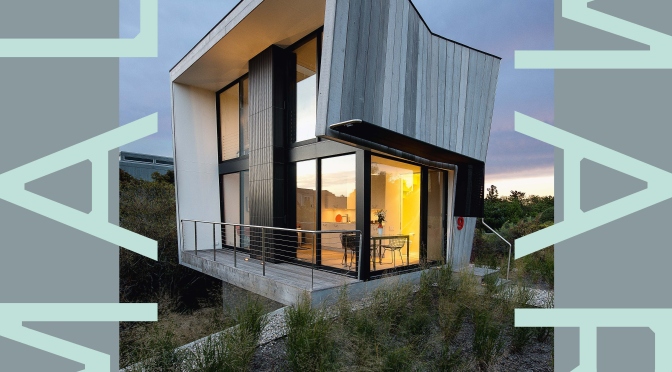
 This volume presents a large variety of sophisticated solutions for mini houses in terms of architectural style, construction method and interior design. Whether portable or prefabricated, newly built or reused, rural or urban, they all meet the highest technological and sustainable standards to literally reduce their owners’ ecological footprint.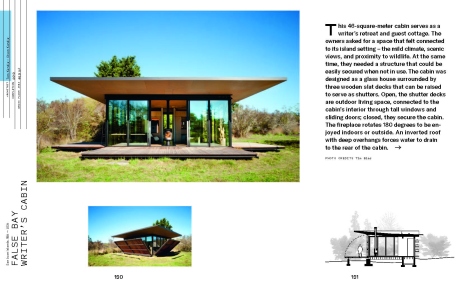

 “Research suggests that as we age, Americans will spend more of our hard-earned retirement assets on health care, such as insurance, prescription drugs, in-home care and other services that help us remain independent,” says NRMLA’s President Steve Irwin. “A retirement plan that includes the responsible use of home equity may be the best option that can help ensure healthcare spending doesn’t become a financial burden for many retired couples.”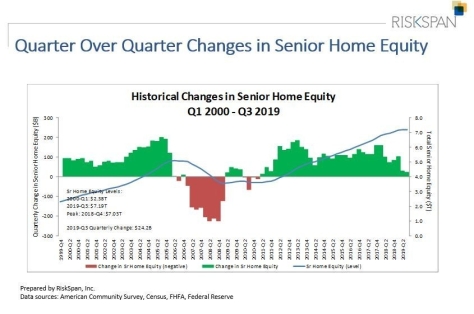

 Situated on a sweeping two-acre lot, this 452-square-foot abode is just right for two.
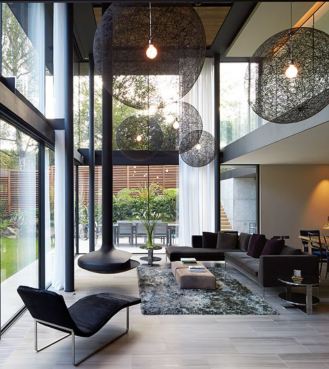 A stunning 6,200 sq ft space, this remarkable and sprawling house rises up through its surrounding landscaped gardens. Described by the Architects’ Journal as having a “beguilingly cave-like relationship to the outside world”, it is a bold vision of contemporary architecture in which the natural world has been thoroughly entwined with the design.
 Recline by the pool, listen to the artificial stream winding its way through the gardens, meander across the footbridge: this home was conceived for those long, dreamy summer days.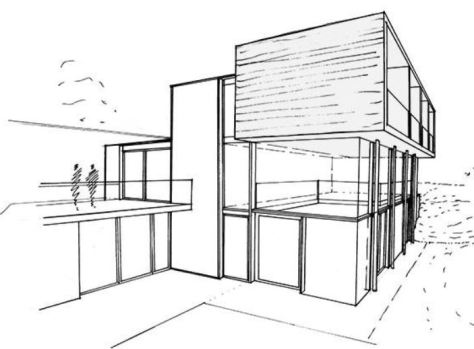

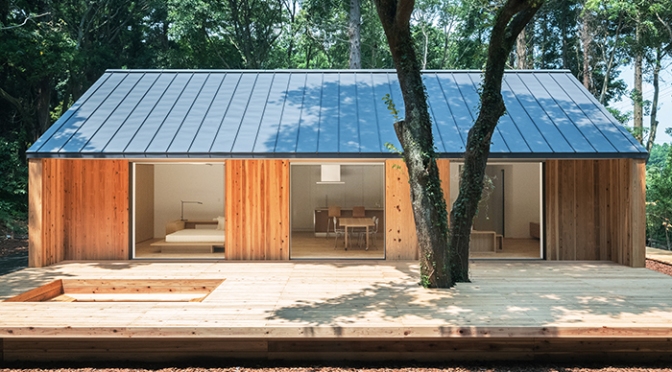
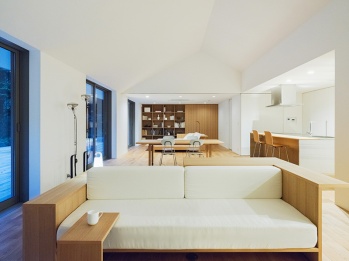 …the Yō no Ie re-imagines a life in suburban-rural areas, rather than urban-suburban. This reflects quiet yet significant social changes – or rather, shifts in life priorities of people and how they define happiness. In the 20th century, when society was excited about economic growth, everyone dreamed of living in cities, working at big companies by navigating a world of fierce competition, either spending an eye-popping amount of money on a small urban condo that quickly became a norm, or traveling hours to commute from a more affordable home in rapidly sprawling suburbs.

 The City of Los Angeles has given the Green Light to Movable Tiny Homes as ADUs!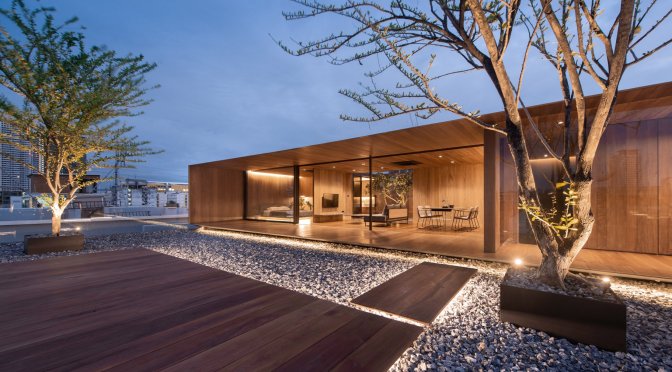
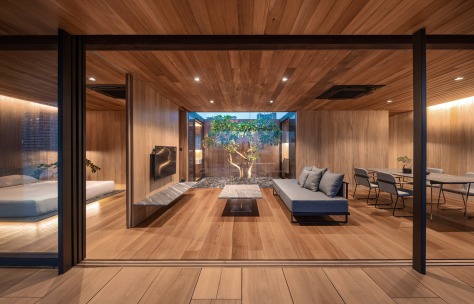
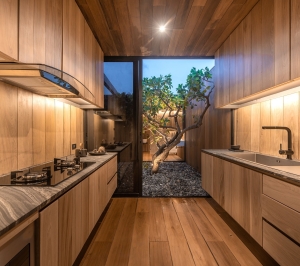 Our idea was not to make this house feel like a building, but to free it from form. We wanted it to be just a borderless box that emerges out of nowhere in the sky, as if the thickness of the wall and roof were non-existent, but still able to make holes in the ceiling to install curtains, air conditioners, and embed lights. Our intention was to give an illusion to onlookers that the entire ceiling was in the same straight line even though we featured a drop ceiling and a slope that was intentionally used to make the wall and ceiling look thin.
 Boomers Daily