Category Archives: Homes

Future Of Housing: California Architect And Builder Launch Luxury Container Tiny Homes

From a Dwell.com online article:
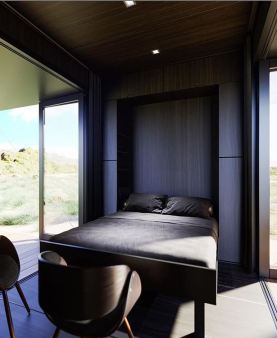
BuHaus Container Home interior fold down bedDrawing upon Garnero’s six years of cargotecture experience and Burdge’s design expertise, the duo recently launched the Buhaus: a tiny pre-permitted container home designed for indoor/outdoor living. “People appreciate great design, and most shipping container designs seem to be more low-end,” says Burdge. “We wanted to create a higher-end shipping container living unit.”

In the wake of the 2018 Woolsey Fire that devastated Southern California, Malibu architect Doug Burdge and builder Nate Garnero sought to provide their clients with temporary housing by repurposing shipping containers into fire-resistant tiny homes.

Buhaus—a combination of the words Bauhaus and Malibu—takes cues from the 20th-century movement with its clean, geometric form and focus on functionality. At 160 square feet, the Buhaus Studio Unit is efficiently divided into three sections: a living/sleeping area with a kitchenette, a bathroom, and an outdoor deck.
Read full article

Top 2019 Home Designs: “Himchori Residence” In Bangladesh By River & Rain Ltd. Architects

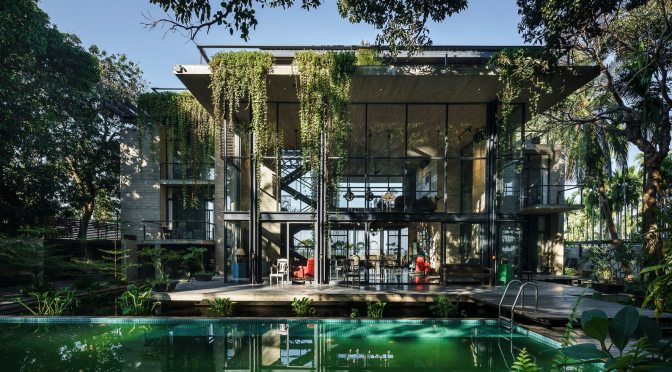
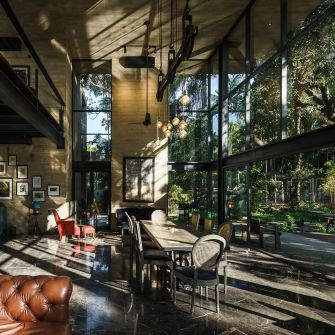
Himchori Residence Interior River & Rain LtdThe two and half-storied ‘Vacation Villa’ in Himchori marine drive is a holiday destination amidst the natural setup of hills and sea. The existing topography inspired project is an alluring statement of contemporary architecture in Bangladesh. The purpose of the villa as a place of vacationing is well served as it ensemble two exquisite natural proponent of the site; sea and hills within its built premise. Knotting multiple forces of nature within a space to create and balance the desired psychological mood of relaxation for user was the challenge.
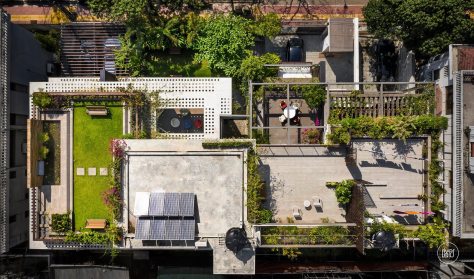

Himchori Residence Overhead View River & Rain Ltd

The composite structure of the project is well displayed to its true expression.  The RCC structure of east and west wing have been adjoined centrally with steel structure.  The sturdy sleek steel frame refurbished with glass is the central segment of the form. Recycled  and vintage materials used in various spaces of the villa have added sophistication without making it much ornate.

Architects website

American Architecture: Inside Tour Of Gertrude Vanderbilt Whitney’s “Guilded Age” Art Studio

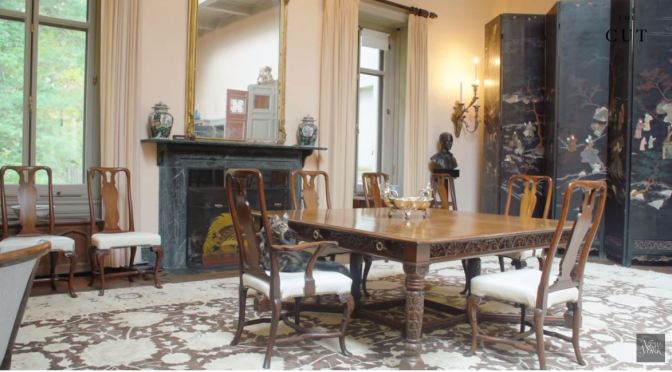
Artist and socialite Gertrude Vanderbilt Whitney, who founded the Whitney Museum of American Art, had homes in New York, Paris, the Adirondacks, and Inside Gertrude Vanderbilt Whitney’s Long Island Art Studio New York Magazine Video January 17 2020Long Island. In 1912, she commissioned the Gilded Age architect William Adams Delano, of Delano & Aldrich, to build her a neoclassical studio on the grounds of the Whitney estate in Old Westbury.

After her death in 1942, the villa lay empty for 40 years until her granddaughter Pamela LeBoutillier decided to renovate it as a home for her family. Today, her son John LeBoutillier lives there, while keeping the family legacy alive.

Video Profiles: London Architect Richard Found In His Cotswold Retreat

When designer Richard Found discovered the dream plot on which to build his serene contemporary retreat overlooking a lake, he didn’t bet on what happened next. In the grounds stood a derelict 18th-century gamekeeper’s cottage, which was immediately spot-listed by Historic England. “It changed the whole dynamic of what I thought would be a straightforward new-build project, and became a far more arduous planning exercise.”…

House Proud is a series of videos created by the Telegraph which showcase some of Britain’s most idiosyncratic, quirky, unusual and unforgettable homes. A celebration of British eccentricity and imagination, in each film the owner gives us an intimate guided tour and tells us the story of their unique property.

Richard Found's Radical Retreat Gloucestershire England The Telegraphy Video January 16 2020

Read the full article

Top 2019 Architecture: “Branch House” By Tolo Architecture (Montecito)

branch-house-by-tolo-architecture-1-e1579038253756.jpg

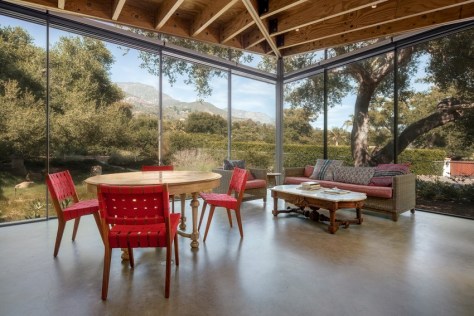
The interior palette is simple, even stark: concrete floors, gypsum board walls and ceilings, and exposed laminated-veneer lumber joists in the corridors and other areas. Colorfully glazed Heath clay tile punctuates specific areas: blue for the kitchen, and blue, pink, and yellow for the bathrooms. The exterior is even simpler, with the roof and siding of the boldly geometric volumes sheathed in copper shingles that act as a rainscreen while protecting the wood-framed structure from fire like a protective armor.

Branch House by Tolo Architecture
http://toloarchitecture.com/

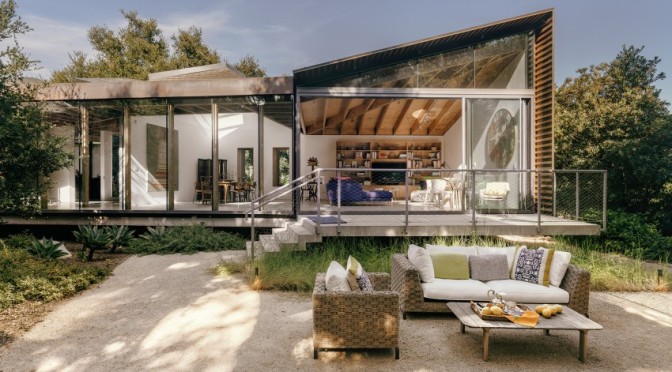
Designed by Los Angeles–based TOLO Architecture, the Branch House brings a village of abstract domestic forms to a typical suburban enclave in Montecito, Calif. The 4,400-square-foot single-family residence sits on a 1-acre site on a cul de sac. A series of eight rectangular volumes, each with a skylight, enclose a living room and dining room, a kitchen, a two-car garage, an office, two bedrooms, a master bath, and a powder room, respectively, and are deployed in a nonorthogonal layout across the site. The positioning of each balances the desire for occupant privacy as well as views of the surrounding landscape. Meandering glass-lined hallways connect the volumes and act as galleries for the client’s art collection.

Read more 

Design: The History Behind “Two-Up, Two-Down” London Row Houses

From a CityLab online article:

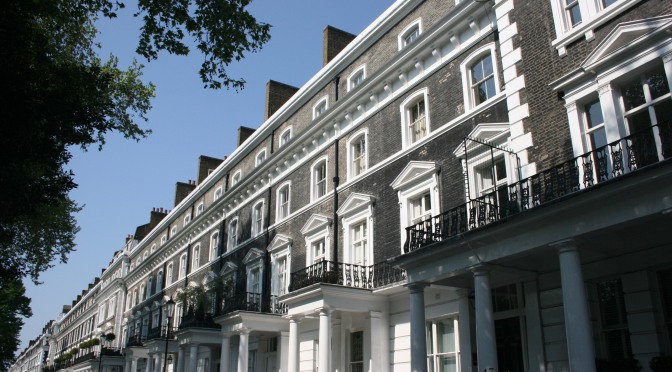
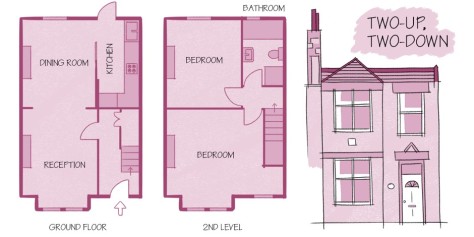
From the outside, London’s row houses have an eclectic variety of ornament, and they range in scale from palatial to boxy. But inside, they are pretty much all configured the same way. That’s because from the late 17th century up until the First World War, most residential buildings here cleaved very close to a model found across English cities: the terraced house, known in its most condensed, emblematic form as the “two-up, two-down.”

Two-Up Two Down London Row Houses CityLab Josh Kramer 2020

For a city that’s long been the repository of vast commercial, imperial, and industrial wealth, this might seem a very modest template. However, it is one that can be easily scaled up, points out Edward Denison, associate professor at the Bartlett School of Architecture and author of The Life of the British Home: An Architectural History.

“What’s extraordinary, in London in particular, is that you can find very grand houses in places such as Carlton House Terrace, with vast rooms and very high ceilings, that are still essentially two-up, two-downs with extra floors added,” says Denison. “Then you go to working-class terraced housing in places like Greenwich, and find a very different scale and quality of fittings, but essentially the same configuration.

Read full article

Retirement: 53-Story “The Clare” Tower Sale Signals Booming “Senior Luxury Living” Sector In Chicago

From a The Real Deal online article:

A unit at the Clare costs an average one-time entrance fee of $800,000 or so, along with around $5,500 monthly fees. The entrance fee is refunded when a resident dies or moves out. Entrance fees at a typical senior living facility is around $369,000.

The 53-story Clare tower on Chicago’s Magnificent Mile has sold for $105 million, a sign that luxury senior living facilities hold huge upside in today’s market.

Fundamental Advisors LP sold the luxury seniors-only tower for twice what the private equity firm paid for the 334-unit tower in 2012, according to the Wall Street Journal.

“The Clare” website 

Read more from article

Art & Innovation: “Gweilo” Scupltured Lighting By Partisans Design, Toronto

Gweilo is a new collection of custom lights by PARTISANS. Inspired by the idea that light itself could be harnessed and manipulated to create a physical sculpture, PARTISANS developed a design that alters light at its source. Gweilo reimagines illumination to architectural effect.

As spectral sculptures that fold and bend like light rays themselves, the pieces function as accents, dividers, or centerpieces, gracefully delineating space to create an
ethereal atmosphere.

Gweilo Lighting Sculptures Partisans Design

Each Gweilo light is handmade using thermoforming, a technique that allows etched optical grade acrylic sheets to be custom-shaped while they are still in their hot plastic
state. The sheets are heated to just under 400°C, at which point they become molten and pliable. They are immediately removed from the heat source and sculpted to produce a
variety of distinct folds and curves. When the metal extrusion containing an embedded LED strip is affxed to the cooled sheet’s edge, light is diffused across the etchings, amplifying the luminescent output. The result is an infnite set of silhouettes and sizes that emulate the vital movement of light.

Website 


Future Of Homebuilding: World’s First 3D-Printed Community Being Built

The Vulcan 2 3D printer can print a house in just 24 hours of print time. This technology is currently being put to the test in rural Mexico, where it’s being used to build the world’s first 3D-printed community, designed for residents living on less than $3 a day.