

A gem of late-nineteenth-century architecture, designed by architect Guido Sartirana, is currently for sale in Moltrasio, by the wonderful waters of Lake Como. This is a place that certainly needs no introduction, the undisputed pearl of the most beloved lake in Italy, one that has always been an elegant and exclusive destination thanks to its breathtaking views and its ancient noble homes surrounded by centuries-old gardens. In this dream setting, this villa for sale is in a unique position, directly overlooking the lake and surrounded by a private park measuring over 5,000 sqm. Directly by the lake, the property’s dockyard offers the exclusivity of reaching it by water in total privacy, aboard private boats. Built at the end of the 19th century on a project by a well-known Milanese architect, this villa is characterized by its richly decorated facade with Renaissance-style motifs, enriched by sloping wings and an extraordinarily panoramic corner tower. A huge terrace right in front of the lake, ideal for enjoying romantic drinks at sunset, leads us to the entrance on the ground floor, which is home to a spacious living area, made extraordinarily bright by big French windows. The terrace also leads to the lower level and to the beautiful pool area, to an outdoor kitchen and to the caretaker’s apartment. The main villa is flanked by two other buildings, a small castle and another independent house, located in the property’s grounds, which are an authentic haven of rest in which to enjoy the magical atmosphere of this place in the privacy of your own home.
Category Archives: Homes
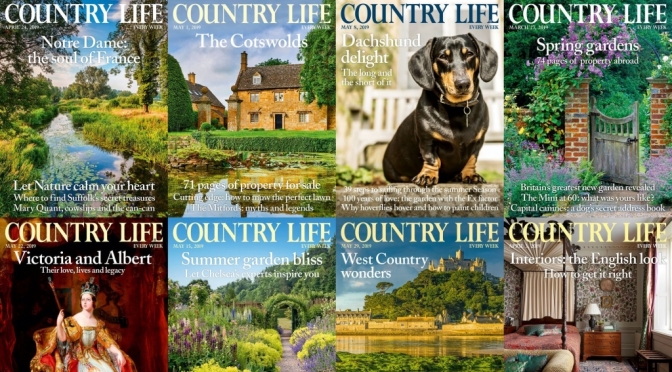
Covers: Country Life Magazine – Nov 2, 2022


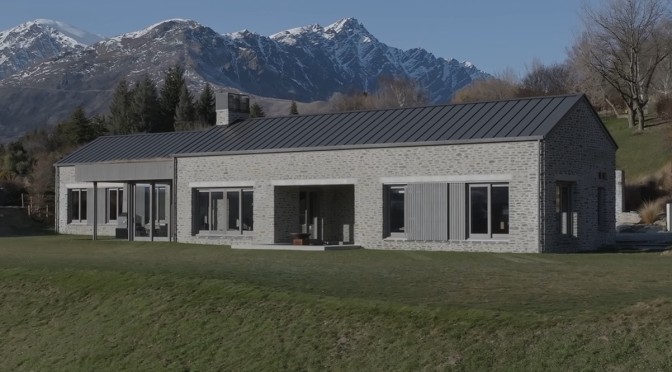
Tours: Lower Shotover House In New Zealand

Video timeline: 00:00 – Introduction to the Hidden Home 00:26 – Bunkering Into the Side of the Hill 01:00 – The Materials Used 01:40 – The Importance of Creating A Robust Home 02:10 – The Soft Pools of Light Throughout the Home 02:30 – Creating a Warm and Dramatic Feel 02:58 – The Building Aspect 03:29 – The Views from the Upstairs Bunk Room 03:51 – The Green Roof 04:17 – A Dramatic Kitchen 04:29 – Finding Joy in the Movement Between the Tight Spaces 04:51 – Creating A Timeless Masterpiece
Based in Queenstown, Lower Shotover House faces north, overlooking the Shotover River and Coronet Peak. The architect designs a hidden home that takes inspiration from the old musterer’s huts settled on the mountainside. Capitalising on the protective quality of the hill, the structures look out upon the landscape with a feeling of safety. Importantly, the architect designs a hidden home that utilises a stone composition and a house tour reveals the resulting echo of the rugged surrounds, as well as the proposition of permanence.
In materiality, Lower Shotover House reflects a playful interpretation of the natural context. The architect designs a hidden home that sees stone, black travertine and charcoal timber interior linings combine to establish a cosy interior design. Crafted in recognition of the clients’ lifestyle, Bureaux enforces a robust material palette that can withstand the markings of an active family in a timeless fashion. A dramatic home, Lower Shotover House features rich timber walls, carefully framed windows and pools of soft lighting.
The architect designs a hidden home in which residents are led through the interior with ease; a project where nothing is over-lit and the architecture captures both the compression and expansion of space. Residents must ascend a step in order to enter the kitchen, suggesting an element of theatricality within the experience of the home. As the architect designs a hidden home, they consider the relevance of orientation to the outcome. Lower Shotover House faces north and, as such, measures are put into place to retain heat and maximise the impact of the sweeping views.
While stone walls and a green roof influence the thermal quality of the building, doors measuring three metres high can be pushed back in order to control the thermal climate of the interior. The green roof also engages the surrounding hillside mass, blurring the boundary between landscape and home. Immersing occupants in the mountainside experience, Lower Shotover House forms the ideal place of retreat. Through a process of consideration, the architect designs a hidden home that, though contemporary, is ultimately defined by a prevailing sense of timelessness.
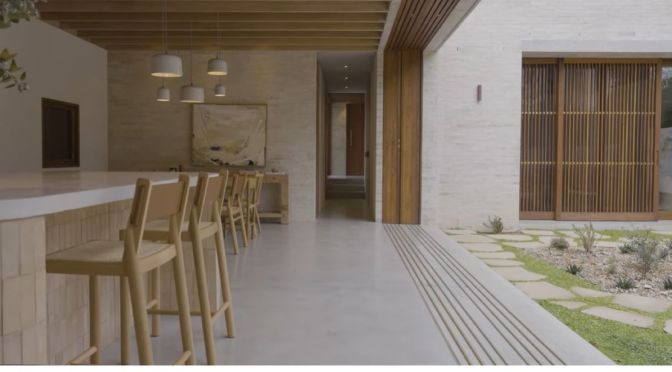
Home Design: Curl Curl House, Sydney, Australia
Afforded the freedom of an open design concept, interior design practice Folk Studio crafts Curl Curl House. Showcasing the collaborative work of architectural practice TRIAS, the magical home captures the spirit of the Australian coast.
Video timeline: 00:00 – An Introduction to the Magical Home 00:38 – The Collaboration of Folk Studio and TRIAS 01:51 – Adding Intentional Gestures to the L-Shaped Floor Plan 02:32 – A Beach, Bush and Coastal Palette 02:51 – Watching Visions Come to Life 03:22 – Having the Garden as an Integral Piece of the Design 03:46 – Seeing Green from all Areas 04:11 – The Hit and Miss Brickwork Screens 04:38 – Creating a Sanctuary and an Oasis for the Clients 04:58 – Finding Joy in the Client’s Comfort
Settled into Curl Curl, the coastal suburb of Sydney located just north of the Central Business District, the same-named house reflects its immersive environment. The natural character of the local context sees bush meet coast and a beachside lifestyle cohere with suburban influence. Upon accepting the design project, Folk Studio promptly met with architectural firm TRIAS in order to solidify the creative vision – a residential sanctuary – and ensure that the architecture and interior design of the home work together to form the ideal domestic experience.
Featuring an L-shaped spatial plan, Curl Curl House encloses a collection of communal zones on its ground floor, including a living room on each end. The position of each living room marks a change from the spatial arrangement of a typical house, which sees kitchen, living and dining spaces continue on from one another. Purposefully located, the living rooms function as calming areas within the magical home, removed from the bustle of the communal zones.
Inspired by the Australian beach, bush and coast, the aesthetic palette of Curl Curl House reflects a sense of natural serenity, enhanced by contrasting injections of brickwork that pay homage to the suburban context. Integral to the design of the magical home is the garden space growing along its perimeter. As a result of TRIAS condensing the architecture of the home, the garden space is maximised and enables a natural vista to be accessed from every room of the house.
Hit-or-miss brickwork screens adorn the upper levels of the façade, intercepting the incoming natural light to create shifting visual patterns within the magical home. Achieving a residential oasis, Folk Studio and Trias craft a magical home that serves as an escape from the hectic nature of everyday life. Curl Curl House stands as a residence in which its owners can take pride, rewarded by the sense of careful curation permeating the dwelling.
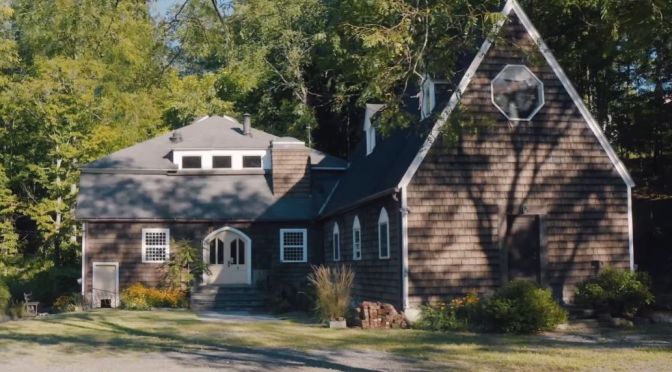
Home Renovations: An 1800’s Chapel In New York
Today on Architectural Digest, contractor Nick Schiffer from NS Builders returns to break down the renovation potential of an abandoned 1800’s-era chapel and museum in New York. Nick takes us through the gutted interior room by room, offering his renovation advice while pointing out the marvelous architectural details worth restoring.

Tours: San Francisco’s Storied Architecture
Today on AD Architect James Dixon leads us on a walking tour of San Francisco, highlighting the captivating details found in its storied architecture. From the iconic Transamerica Pyramid and Hallidie Building to Postcard Row, the Presidio and more – discover the history behind San Francisco’s most famous buildings and neighborhoods through James Dixon’s expert eye.

Tours: Light Mine House In Northern New Zealand
Sitting above the dunes on a plateau, Light Mine is an extraordinary home by Crosson Architects that embraces expansive views of the Coromandel Peninsula. Entering from the southern end of the house, the Light Mine house tour unfolds like a book, seeing Crosson Architects offer a carefully planned story from beginning to end.
Video timeline: 00:00 – Introduction to the Extraordinary New Zealand Home 00:43 – An Extraordinary Site 01:12 – A Choreographed Journey 01:30 – The History Behind the Gold Mining 02:10 – The Light Shafts 02:48 – Tying the Material Palette into Context 03:02 – Cladding Built From the Land 03:32 – Moulding and Blending into the Location Overtime 03:48 – The Extraordinary Craftsmanship 04:33 – A Reference to the Interior of a Gold Mine 05:08 – The Variations of Light Quality
Separated into interconnecting pods, Light Mine is a single level family home that takes inspiration from the dunes and headlands behind and becomes a unique structural form for future generations to enjoy. In designing the home, Crosson Architects looked to the gold mining history of the area, finding inspiration from a historical drawing of a gold mine shaft. As such, the architects have designed a series of geometric pods. Serving as unique structural elements, these inserts work together to break up the horizontal design of the extraordinary home.
Embraced by the clients after many conversations with Crosson Architects, the diagonal inserts offer a sense of scale and character to the home that relates to the surrounding landscape. From within, the diagonal shafts bring a playful and unique movement of light that instils changing characteristics; placed strategically over the living and dining areas, they offer variations of light as the sun shuffles through the extraordinary home.
Notably, the light shaft in the main bedroom offers glimpses of the night sky, capturing the Milky Way and stars above. Understanding that the extraordinary home needed to meld and blend into its surroundings over time, Crosson Architects has used reclaimed local native tōtara timber for the exterior cladding, enhancing the home’s horizontality and settling it into its surrounds. Overall, a cohesive approach to colour and materiality ensures the home reflects the surrounding landscape. Dark timber has been employed on the exterior, referencing the rock of the headland behind; inside, the use of light timber speaks to the sand dunes beyond.
The band sawn timber used extensively throughout the interior design creates a warm reprieve from the outside. In contrast, the kitchen and bathrooms feature dark timber veneer, which also nods to the gold mines while creating visual interest in each internal space. Challenged to design something that was both memorable and laid back, Crosson Architects has delivered an extraordinary home, which references Light Mine’s historical context and incorporates the changing colours of the day to emphasise its unique character.
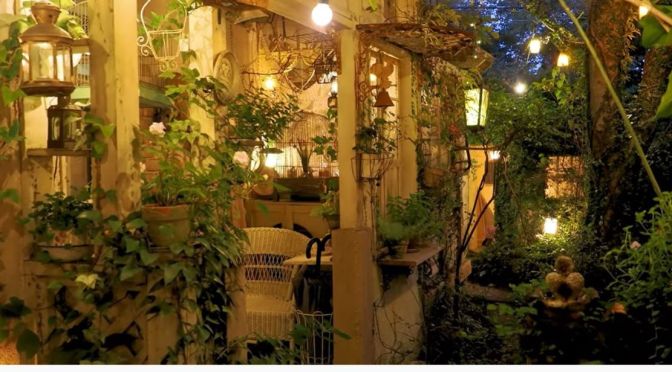
Home Tours: The Gardens Of Saitama In Japan (2022)
The Open Gardens of Saitama private residences:
0:00 Ms. Mizue Takahashi ‘s Residence (Herbal House), 7:31 Interiors of her house, 11:05 Her garden at Night
13:23 Ms.Yoshie Saito’s Residence (Garden Cafe Green Rose)
27:07 Ms.Mariko Gonda’s Residence(Le Jardin Secret)
Saitama Prefecture is part of the Greater Tokyo area. In Saitama City, the Railway Museum traces rail history from the steam engines to bullet trains. Kawagoe city is known for well-preserved Edo-era buildings. West, the 3 Kuroyama Santaki falls cascade down mountains. Chichibu city is home to the 34 Buddhist temples of the Kannon Pilgrimage. Near Kinsho Temple, the Iwadatami rock formations line the Arakawa River.
Home Design: ‘Land On Water’ – MAST Studio (2022)
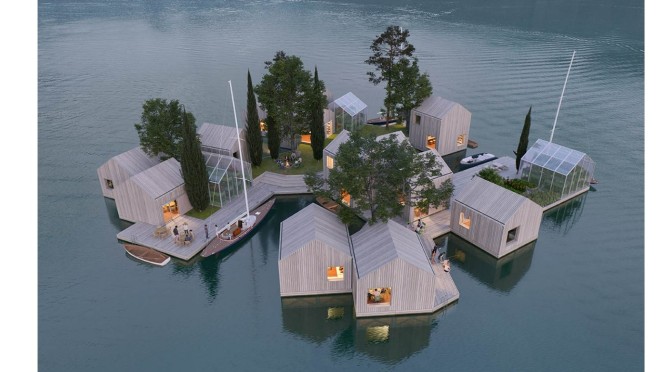
Land on Water by Copenhagen-based Architecture Studio MAST

Land on Water
The system is based on simple flat pack modules made from recycled reinforced polymer. These are extremely strong and resilient and can be easily transported and assembled on location


The modules can be assembled in different configurations to provide floating foundations for floating infrastructure, public spaces or housing.

A growing acknowledgement of sea level rise and an increased risk of urban flooding has contributed to a sharp increase in interest in building on water, but current solutions, including polystyrene filled concrete foundations and plastic pontoons are inflexible, difficult to transport and highly unsustainable.
MAST has envisioned a new system of simple of flat-packed modules made from recycled reinforced plastic, that can be easily transported around the globe and assembled into countless configurations, providing a secure floating foundation. The system offers a sustainable and highly flexible solution for building almost anything on the water; from floating houses in Seattle, to floating campsites on Oslo fjord, to saunas on Hobart’s riverfront.


The system was inspired by gabion construction, an ancient technology which utilises mesh cages filled with rubble to create extremely sturdy, low cost foundations. In this case the concept is inverted; and the modular ‘cages’ are filled with locally sourced, up-cycled floatation supporting the weight of any structure built on top. they are also much more adaptable than existing solutions since floatation can be added or adjusted at any time if weight is added or shifted around above.
Land on water will provide a climate resilient and adaptable solution for the construction of new floating buildings worldwide but could also lead to an entirely new type of dynamic and organic off-grid floating community and an alternative to the large master-planned floating cities currently under development which repeat many of the mistakes made by urban planners in the middle of the 20th century.
Design: St. Vincent Place In Albert Park, Australia
Video timeline: 00:00 – Introduction to the Award Winning Home 00:21 – A Restoration Project 3 Years in The Making 00:58 – Building Aspects From the Ground Up 01:31 – Compatibility Within the Home 01:46 – A Walkthrough of the Historic Section of the Home 02:03 – The Modern Section of the Home 02:18 – Reinterpretations of the Historic Aspects 02:46 – Encouraging Conversation Through Building and Design 03:36 – A Range of Surprising Features 04:45 – Peaceful Curation and Arrangement 05:09 – A Journey With the Client
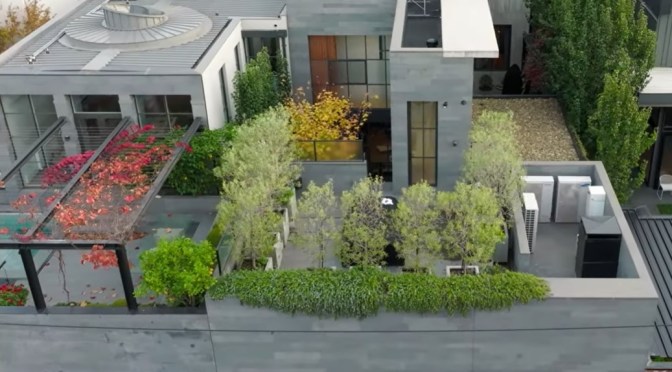
Originally owned by a convent, St Vincent’s Place is comprised of three buildings set side-by-side, situated in the Melbourne precinct of Albert Park. The heritage façade – the only historical element that could be retained in the award winning home – represents a significant contribution to the architecture of the area, presenting a combination of stone and delicate black metalwork. Traversing two design styles in a singular project, B.E Architecture dedicates the front of the home to heritage recreation whilst providing a modern extension.
The front of the award winning home captures a formal entrance and living room and upstairs, a master bedroom and dressing room. A studious approach to restorative design is reflected in the treatment of cornices, skirtings and architraves, as well as doorjambs, doors and flooring. In contrast, the back of the building captures a contemporary interior design including a downstairs pool, onsen and steam room, elevated with tiling and considered lighting.
Several features of St Vincent’s Place indicate the designer’s penchant for aesthetic flair. Inspired by pioneering artist Sigmar Polke, sliced agate doors filter natural light with an array of neutral tones. In addition, a large text piece reading ‘Heaven is a Place Where Nothing Ever Happens’ sparks curiosity from its reference, size and impressive incorporation into the award winning home.
“You do feel the magic of how these elements come together here,” says Broderick Ely, Design Director at B.E Architecture. “We curate, we arrange and manipulate these items so it sits very quietly.” Using the even application of decorative elements, B.E Architecture establishes a coherent and award winning home. St Vincent’s Place is structured to gently guide occupants towards its many hidden gems, enabling the mind to wander in unison with the body.
 Boomers Daily