Category Archives: History

Video Profiles: French Nobel Prize Author Albert Camus (1913 -1960)

This week, we’re putting the focus on Nobel Prize-winning French author Albert Camus. As 2020 saw France mark 60 years since his death in a car crash, Camus’s seminal work “The Plague” was unexpectedly thrust back into the spotlight by the Covid-19 pandemic.

From the UK to Japan, the 1947 novel established itself as a global sensation, topping sales charts and pushing publishers into a rushed reprint. But Camus’s prolific and multi-faceted career extends far beyond this viral hit. We tell you more about the author’s life, starting with his humble beginnings in French-ruled Algeria. 

Disease: ‘Malaria – The Deadliest Pandemic In World History’ (Video)

The covid-19 pandemic may have derailed the world in 2020, but a far deadlier disease has shaped human history for thousands of years. Malaria defeated armies, fuelled the slave trade and jump-started the modern environmental movement. How covid-19 hinders the fight against malaria: https://econ.st/3gAsfCj

Travel & History: Source Of Water For ‘Kakigori’ Shaved Ice In Japan (Video)

A geologist travels deep into Saitama Prefecture to investigate why whale fossils are being found so far from the nearest ocean and why the shaved ice there is so delicious.

The dessert is kakigori, a traditional Japanese shaved-ice specialty that has quickly become the dessert of choice at some of America’s most high-profile restaurants, and continues to grow in popularity. In its home country, however, kakigori has been popular for literal centuries: The idea dates back to the 11th century, when frozen blocks of ice from lakes would be preserved in the winter, only to be finely shaved and served with sweet syrup to Japan’s elite class in the summers. In the 19th century, when ice became more widely available, the public was able to try it, and now — thanks to electric refrigeration — kakigori is ubiquitous during warmer months.

Art: ‘Beyond The Surface’ – Monet’s “Changing Light”

This video takes an in-depth look at Monet’s approach to painting in series, an approach that consumed his later years. From stacks of wheat in the French countryside to sites of foggy London to water lilies at his home garden in Giverny, Monet painted beloved subjects again and again, depicting changing light and atmospheric conditions in works that captivate us still today. New scientific discoveries, however, reveal that Monet’s genius goes well beyond what we see on the surface.

Read more

History: ‘The Building Of The Erie Canal’ (1817-1825)

The Erie Canal is a 363-mile waterway that connects the Great Lakes with the Atlantic Ocean via the Hudson River in upstate New York. The channel, which traverses New York state from Albany to Buffalo on Lake Erie, was considered an engineering marvel when it first opened in 1825.

The Erie Canal provided a direct water route from New York City to the Midwest, triggering large-scale commercial and agricultural development—as well as immigration—to the sparsely populated frontiers of western New York, Ohio, Indiana, Michigan and points farther west. The canal transformed New York City into the young nation’s economic powerhouse, and in 2000 the U.S. Congress designated the Erie Canal a National Heritage Corridor.

Tributes: Country Singer Charlie Pride (1934-2020)

We remember Charley Pride, one of the first African Americans to become popular as a country artist. Pride died yesterday at the age of 86, of complications from COVID-19.

Charley Frank Pride (March 18, 1934 – December 12, 2020) was an American singer, guitarist, and professional baseball player. His greatest musical success came in the early to mid-1970s, when he was the best-selling performer for RCA Records since Elvis Presley.[1] During the peak years of his recording career (1966–87), he had 52 top 10 hits on the Billboard Hot Country Songs chart, 30 of which made it to number one. He won the Entertainer of the Year award at the Country Music Association Awards in 1971.

Pride was one of three African-American members of the Grand Ole Opry (the others are DeFord Bailey and Darius Rucker). He was inducted into the Country Music Hall of Fame in 2000.

Rise to fame

While he was active in baseball, Pride had been encouraged to join the music business by country stars such as Red Sovine and Red Foley, and was working towards this career. In 1958, in Memphis, Pride visited Sun Studios and recorded some songs.[14]

He performed his music solo at clubs and with a four-piece combo called the Night Hawks during the time he lived in Montana.[11] His break came when Chet Atkins at RCA Victor heard a demonstration tape and got Pride a contract. In 1966, he released his first RCA Victor single, “The Snakes Crawl at Night”.[11] Nashville manager and agent Jack D. Johnson signed Pride. Atkins was the longtime producer at RCA Victor who had made stars out of country singers such as Jim ReevesSkeeter Davis, and others. Pride was signed to RCA Victor in 1965. “The Snakes Crawl at Night” did not chart. On the records of this song submitted to radio stations for airplay, the singer was listed as “Country Charley Pride”. Pride disputes that the omission of a photo was deliberate; he stated that getting promoters to bring in a black country singer was a bigger problem: “people didn’t care if I was pink. RCA signed me… they knew I was colored…They decided to put the record out and let it speak for itself.”[11] While living in Montana, he continued to sing at local clubs, and in Great Falls had an additional boost to his career when he befriended local businessman Louis Allen “Al” Donohue, who owned radio stations including KMON, the first stations to play Pride’s records in Montana.[11]

Soon after the release of “The Snakes Crawl at Night”, Pride released another single called “Before I Met You”, which also did not chart. Not long afterwards, his third single, “Just Between You and Me”, was released. This song finally brought Pride success on the country charts. The song reached number nine on Hot Country Songs on February 25, 1967.[15]

According to a news item by the Associated Press, Pride made this comment in a 1992 interview: “They used to ask me how it feels to be the ‘first colored country singer’ .. Then it was ‘first Negro country singer;’ then ‘first black country singer.’ Now I’m the ‘first African-American country singer.’ That’s about the only thing that’s changed”. [16]

Career peak

“Pride’s amazing baritone—it hints at twang and melisma simultaneously, and to call it warm is to slight the brightness of its heat”

Christgau’s Record Guide: Rock Albums of the Seventies (1981)

The success of “Just Between You and Me” was enormous. Pride was nominated for a Grammy Award for the song the next year. In the late summer of 1966, on the strength of his early releases, he was booked for his first large show, in Detroit‘s Olympia Stadium. Since no biographical information had been included with those singles, few of the 10,000 country fans who came to the show knew Pride was black, and only discovered the fact when he walked onto the stage, at which point the applause trickled off to silence. “I knew I’d have to get it over with sooner or later,” Pride later remembered. “I told the audience: ‘Friends, I realize it’s a little unique, me coming out here—with a permanent suntan—to sing country and western to you. But that’s the way it is.’ ”[18]

The show became the first of a long and active career playing to large audiences, his race soon becoming a minor detail compared to his success. In 1967, he became the first black performer to appear at the Grand Ole Opry since founding member DeFord Bailey, who had last appeared in 1941.[19] Between 1969 and 1971, Pride had eight singles that reached number one on the US Country Hit Parade and also charted on the Billboard Hot 100: “All I Have to Offer You (Is Me)“, “(I’m So) Afraid of Losing You Again“, “I Can’t Believe That You’ve Stopped Loving Me“, “I’d Rather Love You“, “Is Anybody Goin’ to San Antone“, “Wonder Could I Live There Anymore“, “I’m Just Me“, and “Kiss an Angel Good Mornin’“. The pop success of these songs reflected the country/pop crossover sound that was reaching country music in the 1960s and early 1970s, known as “Countrypolitan“. In 1969, his compilation albumThe Best of Charley Pride, sold more than one million copies, and was awarded a gold disc.[20] Ultimately, Elvis Presley was the only artist who sold more records than Pride for RCA Victor.[11]

Pride performed “All His Children“, featured in the film Sometimes a Great Notion (1971).[21] The film received two Oscar nominations in 1972, one for “All His Children”.[22]

“Kiss an Angel Good Mornin'”

In 1971, Pride released what would become his biggest hit, “Kiss an Angel Good Mornin'”, a million-selling crossover single. The same year, he won the Country Music Association‘s entertainer of the year award, as well as its top male vocalist award in 1971 and 1972.[23]

“Kiss an Angel Good Mornin'” became Pride’s signature tune. Besides being a five-week country number one in late 1971 and early 1972, the song was also his only pop top-40 hit, hitting number 21, and reaching the top 10 of the Adult Contemporary charts, as well.

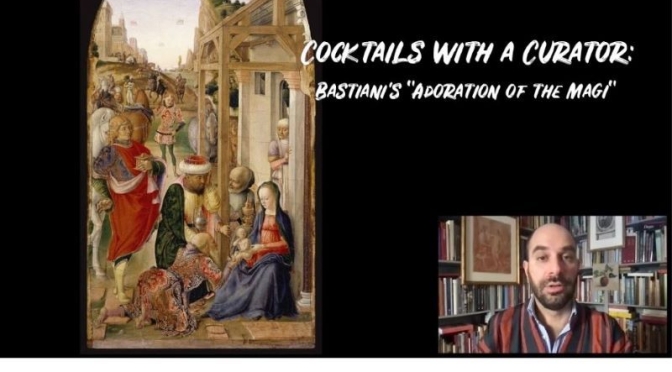
Cocktails With A Curator: Vermeer’s “Mistress And Maid” (The Frick Video)

In this week’s episode of “Cocktails with a Curator,” Curator Aimee Ng pulls back the curtain on hidden details in “Mistress and Maid,” the largest of the Frick’s three Vermeer paintings and Henry Clay Frick’s final acquisition for his collection. Take a closer look at the rumpled tablecloth, the lady’s wispy curls, and the dark background to understand how this mysterious work has changed since Vermeer applied paint to canvas in the mid-17th century. For this week’s complementary cocktail, the Genever Brûlée, Aimee has dipped into the bottle of genever she featured in her summer episode on Vermeer’s “Officer and Laughing Girl.”

To view this painting in detail, please visit our website: https://www.frick.org/mistressmaid

Travel: Christmas Tour Of Midtown Manhattan -2020

Happy Holidays! New York City is known to the world as a Christmas and holiday destination hotspot. Join our guide, Sam, from Top Dog Tours NYC as she takes you on a personal walking tour of all the iconic, must-see sites that put Manhattan on the Christmas map. From Radio City Music Hall to Rockefeller Center and St. Patrick’s Cathedral to Macy’s flagship store, learn the fascinating history of each location, with traditions going back to the early 20th century and beyond.

Video timeline: 0:00 Introduction to New York Holiday Landmarks 0:23 St. Patrick’s Cathedral and the Historical Origins of Christmas 1:34 New York Christmas Firsts 1:54 St. Patrick’s Cathedral Midnight Mass History 2:35 Rockefeller Center Christmas Tree History 4:27 Radio City Music Hall History 4:48 The Rockettes History 5:56 Bryant Park History 6:30 Bryant Park Winter Village 6:57 Macy’s Store History 8:02 Macy’s Day Parade History 9:08 Macy’s Holiday Window Display

Classic Cars: The ‘1929 Bentley Blower’ (Video)

One of the most iconic cars from Bentley’s history – Sir Tim Birkin’s 1929 supercharged 4½-litre “Blower” – is to be reborn with a new build of 12 matching cars, each individually handcrafted by a team of specialists from Bentley’s bespoking and coachwork division, Mulliner. Together, the new cars will form the world’s first pre-war race car continuation series.

Only four original ‘Team Blowers’ were built for racing by Birkin, in the late 1920s. All were campaigned on the racetracks of Europe, with the most famous car – Birkin’s own Team Car No. 2, registration UU 5872 – racing at Le Mans and playing a pivotal role in the factory Bentley Speed Six victory in 1930.

Now, using a combination of generations of handcraftsmanship skills and the very latest digital technology, the 1929 Team Blower will be the master example for 12 continuations – one for each race that the original fleet of four Team Blowers competed in.

Website

American Landmarks: The Modernization Of The ‘Empire State Building’

One of the world’s most famous skyscrapers has just been through a major 10-year modernisation project. See New York City’s 1930s icon has been updated for the modern age.

Full story here – https://www.theb1m.com/video/inside-t…

The Empire State Building is a 102-story Art Deco skyscraper in Midtown Manhattan in New York City. It was designed by Shreve, Lamb & Harmon and built from 1930 to 1931. Its name is derived from “Empire State”, the nickname of the state of New York.