

Bradford-on-Avon is a town and civil parish in west Wiltshire, England, near the border with Somerset, with a population of 9,402 at the 2011 census. The town’s canal, historic buildings, shops, pubs and restaurants make it popular with tourists. The history of the town can be traced back to Roman origins.
Category Archives: History

The Cotswolds: A History Of Broad Campden (4K)
Situated just outside Chipping Campden, Broad Campden is a small village in Gloucestershire, England, with a church and pub, and notable for its beauty and fine walking trails.
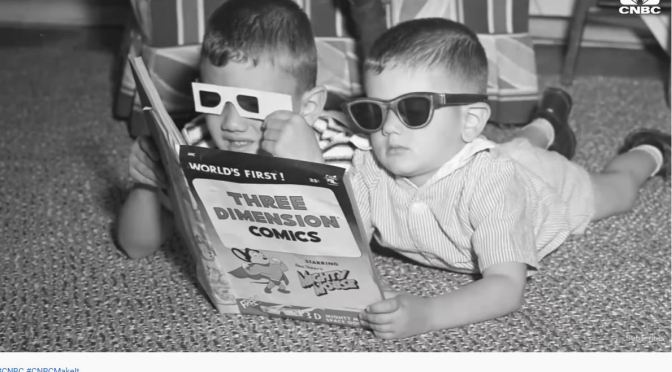
1950’s: A ‘Moral Panic’ That Targeted Comic Books
Comic books have been a staple of American pop culture for the better part of 90 years. The origin story of comics as we know them, however, is much more complicated. In the 1950s, a moral panic swept across the country — one in which parents and children burned comic books by the bushel in public gatherings — and led to the near destruction of the comic book industry. Comics were big business even by the 1940s. They reached millions of readers each week. And the superheroes created then have now become billion-dollar franchises, showcased in blockbuster films and massive conventions such as Comic-Con. Events in 1954, however, almost changed that. Laws were passed. Careers were ruined. And comics fell under a strict censorship regime that lasted for decades to come.

Art History: Whistler’s ‘Comte Robert de Montesquiou-Fezensac’
In the final episode of “Cocktails with a Curator,” Deputy Director and Peter Jay Sharp Chief Curator Xavier F. Salomon bids audiences farewell with a discussion of “Arrangement in Black and Gold: Comte Robert de Montesquiou-Fezensac” by James McNeill Whistler, the best-represented artist at the Frick with twenty works in the collection. Whistler met the eccentric poet and aristocrat depicted in the painting in 1885, and they soon became fast friends, with Montesquiou sitting for the portrait in 1891–92, making it the most modern work on display at Frick Madison. This week’s complementary cocktail is the Black Manhattan, a spin-off of the cocktail from the very first episode of “Cocktails with a Curator.” Xavier, Aimee, and Giulio extend their thanks to all those who made this program possible and, of course, to you, the viewers—cheers! To view this painting (or object) in detail, please visit our website: https://www.frick.org/whistlerblackgold
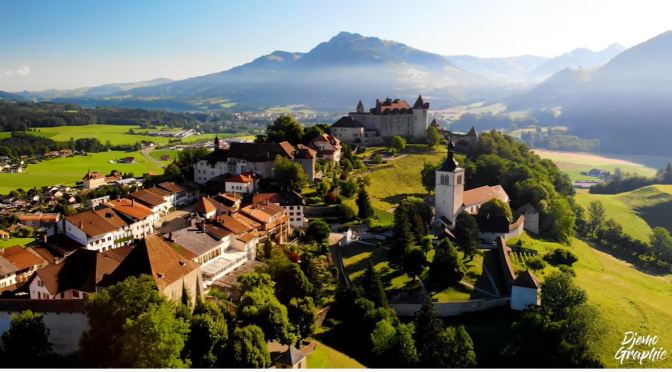
Swiss Tours: Medieval Town Of Gruyères (4K)
Gruyères is a medieval town in the Fribourg canton of Switzerland. It’s known for production of the cheese of the same name. The 13th-century Château de Gruyères is a hilltop fortress with a multimedia history show and ornate rooms. Inside the small St. Germain Castle, the H.R. Giger Museum shows artwork relating to the film “Alien.” The Tibet Museum displays Buddhist sculptures and ritual objects of the Himalayas.
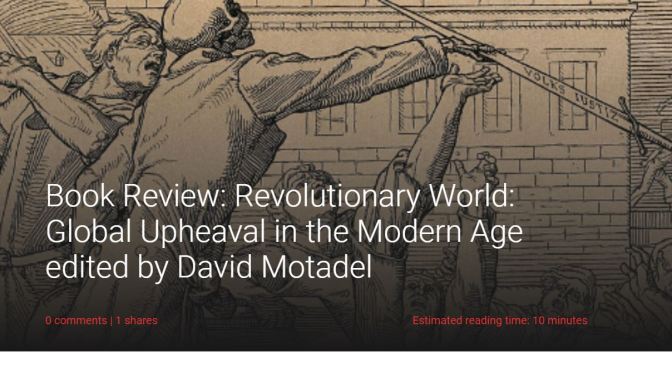
Books: ‘Revolutionary World – Global Upheaval In The Modern Age’ (LSE)

The Cotswolds: A History Of Eastleach Turville & Eastleach Martin (Video)
Eastleach is a civil parish in the county of Gloucestershire, England. It was created in 1935 when the separate parishes of Eastleach Turville and Eastleach Martin were combined as the civil parish of Eastleach. The two villages of the parish—Eastleach Turville and Eastleach Martin—are separated only by the narrow River Leach, which is spanned by the stone road bridge and a stone slab clapper footbridge. Together the villages of Eastleach have over 60 listed houses and farm structures.
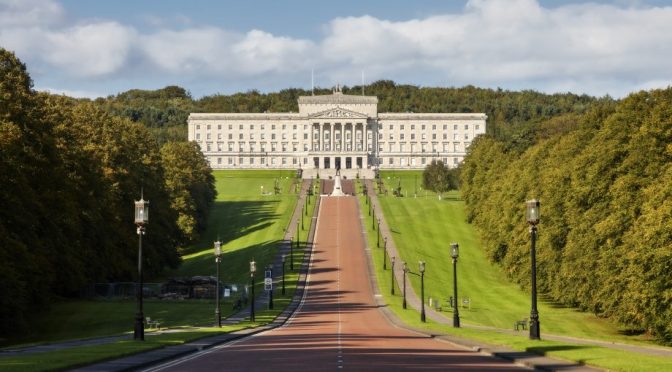
Irish Estates: A History Of Stormont Castle, Belfast
The Stormont estate was attractive because of its proximity to Belfast and the prominent building site that it offered overlooking the city. Entirely incidental to the purchase, but part and parcel of it, was a substantial 19th- century house called Stormont Castle. There was local opposition to demolition so it was spontaneously absorbed into this developing governmental landscape.
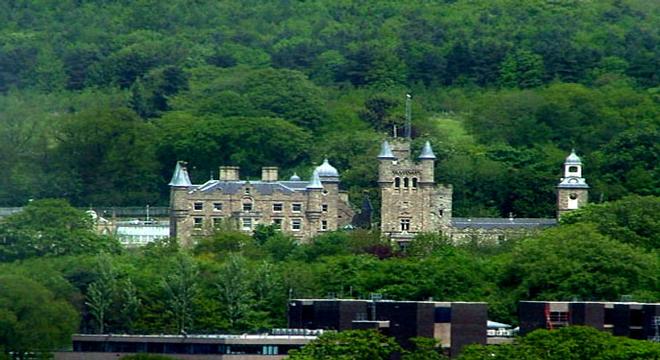


In 1922, the castle became the official residence of Sir James Craig, the first Prime Minister of Northern Ireland. That function ceased in 1940, when it became simply the Prime Minister’s office and was additionally occupied by the Cabinet Secretariat and the head of the Northern Ireland Civil Service. From 1972, following the establishment of direct rule from Westminster, the castle became the headquarters of the Secretary of State for Northern Ireland and, since 1998 and the Good Friday Agreement, it has accommodated the offices of the First and Deputy Ministers of Northern Ireland.
Cliff Home Tour: La Roque Gageac In France (Video)
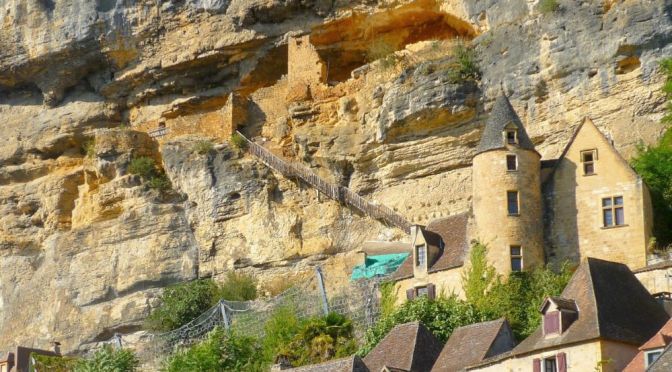
Julien Cohen’s first home was carved into the side of a hill in La Roque Gageac, a troglodytic village stacked against a sheer cliff. He spent 5 years in this sliver of a home where the stone face is everywhere: as the ceiling of his closet and shower, behind the refrigerator, and in the wall looming over the bed. During the Hundred Year’s War,
La Roque Gageac, was one of the few towns that never fell to the English, thanks to a fort perched on the cliff at the top of town whose only access is a tiny staircase (It still stands). The views from the cliff are panoramic perspectives on the Dordogne River and surrounding castles; this is an area Henry Miller called the “Frenchman’s paradise”. Here, Cohen lived for five years until his growing family made the small space too difficult.
La Roque Gageac is one of France’s most beautiful villages. In a stunning position on the north bank of the Dordogne River, and backed by a steep hill / cliff, with little to suggest that much has changed there in the last 300 years, La Roque-Gageac is truly the perfect picture postcard village. It is about 8km from the historic town of Sarlat.

The Arts: Rembrandt And The History Of Mahogany
In the inaugural episode of “Where in the World?,” Curator Aimee Ng explores the history of mahogany, a material hidden beneath the surface of a Rembrandt portrait and sourced oceans away from the famed artist’s homeland.
The Frick’s temporary move to Frick Madison has prompted new ways of looking at our works of art. The reframing of the collection sheds light on the fact that the Frick’s art, although predominantly European, is undeniably linked to the world beyond Europe. In this series, we’re exploring some of these stories, asking “where in the world” we can find new connections to familiar objects.
To view the Rembrandt painting in detail, please visit our website: https://www.frick.org/rembrandtruts
 Boomers Daily