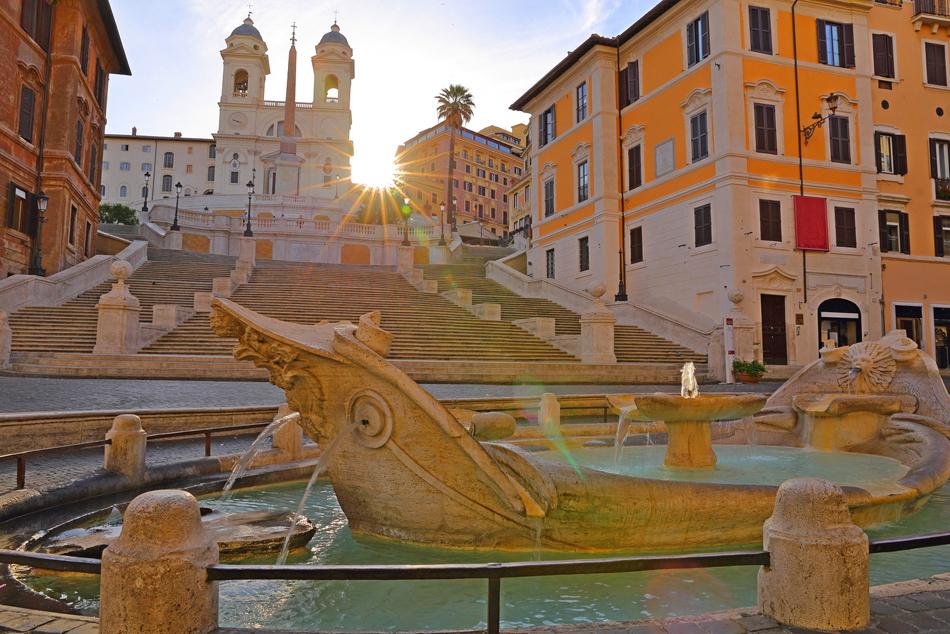
#Rome is dotted with fountains – hundreds of them. From monumental to small, the city’s architectural landscape is very much characterized by the presence of ‘fontane,’ which for the past 2,000 years have decorated the squares and provided drinking water. https://t.co/1AP4nAL5bspic.twitter.com/rwzQjqpcyk
Berlin is a city full of fascinating yet little-known stories, but if you know where to look, you can spot them hiding in plain sight all over the city. Enjoy a tour of Berlin unlike any other.
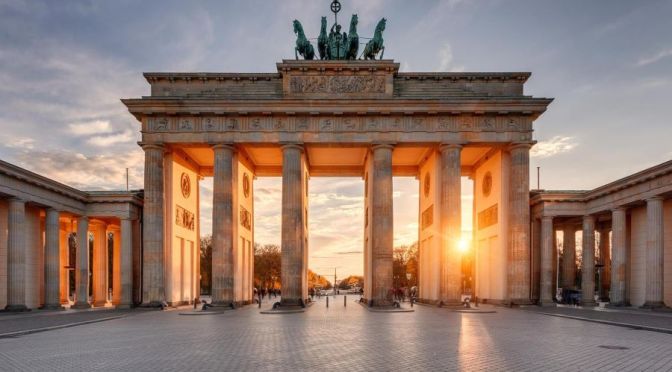
The Brandenburg Gate is an 18th-century neoclassical monument in Berlin, built on the orders of Prussian king Frederick William II after the temporary restoration of order during the Batavian Revolution.
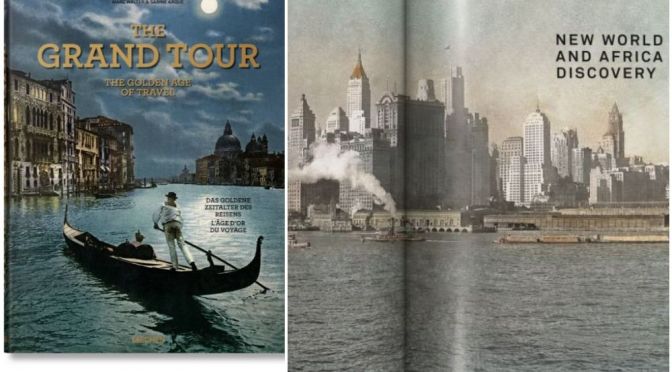
This richly illustrated volume charts the travel heyday of 1869 to 1939. Bedecked with ephemera and precious turn-of-the-century photochroms, it follows six classic tours favored by Western adventurers in the prewar era, including such famous traveler-writers as Charles Dickens, Jules Verne, F. Scott Fitzgerald, Mark Twain, and Goethe.
The Grand Tour
Rediscover the golden age of adventure
Global travel can be a wearying business: mass tourism, overcrowded planes, chaotic airports, heightened security, cookie-cutter hotel chains, well-worn tourist trails. Finding even a sliver of adventure can sometimes feel impossible. But take heart: for all of us with an unfulfilled spirit of wanderlust, The Golden Age of Travel evokes an era when traveling the world was a thrilling new possibility for those with the resources, time, imagination, and daring.
From the Grand Tour of Europe, a traditional rite of passage for young English aristocrats, to the Far East, barely touched by Western influence, to the famous Trans-Siberian Railway, we follow each journey through its itinerant stops and various modes of transport: trains, boats, cars, planes, horses, donkeys, and camels.
With pages brimming with archival travel posters, guides, tickets, leaflets, brochures, menus, and luggage stickers, the book evokes all the romance, elegance, not to mention the sheer sense of novelty, that enthralled these golden-age passengers. Through decadent new cities, or wild, rugged terrains, this is your passport to a long-lost epoch of adventure and wide-eyed wonder at the world.
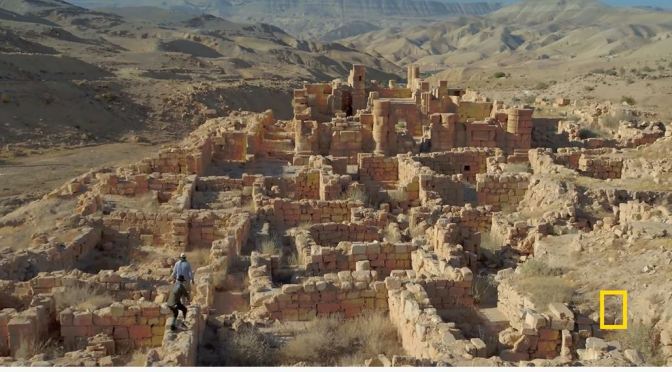
Dr. Albert Lin is exploring the ancient architecture of the Nabateans, and recreates one of their lost cities using lidar.
The Nabataeans, also Nabateans, were an ancient Arab people who inhabited northern Arabia and the southern Levant. Their settlements—most prominently the assumed capital city of Raqmu —gave the name Nabatene to the Arabian borderland that stretched from the Euphrates to the Red Sea.
While Ramses II is often hailed for his military achievements and his skill as a warrior, he was also a well versed diplomat. During his reign he brought the 20 year war with the Hittites to an end and created one of the first written peace treaties.
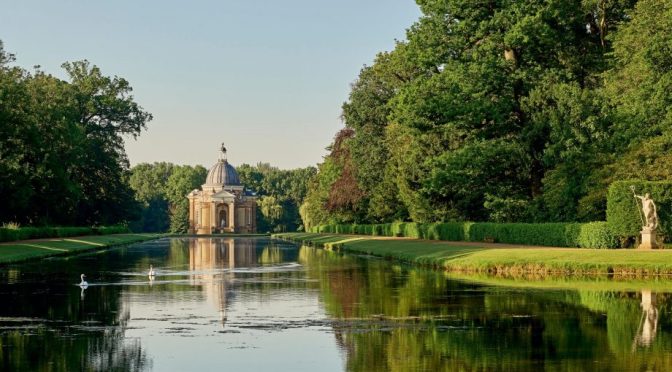
The Archer Pavilion in Wrest Park, Bedfordshire — a place in the care of English Heritage — is one of the most spectacular garden buildings of the English Baroque. Both the pavilion and Thomas Archer, the architect that designed it, are ripe for reappraisal, says Helen Lawrence-Beaton. Photographs by Paul Highnam for Country Life.
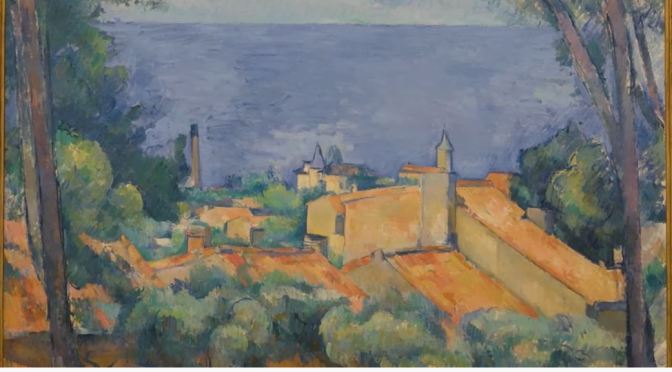
L’Estaque aux toits rouges by Paul Cézanne is one of the finest views of L’Estaque, the Provençal fishing village where the artist forged a radical new way of depicting the world around him.
Exhibited in 1936 and hidden away ever since, this remarkable piece will finally come back on view as part of The Cox Collection: The Story of Impressionism, taking place at Christie’s New York on 11 November.
While Cézanne is primarily associated with Aix-en-Provence, the village of L’Estaque near Marseille was a place that he returned to again and again when he sought sanctuary. His relationship with the village began when he holidayed there as a child with his mother. Then, in 1870, when Cézanne left Paris to avoid conscription into the army following the start of the Franco-Prussian War, he escaped to L’Estaque.
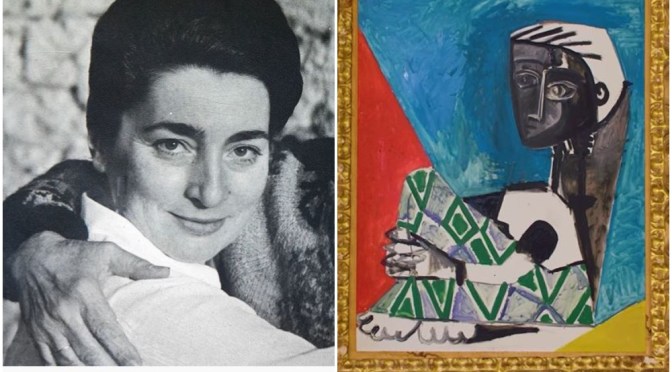
Picasso’s stunning painting ‘Femme Accroupie’, offered in Sotheby’s upcoming Modern Art Evening Sale (9 October | Hong Kong), is a portrait of his ultimate muse and wife, Jacqueline Roque. In this latest Expert Voices, Sotheby’s Chairman Brooke Lampley tells us of the huge artistic inspiration Jacqueline had on Picasso. Discover how this work was the final summation of an entire series of portraits of her, and how it was inspired by master artists of previous centuries.
Vincent Van Gogh was a master of creating sumptuous still lifes. In this latest Expert Voices, Sotheby’s specialist Simon Stock describes how his painting “Nature Morte: Vase Aux Glaïeuls”, offered in Sotheby’s upcoming Modern Art Evening Sale (9 October | Hong Kong), perfectly captured the essence of the artist’s first summer in Paris in 1886. Discover how the artist infused his inspiration of Japanese wood block prints into his paintings, and how he painstakingly captured the joy of living in his still lifes, but also the transience of life.
News, Views and Reviews For The Intellectually Curious




 Boomers Daily