
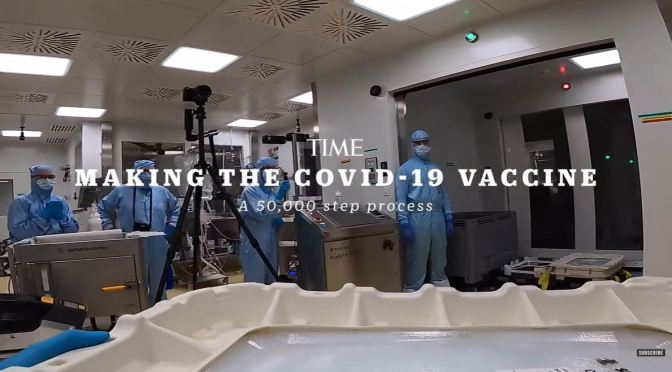
Exclusive: Inside the facilities making the world’s most prevalent COVID-19 vaccine https://ti.me/3grX0v9
Category Archives: Documentaries
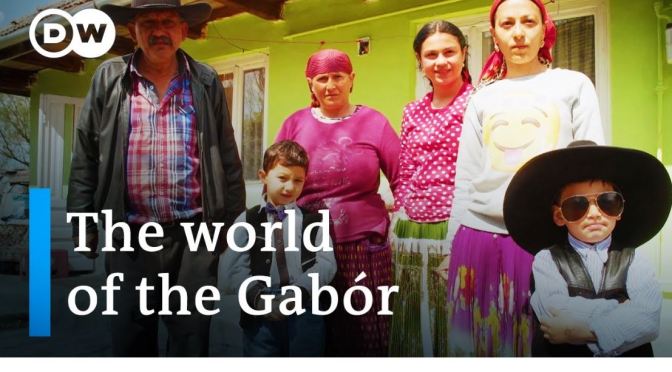
Culture Views: ‘The Gábor Of Transylvania’ (Video)
For 500 years, Transylvania’s Gábor people have held onto their values and rituals. This film explores the insular world of the Gábor Roma, and asks whether they can maintain their traditional lives in a globalized world. The Romanian village of Karácsonyfalva is the center of the Gábor Roma community. More than 1,000 Gábor live there.
The men wear large black hats, the women long skirts. The men travel all over Europe as traders, while the women raise the children. Most Gábor belong to the Adventist denomination. Many only learned to read in order to study the Bible. Abstaining from pork and above all from alcohol and tobacco makes them targets of curiosity. Considered aristocratic among the Roma people, the Gábor have their own laws in all areas of life. Problems are solved within the community; in cases of conflict, even the police turn to the community leaders.
Their biggest and most important celebration is the wedding, the foundation of their society. Gábor marry exclusively among themselves. For this reason, girls are removed from school at age 11 and married at 14. Boys move from organized education to the “school of life” at 14. This documentary follows the marriage of 14-year-old Mundra to 16-year-old Bobbi, while giving a portrait of their families and the wider community. For the first time, they share an insight into their exciting, colorful, contradictory and insular world, in which wealth and poverty collide. This is a tight-knit community, one caught between tradition and the pressures of modernity.
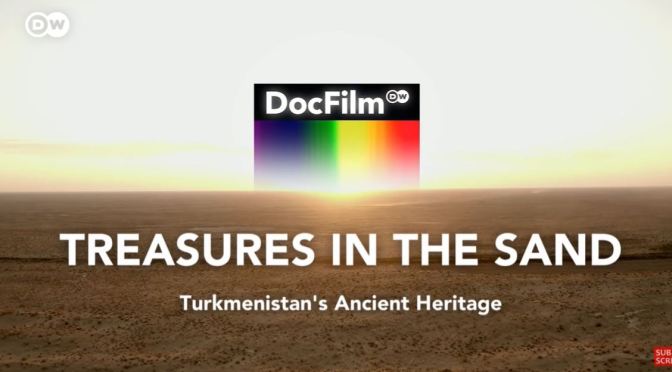
History: ‘Turkmenistan – Cultural Treasures’
To outsiders, Turkmenistan is one of the world’s least known countries. For the first time in ten years, a film crew has been free to visit spectacular excavation sites and follow international researchers into areas that have long been off-limits. Once considered the poorest part of the Soviet Union, oil and natural gas have brought new wealth to Turkmenistan today.
A little known fact in the West is that 4,000 years ago, the country was home to one of the ancient world’s centers of power. Although it flourished around the same time as the advanced civilizations of Mesopotamia and Egypt, the Margiana empire was later largely forgotten. But recently, archaeologists have discovered palace buildings and magnificent burial treasures at the site of the capital, Gonur Depe, in the Karakum Desert. Incredible aerial photography shows the dimensions of the lost metropolis. An international team of researchers also unearthed monumental fortifications in neighboring Ulug Depe.
The ruined cities of Merv and Kunya-Urgench have been declared UNESCO World Heritage Sites. Suddenly, historians and the media are paying much more attention to Central Asia. Why has Turkmenistan seen powerful empires rise and fall since the Bronze Age? DNA analysis shows a highly mobile population, whose contacts reached as far as India, the Urals and the Mediterranean Sea. The Silk Road between China and Europe was the world’s most important trade route for thousands of years, lending Turkmenistan great historical significance. Since the fall of the Soviet Union, the country has been slowly opening up to international researchers, and its astounding cultural heritage is coming to light.

Views: Lives Of The Super-Rich In Congo, Africa
Many millionaires live in the Democratic Republic of Congo, one of the world’s poorest countries. This film depicts some of those who have made fortunes amid the chaos, including musicians, mining bosses, entrepreneurs and preachers. The DRC is rich in raw materials, but only a few profit from its natural resources.
While 60% of Congo’s inhabitants live on less than $1.25 per day, businessmen, artists, former rebel leaders and evangelists are reaping the rewards of economic growth. In the capital, Kinshasa, these new rich live in safe and luxurious enclaves, while children toil in coltan mines in the eastern part of the country. Fally Ipupa has made his money with music.
Others rely on their business acumen, like Patricia Nzolantima, who founded a taxi company and aims to give more opportunities to women. With 3,000 mine workers, Cooperamma is the largest employer in North Kivu, in the east of the DRC. Managing director Robert Seninga says his coltan mines are extremely well-run, yet safety standards are poor. Coltan, a globally coveted mineral, is used in cell phones and other devices. It’s both a blessing and a curse for the Congo. It makes some rich, but for others it means death. The region still suffers from ethnic and factional conflicts, with money from illegal coltan smuggling financing new violence. It’s a vicious cycle.

Analysis: Global Battles For ‘Water’ – A Necessity Or Commodity? (Video)
Water is fundamental to life, yet it’s also a scarce commodity. In many cases, greed and mismanagement are causing this life-giving essential to run dry. What happens when water is monetized? From Australia to California, from New York to London and Brussels, this investigative documentary tells the story of the global struggle over water.
Following rushes to secure gold and oil, the age of the water rush is now here. As well as growing populations and expanding agriculture, there are the problems of environmental degradation and climate change. Global demand for water is skyrocketing. By 2050, at least one in four people will live in a country with a chronic water shortage. The situation has awakened the greed of giant financial institutions, which are going on the offensive, investing billions in the sector. Goldman Sachs, HSBC, UBS, Allianz, Deutsche Bank and BNP are among those pouncing on the commodity known as “blue gold.”
But can fresh water really be considered a commodity on par with oil, coal or wheat? Should the players in these markets – banks and investment funds – be allowed to bet on the value of water? Will concern for profits undermine water’s essential function? Or should this precious resource be declared off-limits to financial speculators? A battle has broken out between those who advocate the monetization of water, and those who defend it as a human right. It’s a battle being fought on many fronts: ideological, political, environmental and, of course, economic. And the fate of the nearly ten billion inhabitants of our planet hinges on its outcome.
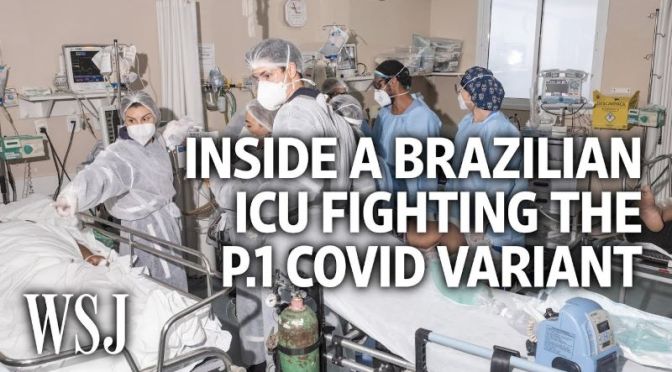
Covid-19: Inside Brazil’s Fight Against P.1 Variant
An aggressive Covid-19 variant called P.1 has spread from the Amazon to other parts of Brazil and has now been identified in U.S. cases. WSJ’s Paulo Trevisani reports from Porto Alegre’s overwhelmed hospitals, where doctors say young people are getting ill. Photo: Tommaso Protti for The Wall Street Journal

Travel & Culture: ‘Life In The Torres Strait Islands’
It’s a remote paradise between Australia and Papua New Guinea. Only a few thousand people live on the islands in the Torres Strait. They depend on a supply ship that sails to their isolated archipelago once a week.
There are 274 islands in the Torres Strait between Australia and Papua New Guinea, their white coral-sand beaches rising from warm, shallow waters. Around 20 of the islands are inhabited, with many several kilometers apart. The main island, Thursday Island, sounds like it could have been lifted from the pages of Robinson Crusoe. Residents who want to visit family or friends must do so by boat, having to deal with unpredictable tidal currents. Cargo ships from the mainland supply the islands with everything from food and medicine to cars and spare parts – and they don’t always arrive on schedule. But Torres Strait Islanders have always used their great ingenuity to cope with the scarcity of resources. They include Ken, who’s currently working on a sculpture for the reopening of a local church, Paula, a midwife, and Sylvia, who reads the weather reports on local radio.

Trailer: ‘The Last Cruise’ – Covid Nightmare On The Diamond Princess (Video)
Using intimate footage recorded by passengers and crew, The Last Cruise is a first-person account of the nightmare that transpired aboard the ill-fated Diamond Princess cruise ship, which set sail from Japan on the earliest days of the COVID-19 pandemic. The HBO original documentary The Last Cruise premieres March 30 on HBOMax.

Space Ventures: Asteroids As Source Of Precious Metals & Elements (Video)
Mining on asteroids sounds like the stuff of science fiction, but it could soon become a reality. Nations and powerful corporations already have plans for such ventures and are hard at work staking their claim to resources from space. How can economic growth continue unfettered once all the earth’s resources have been consumed?
Major companies and governments have long been working on plans to exploit the resources to be found in the vastness of space. How far are humans from achieving this? This documentary examines the technological requirements of space mining. It also assesses how great the desire is to find new sources of raw materials. The film touches on scientific and fundamental societal issues – including humanity’s craving for new territories and our degradation of the Earth as we attempt to exploit all our planet has to offer.
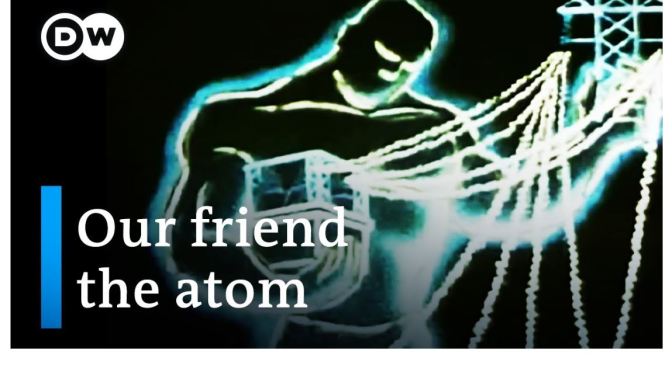
Documentary: ‘Fukushima – The Age Of Radioactivity’
The USS Ronald Reagan cruised into a radioactive cloud from the Fukushima nuclear power plant in March 2011. Sailors on the aircraft carrier were exposed to radiation. This documentary looks at the event and what came before it. The discovery of the atom and radioactivity are among the most important advances in 20th Century science. This film provides a comprehensive, historical examination of a century of radioactivity. At the same time it remembers the victims – from the Curies to Fukushima.
The film-makers visit Japanese families who sued Tepco, the operator of the Fukushima reactor, after their children developed thyroid cancer following the tsunami and subsequent nuclear disaster. Sent to help tsunami victims, sailors from the USS Ronald Reagan give detailed accounts of what happened on board the carrier. Radiation victims on both sides of the Pacific recount their difficulties in getting information. The film also introduces others harmed by industrial and military secrecy over the issue. Among them are fishermen and veterans exposed to radiation during the nuclear bomb tests on Bikini Atoll, Hiroshima survivors and young women who worked with radium in US factories in the 1920s. Radioactivity is invisible and odorless, yet very harmful to life. A Japanese doctor tells viewers how radioactivity affects the human body, why it causes cancer, and what can be done to shield people against it.
 Boomers Daily