Yurara Sarara Films (December 31, 2023) – Japanese water gardens, built in the traditional style of a Tsukiyama Garden originating in Japan, often aim to make a smaller garden appear larger than it is.
In Japan, garden making is considered a high art, akin to the arts of calligraphy and ink painting. Traditionally, the art of garden making was passed from sensei to apprentice through oral transmission.
France-Amérique Magazine – December 30, 2023 – The new issue features ‘The Peak of French Chic’; A Century Ago – Inventing the Winter Olympics in Chamonix…
From Washington D.C. to New York City and from New Orleans to Paris, many philanthropic organizations continue to nurture the bonds connecting France and the United States through history, politics, economics, language, and culture.
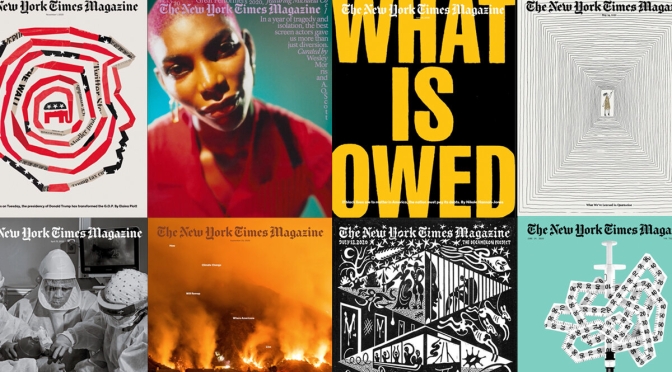
She fell in love with a future president at 17. Marriage never waylaid her dreams.
By MICHAEL PATERNITI
Three miles lie between this life and another, between their two houses, hers in downtown Plains, Ga., and his family farm in the country surrounded by peanuts planted in red clay. Three miles between the ordinary and extraordinary.
Uncovering the unlikely story behind the singer’s first album.
By JOHN JEREMIAH SULLIVAN
To say that Sinead O’Connor never quite regained the musical heights of her 1987 debut album, “The Lion and the Cobra,” is not to slight the rest of her output, which contained jewels. There is no getting back to a record like that first one. It was in some sense literally scary: The label had to change the original cover art, which showed a bald O’Connor hissing like a banshee cat, for the American release. In the version we saw, she looks down, arms crossed, mouth closed, vulnerable. The music had both sides of her in it.
Country Life Magazine – December 27, 2023: The latest issue features ‘This Splendid Land’ – Landscapes, Landmarks, Houses and Gardens; The Art of Knot Tying; Winston Churchill’s interior-design tips; A unicorn in the garden – fantastic beasts tamed…
Long-standing Country Life contributor Charles Quest-Ritson is literally the man who wrote the book on roses — specifically The RHS encyclopedia of Roses — and back in June, he shared some tips on sharing and planting cuttings which proved enormously popular.
The New Yorker – January 1 & 8, 2024 issue: The new issue‘s cover featuresBianca Bagnarelli’s “Deadline” – The artist evokes a moment suspended between the old and the new.
He began as more of a tutor than a talent. But in his final decade he lent a keen eye-in-the-sky view to the Paris streets, rendering miracles of kinetic characterization.
It’s one of the stranger anomalies of French intellectual life that Impressionist painting—by far the most influential of French cultural enterprises—has received so little attention from the most ambitious French critics and philosophers. One can page through André Gide’s journal entries, a lot of them on art, or through Albert Camus’s, and find very little on Claude Monet or Edgar Degas (and much more on the Symbolists, a group that was far easier for a literary man to “get”). Marcel Proust cared passionately for painting, and his hero-painter Elstir has touches of Monet, but in order to make him interesting Proust had to model him on the more histrionic James McNeill Whistler, with samplings from a forgotten American painter added in.
Following Hamas’s October 7th attack and Israel’s invasion, Mosab Abu Toha fled his home with his wife and three children. Then I.D.F. soldiers took him into custody.
Decades after I left hustling to become a writer, why did I seek out the man who drew me into that world?
By Mitchell S. Jackson
O.G. rings me in the a.m. to say he’s just touched down in Phoenix. It’s the day before he said he’d arrive, and while there was a time when I’d treat the seeming opacity of his plans as par, the call’s a minor surprise. He asks for my address and tells me he can drop by as soon as he grabs his rental car. “Cool,” I say, as if the call ain’t ramped my pulse, as if my crib is presentable for guests. It isn’t. So I shoot out of bed and get to cleaning and straightening the first floor, going so far as to light a candle. It’s been umpteen years since I’ve seen O.G. — Lonnie’s his name — and God forbid he judge me anything less than hella fastidious.
The story of 2.3 million Palestinian refugees in Jordan has been shaped by generations of war and exile.Photographs
by MOISES SAMAN
How Do You Make a Movie About the Holocaust?
With “The Zone of Interest,” Jonathan Glazer is just the latest director to confront the problem.
Poetry makes nothing happen, W.H. Auden said in 1939, when words must have seemed especially impotent; but cinema is another matter. For several decades after the end of the Second World War, what’s come to be seen as its central catastrophe — the near-total destruction of the European Jews — was consigned to the status of a footnote. The neglect was rooted in guilt: Many nations eagerly collaborated in the killing, while others did nothing to prevent it. Consumed by their own suffering, most people simply didn’t want to know, and a conspiracy of silence was established.
Kim Stanley Robinson is credited with helping create the genre of climate fiction, and his book Green Earth is yet another example of that. Set in Washington, DC, Robinson draws from his own personal experience living and working in the capital city. “What I like about DC is that there is kind of an electricity in the air, a human electricity,” Robinson told CityLab. “You walk the streets, you see people from all over the world. To go to the world capital and settle there is a statement. It’s an attempt to wrest control of one’s fate.” But where the fictional part of the story begins is in its characters — when he portrays federal bureaucrats as a positive force for good.
“If we can understand that cities are part of nature — even if they don’t really look like nature — that means we’ve got to change how we plan with them, how we work with them, and what our future looks like on spaceship Earth,” Adrian McGregor says. That’s the premise of Biourbanism: Cities as Nature, which looks at how effective urban planning and design can be achieved by viewing cities through a natural lens. McGregor sees cities as instrumental to lead the fight against the climate crisis. “There’s a policy gap between a federal government making decarbonization commitments and actual city policy,” he says. “They’re not really thinking clearly about where the emissions are coming from and therefore how to target them.”
Journalist Henry Grabar has a pretty simple solution for better city living: parking reform. The act of parking, for so many, is an aggravating experience. “You’re more likely to be killed over a parking space than you are to be killed by a shark,” Grabar told CityLab. In his book Paved Paradise, he argues that the key to happier residents is transforming parking policies to make them smarter and more convenient, and by undoing some of the privileges given to drivers in order to help boost multimodal transportation. “It’s very hard to overrule the instinctive feeling that parking ought to be available when I want it, where I want it, for the price I want to pay, which is zero,” Grabar said. “A lot of smart parking policy deviates from those assumptions, like charging for coveted street parking in busy locations, or trying to encourage people to park in a garage a few blocks away and then walk a bit.”
What happened after the Tulsa race massacre? It’s a question often lost when thinking about the violence that saw one of the wealthiest historic Black American neighborhoods burned down, and its residents killed or chased out. Built From the Fire seeks to tell the story of Greenwood from start to end, past the initial tragedy that wiped out Black Wall Street and the destructive urban renewal plans and physically divisive highways that followed. For Victor Luckerson, who moved to Tulsa and embedded himself in Greenwood’s community and archives in order to tell the story right, the policies and actions of local government officials did as much damage, if not more, to the neighborhood’s heritage than the initial conflagration. “I would say the massacre was more devastating in the short term, and urban renewal more devastating in the long term,” he says.
It’s not just heartbreak and bad grades that teens are facing — now, it’s gentrification too. Author Jade Adia found inspiration in the Los Angeles youth that came out to protest against police brutality after the murder of George Floyd, and wrote There Goes the Neighborhood with those young people in mind. Her debut young adult novel tells the story of 15-year-old Rhea, who devises a plan to save her best friend’s family from eviction, as gentrifiers threaten to upend her neighborhood in South Los Angeles. “I wanted to tackle the topic [of gentrification] in the most accessible way possible,” Adia told CityLab, “by putting young people and their experiences on the front lines of the conversation.”
As visitors exit “First Kings of Europe,” the gift shop offers a kind of test. Two craft beers were created for the exhibition, a collaboration between the museum and Off Color Brewing: Beer for Kings, made from top-quality rich and ancient grains, and Beer for Commoners, made from the more modest ingredients of the poor. Beneath the racks of beer hang T-shirts with the art for each. Which identity does the visitor want to take home: commoner or king? The answer for most exhibitions celebrating the awe-inspiring treasures of royalty would be easy, but “First Kings of Europe” is a different kind of show, with an ambitious new approach to how we display and envision power, kingship, and history.
International institutions seem powerless in face of Russia’s invasion of Ukraine, writes Margus Tsahkna, arguing they ‘cannot survive unchanged’
The international rules-based system needs urgent and fundamental change if it is not to collapse, the Estonian foreign minister has said, calling for “a new global conversation” to begin on how to reform the UN and the international criminal court.
Writing in the Guardian on Wednesday, Margus Tsahkna says Russia’s invasion of Ukraine has highlighted flaws in the system that risk fatally undermining people’s faith in it.
_______________________________
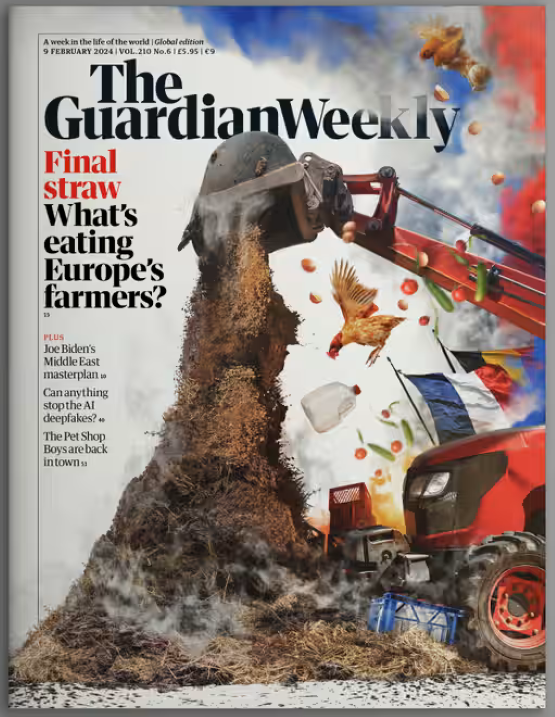
Elsewhere, we shouldn’t forget there are plenty of reasons for hope. Having been expected to deliver little, the Cop28 climate summit turned out to be full of surprises – but was the final deal on fossil fuels just a ruse, asks environment editor Fiona Harvey.
Writers from the Guardian’s global development team reflect on the inspirational figures they met in 2023, from leaders to dancers to dads, who proved that humanity still has much to give. And leading conservationists and scientists tell us about the mysteries of the planet they wish they better understood.
The review of 2023 continues with the Observer’s selection of those we lost, recalled with affection by their friends. There’s also a dazzling range of images courtesy of the Guardian agency photographers of the year.
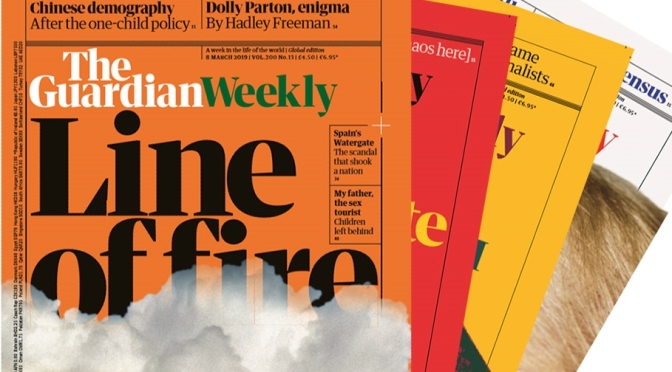
Last but not least, the Guardian critics’ top 10 rundowns of the best film and music of 2023, topped off with the Guardian Weekly team’s now-legendary television selections of the year.
News, Views and Reviews For The Intellectually Curious