Category Archives: Conservation

Profile: ‘Ocean Cleanup’ – Ridding The World’s Oceans Of Plastic (Video)

The Ocean Cleanup, a non-profit organization, is developing advanced technologies to rid the world’s oceans of plastic.

Every year, millions of tons of plastic enter the oceans primarily from rivers. The plastic afloat across the oceans – legacy plastic – isn’t going away by itself. Therefore, solving ocean plastic pollution requires a combination of stemming the inflow and cleaning up what has already accumulated.

FOUNDED 2013

Dutch inventor Boyan Slat founded The Ocean Cleanup at the age of 18 in his hometown of Delft, the Netherlands.

NON-PROFIT FOUNDATION

We are a registered charity as a ‘Stichting’ in the Netherlands, and a 501(c)(3) in the US.

HQ ROTTERDAM

The Ocean Cleanup’s team consists of more than 90 engineers, researchers, scientists and computational modelers working daily to rid the world’s oceans of plastic.
Website

Travel Journeys: ‘Ashio, Japan’ – Return To Forests

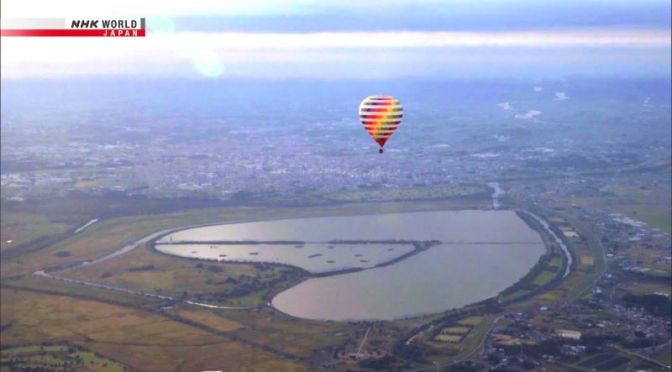
Dig deeper into the story of Ashio, a former mining town in Tochigi Prefecture that’s returning to nature with the passage of time and contributions of hard-working residents.

[Skip Intro] 1:59

The Ashio Copper Mine (足尾銅山, Ashio Dōzan) was a copper mine located in the town of Ashio, Tochigi, (now part of the city of Nikkō, Tochigi), in the northern Kantō region of Japan. It was significant as the site of Japan’s first major pollution disaster in the 1880s and the scene of the 1907 miners riots. The pollution disaster led to the birth of the Japanese environmental movement and the 1897 Third Mine Pollution Prevention Order. The pollution incident also triggered changes in the mine’s operations that played a role in the 1907 riots, which became part of a string of mining disputes in 1907. During World War Two the mine was worked by POW forced labour.

Deforestation: ‘Amazon Rainforest’ – Becoming A Savannah In 15 Yrs? (Video)

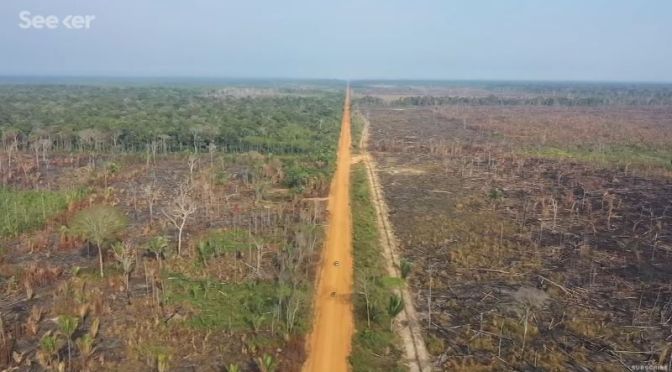
New research suggests that if the current rate of deforestation continues, the Amazon rainforest could transform into a savannah within 15 years. Do we have time to stop it?

The Amazon basin spans over 6 million square kilometers, and is home to one-fifth of the world’s land species. In addition, it supports the 30 million people who live and depend on the land as a source of food, medicine, and shelter. That’s not even including the key role it plays in regulating the regional AND global climate.

Trees absorb water through their roots and transport it to their leaves, where it’s released as vapor through small pores in a process called transpiration. As the water vapor rises and condenses, it forms rain clouds over the forest canopy. Basically, the rainforest is making its own weather. For example, one large tree can release 1,000 liters of water into the atmosphere in a single day.

The rainforest recycles this water up to six times before it moves out of the region, but as more trees are cut down, those that remain may not be able to recycle enough water to survive. Less trees means more sunlight will hit the forest floor, exposing the forest to higher temperatures. Since deforestation began accelerating in the 1970’s, 800,000 square kilometers of the Amazon have been lost. And over that same period, the average temperature of the basin has risen by 1 degree Celsius.

Conservation: Mapping ‘The Great Barrier Reef’ To Help It Survive (BBC Video)

The Great Barrier Reef is the world’s largest coral reef system composed of over 2,900 individual reefs and 900 islands stretching for over 2,300 kilometres over an area of approximately 344,400 square kilometres. The reef is located in the Coral Sea, off the coast of Queensland, Australia. 

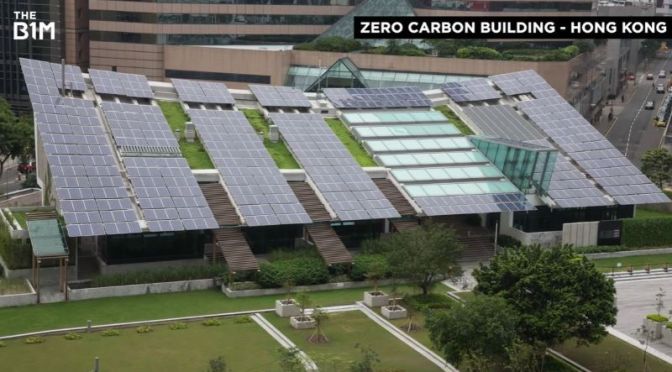
Net-Zero Tech: ‘Buildings Producing More Energy Than They Use’ (Video)

What if our buildings produced more energy than they used? From the United States to Hong Kong, these projects prove it can be done.

zero-energy building (ZE), also known as a zero net energy (ZNE) building, net-zero energy building (NZEB), net zero building is a building with zero net energy consumption, meaning the total amount of energy used by the building on an annual basis is equal to the amount of renewable energy created on the site,[1][2] or in other definitions by renewable energy sources offsite, using technology such as heat pumps, high efficiency windows and insulation, and solar panels.

Preservation: ‘Tree Of The Year 2020’ In England, Wales & Scotland (Video)

Scotland’s #TreeOfTheYear 2020 – The Survivor Tree, Carrifran Valley.

It was once a lone rowan clinging to a stream bank in Carrifran Valley, but today that survivor tree is lonely no more! It is surrounded by a little forest of its children, and lots of suckers are coming up from its base. This was some of the first natural regeneration the Borders Forest Trust achieved in the Carrifran Valley. In addition to its own children, the rowan tree now has over half a million other native Scottish trees for company. Where once it dominated the view, it will soon be hidden from sight. The rowan tree no longer stands alone and is a symbol of the 20-year journey to revive the wild heart of Southern Scotland.

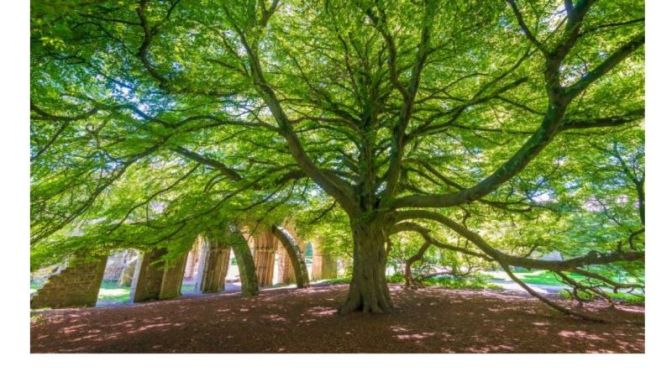
Wales’ #TreeOfTheYear 2020 – The Chapter House Tree, Margam Park, Port Talbot.

Standing in the shadows of 17th century Margam Orangery and St Mary’s Church, this historic fern-leaved beech envelopes the remains of one of the first Cistercian abbeys in Wales. Its canopy has provided shelter to visitors for many years – from Victorian tea parties taking place under its sweeping boughs to a favourite summer picnic spot for present day visitors. The tree provides an atmospheric back drop and is loved by cinematographers – featuring in TV and Film productions from Dr Who and ‘Songs of Praise’ with Sir Bryn Terfel to the recent Netflix blockbuster series ‘Sex Education’.

England’s #TreeOfTheYear 2020 – The Happy Man Tree, Hackney, London. Currently earmarked for felling, the plight of this 150 year old Plane has awakened something in a community that couldn’t bear to see it go. The dressing of the tree, and the signs behind it, are testament to the strength of feeling among the local campaigning. As an urban tree, it makes an important contribution to combating air pollution and making grey city streets green. But the community sees it as more than just the sum of it’s parts – it’s part of the estate, part of their collective history.

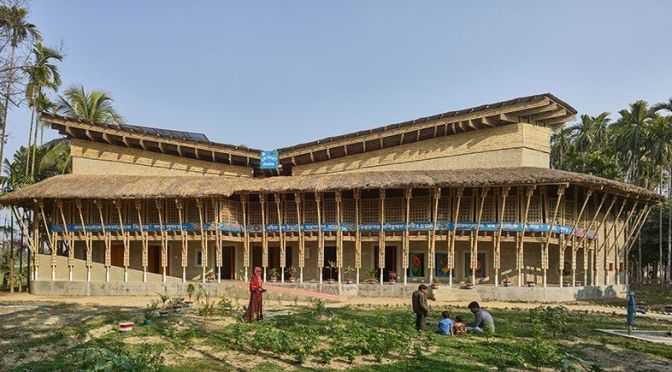
Sustainable Architecture: ‘Anandaloy In Bangladesh’ – Made of Bamboo & Mud

designed by german architect anna heringer, ‘anandaloy’ is a community center and workshop in bangladesh that is made from mud and bamboo. located in rudrapur, a village in the country’s dinajpur district, the two-storey building contains a therapy center for people with disabilities at ground level and a fair-trade textile manufacturing workshop for local women on the first floor. below a big ramp that connects the two levels, protective cave-like spaces provide settings for recreation or solitude.

Bangladesh, to the east of India on the Bay of Bengal, is a South Asian country marked by lush greenery and many waterways. Its Padma (Ganges), Meghna and Jamuna rivers create fertile plains, and travel by boat is common. On the southern coast, the Sundarbans, an enormous mangrove forest shared with Eastern India, is home to the royal Bengal tiger.

Conservation Video: ‘How Farming Is Drying Up Arizona’s Water Supply’

With a lack of restrictions on water use, owners of some large-scale farms in the United States are drying up underground water tables. All they have to do is buy the land to have access to as much free water as they want. In Arizona, farm owners and ranchers are digging ever deeper to irrigate their land, leaving other residents with low water reserves. Meanwhile, parts of the land have caved in, collapsing as the water is pumped up from beneath. Our France 2 colleagues report, with FRANCE 24’s James Vasina.

Nature & Wildlife Video: ‘Rewilding Scotland’ (PBS)

Alan Watson Featherstone, ecologist and founder of “Trees for Life,” describes the moment he realized he needed to help in the effort to rewild Scotland, resulting in the founding of his charity “Trees for Life” to achieve this. Tune in or stream “The Age of Nature” Wednesdays, October 14-28, 2020 at 10/9c.

Website

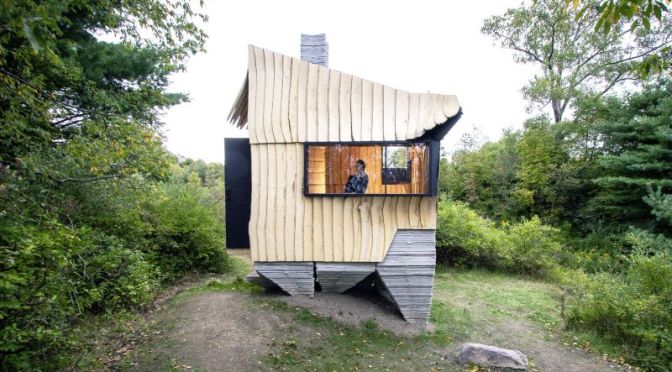
Future Of Homes: ‘Ashen Cabin’ – 3D Printed, Waste Wood Building Material

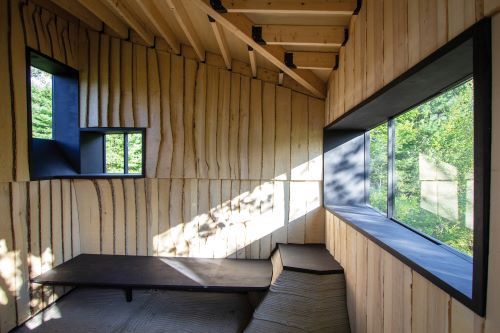
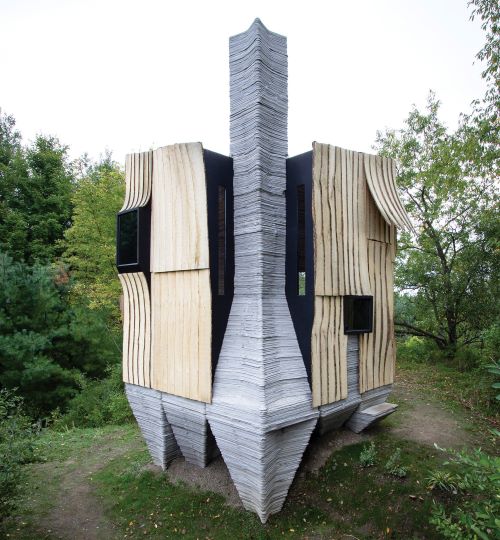
By implementing high precision 3D scanning and robotic based fabrication technology, HANNAH transforms Emerald-Ash-Borer-infested “waste wood” into an abundantly available, affordable, and sustainable building material.

From the ground up, digital design and fabrication technologies are intrinsic to the making of this architectural prototype, facilitating fundamentally new material methods, tectonic articulations, and forms of construction.

Project realized with scientific support from the Cornell Robotic Construction Laboratory (RCL) / Sponsors: AAP College of Architecture, Art, and Planning; AAP Department of Architecture; HY-Flex Corporation; Cornell Atkinson Center for a Sustainable Future, Cornell Arnot Teaching and Research Forest.

Read and see more