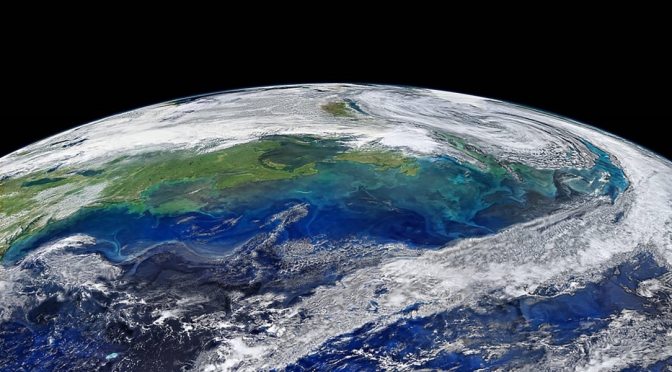
Princeton University (December 13, 2022) – Earth’s atmosphere, oceans, and land surfaces interact and combine in powerful, yet often unseen, ways as part of a complex planetary system that determines the climate.
Over many decades, researchers at Princeton University have played a leading role in the development of advanced computational models that simulate interactions among these elements to inform an understanding of future climate scenarios under varying conditions.
In this video, climate scientists Gabe Vecchi and Laure Resplandy discuss how computational models are used to project future climate scenarios and inform mitigation strategies.
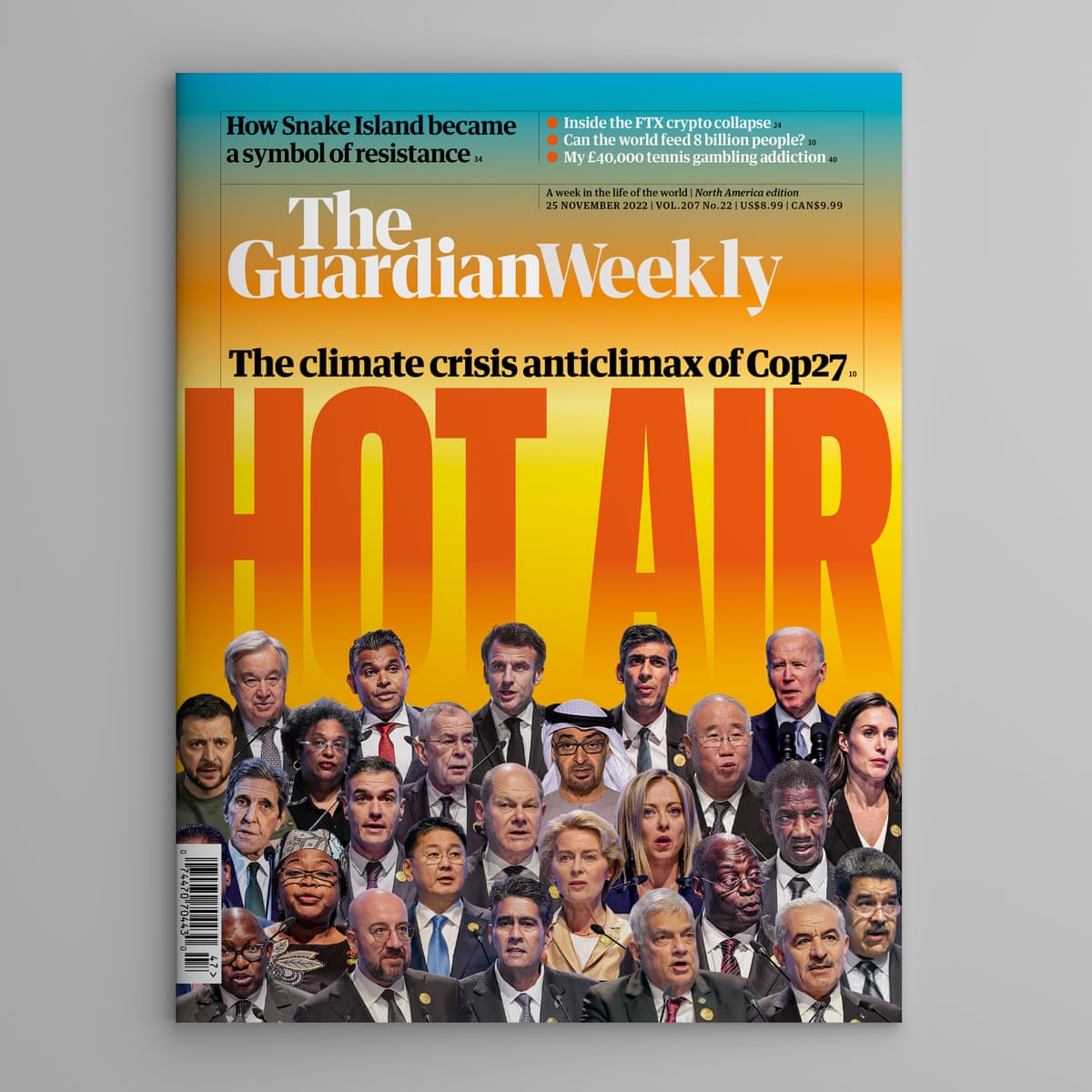
Cop27 ended in a now-traditional blur of last-minute horse-trading, resulting in the welcome agreement of a finance deal for developing countries affected by global heating. But progress on eliminating fossil fuel usage – the key to slowing climate change – again seemed beyond the international community.
As winter descends on Ukraine, we focus on some of the war’s ripples around Europe. Jennifer Rankin reports from Antwerp, where the continued trade in Russian diamonds shines a light on loopholes in EU sanctions on Moscow. And Emma Graham-Harrison is in eastern Poland, where people’s proximity to the war is helping people to put aside past differences.
Then, in features, Luke Harding speaks to the Ukrainian defenders of Snake Island – who famously sent an expletive-laden rebuttal to a Russian warship at the start of the conflict – and finds out what happened next.
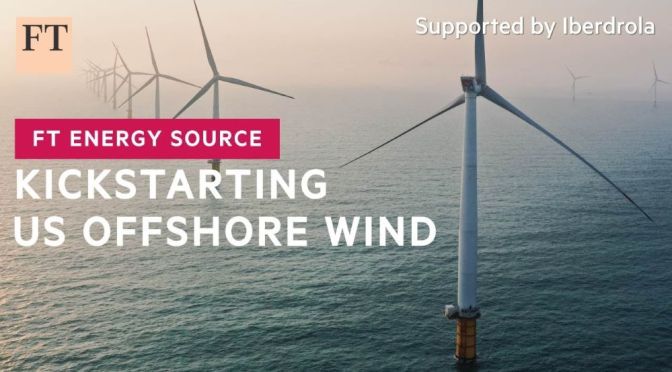
Financial Times – Wind power is the number one source of renewable energy in the US, but nearly all this stems from onshore wind. The US offshore wind industry is underdeveloped and, with only two small offshore operations to date, it lags far behind Europe and China by comparison. The FT’s Derek Brower looks at why progress is slow, and what the White House is trying to do about it.
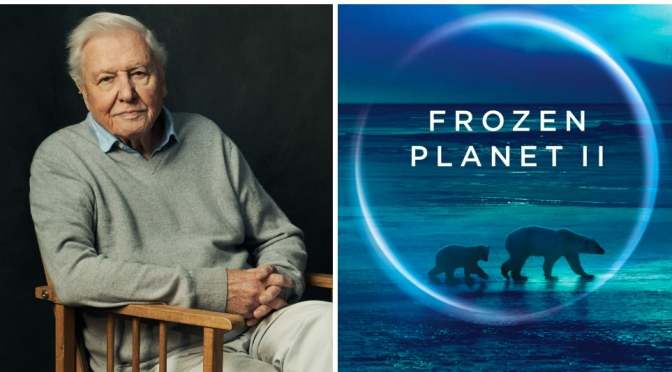
Frozen Planet II (2022): This six-part series – narrated by Sir David Attenborough – explores the wildlife found in the world’s coldest regions: the Arctic and Antarctic, high mountains, frozen deserts, snowbound forests, and ice-cold oceans. From polar bears to penguins, and from snow monkeys to Siberian tigers, each species must overcome a unique set of challenges to endure its extreme environment.
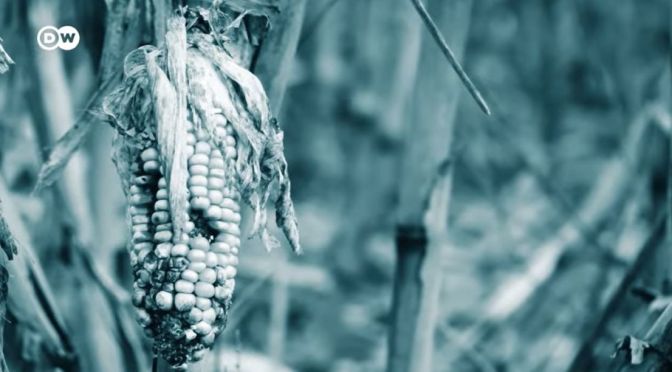
Climate change is causing rising temperatures, extreme weather events and more and more drought. And, in this changing reality, everyone needs more water. Humans are competing with the natural world for water. What does this mean for biodiversity? Fewer and fewer countries still have an abundance of water. The climate crisis, overpopulation and overexploitation are the root of this global problem. And, in a warming world, everyone is using more water: people, agriculture and industry. In Germany, streams and ponds are disappearing, forests and soils are drying out. What does this mean for biodiversity? And how do people cope with drought in countries that have even less water — for example, in the USA or Mexico? What happens when our water dries up?
“Tier Drops,” by Lisa Owens Viani. Regulations and apportioning that were set up 100 years ago are under pressure as the Colorado River shrinks. As climate change accelerates and record-breaking drought worsens, cities, tribes, and industries must prepare for a future with less water. (Online August 10)
It’s past time to get real about the Southwest’s hardest-working river.
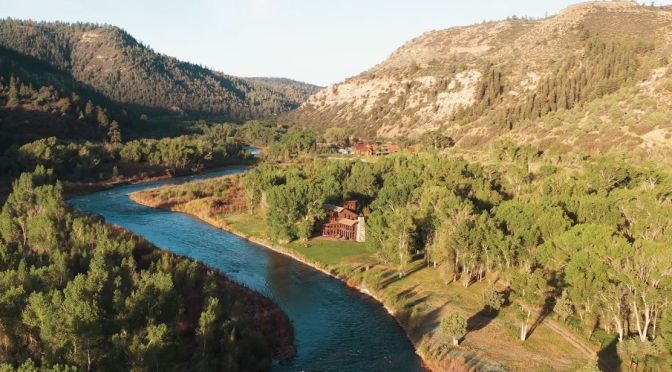
About 40 million people rely on the Colorado River as it flows from Wyoming to Mexico. But overuse and climate change have contributed to its reservoirs drying up at such a rapid rate that the probability of disastrous disruptions to the deliveries of water and hydroelectric power across the Southwest have become increasingly likely. Now the seven states that depend on the river must negotiate major cuts in water use by mid-August or have them imposed by the federal government.
Those cuts are merely the beginning as the region struggles to adapt to an increasingly arid West. The rules for operating the river’s shrinking reservoirs expire in 2026, and those seven states must forge a new agreement on water use for farmers, businesses and cities.
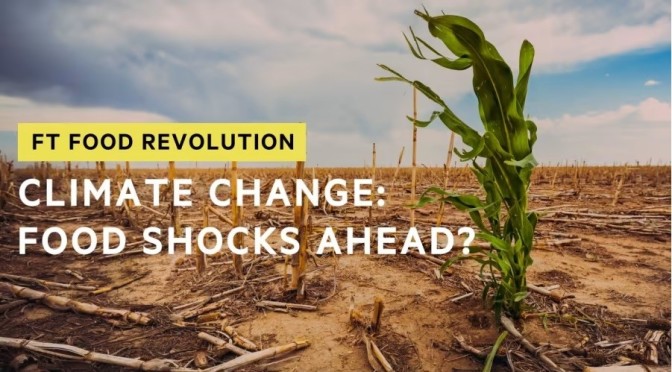
Recent crises such as the pandemic and Russia’s invasion of Ukraine have thrown the vulnerability of supply chains, and with them, food supplies, into sharp focus. But as the FT’s Camilla Hodgson reports, a landmark UN report says climate-related shocks such as extreme weather events will become more common and severe and could further upend food supply chains. But what can we do about it?
Exotic destinations, or staycations? As we make choices like these, we ask ourselves: Will we ever be able to fly without feeling guilty again? This film examines the tourism business today, and asks how the industry envisages the future.
The pandemic brought the tourist industry to a standstill. But it also highlighted something we have long suspected: Namely, too much travel is bad for the environment.
Not only that, but tourism transforms entire regions – not always for the better. It profoundly impacts communities and often brings benefits for only a very few. But our wanderlust remains. So, do travelers have to decide between the two extremes: exotic destinations (and high carbon footprints) or holidays at home? Given the climate emergency, can we fly without feeling guilty? How environmentally damaging are cruises? And what does it mean to have a sustainable holiday?
This documentary examines an industry that had gotten ahead of itself, even before it was hit by the pandemic. We hear from mayors, tourism managers, a climate expert, an internet activist and a sociologist. The film travels to the European tourist hotspots of Barcelona, Venice and Dubrovnik. The tiny island of Palau in the Pacific Ocean demonstrates how sustainable travel can be sensibly organized, and a Parisian start-up develops a concept for virtual travel experiences.
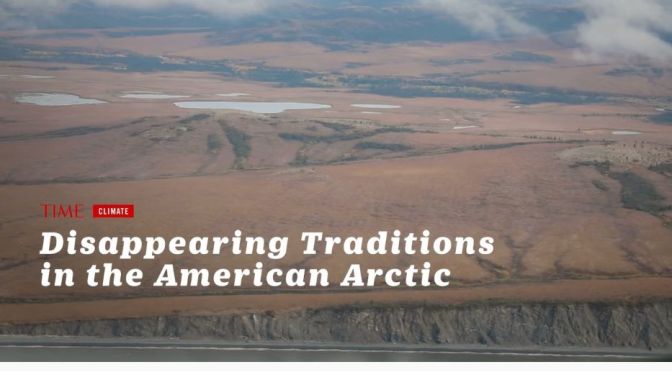
To Laureli Ivanoff, climate change is far from an abstract idea. As an Iñupiat writer living in the remote Alaskan town of Unalakleet, she’s seen firsthand the warming planet’s tangible impact on her culture’s food traditions, some of the only practices to survive colonization. “Ice fishing or hunting or just going out and enjoying ourselves, there’s no way to really do that if there isn’t any snow,” she says.
Animals that rely on snow and sea ice, such as the ugruk—or bearded seal—are harder to find as sea ice melts, leaving subsistence hunters concerned for their livelihoods. Although local native communities have weathered many historic hardships before, Ivanoff believes the challenges ahead are unprecedented. “Already every year, we’re wondering, ‘Is the ocean ice going to form?
Read more about climate change’s impact on the American Arctic : https://ti.me/3MqmwOe
News, Views and Reviews For The Intellectually Curious







 Boomers Daily