Take a walk and check out some of the amazing Art Deco architecture around Miami Beach in Florida. David Brauer shows you a wide variety of buildings featuring the classic Art Deco style and the history behind them.
Video Timeline: 00:00 Introduction 00:33 David Brauer Poem 01:12 Congress Hotel 02:53 Versace Mansion 03:36 Hotel Victor 03:52 Marlin Hotel 04:05 The Carlyle Hotel 04:22 Barbara Capitman 05:00 Beach Walk 05:20 The Betsy Hotel 05:38 Leslie Hotel 06:28 The Wolfsonian Museum of Art 07:07 Oldest Building in Miami Beach
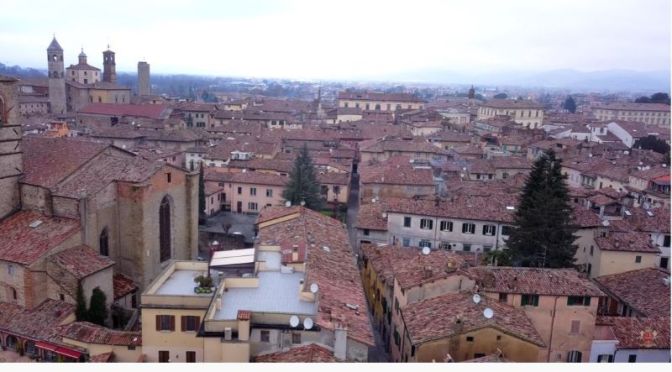
A few steps from the main square of Città di Castello, Umbrian town not far from Tuscany, finely restored apartment located on the second and third floor of a 13th century noble building, restored at the end of the 20th century and divided into two apartments. The apartment for sale boasts a total surface of approx. 325 sqm and it hosts four bedrooms.
First level: entrance hall, bright reception room with marble fireplace, eat-in kitchen, dining room, bedroom, bathroom, library with direct access to the shared landing, bedroom with en-suite bathroom, laundry room;
– Second level: music room (garret), two bedrooms, bathroom, closet and panoramic terrace.
Città di Castello is a city and comune in the province of Perugia, in the northern part of Umbria. It is situated on a slope of the Apennines, on the flood plain along the upper part of the river Tiber. The city is 56 km north of Perugia and 104 km south of Cesena on the motorway SS 3 bis.
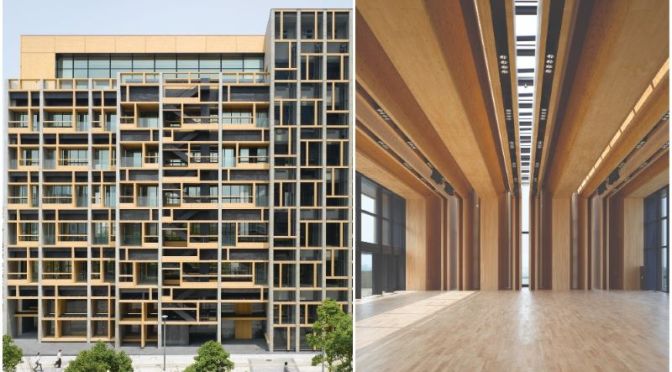
Monocle 24 ‘Tall Stories’: We visit the headquarters of the Tokyo timber wholesalers’ association, a building that “walks the walk” with its impressive wooden construction.
This project involved the relocation of the offices of the Association of Wood Wholesalers in Tokyo. It serves as a showcase to demonstrate the possibilities of wood as an urban construction material. Engawa, or Japanese terraces, allow a natural breeze to enter while shutting out strong sunlight for a comfortable indoor environment. Lumber were integrated into the building’s structure, and architectural exposed concrete was cast in cedar formwork. Since the building uses a large amount of wood, great attention was given to fire safety measures. The design focused on creating spatial continuity with the use of layering and natural light.
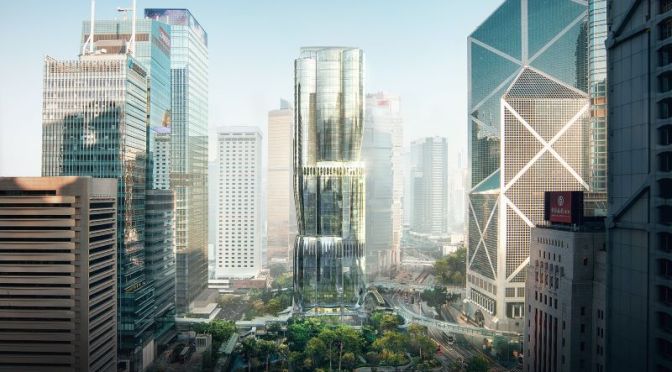
Zaha Hadid Architects has revealed its design for the 2 Murray Road project for $3 billion Henderson Land, in the heart of Hong Kong’s central business district. Creating new civic plazas enveloped by nature, the urban oasis is located in proximity other iconic Hong Kong skyscrapers.
Replacing a multi-story car park, the development is connected to adjacent public gardens and parks, through an elevated base sheltering courtyards cultivated with trees and plants. These outdoor areas seamlessly flow into the communal spaces of the interior. Inspired by the structural forms and layering of a Bauhinia bud about to blossom, known as the Hong Kong orchid tree, the design generates a very wide span of naturally lit, column-free, Grade A office space with a 5-meter floor-to-floor height giving maximum flexibility.
The façade, designed to withstand summer typhoons, includes 4-ply of double-laminated, double-curved insulated glass units, in order to insulate effectively the building and reduce its cooling load as well as build resilience. Moreover, “hybrid ventilation is controlled by the building’s automated management system and enables all office levels to be naturally ventilated”. In fact, smart systems learn to accurately predict daily occupancy trends to optimize energy demand, ensuring increased efficiencies with lower energy consumption.
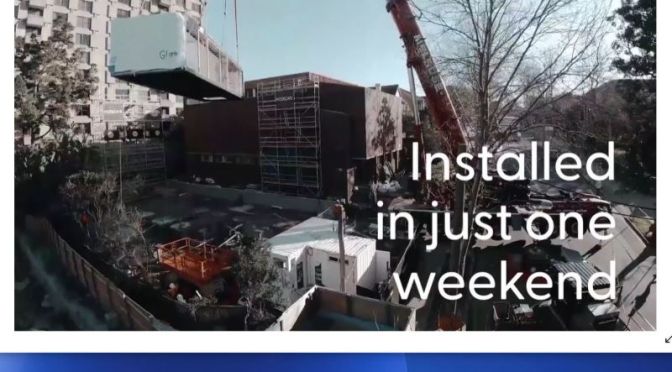
This four-storey school was built in the Modscape factory in just 12 weeks before taking the drive up to North Sydney to be installed in just one weekend.
Comprised of 20 modules, the building includes 14 learning spaces, three COLAs, staff amenities, a lift and stairs. In collaboration with Team 2 Architects.
The Palazzo Vecchio “Old Palace” is the town hall of Florence, Italy. It overlooks the Piazza della Signoria, which holds a copy of Michelangelo’s David statue, and the gallery of statues in the adjacent Loggia dei Lanzi. Originally called the Palazzo della Signoria, this building was also known by several other names: Palazzo del Popolo, Palazzo dei Priori, and Palazzo Ducale, in accordance with the varying use of the palace during its long history. This 4K video shows the exterior and interior of this amazing building, focusing on the art present on walls, ceilings and rooms.
One of the world’s most famous skyscrapers has just been through a major 10-year modernisation project. See New York City’s 1930s icon has been updated for the modern age.
The Empire State Building is a 102-story Art Deco skyscraper in Midtown Manhattan in New York City. It was designed by Shreve, Lamb & Harmon and built from 1930 to 1931. Its name is derived from “Empire State”, the nickname of the state of New York.
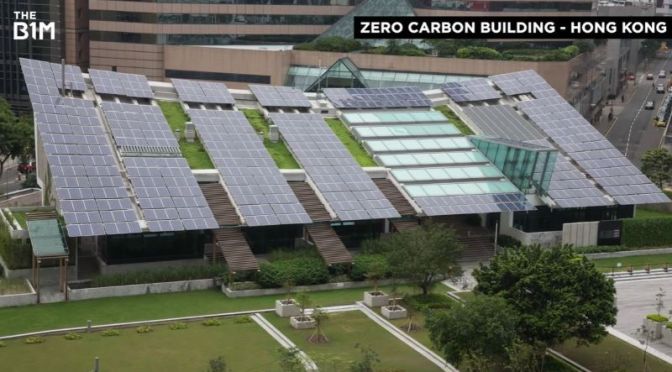
What if our buildings produced more energy than they used? From the United States to Hong Kong, these projects prove it can be done.
A zero-energy building (ZE), also known as a zero net energy (ZNE) building, net-zero energy building (NZEB), net zero building is a building with zero net energy consumption, meaning the total amount of energy used by the building on an annual basis is equal to the amount of renewable energy created on the site,[1][2] or in other definitions by renewable energy sources offsite, using technology such as heat pumps, high efficiency windows and insulation, and solar panels.
There’s a lot of buzz around self-driving cars, but autonomous-driving technology could revolutionize a different industry first — construction. That industry hasn’t changed much over the last several decades, according to some experts, making it an ideal candidate for automation.
“The way we build today is largely unchanged from the way we used to build 50 years ago,” said Gaurav Kikani, vice president of Built Robotics. “Within two years, I think we’re really going to turn the corner, and you’re going to see an explosion of robotics being used on construction sites.”
The industry is also faced with a labor shortage that the Covid-19 pandemic has further complicated. “Covid is making people step back and say, ‘hey, the way we’ve been doing things for a long time is just not sustainable,’” said Kevin Albert, founder and CEO of Canvas. “It is just a wake-up call for the industry.”
Canvas is one of several companies working on autonomous construction technology. Big players like Caterpillar and Komatsu, and start-ups like SafeAI and Built Robotics, see value in using autonomous machines to accelerate construction projects. The mining industry was one of the first to employ the use of self-driving tech.
Caterpillar began its first autonomy program more than 30 years ago. The company now has the largest fleet of autonomous haul trucks. Caterpillar says it’s hauled 2 billion metric tons in just over six years. Built Robotics is a San Francisco-based start-up founded by an ex-Google engineer that already has machinery out in the field. It’s automated several pieces of equipment, such as bulldozers and excavators.
“You can now collapse your construction timeline so you can knock out work overnight so that it’s ready for your human workers in the morning to speed them along,” Kikani said. SafeAI is another Silicon Valley start-up. It recently teamed up with Obayashi for a pilot program. It’s been retrofitting equipment like dump trucks, bulldozers and loaders. Robots are also helping inside.
San Francisco-based Canvas created an autonomous machine for finishing drywall and has worked on projects like the San Francisco International Airport and Chase Arena. Humans work alongside its robotic system. “Drywall is very hard work on the body,” Albert said. “And we’ve seen that 1 out of every 4 workers has to end their career early because of injuries. This will create longer careers for people and also enable people to join the trades that haven’t had access before.”
The construction industry is one of the largest sectors in the global economy, with about $10 trillion spent each year. That spending accounts for 13% of the world’s GDP, even though the sector’s annual productivity growth has only increased 1% over the past 20 years. According to McKinsey & Co., $1.6 trillion of additional value could be created through higher productivity, and autonomy would help the industry achieve that.
News, Views and Reviews For The Intellectually Curious





 Boomers Daily