An inviting exploration of architecture across cultures and centuries by one of the field’s eminent authors
In this sweeping history, from the Stone Age to the present day, Witold Rybczynski shows how architectural ideals have been affected by technological, economic, and social changes—and by changes in taste. The host of examples ranges from places of worship such as Hagia Sophia and Brunelleschi’s Duomo to living spaces such as the Katsura Imperial Villa and the Alhambra, national icons such as the Lincoln Memorial and the Sydney Opera House, and skyscrapers such as the Seagram Building and Beijing’s CCTV headquarters. Rybczynski’s narrative emphasizes the ways that buildings across time and space are united by the human desire for order, meaning, and beauty.
This is the story of architecture’s physical manifestation of the universal aspiration to celebrate, honor, and commemorate, and an exploration of the ways that each building is a unique product of patrons, architects, and builders. Firm in opinion, even-handed, and rooted in scholarship, this book will delight anyone interested in understanding the buildings they use, visit, and pass by each day.
CBS Sunday Morning – Since opening its doors in 1884, New York City’s Chelsea Hotel has welcomed artists, writers and cutting-edge thinkers who shaped America’s cultural landscape. Today, the storied landmark is being developed into a luxury boutique hotel.
Correspondent Alina Cho talks with residents, and with “Inside the Dream Palace” author Sherill Tippins, about the Chelsea’s unique history; and with developer Sean MacPherson about his determination to approach the Hotel Chelsea’s restoration with reverence.
Butler to the World: How Britain Became the Servant of Tycoons, Tax Dodgers, Kleptocrats and Criminals by Oliver Bullough
Britain, according to this damning book, is a land of dirty money. It has become the country of choice for dictators wanting to hide their cash, and oligarchs wishing to launder their reputations. Yet instead of waging war on this illicit finance, we’re helping it to propagate. Our national debasement is a sordid story, but Oliver Bullough canters through it with wit and such a colourful set of case studies that it is at least a little easier to stomach. His account begins with the Suez crisis in 1956, which Bullough pinpoints as the moment when Britain’s imperial power crumbled and the nation searched for a new role in the world. The job we chose? Playing Jeeves to kleptocrats. Since the Brexit vote there has been a lengthy debate about what kind of country Britain should strive to be; Bullough argues convincingly that we haven’t spent enough time scrutinising what it has already become. Ros Urwin Profile, £20 Buy a copy of Butler to the World here
Megathreats: The Ten Trends that Imperil Our Future, and How to Survive Them by Nouriel Roubini
Nouriel Roubini is not known as “Dr Doom” for nothing, and this book from the economist who predicted the 2008 financial crisis is a bleak look at some of the horrible threats facing our survival on Earth, from economic collapse to a new cold war and the rise of artificial intelligence. But it is also an important wake-up call to how fragile modern civilisation is. Roubini lucidly lays out the challenges we face. Maybe save reading this until after the festive period. TK John Murray, £20 Buy a copy of Megathreats here
A Pipeline Runs Through It: The Story of Oil from Ancient Times to the First World War by Keith Fisher
In this epic, deeply researched history of oil, Keith Fisher, who spent 15 years on the book, takes us from the Byzantine era to the US oil boom of the 19th century and the rise of barons such as John D Rockfeller, and ends with the First World War. He unsparingly shows what a great but terrible industry oil exploration has been. No one comes out well, but the brutality involved in clearing indigenous communities to open up areas for exploitation are harrowing, especially the cruelty from what would become Royal Dutch Shell. TK Allen Lane, £35 Buy a copy of A Pipeline Runs Through It here
A new biography by Brigitta Olubas is the first to examine the life of the Australian novelist celebrated for her refined poetic fiction and acute moral vision.
Juan Villoro, who spent over two decades perfecting one book about Mexico City, recommends reading on the city he loves. “Mexico is too complex,” a visitor said. “It needs to be read.”
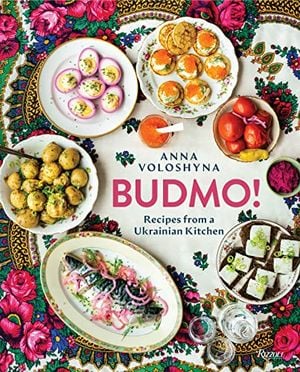
In this colorful cookbook you’ll find recipes for dishes like cold borscht, dark cherry varenyky and sweet pumpkin rice kasha from Ukrainian native Anna Voloshyna, who moved to California in 2011. Known for hosting pop-up dinners and cooking classes, Voloshyna is also a food stylist, photographer and blogger. In her debut cookbook, she offers modern and American spins on the typical dishes she grew up with, and she also includes details like food origins, customs and traditions in each recipe’s headnote. Budmo, which is how Ukrainians say “cheers,” shares the country’s complicated history that has led up to the current war, while simultaneously celebrating its varied and vibrant cuisine.
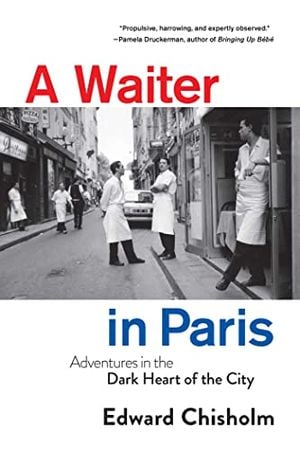
“It’s the boundary between two worlds: the Paris you see and the Paris you don’t,” writes Edward Chisholm, an Englishman who moved to Paris in 2012 and spent several years as a waiter while trying to build up his writing career. Now, his debut book, a no-holds-barred memoir detailing his time waiting tables in one of the world’s hottest restaurant cities, reveals what really goes on behind the scenes of fine dining establishments. This book is the next generation of Anthony Bourdain’s Kitchen Confidentialand Stephanie Danler’s Sweetbitter, with Chisholm exposing the often-shocking mayhem of the restaurant kitchen in visceral detail. He deftly uses the Parisian restaurant as a microcosm for France as a whole, with immigrants, people of color and blue-collar workers at the bottom of the food chain.
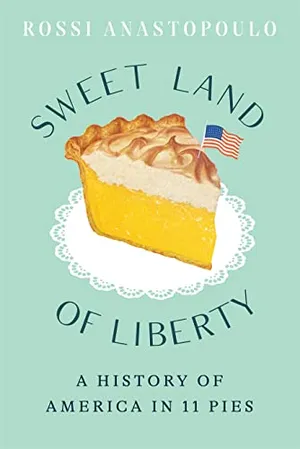
Ever wonder how apple pie became a symbol of America? Food writer and editor Rossi Anastopoulo slices into the history of pie in the good ol’ US of A, from pumpkin pie on Thanksgiving to apple pie on Independence Day, using the iconic American dessert to tell the story of a country. Still, it’s not all sweet, as she details how molasses pie traces its origin to slavery and Jell-O pie reveals the history of gender disparity in our country. All in all, Anastopoulo shares interesting facts behind 11 all-American pies, like how the first recipe for American apple pie appeared in a 1796 cookbook called American Cookery, which is believed to be the first cookbook ever published in the newly minted United States. The book includes a recipe for each pie, too.
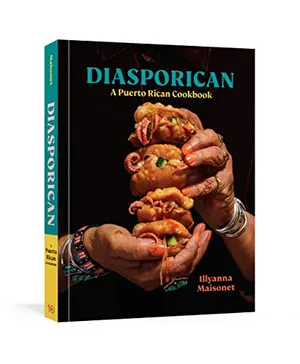
Part memoir and part cookbook, this debut from our country’s first Puerto Rican food columnist Illyanna Maisonet dives into the author’s personal family recipes, which she painstakingly documented from her extended relatives through the years, and also includes her interpretation of dishes by Puerto Rican friends, chefs and roadside food vendors. There are 90 recipes including traditional Puerto Rican dishes like tostones, pernil and mofongo. Other highlights include sloppy joes and sancocho. But more than just the recipes, Maisonet shares how migration and colonization have influenced and progressed Puerto Rican food, ingredients and techniques. In explaining why her family wraps their pasteles in foil, Maisonet writes in her intimate, conversational style, “When you think of my grandma coming to Sacramento as a 17-year-old mother of two in 1956, you have to wonder where the hell would she have found banana leaves in Northern California?” She posits that this progression is no less authentic than the original method, and that the resourcefulness of Puerto Ricans has evolved their cuisine into what it is today: dynamic and delicious.
‘This is what Biden and his advisers are counting on: a grinding and volatile battle with a weakened Trump and his increasingly unhinged movement in 2024.’
There is no way to offset the fact that a gigantic dose of hydrocarbon wealth is being used to stage an immensely carbon-intensive spectacle, in a place that is already getting hotter faster than almost anywhere else on the planet. In the narrowing window of opportunity that remains, can we justify burning this much of our carbon budget on international football?
Act of Oblivion, the title of Robert Harris’s novel, refers to the Act of Free and General Pardon, Indemnity and Oblivion, introduced to the Convention Parliament in May 1660 and given royal assent on 29 August.

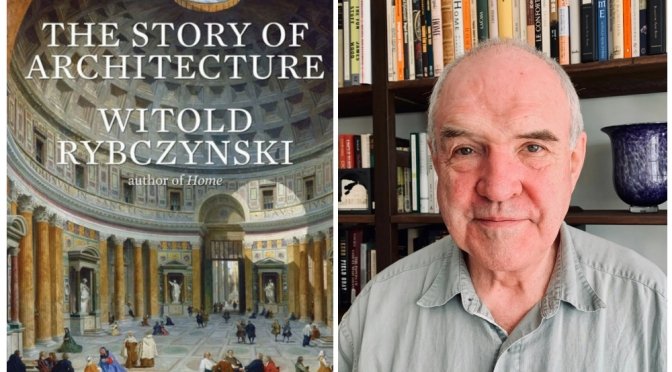







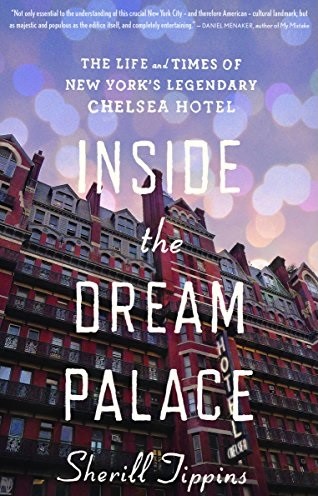


 Illustration by Eleanor Taylor






 Boomers Daily