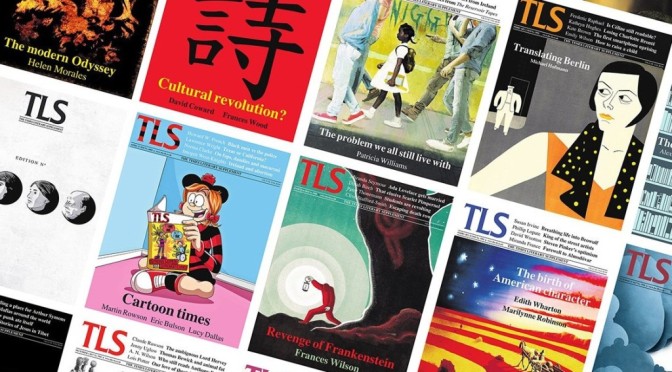
Times Literary Supplement (October13, 2023): The new issue features Deeper Truths – The spiritual quest of the Nobel Laureate Jon Fosse; ‘Woke Wars’ and identity politics; fashion and the Bloomsbury group; Jewish boxers in London; Elsa Morante’s princes and demons and ‘Free Will?’
Literary Review – October 2023: The new issue features How Bond Was Born; Impressions of Monet; Inequality through the Ages; Adam Smith the Socialist, and more…
Anthony Powell, two and a half years older than Ian Fleming, remembered him as ‘one of the few persons I have met to announce that he was going to make a lot of money out of writing novels, and actually contrive to do so’.
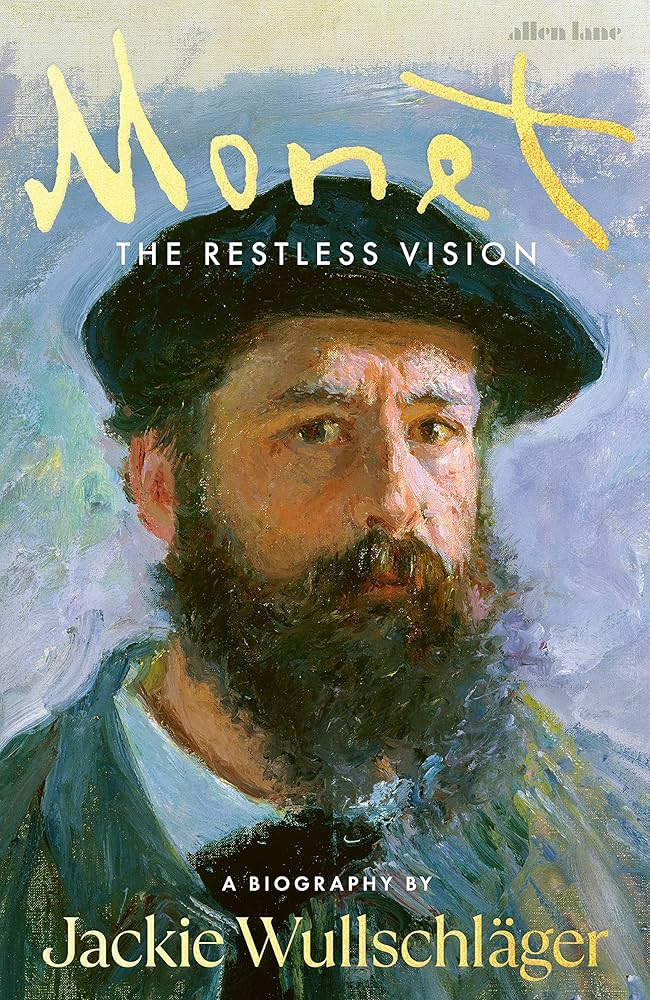
You long for sublime artists to be sublime people. Or, if they’re bad, to be magnificently so. Possessing ‘a vanity born of supreme egoism’, Claude Monet ‘believed his art conferred a right to good living’ and that ‘his welfare must be … the immediate concern of others’, writes Jackie Wullschläger, chief art critic of the Financial Times. With great honesty, Wullschläger records her subject’s wearisome scrounging letters and his propensity for petty and often pointless mendacity.
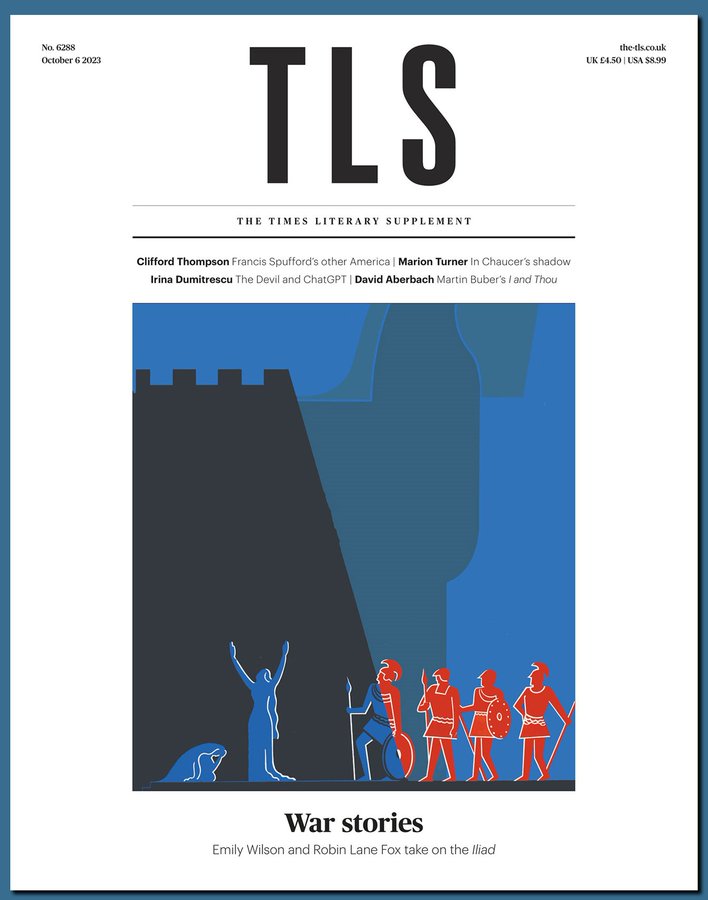
Times Literary Supplement (October 6, 2023): The new issue features War Stories – A review of the Iliad; Frances Sputford’s ‘Other America’; In Chaucer’s Shadow; The devil and ChatGPTand Martin Buber’s ‘I and Thou’…
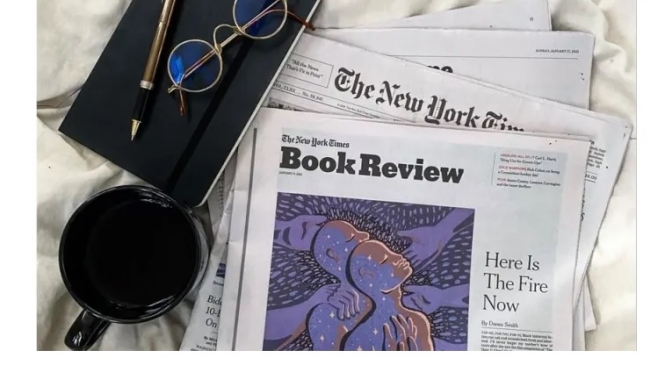
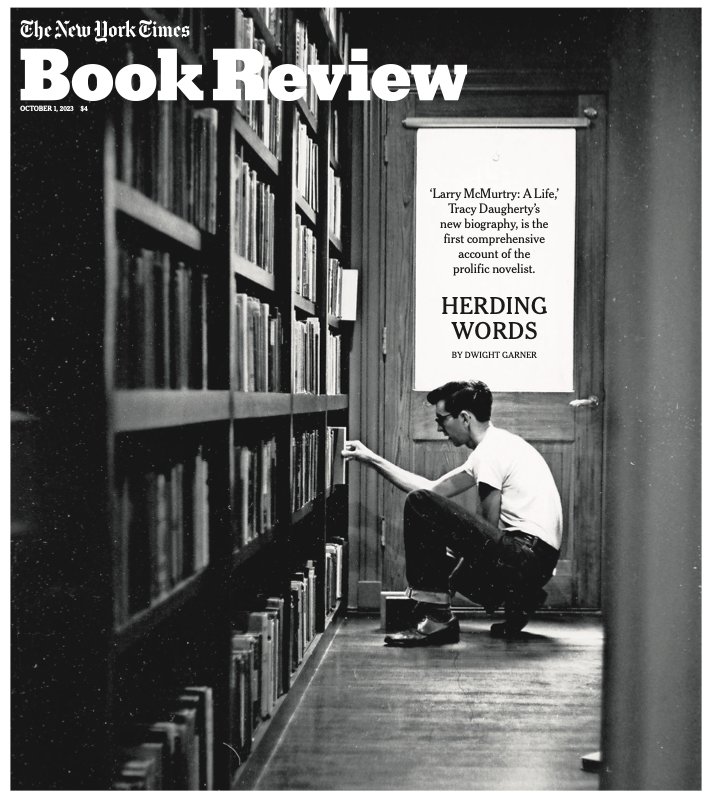
Tracy Daugherty’s new biography is the first comprehensive account of the prolific novelist who brought us “Lonesome Dove,” “The Last Picture Show” and more.
When the art critic Dave Hickey learned that Tracy Daugherty was writing a biography of his friend Larry McMurtry (all three men are Texans), he said to Daugherty: “Knowing Larry, it’s going to be a real episodic book.” Episodic this biography is. It’s also vastly entertaining.
McMurtry, the prolific author of “The Last Picture Show,” “Terms of Endearment” and “Lonesome Dove,” was a demythologizer of the American West who appeared to live in several registers at once.
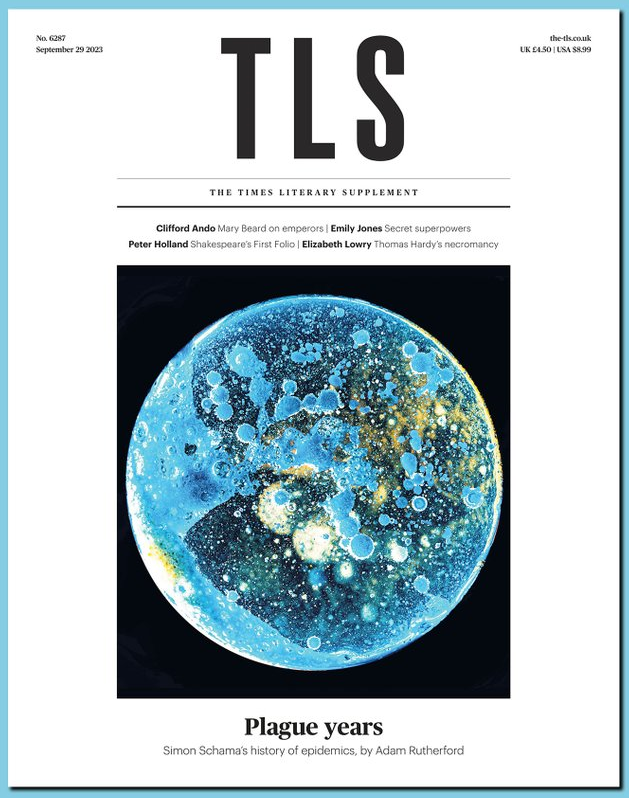
Times Literary Supplement (September 29, 2023): The new issue features The First Folio at 400; how disease shaped global history; novels of queer experience; what Britain laughs at; literary thefts and coincidences – and much more…
Scientists often make poor historians. Their shortcomings in describing and analysing the past include a failure to shed the whiggish stories that academic history moved away from decades ago. Straight lines are still drawn between Great Men and the impact of their brilliant insights on our view of reality. They also sometimes fail to treat the material of history with the seriousness they bring to their own discipline. Simple questions that are drummed into schoolchildren are frequently ignored in analysing documentary evidence: who wrote this, why, and for whom? The result is context-lite narrative that doesn’t stand up to scrutiny.
Next year, the Folger Shakespeare Library in Washington DC will reopen after a three-year closure for a large-scale renovation of its building, which dates from 1932. The centrepiece of the new Shakespeare Exhibition Hall, will be, as the press release puts it, something “that only the Folger could produce: all 82 copies of the 1623 First Folio of Shakespeare that were collected by Henry and Emily Folger”. The Folger holds slightly more than a third of all extant copies of the book and now eighty of them will be on permanent show in a “20-foot long visible vault”, while two more will be open in cases as part of an “interactive” visitor experience. Peering into the vault says much about the Folgers’ appetite for cornering the market in Folios but, since nearly all copies differ in some respects, it did make some kind of sense to buy many of them.
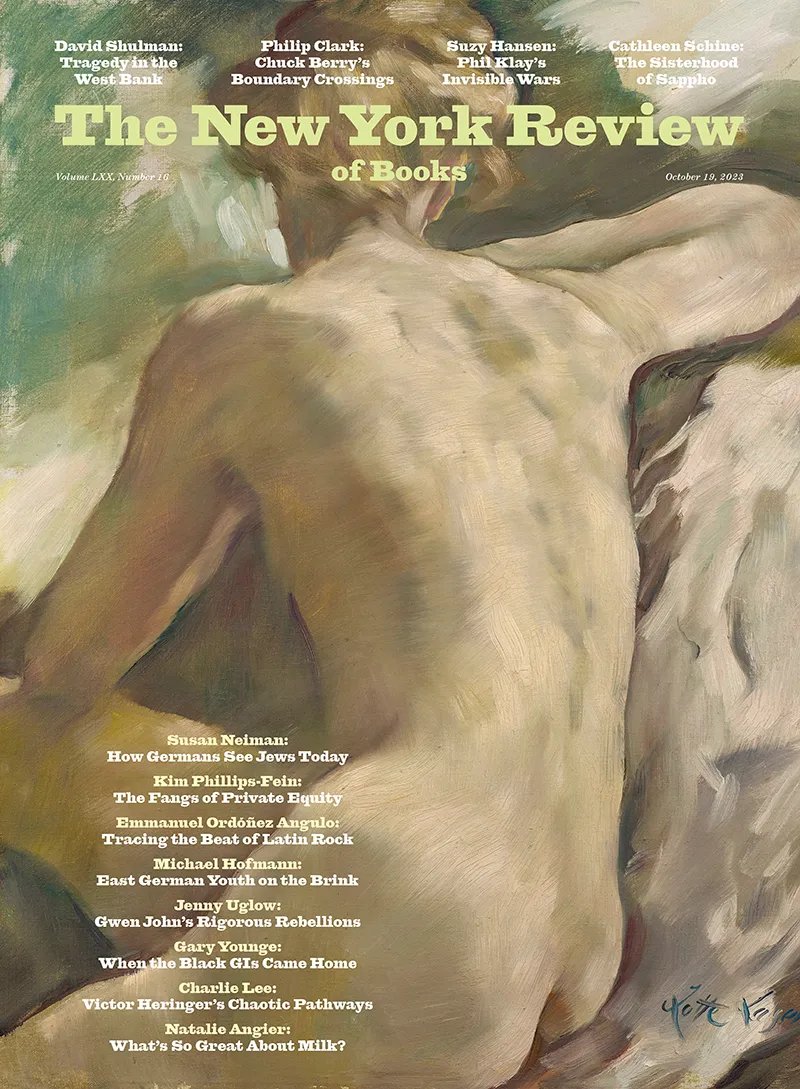
The New York Review of Books (October19, 2023)– The latest issue features with Gary Younge on the Black soldiers who fought for freedom at home and abroad, David Shulman on the road to a second Nakba, Jenny Uglow on the exuberant Gwen John, Suzy Hansen on America’s endless and remote wars, Kim Phillips-Fein on plundering private equity, Natalie Angier on milk, Megan O’Grady on Lucy Lippard, Adam Kirsch on the prophetic Kieślowski, Philip Clark on the lines Chuck Berry crossed, Susan Neiman on Germany’s historical memory, poems by Arthur Sze, Jessica Laser, and Jules Laforgue, and much more.
Half American: The Epic Story of African Americans Fighting World War II at Home and Abroad by Matthew F. Delmont
The ambivalence many Black soldiers felt toward the United States during World War II was matched only by the ambivalence the United States demonstrated toward the principles on which the war was fought.
One of my favorite novels is by Compton Mackenzie, a Scottish writer known today, if he is known at all, for his whimsically comic Whisky Galore (1947) and his ambitious early novel Sinister Street (1913). The one I love, however, is Extraordinary Women: Theme and Variations (1928), a satirical roman à clef about the sapphic adventures of the unorthodox and eccentric inhabitants of an island modeled after Capri during World War I. After Sappho, a novel by Selby Wynn Schwartz that was longlisted for the Booker Prize in 2022, is many things, none of them satirical, but I kept thinking of the title of Mackenzie’s book as I read it.
LA Review of Books (Autumn 2023) – The latest issue features The Funny Thing About Misogyny; The New Scarcity Studies: On Two New Socioeconomic Histories and Endgame Emotions: The Melting of Time, the Mourning of the World…
THE FUNNY THING about misogyny is it’s structured like a joke. Not a very good joke—a groaner, a dad joke. Why are they called “women”? Because they’re a woe to men. Get it? Woman is a container for man; language engenders gender subordination. As Mike Myers recites on stage in his role as a moody slam poet in the thrillingly zany 1993 Hitchcockian send-up So I Married an Axe Murderer, “Woman! Whoa, man. Whoaaaaaa. Man!”
Scarcity: A History from the Origins of Capitalism to the Climate Crisis by CARL WENNERLIND
WATER FALLS FROM the sky, literally. It is the most abundant chemical compound on Earth, and yet many people buy it in plastic bottles. Nestlé and other corporations source water cheaply and add labels that depict something other than heavy-industry and fossil-fuel derivatives, as though you’re drinking straight from a pristine spring. By bottling this natural resource and selling it as a commodity, Nestlé creates a form of scarcity.
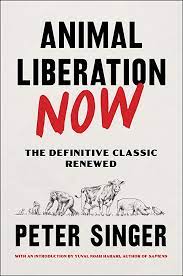
London Review of Books (LRB) – October 5, 2023: The new issue features Animal Ethics; Orca Life – We may understand less about orcas than they do about us, and Why Weber? – Weber insists that everything remain in its rightful place. Politicians should stick to politics, and scientists to science.
We may be tempted to throw up our hands and say: fuck it, I’m having a burger. Peter Singer would think this illogical: we should endeavour to do the least harm we can. But we might wonder whether something is wrong with the ethical approach that has led us to this point.
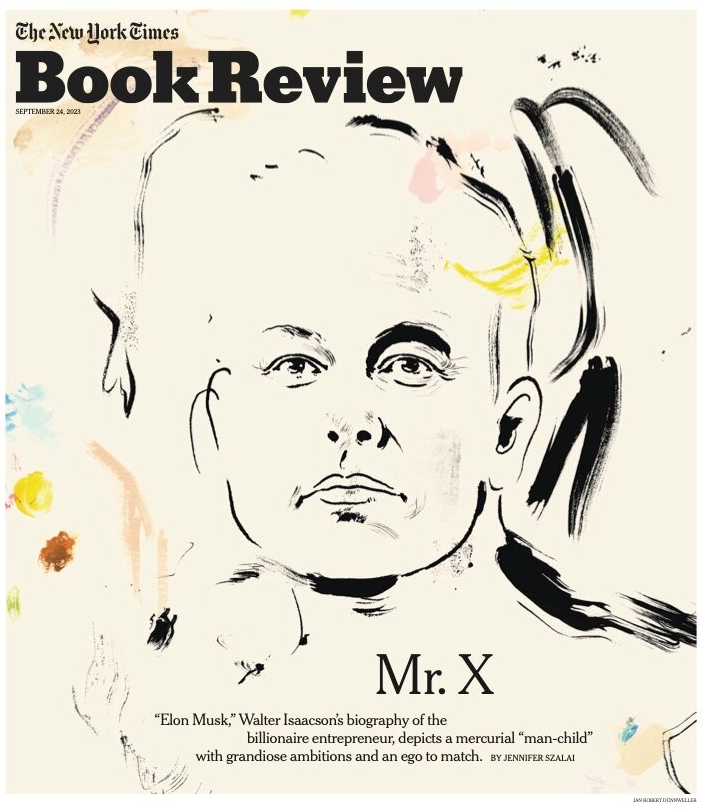
At various moments in “Elon Musk,” Walter Isaacson’s new biography of the world’s richest person, the author tries to make sense of the billionaire entrepreneur he has shadowed for two years — sitting in on meetings, getting a peek at emails and texts, engaging in “scores of interviews and late-night conversations.” Musk is a mercurial “man-child,” Isaacson writes, who was bullied relentlessly as a kid in South Africa until he grew big enough to beat up his bullies. Musk talks about having Asperger’s, which makes him “bad at picking up social cues.” As the people closest to him will attest, he lacks empathy — something that Isaacson describes as a “gene” that’s “hard-wired.”
“The Vaster Wilds” follows a girl’s escape from a nameless colonial settlement into the unforgiving terrain of America.
By Fiona Mozley
Jamestown, Va., the first permanent English settlement in the Americas, very nearly didn’t survive. A few years into its existence, in the early 1600s, the majority of the population had succumbed to famine and disease. The period known as the Starving Time has taken on allegorical status. Jamestown is the colony that tried too much too soon; that underestimated the harsh climate, the foreign land, its existing, Indigenous population. Pilgrims went in search of heaven and found hell.
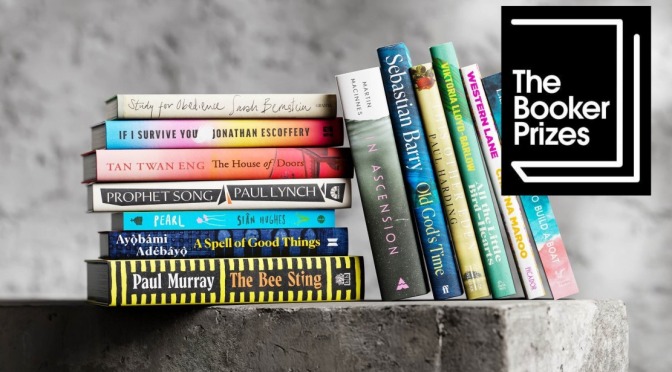
The Booker Prize (September 20, 2023) – The shortlist has been announced! It features six books by authors never previously shortlisted, including two debuts.
Shortlisted for the Booker Prize 2023. A patch of ice on the road, a casual favour to a charming stranger, a bee caught beneath a bridal veil – can a single moment of bad luck change the direction of a life?
Shortlisted for the Booker Prize 2023. Chetna Maroo’s tender and moving debut novel about grief, sisterhood, a teenage girl’s struggle to transcend herself – and squash
Shortlisted for the Booker Prize 2023. A mother faces a terrible choice, in Paul Lynch’s exhilarating, propulsive and confrontational portrait of a society on the brink
Shortlisted for the Booker Prize 2023. Full of lyricism and power, Paul Harding’s spellbinding novel celebrates the hopes, dreams and resilience of those deemed not to fit in a world brutally intolerant of difference
Shortlisted for the Booker Prize 2023. An exhilarating novel-in-stories that pulses with style, heart and barbed humour, while unravelling what it means to carve out an existence between cultures, homes and pay cheques
Shortlisted for the Booker Prize 2023. In her accomplished and unsettling second novel, Sarah Bernstein explores themes of prejudice, abuse and guilt through the eyes of a singularly unreliable narrator

















/https%3A%2F%2Fdev.lareviewofbooks.org%2Fwp-content%2Fuploads%2F2023%2F09%2FScarcity.jpg)






 Boomers Daily