Category Archives: Arts & Literature

Destinations: Walk The Streets, Parks And Palaces Of Beethoven’s Vienna

From a Wall Street Journal online article:

Beethoven's Vienna WalkBeethoven moved nearly 70 times while living in Vienna. Two of his former homes are open to the public, and many more are marked with commemorative plaques.
High above Vienna’s historic center, at the edge of the hilly Vienna Woods, the city’s Beethoven Museum, is housed in a onetime bakery complex dating back to the late Middle Ages, with an 18th-century annex containing a small apartment where Beethoven spent the summer of 1802. While living here, he composed his tragic “Tempest” piano sonata and began work on his 3rd Symphony, the “Eroica.”

Where to Binge on Beethoven in Vienna - Wall Street Journal Sept 2019

Theater an der Wien - Beethoven's ViennaLUDWIG VAN BEETHOVEN is as Viennese as apple strudel. Though born in Bonn, Germany in 1770, he moved to the Austrian capital when he was in his early 20s, and then spent the rest of his 56 years changing the course of Western music from the city on the Danube. A quirky, cantankerous celebrity in his own time, he premiered his groundbreaking symphonies and concertos in Vienna’s grand palaces, escaped the summer heat in what are now its sleepy suburbs, and moved around between dozens of supposedly squalid apartments that sprawl across much of the city.

To read more: https://www.wsj.com/articles/where-to-binge-on-beethoven-in-vienna-11568303745

Top New Short Films: “Maestro” By French Animation Collective Illogic Is “Remarkable”

Animated and Directed by: Illogic http://illogic.fr/portfolio/maestro/

Produced by: Bloom Pictures https://www.bloompictures.tv/portfolio/maestro/

Maestro short film by Illogic 2019

For decades, Disney has been the de facto master of the animated animal orchestra — as seen in classics like FantasiaThe Little Mermaid, and The Lion King. However, this week’s Staff Pick Premiere, “Maestro,” from animation collective Illogic, sets out to change the tune. The film features a photo-realistic rendition of forest animals belting out songs from a Vincenzo Bellini war opera. And it’s remarkable.

Maestro short film by Illogic 2019

Best known for their 2018 Oscar-nominated short “Garden Party,” which features impressive amphibian animation, Illogic expands their animal exploration with “Maestro” to include birds, squirrels, hedgehogs, and deer. As in their previous work, the collective continues to explore the question of what animals do when humans aren’t watching, and the animations continue to be surprising.

Maestro short film by Illogic 2019


Exhibitions: Bertoldo di Giovanni – Renaissance of Sculpture in Medici Florence, Opens Sept. 18 At The Frick Collection NYC

Bertoldo di Giovanni (ca. 1440–1491)This fall, The Frick Collection will present the first-ever exhibition on the Florentine sculptor Bertoldo di Giovanni (ca. 1440–1491), a renowned student of Donatello, a teacher of Michelangelo, and a great favorite of Lorenzo “il Magnifico” de’ Medici, his principal patron. More than twenty statues, reliefs, medals, and statuettes — constituting nearly his entire extant oeuvre — will be on view exclusively at the Frick, which houses the only sculptural figure by Bertoldo outside of Europe. The exhibition will800px-Bertoldo_di_giovanni,_medaglia_della_congiura_dei_pazzi_(lorenzo),_1478 highlight the ingenuity of the artist’s designs across media, including bronze, wood, and terracotta, and provide the first chance to fully explore longstanding questions of attribution, function, groupings, and intended display. Bertoldo di Giovanni: The Renaissance of Sculpture in Medici Florence will bring into focus the sculptor’s unique position at the heart of the artistic and political landscape in fifteenth-century Italy.

To read more: https://www.frick.org/exhibitions/bertoldo?utm_source=Frick+eNews&utm_campaign=8cb95d1fae-Acquisition_Bertoldo_2019&utm_medium=email&utm_term=0_518a4c86ac-8cb95d1fae-364490665

Collectible Books: “Gold” By Sebastião Salgado Chronicles The Brazilian Gold Rush (Taschen)

From a Taschen.com online release:

Gold Sebastiao Salgado gold workers“Salgado’s photographs project an immediacy that makes them vividly contemporary. We know that the mine at Serra Pelada is now closed, yet the intense drama of the gold rush leaps out of these images.”

For a decade, Serra Pelada evoked the long-promised El Dorado as the world’s largest open-air gold mine, employing86-11-46-32.tif some 50,000 diggers in appalling conditions. Today, Brazil’s gold rush is merely the stuff of legend, kept alive by a few happy memories, many pained regrets—and Sebastião Salgado’s photographs. This signed edition gathers the complete black-and-white portfolio in impeccable, grand-scale, museum-quality reproductions.

To read more: https://www.taschen.com/pages/en/catalogue/photography/all/86908/facts.sebastio_salgado_gold.htm

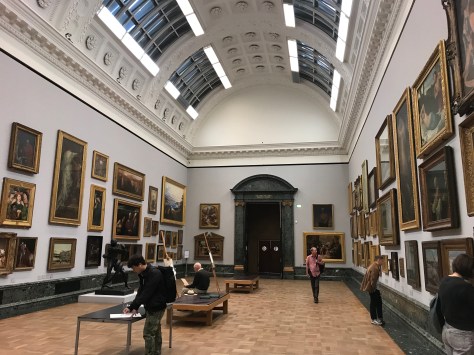
Top Exhibitions: William Blake At Tate Britain (Sept. 11, 2019 to Feb. 2, 2020)

From a Tate Britain online description:

Nebuchandnezzar by William BlakeAlthough Blake was considered mad by contemporaries for his idiosyncratic views, he is held in high regard by later critics for his expressiveness and creativity, and for the philosophical and mystical undercurrents within his work. His paintings and poetry have been characterised as part of the Romantic movement and as “Pre-Romantic”. A committed Christian who was hostile to the Church of England (indeed, to almost all forms of organised religion), Blake was influenced by the ideals and ambitions of the French and American Revolutions.

William Blake (28 November 1757 – 12 August 1827) was an English poet, painter, and printmaker. Largely unrecognised during his lifetime, Blake is now considered a seminal figure in the history of the poetry and visual arts of the Romantic Age. What he called his prophetic works were said by 20th-century critic Northrop Frye to form “what is in proportion to its merits the least read body of poetry in the English language”. His visual artistry led 21st-century critic Jonathan Jones to proclaim him “far and away the greatest artist Britain has ever produced”. In 2002, Blake was placed at number 38 in the BBC’s poll of the 100 Greatest Britons.

To read more: https://www.tate.org.uk/art/artists/william-blake-39

World’s Top Exhibitions: “The Deep Listener” By Danish Artist Jakob Kudsk Steensen, Serpentine Galleries, London (2019)

deeplistener1Designed as an augmented reality and spatial audio work downloadable as an app for mobile devices, it is both a site specific public artwork and a digital archive of these species, using tools and platforms from a range of fields including video games, computer generated images and film. Inspired by ecological science-fiction and scientific research, Kudsk Steensen creates a form of ‘slow media’ that uses the technological to foster attention rather than distraction. 

...a journey to both see and hear five of London’s species: London plane trees, bats, parakeets, azure blue damselflies and reedbeds.

Kudsk Steensen has collaborated with the field recordist and sound designer Matt McCorkle to represent five species as sound. The audio and visuals within the project are drawn directly from organic source material gathered from a period of embedded research within Kensington Gardens and Hyde Park. These organic materials are then transformed through digital processes to be re-embedded within the same context.

Download brochure: https://www.serpentinegalleries.org/files/press-releases/the_deep_listener_tdl_a5_digital_v2_final.pdf

Website: https://www.serpentinegalleries.org/exhibitions-events/serpentine-augmented-architecture

New Photography Books: The Full-Day Panoramas Of “Day To Night” By Stephen Wilkes (Taschen)

From a Smithsonian Magazine online review:

Flatiron NYC Day to Night 2010 Stephen WilkesAt first glance, Stephen Wilkes’ photographs look like a single moment in time. It is only upon closer inspection that viewers discover that each of his works is actually the result of shooting thousands of photographs from a stationary position over the course of a day and stitching them together digitally to create one cohesive panorama. The painstaking task of editing all of this information and whittling it down into one image can take months to complete, but the results capture a sense of place that can’t be expressed by a single frame alone.

Wilkes expands on this concept in his new bookDay to Night, which features panoramas of iconic places like New York’s Coney Island, Moscow’s Red Square and Arizona’s Grand Canyon seen over the course of a day. Time-lapse photos these are not, as Wilkes carefully selects the exact frames he’ll compile into the final image. (The book release coincides with “A Witness to Change,” a photographic exhibition to be held at Bryce Wolkowitz Gallery in New York City beginning September 12.)

Read more: https://www.smithsonianmag.com/travel/how-photographer-stephen-wilkes-captures-full-day-single-image-180972935/#6RZ7EF0BklRrTGAP.99

Profiles: Mexico’s Great Artist, Francisco Toledo, Has Died (1940 – 2019)

From a Smithsonian Magazine online article:

Francisco Toledo - The Wanderer (1989)Though his paintings and sculptures sell all over the world for fabulous prices, he has not enriched himself. He lives simply, with his wife, Trine Ellitsgaard Lopez, an accomplished weaver, in a traditional house in the middle of Oaxaca, and has used his considerable profits to found art centers and museums, an ethnobotanical garden and at least three libraries.

jun2019_g03_franciscotoledoToledo, whose origins were obscure and inauspicious, was the son of a leatherworker—shoemaker and tanner. He was born in Mexico City, but the family soon after moved to their ancestral village near Juchitán de Zaragoza in the Isthmus of Tehuantepec, nearer to Guatemala than to Mexico City—and being ethnically Zapotec, nearer culturally to the ancient pieties of the hinterland too.

His paintings became sought after for their singular beauty. His work resisted all classification and fashion. He was not attached to any movement, even when the art world was turbulent with abstraction and Minimalism and Color Field and Op Art. He elaborated his ancestral visions of masks and folk tales, haunted and highly colored landscapes, and eroticism that was both comic and gothic. “He intuits the timelessness of authenticity,” the Guatemalan art critic Luis Cardoza y Aragón wrote. In 1967, an enthusiastic Henry Miller—himself a watercolorist—wrote the text for a Toledo exhibition.

Read more: https://www.smithsonianmag.com/arts-culture/what-makes-francisco-toledo-180972172/#OPyozLi0YzWgWjf4.99

Best New History Books: “Escape From Rome” By Walter Scheidel (Oct 2019)

From a Princeton University Press release:

Escape From RomeThe fall of the Roman Empire has long been considered one of the greatest disasters in history. But in this groundbreaking book, Walter Scheidel argues that Rome’s dramatic collapse was actually the best thing that ever happened, clearing the path for Europe’s economic rise and the creation of the modern age. Ranging across the entire premodern world, Escape from Rome offers new answers to some of the biggest questions in history: Why did the Roman Empire appear? Why did nothing like it ever return to Europe? And, above all, why did Europeans come to dominate the world?

In an absorbing narrative that begins with ancient Rome but stretches far beyond it, from Byzantium to China and from Genghis Khan to Napoleon, Scheidel shows how the demise of Rome and the enduring failure of empire-building on European soil ensured competitive fragmentation between and within states. This rich diversity encouraged political, economic, scientific, and technological breakthroughs that allowed Europe to surge ahead while other parts of the world lagged behind, burdened as they were by traditional empires and predatory regimes that lived by conquest. It wasn’t until Europe “escaped” from Rome that it launched an economic transformation that changed the continent and ultimately the world.

To read more: https://press.princeton.edu/titles/13581.html

Top Museum Exhibitions: “Gorham Silver – Designing Brilliance 1850–1970” At The Rhode Island School Of Design

From a RISD Museum online exhibit:

RISD MuseumEstablished in 1831, the Gorham Manufacturing Company adeptly coupled art and industry, rising to become an industry leader of stylistic and technological achievement in America and around the world. It produced public presentation pieces and one-of-a-kind showstoppers for important occasions, as well as tableware for everyday use. Its works trace a narrative arc not only of great design but also of American ambitions. In this volume, insightful essays are accompanied by gorgeous new photography of splendid silver pieces along with a wealth of archival images, design drawings, casting patterns, and company records that reveal a rich heritage of a giant in decorative arts and silver manufacturing.

Produced in collaboration with the RISD Museum, which has the world’s most significant collection of Gorham silver, this major new book casts new light on more than 120 years of grand aesthetic styles in silver, innovative industrial practices, and American social and cultural norms.

Website: https://risdmuseum.org/art-design/projects-publications/publications/gorham-silver-designing-brilliance-1850-1970