Category Archives: Art

Art Reviews: Gagosian Quarterly – Winter 2023

Image

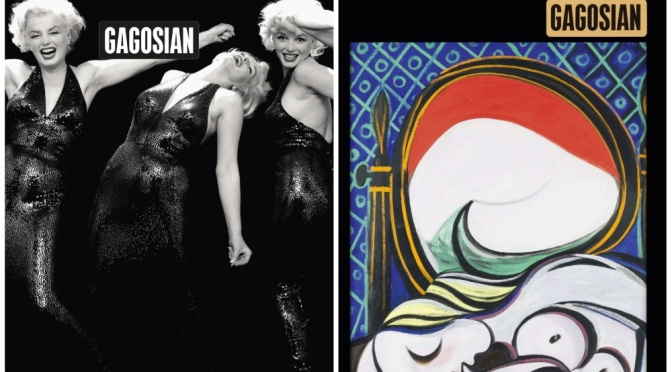
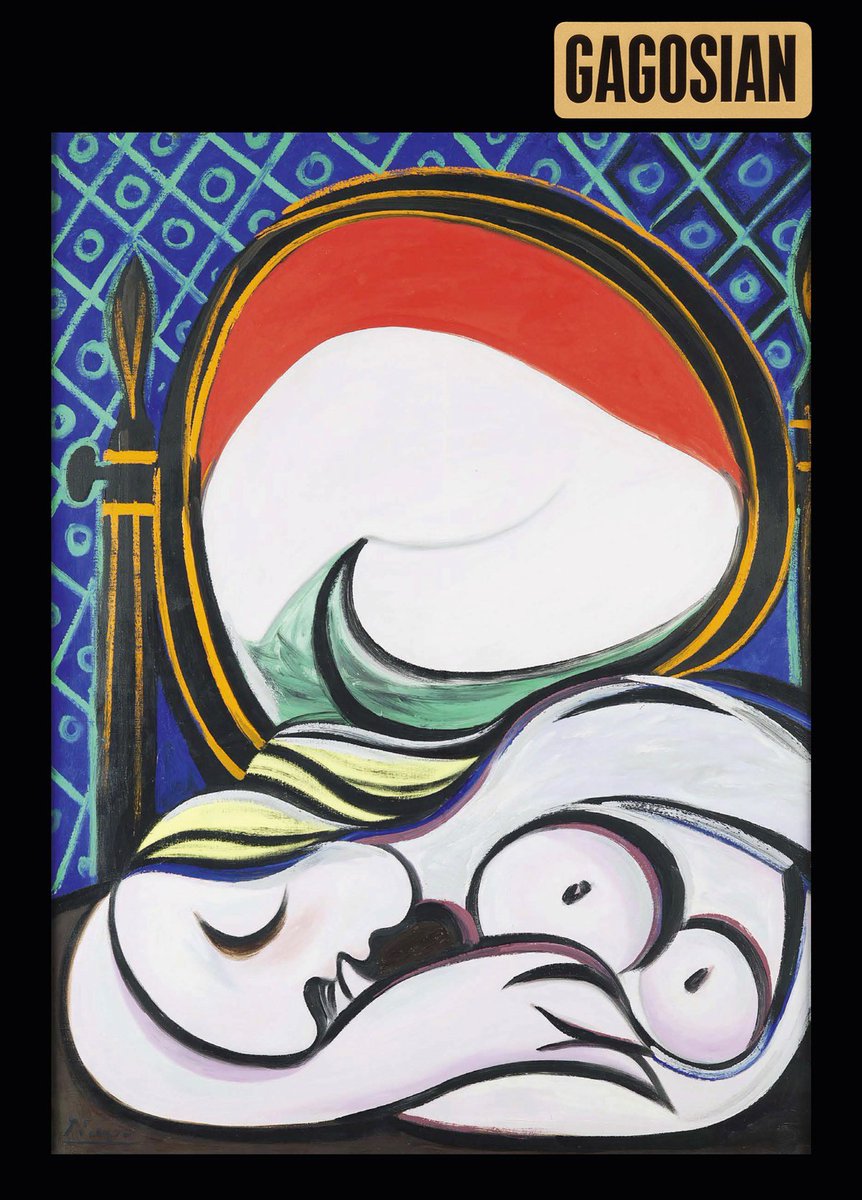
Gagosian Quarterly (Winter 2023) – The new issue features Annie Cohen-Solal who writes about the exhibition A Foreigner Called Picasso, at Gagosian, New York, detailing the genesis of the project, her commitment to the figure of the outsider, and Picasso’s enduring relevance to matters geopolitical and sociological. Connecting the dots among the Surrealist milieu, including Picasso, a conversation on the underrecognized photographer Lee Miller sets the stage for a New York show about her work, friendships, and collaborations with fellow artists.

A FOREIGNER CALLED PICASSO

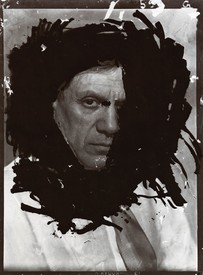
Dora Maar, Portrait de Picasso, Paris, studio du 29, rue d’Astorg, winter 1935–36

Cocurator of the exhibition A Foreigner Called Picasso, at Gagosian, New York, Annie Cohen-Solal writes about the genesis of the project, her commitment to the figure of the outsider, and Picasso’s enduring relevance to matters geopolitical and sociological.

By Annie Cohen-Solal

I have been interested in the issue of immigration ever since I entered the art world. I began my career as an intellectual historian: I was a scholar of Jean-Paul Sartre and wrote his first biography. It was quite unexpected that I would fall into the orbit of the art world, let alone so fast, but two days after I arrived in New York City, in 1989—I had just been nominated cultural counselor to the French Embassy in the United States—I met Leo Castelli at a dinner. Out of the blue, Leo told me, “You don’t look like your predecessors.” (I was the first woman in the position.) “You’ll take New York city by storm and I’ll teach you American art. Come to the gallery tomorrow, I have a show with Roy [Lichtenstein]. Come for the opening and stay for the dinner.”

LEE MILLER AND FRIENDS

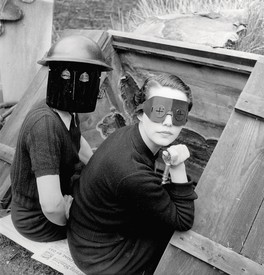
Lee Miller, Fire Masks, 21 Downshire Hill, London, England 1941, 1941

The American Surrealist photographer Lee Miller is the subject of the exhibition Seeing Is Believing at Gagosian, New York. Here we present a conversation on the stewardship of Miller’s legacy, her photography and writing from the frontlines of war to the pages of Vogue, and the intertwined lives of her friends, lovers, and the many artists she knew.

Art Exhibitions: ‘Gerhard Richter – Engadin’, Hauser & Wirth St. Moritz Gallery

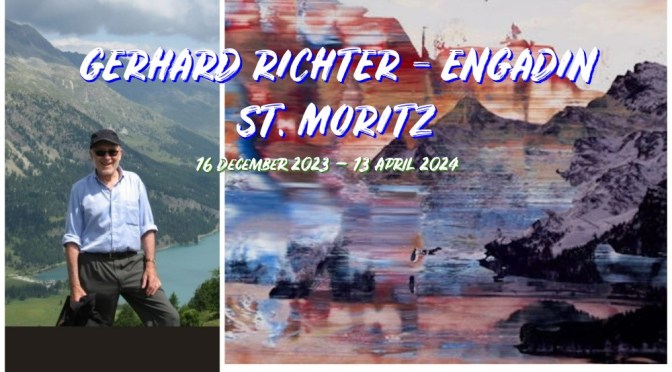
Hauser & Wirth – Art Gallery (November 11, 2023) = Gerhard Richter, born in 1932, is one of the most important and celebrated artists of our time. His works can be found in international collections and have been exhibited in numerous museums and galleries in Europe and the United States. Richter first vacationed in the Swiss Alpine village Sils, located in the Upper Engadin region, in 1989, a location he has regularly visited during both summer and winter holidays for over 25 years.
Silsersee (Lake Sils) – Gerhard Richter 1995

GERHARD RICHTER
ENGADIN

St. Moritz

16 December 2023 – 13 April 2024

25.3.15 – Gerhard Richter

Curated by Dieter Schwarz and presented across three venues in the Upper Engadin—Nietzsche-Haus, the Segantini Museum and Hauser & Wirth St. Moritz—this momentous exhibition is the first to explore Gerhard Richter’s deep connection with the Engadin’s alpine landscape. More than seventy works from museums and private collections—including paintings, overpainted photographs, drawings and objects—are testament to the artist’s fascination with the Upper Engadin. Opening 16 December 2023, ‘Engadin’ will be on view through 13 April 2024.

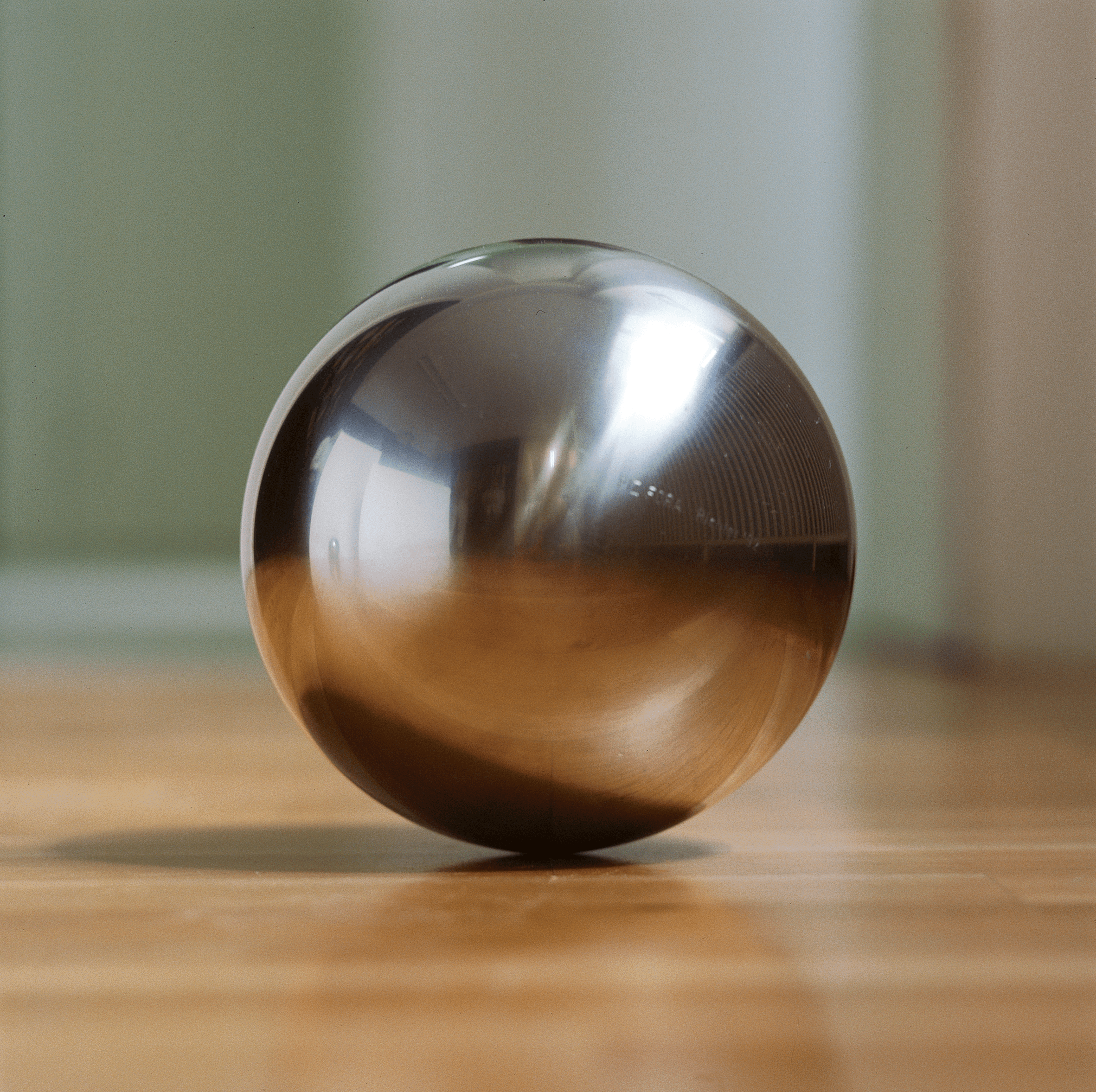
The work connecting the three exhibition venues is a steel sphere that Richter had produced as an edition, on view at each site. He first presented it at Nietzsche-Haus in 1992, in an exhibition curated by Hans Ulrich Obrist. Each unique sphere bears the name of a mountain in the Upper Engadin. The matte, subtly reflective, almost surreal sphere delicately reflects all that surrounds it. It symbolizes the sublime yet inhospitable manifestations of nature, which are especially conspicuous in the mountains.

St. Moritz – Gerhard Richter – 1992

Kugel III (Piz Fora) [Sphere III (Piz Fora)] – Gerhard Richter – 1992

On view at the Segantini Museum and Hauser & Wirth are paintings that Richter created from photographs taken during his hikes in the Upper Engadin. These works mark a new chapter in his landscape painting—a genre that had always appealed to him for its supposed untimeliness. Richter’s Engadin landscapes are exemplary of the ambiguity in his painting, oscillating between a seductive transfiguration of nature and a reflection of its alienness. Particularly noteworthy is the painting ‘Wasserfall (Waterfall)’ (1997) from Kunst Museum Winterthur, a work that clearly traces Richter’s engagement with 19th-century painting, from romanticism to realism. The artist later overpainted some of the Engadin motifs, including depictions of Piz Materdell and Lake Sils, transforming them into abstract paintings with a melancholic atmosphere that responds to impressions of the landscape.

Literature: Shakespeare’s First Folio At 400 Years

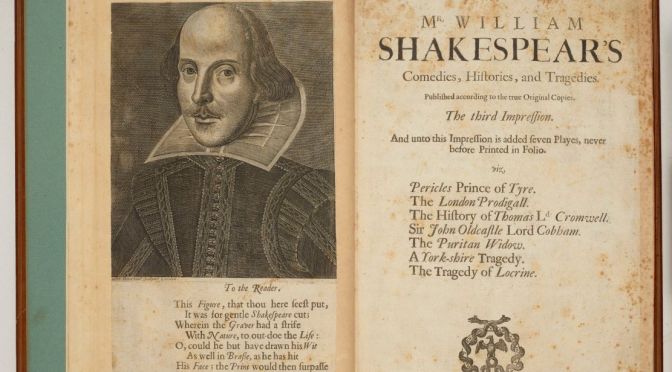
Royal Collection Trust (November 8, 2023) – Today, November 8, 2023, marks the 400th anniversary of the publication of Shakespeare’s First Folio. Around 235 copies of the First Folio survive today, including a copy in the Royal Library.

Watch our film to learn more about it. The First Folio is the first printed collection of William Shakespeare’s plays. It was produced in 1623, seven years after Shakespeare’s death, and contains 36 of Shakespeare’s works. Without this book we may not have had texts of 18 of Shakespeare’s plays, including Macbeth, Twelfth Night and The Tempest.

Find out more about the First, Second and Third Folios in the Royal Library and which kings owed them. Find out what Charles I wrote in the Second Folio shortly before his execution…

Japan Views: Artist Mariko Mori – ‘Gods & The Future’

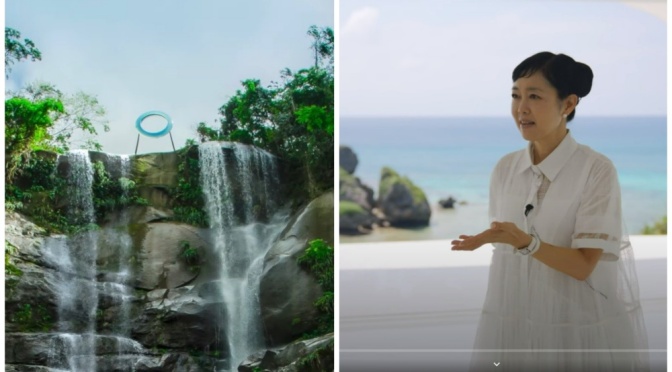
Louisiana Channel (November 7, 2023) – Japanese artist Mariko Mori shares a look into her studio and home as well as her own artistic practice. Mariko Mori was born in Tokyo, Japan, but has lived for several years in both New York and London. Her mother was an art historian, and the young Mori was introduced to art through her.

“It seems to me that a lot of our conceptual ideas are already carried out in the past. And we’re at a point to inherit those ideas to the future.”

“When I was nine years old, I was looking through her collection of postcards of all the Western art,” Mori remembers: “Somehow I found Jackson Pollock’s no. 13 painting. And I was so thrilled. I didn’t know what abstract painting was, but I really felt freedom.” Today, Mariko Mori works in various mediums, from photography and sculpture to installation and architecture. Her studio – and home – was the first architectural project she did. The house is located at Okinawa, a tropical island south of Japan.

Inspired by the surrounding nature Mori wanted “the house to be an extension of that. A part of nature.” The untraditional shape of the house is eye-catching: “Originally, I was thinking of just building an architecture building, but it became more like a sculpture or form,” she says and continues: “The shape tried to accommodate the wind coming from the north.” This explains why the building is smaller in one part and bigger in another.

Mariko Mori is a Japanese multidisciplinary artist. She is known for her photographs and videos of her hybridized future self, often presented in various guises and featuring traditional Japanese motifs. Her work often explores themes of technology, spirituality and transcendence.

Art Collection Tours: ‘Living The Avant-Garde’

Phillips Art Auction House (November 6, 2023) – In this four-part series, Jean-Paul Engelen — Phillips’ President, Americas and Worldwide Co-Head of 20th Century & Contemporary Art — and Miety Heiden — Deputy Chairwoman and Head of Private Sales — explore what makes ‘Living the Avant-Garde: The Triton Collection Foundation’ so unique.

Living the Avant-Garde: The Triton Collection Foundation New York

On View in New York through 14 November

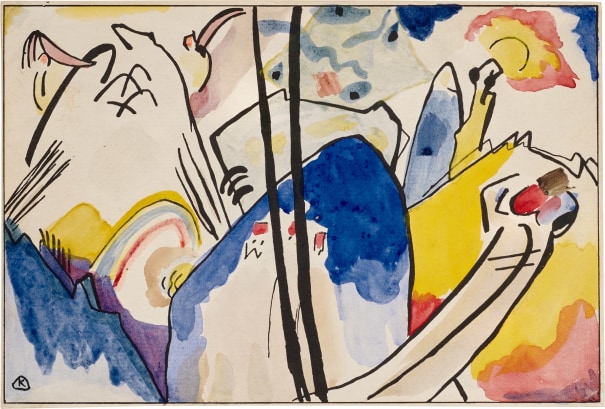
Entwurf zu Komposition IV

Wassily Kandinsky – Entwurf zu Komposition IV

Art Exhibits: ‘A Foreigner Called Picasso’ (Gagosian)

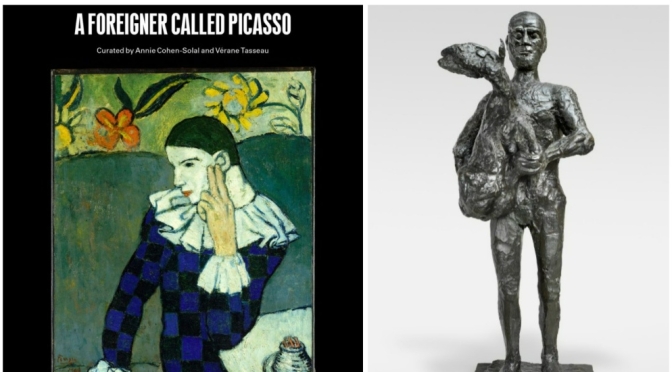
A Foreigner Called Picasso: Curated by Annie Cohen-Solal and Vérane Tasseau,  West 21st Street, New York, November 10, 2023–February 10, 2024 | Gagosian

A FOREIGNER CALLED PICASSO

November 10, 2023–February 10, 2024

Gagosian is pleased to present A Foreigner Called Picasso at its West 21st Street gallery in New York. The exhibition is curated by the eminent writer, biographer, and historian Annie Cohen-Solal together with art historian Vérane Tasseau. It is organized in association with the Musée national Picasso–Paris and the Palais de la Porte Dorée–Musée national de l’histoire de l’immigration, Paris.

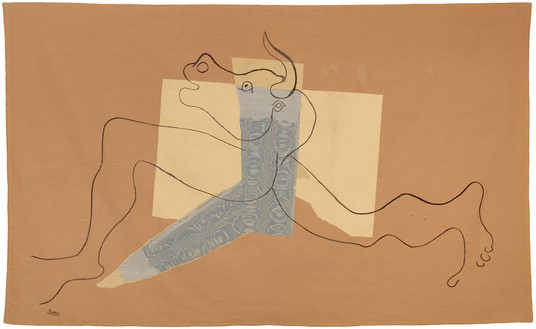
Spanning the entirety of Pablo Picasso’s career in France from 1900 through 1973, the exhibition will feature loans of important works from private and public collections in the United States and Europe. It includes early self-portraits lent by the Museum of Modern Art and the Metropolitan Museum of Art in New York, as well as Cubist and Surrealist masterpieces from the Philadelphia Museum of Art and Fondation Beyeler, Riehen/Basel. The iconic sculpture Head of Fernande (1909) will be displayed, as will Man with a Lamb (1943)—Picasso’s forceful response to the aesthetics of Arno Breker (Adolf Hitler’s favorite artist), who exhibited in occupied Paris.

Read more

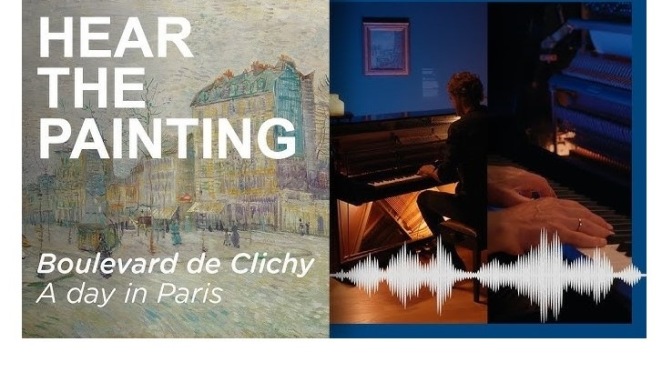
Art & Music: ‘Boulevard de Clichy’ – Van Gogh Inspires The Pianist Remko Kühne

Van Gogh Museum (November 3, 2023) – What do you hear when you see a painting, ;Boulevard de Clichy’ – A day in Paris, by Van Gogh? What inspired Remko Kühne?

“Van Gogh lived close to this boulevard with his brother Theo. The music takes you on a day in Paris, starting off in the morning. The square is still calm, but a day in Paris is always full of surprises and will give you a lot of little events that trigger your memory for life.”

Boulevard de Clichy is one of the major streets in the Paris district of Montmartre, where many artists lived. Van Gogh painted the junction that he often crossed. Rue Lepic, where he lived with his brother Theo, began on the right, just beyond the edge of the picture.

Art Tours: Michelangelo’s ‘Secret Room’ In Florence

The Florentine (November 2, 2023) – For the first time since its discovery in 1975, Michelangelo’s secret room in Florence, Italy, will be regularly open to the public starting from November 15.

The tiny space accessible via the New Sacristy in the Museum of the Medici Chapels contains charcoal drawings attributed to Buonarroti and will be open on an experimental basis to small groups of visitors until March 30, 2024.

Exhibitions: Hans Holbein At The Court Of Henry VIII

Royal Collection Trust (October 30, 2023) – Explore the art of the image-maker of the Tudor court in the Royal Collection. Watch the film to discover the importance of the drawings, paintings and miniatures in the Royal Collection.

Discover how Holbein rose to become Henry VIII’s court painter and find out more about the techniques he used. See a rare moment where Holbein’s preparatory drawing and finished painting were reunited. Hans Holbein was one of the most talented artists of the 16th century. 

From his arrival in England in search of work he rose to royal favor, chosen to paint the portraits of Henry VIII, his family and leading figures, among them Anne Boleyn and Sir Thomas More. By his death, Holbein’s work was as admired by his contemporaries as it is today. His portraits inspired the next generation of artists in their depictions of Edward VI, Mary I and Elizabeth I.

Previews: Holbein And The Renaissance In The North

Salome with the Head of John the Baptist (detail; c. 1520–24), Andrea Solario. Kunsthistoriches Museum, Vienna

Apollo Magazine (October 27, 2023) This exhibition at the Städel Museum in Frankfurt places work by Hans Holbein the Younger and the Elder, Albrecht Dürer and Hans Burgkmair in dialogue with that of their contemporaries working in the city of Augsburg and elsewhere in Germany, and in Italy and the Netherlands (2 November–18 February 2024).

Holbein and the Renaissance in the North

2 Nov 2023 – 18 Feb 2024

The Städel Museum is prized far and wide for its major Old Masters exhibitions. After Rubens, Rembrandt and Reni, it now holds yet another exceptional show in store for the public. The Städel Museum is presenting the Renaissance in the North—a new and entirely unique style of painting that originated more than 500 years ago in the North of Europe at the threshold from the Middle Ages to the Early Modern period.

Philipp Demandt, Director, Städel Museum
Renaissance in the North

It brings together some 130 painting, drawings and prints by leading artists of the Northern Renaissance dating from the period of the 1480s through to the 1530s. These include two masterpieces by Holbein the Younger – the Solothurn Madonna (1522), on loan from the Kunstmuseum Solothurn, and The Madonna of Jacob Meyer zum Hasen (1526–28) from the Würth Collection.

READ MORE

 Find out more on the Städel’s website.