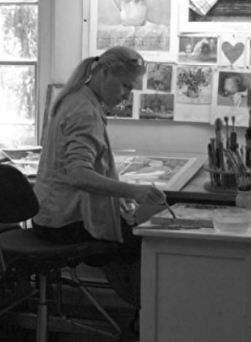
 “To me architectural and still life paintings are anything but still… they are personal narratives, full of life, that tell the story of a person, time, and place that I find… endlessly inspiring.”
Deborah Chabrian is a watercolor artist who transforms houses, gardens, and objects into vibrant narratives. Her paintings have been included in numerous exhibitions throughout the United States and awarded honors from The American Watercolor Society, The National Watercolor Society, The Portrait Institute, The National Academy of Design, and The Society of Illustrators. Her work graces more than 500 book covers and is featured in numerous books and magazines focusing on Fine Art.
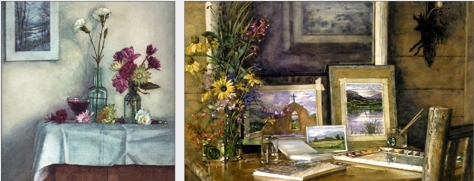
Passionate about art since childhood, Deborah was born and raised in Illinois, and won a full scholarship to Parson’s School of Design in NYC, from which she graduated with Honors. There she met her husband, portrait artist Edward Martinez, they are each other’s strongest supporter, and most critical second eye. Over the years they have studied with many inspired artists, most notably, teacher and master realist painter, Burton Silverman. As a lover of watercolor, Deborah discovered Silverman, first through his book, Breaking the Rules of Watercolor, which led to several years of personal study in his NYC atelier. Silverman said of Chabrian: “In some measure Deborah’s work is more than the watercolor medium she uses. Its excellence relies on her visual sensitivity and her expressive content to talk about the wonder of the ordinary, to reveal what our eyes usually just record without really seeing. In this regard, her work is very special indeed.”
Website


 Sotheby’s upcoming cross-category Evening Auction ‘Rembrandt to Richter’ (28 July | London), features many of the key British avant-garde movers and shakers of their day.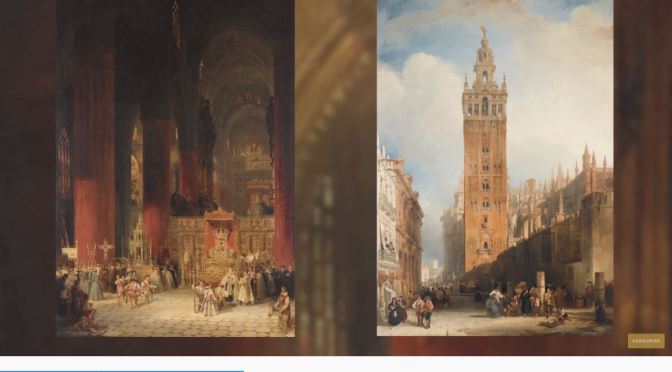
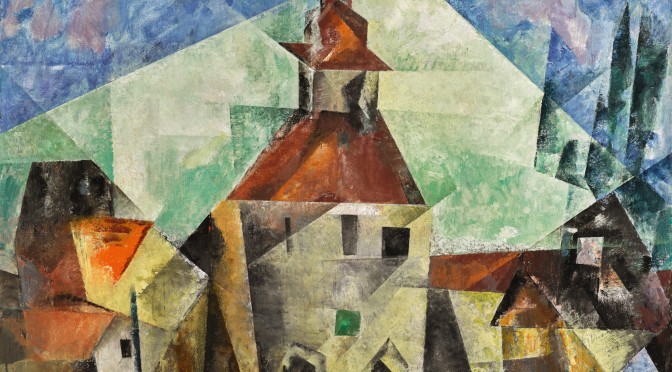
 Italian Futurism, abstract form and function from the Bauhaus, and an expressive use of colour from his involvement with Die Brucke and Die Blaue Vier. Feininger’s instantly recognisable style is clearly visible in the dramatic interplay of light and shadow displayed in ‘Zottelstedt II’ from 1927.
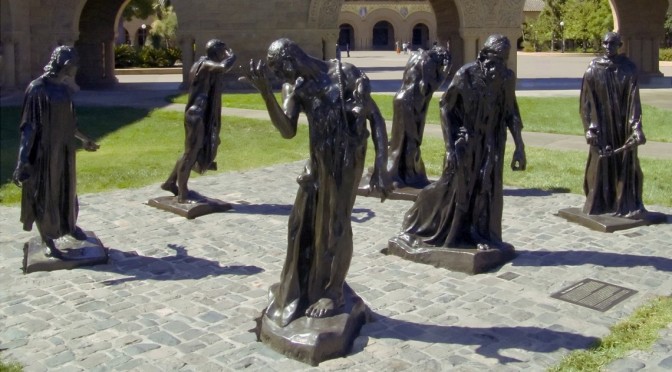
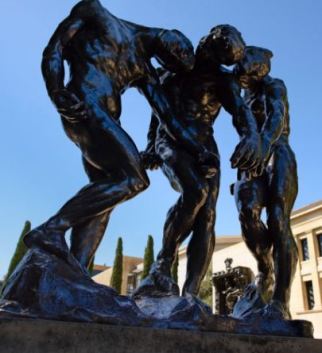
 It’s interesting that Rodin attracts so much attention from medical experts, especially here at Stanford, who have used his hands for diagnostic purposes. It’s true that Rodin was intensely interested in exploring pathologies of the body, especially now-discredited understandings of female hysteria. But there is also the irony that Rodin became furious after a critic accused him of making his first life-size figure through life casting, rather than modeling it himself. It should go without saying, but Rodin’s hands are not hands – not real ones, anyway – and their expressive forms don’t align neatly with the anatomical reality of hands in flesh and blood or even their more naturalistic counterparts. But the very fact that they elicit such responses demonstrates the power of art to provoke challenging questions that drive innovative paths of research that cut across disciplines, particularly in a university setting.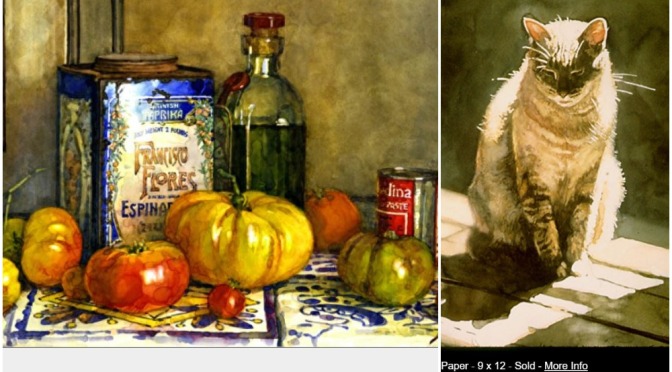
 Boomers Daily