

The rollout of the Johnson & Johnson vaccine has been paused in the US, Europe and South Africa after reports of rare blood clotting in a very small number of people. Health authorities said they were halting the use of the shot while they investigate the cases — and that they were doing this out of “an abundance of caution.” The Astra Zeneca jab was also recently temporarily suspended in some countries after being linked to rare blood clots. Authorities are calling it a short “pause.” The US’s Johnson and Johnson vaccine has hit the same stumbling block as the UK’s AstraZeneca jab did last month: a likely link to a rare and deadly blood clot. Use of Johnson and Johnson’s Janssen vaccine has now been halted across the US, Europe and South Africa, with health authorities investigating six incidents of clotting in younger women, one of them fatal. The US-developed vaccine uses an adenovirus to trigger immunity – the same mechanism as the UK’s AstraZeneca vaccine. It accounts for roughly 5 percent of vaccines delivered so far in the US. This is a setback to Europe, too. Johnson and Johnson announced it will delay it’s rollout on the continent. The company had already started processing an order from the EU of 200 million doses. The Janssen jab has been partially rolled out in Africa, where a majority of countries don’t have enough vaccines even for their healthcare workers. The African Union signed a deal for 220 million doses this year. But US authorities remain hopeful. They’re saying it could only be a matter of days before the rollout resumes.
Category Archives: Analysis

Finance: ‘What To Know About 2020 Tax Returns’
The coronavirus pandemic disrupted the global economy in ways that may affect your 2020 taxes. WSJ tax reporter Richard Rubin shares his tips for this unusual tax season. Photo illustration:Laura Kammermann

Anaylysis: The Cargo Ship Bottleneck In L.A. (Video)
An average of 30 container ships a day have been stuck outside the Ports of Los Angeles and Long Beach just waiting to deliver their goods. The backlog is part of a global supply-chain mess spurred by the pandemic that means consumers could see delivery delays for weeks. Photo Composite: Adam Falk/The Wall Street Journal
Analysis: The Rise Of ‘Robo-Advisors’ To Manage Personal Investments
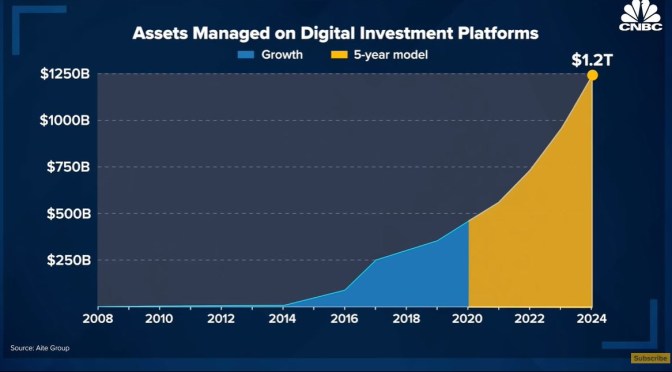
Robo-advisors have had a meteoric rise in popularity since their debut in 2008 thanks to the support from millennials and Gen Z. Today, Robo-advisors manage $460 billion, with some analysts predicting it will become a $1.2 trillion industry by 2024. Watch the video to find out why some investors believe it will never replace traditional human financial.
Since their debut in 2008, robo-advisors have had a meteoric rise in popularity. In 2020, they managed $460 billion, a 30% increase compared with 2019. Some analysts predict robo-advising will become a $1.2 trillion industry by 2024. “Investors historically have had two options when it comes to managing their investments. They could do it themselves through something like an online broker or you can work with a financial advisor,” explained Brian Concannon, head of Digital Advisor at Vanguard.
“Now, with the advent of robo-advisors, there’s a third option, and that’s to merge the benefits of professional money management and advice with the convenience of an all-digital application.” Robo-advisors’ sudden rise to prominence was made possible due to massive interest and support from millennials and Gen Z. According to a recent survey by Vanguard, millennials were twice as likely as young baby boomers to consider using a robo-advisor for investments.
“I believe that there are things that technology or algorithms can do better than humans can,” said Taylor Crane, a robo-advisor customer. “And I have no problem trusting a software to do that.” Skeptics do not expect robo-advisors to replace human advisors entirely in the near future. “Clearly, there’s always going to be a human element that’s missing,” said Jason Snipe, chief investment officer at Odyssey Capital Advisors. “My problem always will be the emotional response. Take a situation like last year when we’re going through Covid-19 and markets are moving a lot, dramatically. …
You can’t talk to the technology, right?” To combat this, many robo-advisor companies including Betterment and Vanguard began providing the option of hybrid services that combine both human and digital advice. “[Some] investors we see crave validation from a financial advisor,” said Concannon. “So for those investors, being able to pick up the phone and have a video conference with a financial advisor, have a discussion about their needs and wants goes an incredibly long way to providing them the peace of mind that they so desperately need.”
Time is on the side of the robo-advisory industry as the technology continues to improve and the younger generations accrue more wealth. “I think some combination of the two probably is where we are headed for in the future,” said Snipe. “I think the robo space has room to grow. I think it will obviously modify and change and become even more sophisticated.”

Analysis: Recycling ‘End-Of-Life EV Batteries’ (CNBC)
Lithium-ion batteries are everywhere — in phones, laptops, tablets, cameras and increasingly cars. Demand for lithium-ion batteries has risen sharply in the past five years and is expected to grow from a $44.2 billion market in 2020 to a $94.4 billion market by 2025, mostly due to the boom in electric cars.
And a shortage of lithium-ion batteries is looming in the U.S. Former Tesla CTO and Elon Musk’s right-hand man, JB Straubel, started Redwood Materials in 2017 to help address the need for more raw materials and to solve the problem of e-waste. The company recycles end-of-life batteries and then supplies battery makers and auto companies with materials in short supply as EV production surges around the world. Straubel gave CNBC an inside look at its first recycling facility in Carson City, Nevada. Watch the video to learn why battery recycling will be an essential part in making EV production more sustainable.

Healthcare: The Costs Of ‘Long-Covid’ Treatment
Covid-19 is a particularly vicious disease. While a significant number of people remain asymptomatic, other patients could go on to develop what researchers are calling post-Covid-19 syndrome. Americans suffering from the condition are running into financial problems due to the inconsistent nature of the U.S. health-care system. CNBC spoke with three people about their experience battling Covid and paying for their treatment. Watch the video above to learn how coronavirus treatment costs add up long after patients leave the hospital.
Video timeline: 0:00 – Introduction 1:40 – What the data says 3:28 – In for the long haul 7:40 – Government assistance 9:12 – What’s next?

Covid-19 Vaccines: How It Will ‘Flatten The Curve’
Remember the first COVID-19 vaccine jabs? They gave us hope that life might return to what it was before the pandemic. If we could only get enough people vaccinated. But some of the nations leading the world in vaccinations are still struggling with the coronavirus.

Mars Mission: NASA’s Ingenuity Helicopter
NASA’s Ingenuity helicopter, which was carried to Mars by the Perseverance rover, is set for the first ever flight on the red planet. WSJ goes inside the company that partnered with NASA to design and build an aircraft for a completely different atmosphere from Earth. Photo: NASA/JPL
Analysis: The Electric Vehicle Battery Shortage
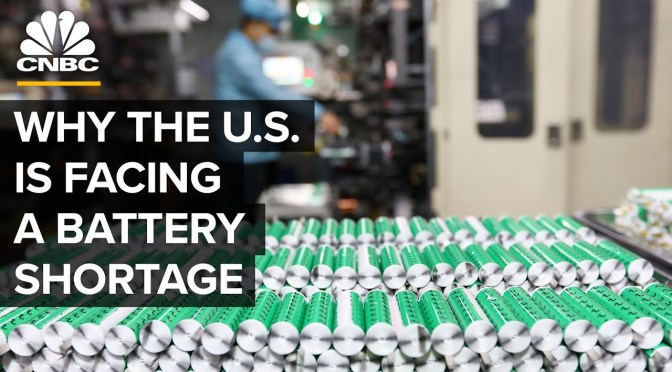
U.S. automakers are finally making bold commitments to electrify their fleets, but in the short-term, there may not be enough lithium-ion batteries to go around. While China dominates the battery manufacturing supply chain, and Europe is working to catch up, the U.S. still lags far behind.
As batteries become a matter of energy independence and national security, here’s what the U.S. can do to catch up. As automakers continue to grapple with a semiconductor shortage, some experts say the next supply chain crisis for the U.S. could involve lithium-ion batteries. As companies like GM, Ford and a slew of start-ups are ramping up their electric vehicle ambitions, current battery production in the U.S. will not be able to keep up with demand.

Cruise Industry: How U.S. Ports Are Staying Afloat
The shutdown of cruise lines during the pandemic has had far-reaching economic consequences for America’s ports. In this video, WSJ reporter Julie Bykowicz visits Port Canaveral’s once-bustling cruise terminal to learn about what’s next for the industry.
 Boomers Daily