Myanmar is on the brink of collapse. Its armed forces are continuing a brutal crackdown—arresting, torturing and killing protesters—as Aung San Suu Kyi, Myanmar’s de-facto leader, is detained. Our experts answer your questions.
Chapters 00:00 – What will happen to Aung San Suu Kyi? 02:15 – What are India and China doing? 03:37 – Should the West intervene? 05:25 – What’s happening to the Rohingya refugees? 07:16 – How will Myanmar’s neighbours be affected? 08:44 – Will civil war break out? 10:36 – Can the protesters win? 12:05 – Will Myanmar become a failed state?
While the automotive industry was ravaged early on in the pandemic thanks to lockdown measures and a dramatic decrease in travel, it more recently has begun facing a new problem: a shortage of microchips.
Microchips are vital to much of a vehicle’s key functions, such as engine control, transmission, infotainment systems, and more. In the last half of 2020 and now in 2021, vehicle sales recovered fairly quickly, faster than automakers anticipated.
Suddenly, they were struggling to meet demand. At the same time, chipmakers were experiencing supply shortages and increased demand from other sectors, such as personal electronics. With the resulting lack of microchip supply, automakers have been forced to slow production, even on their most popular models. For several automakers, the shortage is expected to cost them $1 billion or more — and even still, the alternatives are worryingly few.
Startups, governments and nonprofits are racing to create so-called “vaccine passports,” or digital health passes aimed at helping people travel and safely move around in public. WSJ explains what it would take to get a global digital health pass system off the ground. Illustration: Zoë Soriano
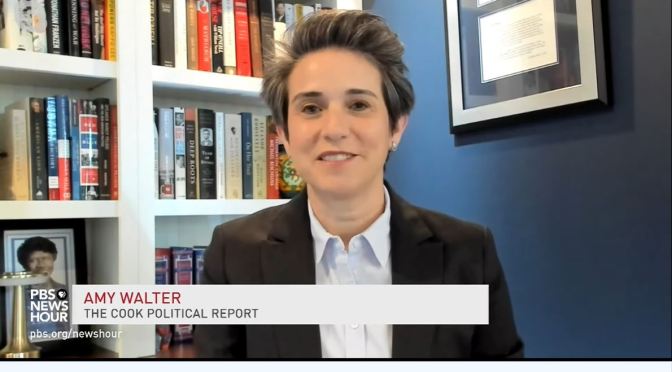
NPR’s Tamara Keith and Amy Walter of the Cook Political Report join Judy Woodruff to discuss the latest political news, including internal Republican politics over Rep. Liz Cheney’s House position, former President Trump’s influence on the party, and bipartisanship on President Biden’s plans.
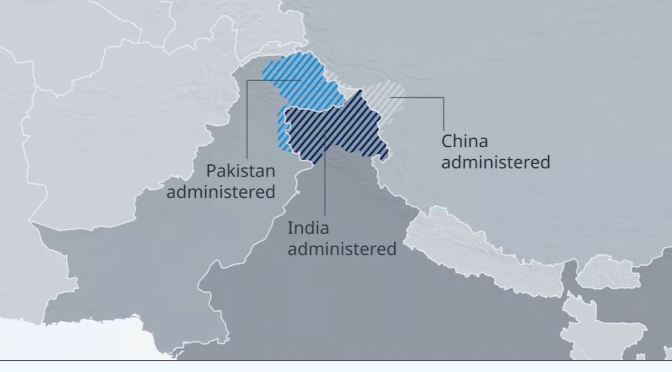
In February 2021, India and Pakistan agreed to strictly observe all previous agreements on ceasefire along the Line of Control in Jammu and Kashmir and other sectors, and to address core issues and concerns. It was their first joint statement in over eight years. But will the agreement be upheld this time? Both countries have come close to an all-out military conflict several times in the past two decades. DW takes a look at factors that are driving the hostility between the two South Asian neighbors.
Cryptocurrencies like Bitcoin have been billed as a major disruptor to finance. But digital currencies issued by governments might be even more radical—they may even threaten the future of traditional banking.
The German automotive industry has long played a key role in the country’s prosperity. It employs hundreds of thousands and enjoys cozy relationships with politicians.
But the COVID-19 crisis threw a wrench in the works. What’s next? The prosperous German auto industry has long been lagging when it comes to innovating new automotive technologies. Then came the COVID-19 pandemic. Now, the industry is turning to decision-makers for help. But just how far will policymakers go to help the car companies?
Arguing that the COVID-19 pandemic has hit them hard, the auto industry is demanding the postponement of stricter CO2 limits and a purchase premium for new vehicles. They maintain that nothing less than the prosperity of the whole country is at stake. But is Germany’s success really dependent on the auto industry? And how much blame does industrial policy bear for the failures of the automotive companies?
Armed drones are growing in military importance as conflicts around the world have proven the utility of these effective tools of war. Companies in China, Turkey, and Russia, among others, have developed advanced remotely piloted aircraft that can use guided weapons on and off the battlefield.
The widespread use of drones in Iraq and Afghanistan by the United States to target and kill insurgents jump started a new chapter in the history of conflict. These high flying and remotely piloted aircraft could engage targets with impunity while the operators were safely working in a ground control station. Keeping the crews out of danger also made the drones politically cheap to use over dangerous skies.
Now more and more countries are gaining this military capability for their own purposes. “At the moment, we’ve seen over 100 states worldwide using military drones and that number is growing significantly” said Wim Zwijnenburg, Project leader, Humanitarian Disarmament at PAX. “We have over 20 states that are using armed drones in conflicts or outside of armed conflicts.”
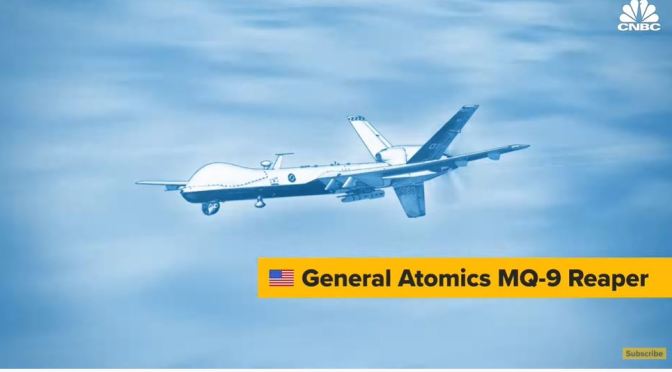
Although larger and more complex drones, like the General Atomics MQ-9 Reaper are not cheap to develop or operate, smaller drones are becoming more ubiquitous in conflict zones. Limiting the proliferation of these smaller drones, and the ability to weaponize them, is a regulatory nightmare for government agencies around the world.
“Drones are just model airplanes with great sensors on them. And all of these are dual use and have been used in the civilian realm” said Ulrike Franke, a Senior Policy Fellow at the European Council on Foreign Relations. “And in fact, drones have risen enormously in the civilian realm over the last five to 10 years. And so controlling their export is really difficult.”
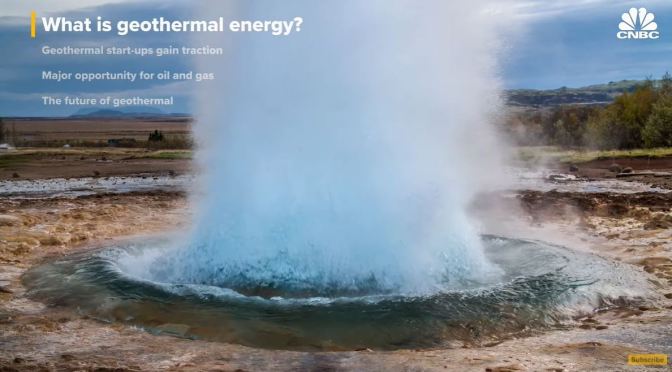
Miles below the Earth’s surface, there’s enough thermal energy to power all of humanity for the foreseeable future. It’s called geothermal energy, and it’s poised to play an increasingly large role as a source of always available, renewable power. Now, there are a number of startups in the geothermal space, working to figure out how to access this heat in difficult to reach geographies, at a price point that makes sense. And it’s even gotten the attention of oil and gas industry giants, who are interested in greening their portfolios while sticking to their core competencies – extracting energy resources from deep within the Earth.
News, Views and Reviews For The Intellectually Curious







 Boomers Daily