
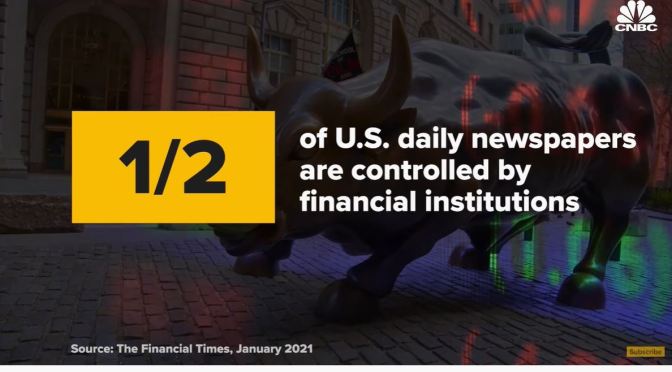
As Covid-19 ran rampant across the United States in 2020, local newsrooms across the country cut back—even as they covered the biggest story in decades. “As far as readers, we saw that skyrocket during the pandemic,” Emma Way, editor at Axios Charlotte, told CNBC. “So at the same time that revenue was falling, readers were spiking. It was kind of this dilemma that I’m sure a lot of news organizations faced.” Reporters were laid off and furloughed. Some who stayed were offered buyouts. It was a catastrophic and uncertain time for American newsrooms. During the pandemic, more than 70 local newsrooms closed across the country. This includes newspapers that have served their communities for decades. Often, these papers are shut with little notice. But the problem existed long before the pandemic. Since 2004, about 1,800 U.S. newspapers have closed. Newspapers have struggled to make money with the collapse of print advertising as readership moved online. Then, the digital advertising market quickly became dominated by tech companies like Google and Facebook. Today, some of the largest newspaper groups in the country —such as Tribune, McClatchy and Media News Group — are owned, controlled by or in debt to hedge funds or private equity groups. In fact, hedge funds and other financial firms control half of the daily newspapers in the United States, according to a recent analysis by the Financial Times.
Category Archives: Analysis
Green Energy: Using Soil To Generate Electricity
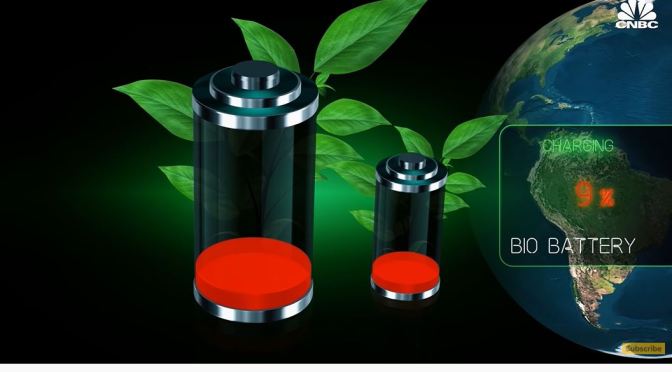
Bioo is generating electricity from the organic matter in soil and creating biological batteries to power agricultural sensors, a growing $1.36 billion global market. Eventually, Bioo envisions a future where biology could help to power our largest cities.

Technology: Quantum Computers, Explained
Quantum computers aren’t the next generation of supercomputers—they’re something else entirely. Before we can even begin to talk about their potential applications, we need to understand the fundamental physics that drives the theory of quantum computing. (Featuring Scott Aaronson, John Preskill, and Dorit Aharonov.) For more, read “Why Quantum Computers Are So Hard to Explain”: https://www.quantamagazine.org/why-is…

Political Analysis: Amy Walter & Errin Haines On Voting Rights, Fillibuster
Amy Walter of the Cook Political Report and Errin Haines of The 19th News join Judy Woodruff to discuss the latest political news, including voting rights legislation, the future of the filibuster and what former President Trump’s continued involvement in politics means for Democrats and Republicans.

Analysis: China’s XPeng Vs Tesla In EV Tech Race (WSJ)
Chinese automaker XPeng is betting that driving assistance features and other tech will be the key to winning new customers. WSJ travels to its research and development lab to see how its rivalry with Tesla could reshape how we drive. Photo: XPeng

Politics & Analysis: New Geopolitics Of Business, Brazil & The Next Tesla
A selection of three essential articles read aloud from the latest issue of The Economist. This week: the new geopolitics of business, Brazil’s dismal decade (9:25), and how to be the next Tesla (16:30)

Analysis: The Business & Profitability Of Golf
In 2020, golf saw a surge in new players following the Covid-19 pandemic and social distancing measures. Callaway, the maker of golf balls, clubs, bags and apparel, has been thriving. But with movie theaters, travel and concerts expected to rebound, will golf club makers like Callaway and its rival Acushnet be able to maintain their momentum?

Political Analysis: Brooks & Capehart On Congress’ Infrastructure Debate
New York Times columnist David Brooks and Washington Post columnist Jonathan Capehart join Judy Woodruff to discuss the week in politics, including negotiations between President Biden and Republicans over infrastructure, Vice President Kamala Harris’s focus on the border and voting rights, and Republicans who are speaking out against former President Trump.

Covid-19: Vaccination Is Key To Curbing Mutants
Almost 2 billion doses of Covid-19 vaccine have been administered worldwide to date. But is it enough to wipe out Sars-CoV-2? Of course, those shots are not evenly spread across all continents. In terms of sheer numbers,
North America and Europe managed about 370 million shots each. South America with Covid-stricken countries like Brazil has a lot of catching up to do. Africa and its more than 1.3 billion people only received 34 million doses so far while Asia is storming ahead with more than 1 billion shots. But that doesn’t mean Asia is fully vaccinated. Far from it.
There are huge gaps, like in Vietnam, a country that has long been praised for its response to the pandemic. Now it is faced with new outbreaks and a new variant.
Analysis: The Future Of Modern Warfare (Video)
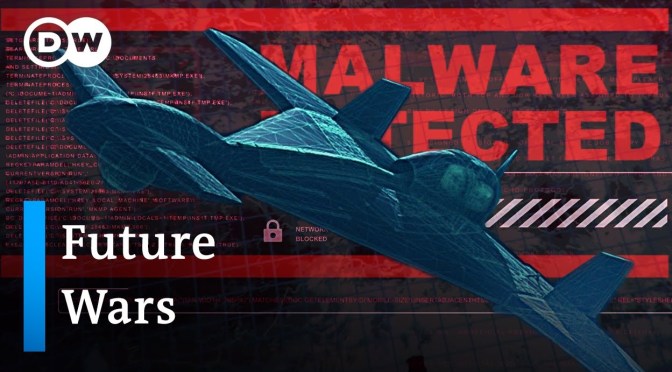
The world is entering a new era of warfare, with cyber and autonomous weapons taking center stage. These technologies are making militaries faster, smarter, more efficient. But if unchecked, they threaten to destabilize the world. DW takes a deep dive into the future of conflict, uncovering an even more volatile world.
Chapters 00:00 – Introduction 02:37 – The Cyber Nuclear Nightmare 17:05 – Flash Wars And Autonomous Weapons 30:12 – Trading Markets And Flash Crashes 31:45 – Time To Act
Where a cyber intrusion against a nuclear early warning system can unleash a terrifying spiral of escalation; where “flash wars” can erupt from autonomous weapons interacting so fast that no human could keep up. Germany’s Foreign Minister Heiko Maas tells DW that we have already entered the technological arms race that is propelling us towards this future. “We’re right in the middle of it. That’s the reality we have to deal with.” And yet the world is failing to meet the challenge. Talks on controlling autonomous weapons have repeatedly been stalled by major powers seeking to carve out their own advantage. And cyber conflict has become not just a fear of the future but a permanent state of affairs. DW finds out what must happen to steer the world in a safer direction, with leading voices from the fields of politics, diplomacy, intelligence, academia, and activism speaking out.
 Boomers Daily