
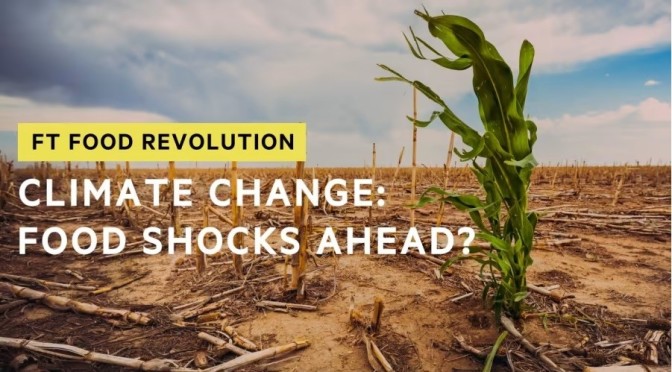
Recent crises such as the pandemic and Russia’s invasion of Ukraine have thrown the vulnerability of supply chains, and with them, food supplies, into sharp focus. But as the FT’s Camilla Hodgson reports, a landmark UN report says climate-related shocks such as extreme weather events will become more common and severe and could further upend food supply chains. But what can we do about it?
Category Archives: Analysis
Opinions: Globalization Remade, Latin America Mired, Battle Tank Fix
A selection of three essential articles read aloud from the latest issue of The Economist. This week, the remaking of globalisation, Latin America’s vicious circle (9:55), and does the tank have a future? (17:55).
Opinions: New Frontier For AI, British Stagnation, Story Scene Imagination
A selection of three essential articles read aloud from the latest issue of The Economist. This week, why foundation models are artificial intelligence’s new frontier, the stagnation nation: a chronic British disease (10:30), and why visiting the scenes of stories is an act of imagination (18:20).
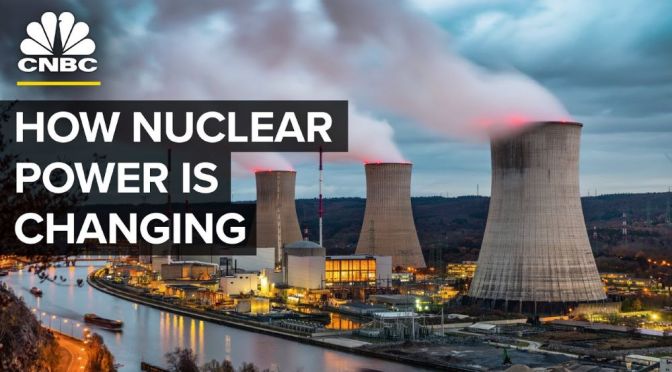
Analysis: How Nuclear Power Is Changing (CNBC)
For some, nuclear power may conjure images of mushroom clouds or bring back memories of disturbing nuclear disasters like Chernobyle and Fukushima. But despite public fear around nuclear power, the technology has proved to be an emission-free, reliable way to produce large amounts of electricity on a small footprint.
As a result, sentiments about the technology are beginning to change. Both the U.S. government and private companies including X Energy, NuScale and, Bill Gates-backed, TerraPower are pouring money into developing, what they say will be smaller, safer nuclear reactors. CNBC visited Idaho National Laboratory to see the Marvel microreactor firsthand and learn what such developments could mean for the future of nuclear power.
After humankind discovered nuclear fission, the first applied use was the atomic bomb. The study of fission for electricity production came later. In December 1953, President Dwight D. Eisenhower gave his fateful Atoms for Peace speech, an impassioned plea to reconstitute the power of the atomic bombs dropped in World War II for a more noble cause.
“Against the dark background of the atomic bomb, the United States does not wish merely to present strength, but also the desire and the hope for peace,” Eisenhower told the United Nations. Almost 70 years later, the tension between those end uses still underlies the space today. From the 1950s through the 1970s, the United States dramatically increased its nuclear energy generation.
But the Three Mile Island accident in 1979 and Chornobyl meltdown in 1986 changed the landscape, spurring fear that nuclear energy could not be controlled safely. Since the 1980s, nuclear energy capacity and generation in the U.S. has largely stayed flat. Today, the country’s fleet of nuclear power reactors produces only 19% of the country’s electricity, according to the government’s Energy Information Administration.
In more recent times, the Fukushima Daiichi accident in Japan in 2011 — and earlier this year the capture of nuclear power plants in Ukraine by invading Russian forces — have added to public concerns. But despite its fraught origin story and the psychological effect of high-profile accidents, nuclear energy is getting a second look. That’s largely because nuclear energy is clean energy, releasing no greenhouse gasses.
Meanwhile, the world is seeing more of the effects of climate change, including rising global temperatures, increased pollution, wildfires, and more intense and deadly storms. “We need to change course — now — and end our senseless and suicidal war against nature,” Antonio Guterres, the secretary-general of the United Nations, said in Stockholm on Thursday. “There is one thing that threatens all our progress. The climate crisis. Unless we act now, we will not have a livable planet,” Guterres said. “Scientists recently reported that there is a 50-50 chance that we could temporarily breach the Paris Agreement limit of 1.5 degrees Celsius in the next five years.”
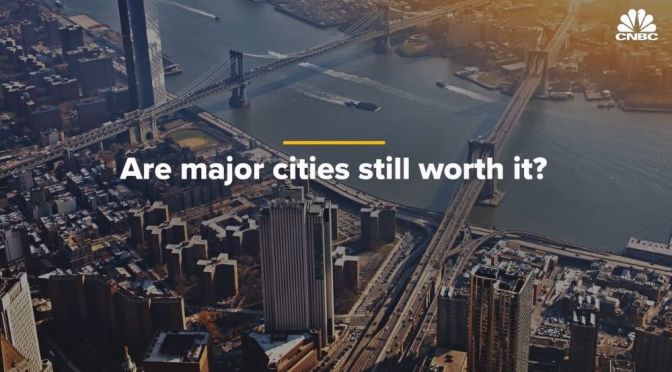
Urban Living: Are U.S. Big Cities Still Worth It?
A cost-of-living crisis is unfolding in U.S. major cities. Inflation data shows that costs for items such as rent and groceries are increasing quickly across the Sun Belt and coastal superstar cities. Now years removed from the darkest days of the pandemic, people are asking: Is a return to the city worth it?
Metropolitan regions have sprawled in recent years, raising budget concerns and quality-of-life issues for the people who remain downtown. Meanwhile the absence of commuters is slowing the recovery in leisure and hospitality. Many renters believe that a cost-of-living crisis is brewing in America’s major cities.
New York City is showing up as a hotspot of rent inflation. The average rent for 1-bedroom apartments in Manhattan rose to $3,995 a month in May 2022 — a 41% increase from one year ago, according to Zumper. Sudden, double-digit rent spikes are hitting other hubs, including Chicago, Los Angeles, and Austin, Texas. Zumper data shows that growth is particularly strong in Sun Belt cities such as Miami, where rents have risen to $2,700 a month in May 2022, a 64% increase from a year prior. During the pandemic, workers left the largest U.S. cities.
Two years in, renters have returned but many commuters haven’t as companies negotiate the particulars of a return to the office. Public officials are concerned about lagging transit ridership in cities such as New York. Ed Glaeser, an economist at Harvard University, says cities are becoming more important — not less — in the age of remote work. “When you Zoom to work, you miss the opportunity to watch the people who are older, to watch what they’ve done and to learn from them,” he told CNBC in an interview.
But for renters, a return to increasingly expensive cities might seem like a raw deal, especially if they can do their jobs from home. Researchers say remote work limits firms’ ability to train new workers. Data produced by Microsoft’s workforce suggests that it is more difficult to share in-depth information remotely, which can produce silos within companies’ rank and file.
“A lot of these tech companies, they’re saying you can work remotely,” said Andra Ghent, a professor of finance at the University of Utah. “But, you know, in many cases, they’re also saying, like, we’re not going to pay you quite the same amount.” Many renters believe that a cost-of-living crisis is brewing in America’s major cities. New York City is showing up as a hotspot of rent inflation. The average rent for 1-bedroom apartments in Manhattan rose to $3,995 a month in May 2022 — a 41% increase from one year ago, according to Zumper.
Sudden, double-digit rent spikes are hitting other hubs, including Chicago, Los Angeles, and Austin, Texas. Zumper data shows that growth is particularly strong in Sun Belt cities such as Miami, where rents have risen to $2,700 a month in May 2022, a 64% increase from a year prior. During the pandemic, workers left the largest U.S. cities. Two years in, renters have returned but many commuters haven’t as companies negotiate the particulars of a return to the office.
Public officials are concerned about lagging transit ridership in cities such as New York. Ed Glaeser, an economist at Harvard University, says cities are becoming more important — not less — in the age of remote work. “When you Zoom to work, you miss the opportunity to watch the people who are older, to watch what they’ve done and to learn from them,” he told CNBC in an interview. But for renters, a return to increasingly expensive cities might seem like a raw deal, especially if they can do their jobs from home.
Researchers say remote work limits firms’ ability to train new workers. Data produced by Microsoft’s workforce suggests that it is more difficult to share in-depth information remotely, which can produce silos within companies’ rank and file. “A lot of these tech companies, they’re saying you can work remotely,” said Andra Ghent, a professor of finance at the University of Utah. “But, you know, in many cases, they’re also saying, like, we’re not going to pay you quite the same amount.”
Opinion: India’s Economy, Workplace Surveillance, Infant Genome Screening
A selection of three essential articles read aloud from the latest issue of The Economist. This week, the forces that stand to transform India’s economy over the next decade (11:06), how surveilling workers could enhance productivity (21:07), and full-genome screening for newborn babies is now on the cards.
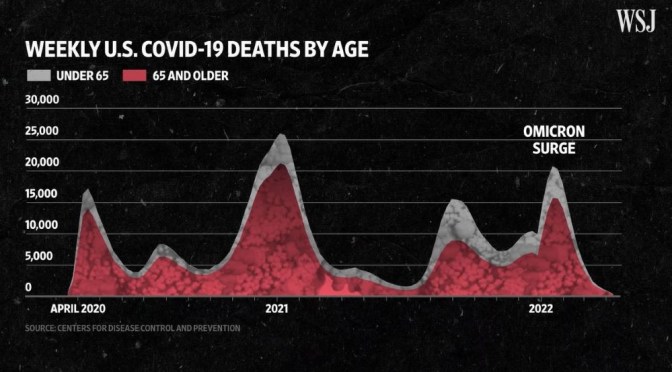
Covid-19: How Deaths Reached 1 Million In U.S.
More than one million Americans were killed by Covid-19 in just over two years, the CDC reports. But the disease has hit some segments of the U.S. population far more than others. Photo illustration: Todd Johnson
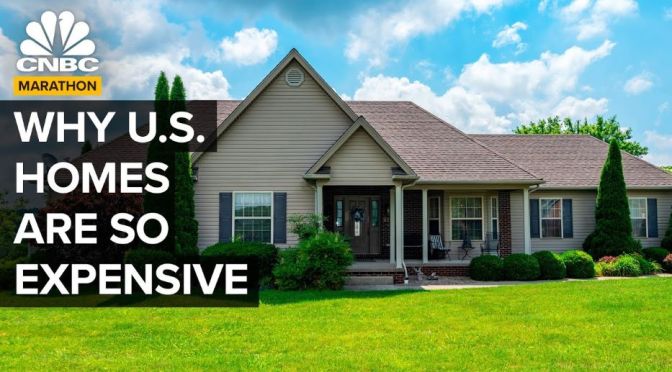
Housing: Why U.S. Homes Are So Expensive (CNBC)
Prices for the American dream home have skyrocketed. The U.S. housing market has been an unlikely beneficiary from Covid-19. The pandemic encouraged city dwellers to move to the suburbs as families looked for home offices and bigger yards.
Segments: 00:00 – Why the U.S. is facing a housing shortage (May 2021) 12:37 – How suburban sprawl shapes the U.S. economy (February 2022) 25:49 – How did rent become so unaffordable in the U.S. (December 2021) 34:46 – Is the U.S. in a housing bubble? (September 2021)
“Everybody expected housing to really sort of dry up with the rest of the economy,” said National Association of Home Builders CEO Jerry Howard. “And in fact, the opposite has happened. People who have been sort of scared out of the cities by the pandemic.”
With homeowners unwilling to sell, a record low supply of homes for sale has forced buyers into intense bidding wars. According to the National Association of Realtors, the U.S. has under built its housing needs by at least 5.5 million units over the past 20 years. That’s a stark comparison to the previous housing bubble in 2008 when overbuilding was the issue. Higher costs for land, labor and building materials including lumber have also impacted homebuilders.
However, according to most experts, the market is shaping up to look more like a boom rather than a bubble. “We say bubble because we can’t believe how much prices have gone up,” CNBC real estate correspondent Diana Olick said. “A bubble tends to be something that’s inflated that could burst at any minute and change and that’s not really the case here.” And America’s suburbs are sprawling again.
Over the 20th century, real estate developers built large tracts of single-family homes outside of major cities. The builders were following mortgage underwriting standards first introduced by the Federal Housing Administration in the 1930s. Over the century, those guidelines created housing market conditions that explicitly shut out many minorities. Experts say it is possible to update these old building codes to create equity while fixing some, but not all of the problems of American suburbia.
In 2021, single family housing starts rose to 1.123 million, the highest since 2006, according to the National Association of Home Builders, however, options for prospective homebuyers remain lean. Experts say the problems of America’s housing market relate to past policy decisions. In particular, they say restrictive zoning codes are limiting housing supply.
Opinions: Saving The U.S. Supreme Court, Health Care Tech, Remote Work
A selection of three essential articles read aloud from the latest issue of The Economist. This week, how to save the supreme court from itself, how wearable technology promises to revolutionise health care (10:29) and our Bartleby columnist on why working from anywhere isn’t realistic (18:29).
Political Review: Russia’s ‘Rotten Army’, Macron’s Challenge, Culture Wars
A selection of three essential articles read aloud from the latest issue of The Economist. This week, how rotten is Russia’s army? France’s re-elected president prepares for a tough second term (10:30) and a struggle over artistic freedom suggests a better way out of the culture wars (15:25).
 Boomers Daily