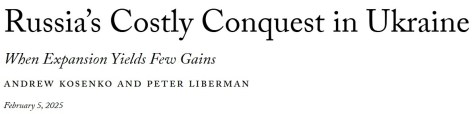
FOREIGN AFFAIRS MAGAZINE (February 5, 2025): Today, about 20 percent of southeastern Ukraine is under Russian occupation, including Crimea and large parts of the Donetsk, Luhansk, Kherson, and Zaporizhzhia regions. Russian President Vladimir Putin has painted the war in Ukraine as a nationalist campaign to repel Western advances and reclaim territory that, in his view, rightfully belongs to Russia. But conquest has another motivation: economic gain. If Russia maintains military control over these regions, it may be hoping to reap that benefit. At this stage, however, it is hardly clear that they would become economic assets for Moscow; supporting the war-torn territories could just as easily become a drain on its coffers.
The human costs of this war are enormous. Russian forces are ruling occupied Ukraine with an iron fist, engaging in a ruthless campaign of torture, kidnapping, violence, and arbitrary killing. Any assessment of the war’s economic consequences should not minimize its awful depravity or the immense suffering it has inflicted. But its economic outcome will affect future judgments of Putin’s decision to invade in February 2022. If Russia benefits economically from the occupation of Ukraine, the war may be remembered as a strategic success, albeit a coldblooded one. If Russia instead suffers economically, the invasion will be seen as a self-defeating, barbaric blunder.
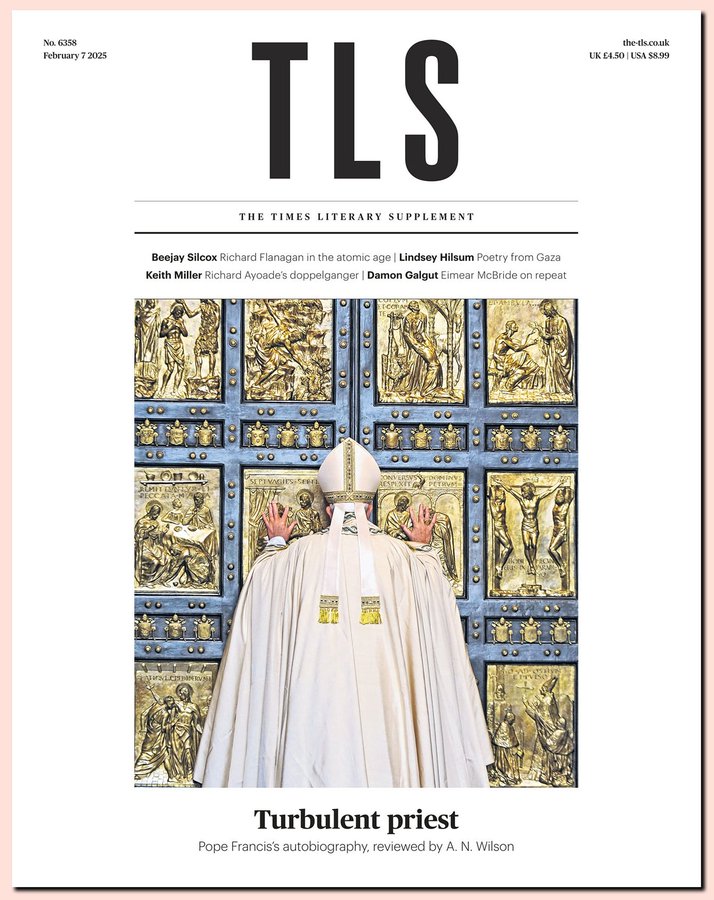
TIMES LITERARY SUPPLEMENT (February 5, 2025): The latest issue features ‘Turbulent Priest’ – Pope Francis’s autobiography; Richard Flanagan in the atomic age; Poetry from Gaza; Richard Ayoade’sdoppelganger and Eimear McBride on repeat…
This week’s @TheTLS, featuring A. N. Wilson on Pope Francis; @funesdamemorius on Richard Ayoade; @lindseyhilsum on writing from Gaza; Adam Mars-Jones on The Brutalist; Damon Galgut on Eimear McBride; Beejay Silcox on Richard Flanagan – and more pic.twitter.com/Ks0liMNF0k
MONOCLE RADIO (February 5, 2025): As Ahmed al-Sharaa, Syria’s transitional president, meets Turkey’s Recep Tayyip Erdogan in Ankara, we ask: what role is Turkey seeking to play when it comes to regional security?
Then we discuss Benjamin Netanyahu’s trip to the White House to see Donald Trump. Plus, a ceasefire in the Democratic Republic of the Congo, former Nato chief Jens Stoltenberg makes a comeback in Norwegian politics and press freedom in Czechia.
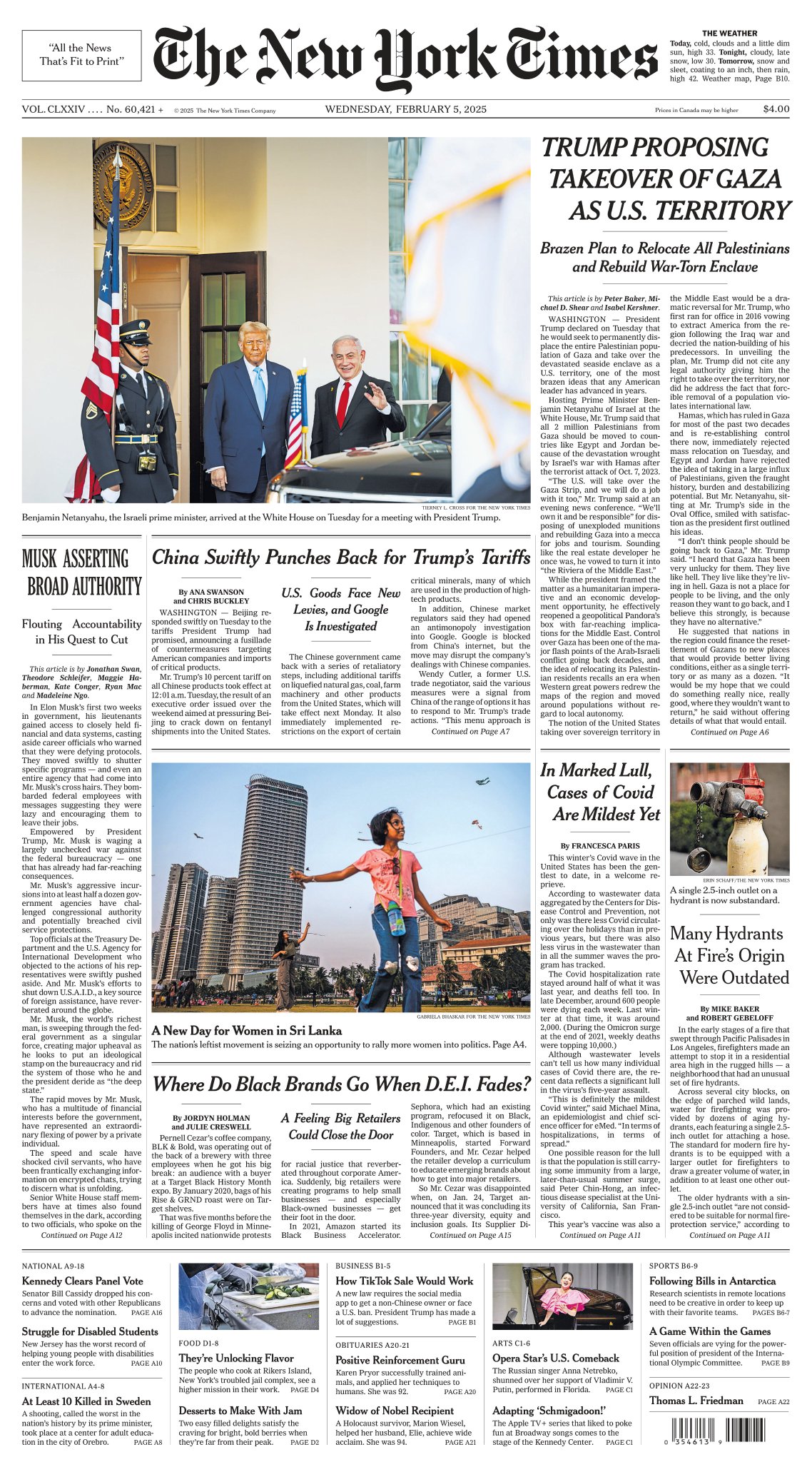
The billionaire is creating major upheaval as his team sweeps through agencies, in what has been an extraordinary flexing of power by a private individual.
The billionaire has used the social media site to boast of victories, lash out at enemies and conduct polls for the initiative he calls the Department of Government Efficiency.
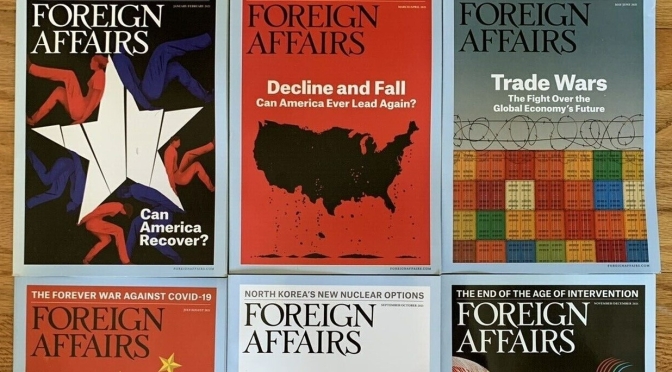
After a 10 percent tariff on Chinese products took effect on Tuesday, China announced retaliatory measures, including tariffs and an investigation of Google.
Senate Panel Pushes Through Kennedy’s Nomination Along Party Lines
Senator Bill Cassidy, a Republican torn between his concerns as a doctor and supporting President Trump, voted to send Robert F. Kennedy Jr.’s nomination as health secretary to the full Senate.
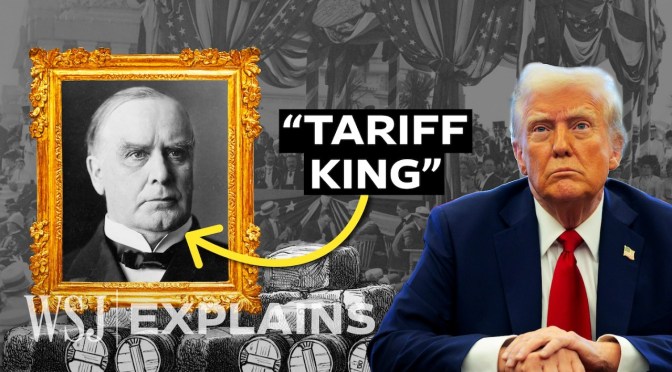
The ‘McKinley Tariffs’ were some of the largest hikes in U.S. history, but in his second term, McKinley changed his mind, and argued for more free international trade as a way of helping the U.S. economy. WSJ explores how McKinley used tariffs, how Trump is following a similar playbook and why McKinley. Actually came to speak out against them.
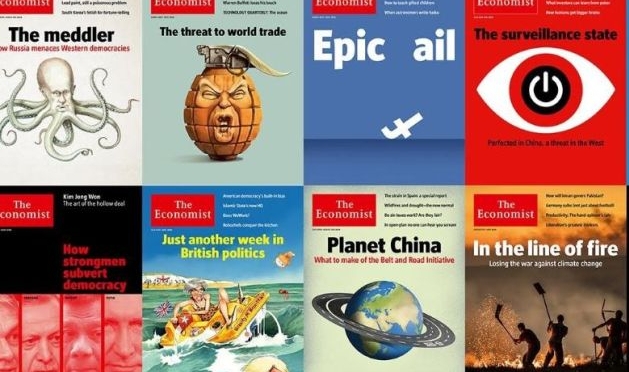
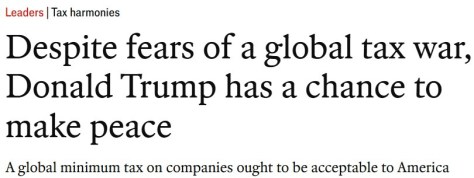
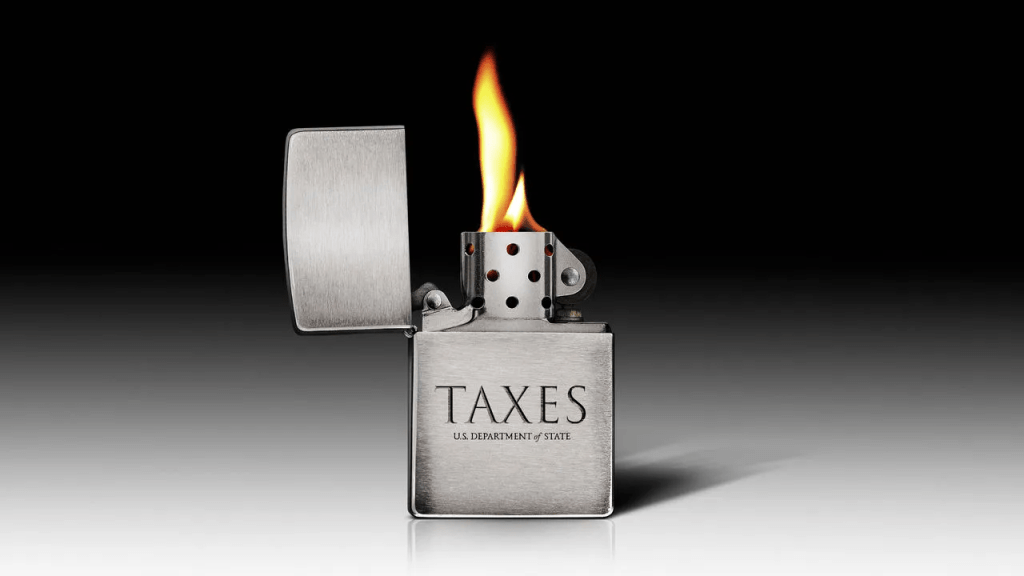
THE ECONOMIST MAGAZINE (February 3, 2025): That Donald Trump may unleash a global trade war is a frightening but familiar risk. Less well understood is the danger that he may also provoke a tax war. One of his first actions on returning to the White House was to warn other countries that if they adopt tax policies America dislikes, he may double tax rates on their companies and even their citizens.
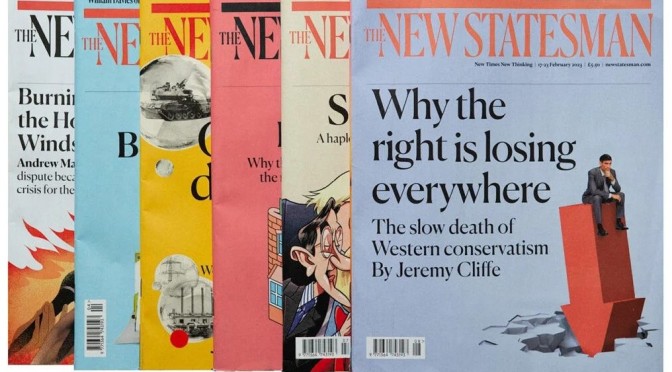
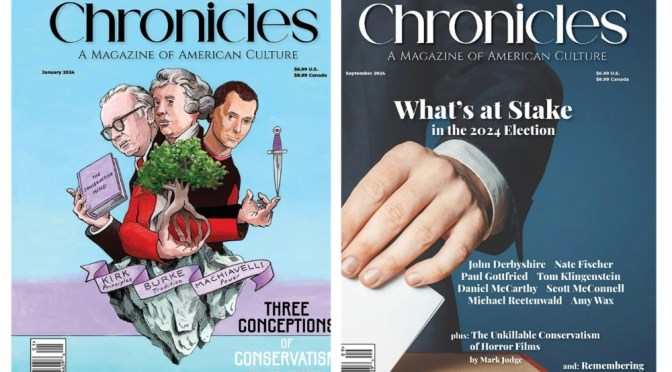
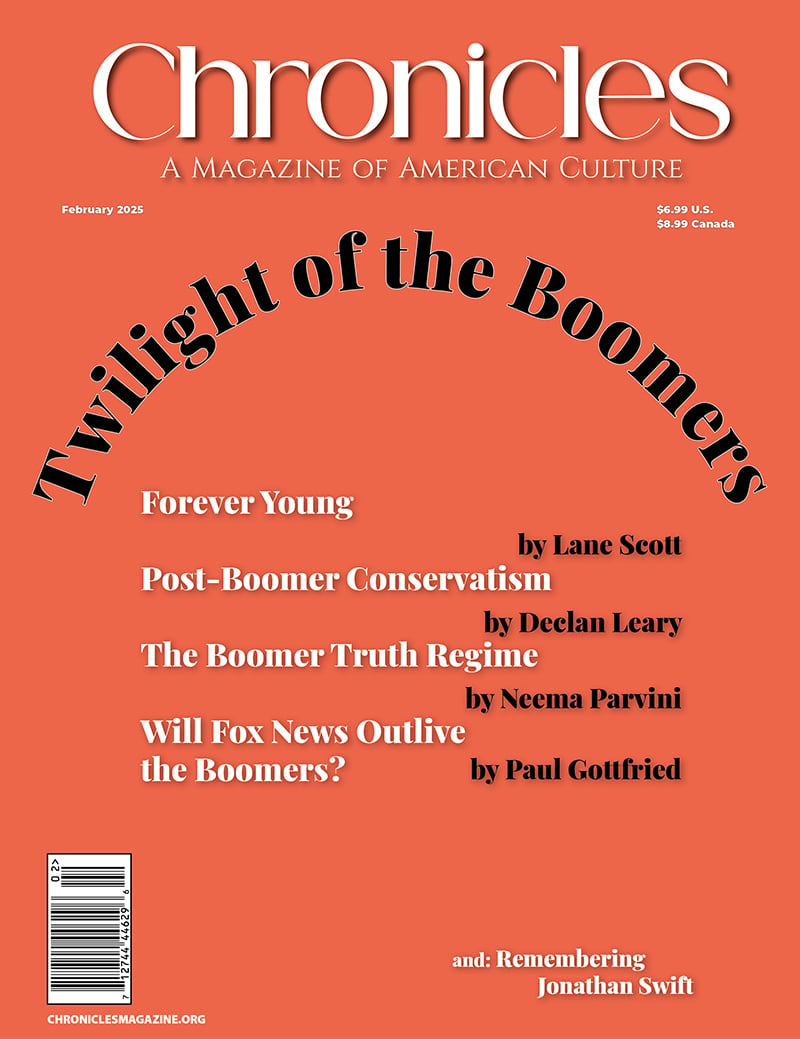
Baby boomers have safeguarded and perpetuated a grand myth through which they interpret past and present events, and derive motivations. Myth is one hell of a drug.
Baby boomer conservatism arose during the salad days of American capitalism, the apex of American military might, and the drama of the Cold War. That’s all gone and the young right stands at a crossroads.
MONOCLE RADIO (February 4, 2025): As the trial of South Korea’s impeached president continues, Monocle’s Seoul correspondent, Jeyup S Kwaak, and John Nilsson-Wright join Emma Nelson to discuss what comes next.
Also on the programme: is USAID doomed? We delve into the global consequences of freezing US aid. Then: after an eight-month wait, Belgium has a new government. What took it so long? Plus: all the winners from Sundance Film Festival and the Critics’ Choice Awards with Karen Krizanovich.
News, Views and Reviews For The Intellectually Curious






 Boomers Daily