Café Views: Vincennes Near Paris, France (4K)

Vincennes, town, eastern residential suburb of Paris, Val-de-Marne départementÎle-de-France région, north-central France, immediately outside the Paris city limits.

The château of Vincennes, which succeeded an earlier fortified hunting lodge on the site, consists of four principal buildings—the keep, the chapel, and two pavilions—enclosed by an enceinte with nine towers. The magnificent and well-preserved keep, the finest surviving in France, 170 feet (52 metres) in height, was begun under Philip VI, completed under Charles V (reigned 1364–80), and used thereafter as a royal residence until Versailles was built. The chapel, not completed until 1552 but in Gothic style, has a Flamboyant facade and a great rose window. The two pavilions—the Pavillon du Roi and the Pavillon de la Reine—were built by Louis Le Vau, under the direction of Jules Cardinal Mazarin, during the third quarter of the 17th century.
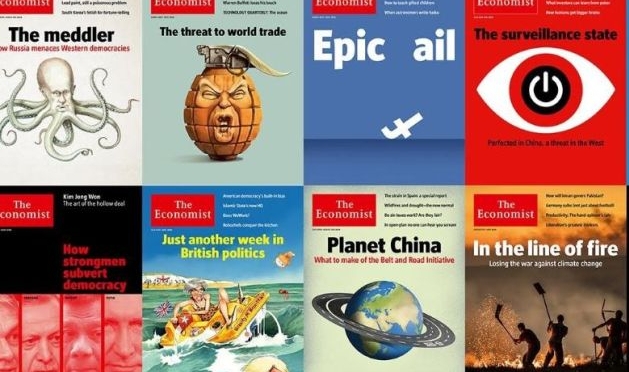
Previews: The Economist Magazine – April 16, 2022

Culture: ‘Brooklyn Best’

“Brooklyn Best”

Director/Editor: @newyorknico
DoP/Producer: @joebressler
AC: @brianfreakinansel
Gaffer: @johnizarpate
Sound: @_billvella_
PA: Michael Ortiz
@indyb123
Copywriter: @patrickjewing33
Music: @isaac.chords
Colorist: @ceen.mkv

Starring: @nems_fyl @gizmo_vintage_honey @charliedawolf @lilmomozzarella @slikniktheruler @mrsaks5th @aceboon718 @greenladyofbrooklyn @aloeadvntrs @lennyspizza86 @ll08312014 @creationsbyerma @abgneal1 @halseylewisbk @sabinocurcio @thebakeryonbergen @mclarenkickshop1

Walking Tour: Cochem In Western Germany (4K)

Cochem is the seat of and the biggest town in the Cochem-Zell district in Rhineland-Palatinate, Germany. With just over 5,000 inhabitants, Cochem falls just behind Kusel, in the Kusel district, as Germany’s second smallest district seat. Since 7 June 2009, it has belonged to the Verbandsgemeinde of Cochem.

Science: Longer Lives And Slower Mutations, The Largest Galaxy Structure

For biologists, a long-standing question has been why some animals live longer than others. This week a team have attempted to answer this, by measuring the rates that different animal species accumulate mutations. They show that longer-lived animals acquire mutations at a slower rate, which helps to explain why cancer risk does not scale with lifespan.

07:56 Research Highlights

A clinical trial suggests a change to the treatment of a pregnancy ailment, and astronomers identify the largest known structure produced by a single galaxy.

Research Highlight: Ambitious trial inspires a rethink on a common ailment of pregnancy

Research Highlight: Even among ‘giant’ galaxies this one is record-setting

10:43 The war in Ukraine’s effects on global energy

Many European countries are dependent on Russian fossil fuels for energy production. Following Russia’s unprovoked invasion of Ukraine, these countries are looking to wean themselves off these fuels, which could have short- and long-term impacts on emissions and food production.

Feature: What the war in Ukraine means for energy, climate and food

Editorial: The EU can simultaneously end dependence on Russia and meet climate goals

Editorial: The war in Ukraine is exposing gaps in the world’s food-systems research

19:58 A new measurement of a particle’s mass hints at new physics

Last week, a new estimate of the W boson’s mass caused much excitement among physicists. The result suggests that this particle is heavier than theory predicts, a finding that could be the first major breach in the standard model of particle physics. However, measuring W bosons is notoriously tricky, and further work will be needed to confirm the finding.

News: Particle’s surprise mass threatens to upend the standard model

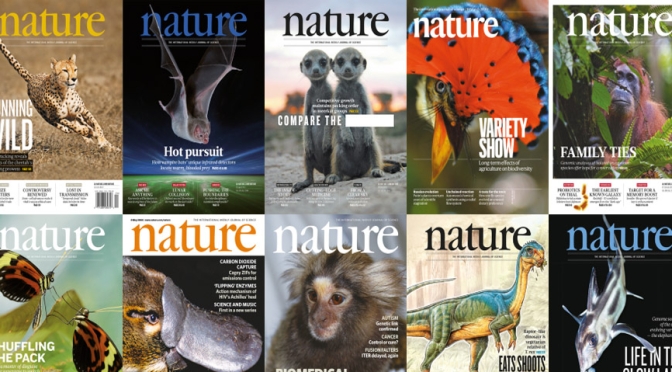
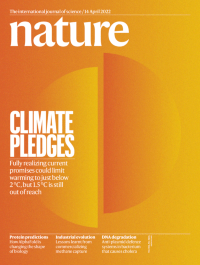
Cover Previews: Nature Magazine – April 14, 2022


Africa Views: The Cassava Flour Boom In Cameroon

As the Russian invasion of Ukraine continues to impact crucial food exports, wheat prices are soaring. Many African countries rely on Ukrainian and Russian grain exports and could face a severe food crisis. But in Cameroon, entrepreneurs are coming up with alternatives to wheat, which is used to make flour. Production of bread and cakes made from local cassava and sweet potato flour is now booming. These tubers are abundant in the country but are normally used unprocessed in traditional dishes. Our correspondents report.