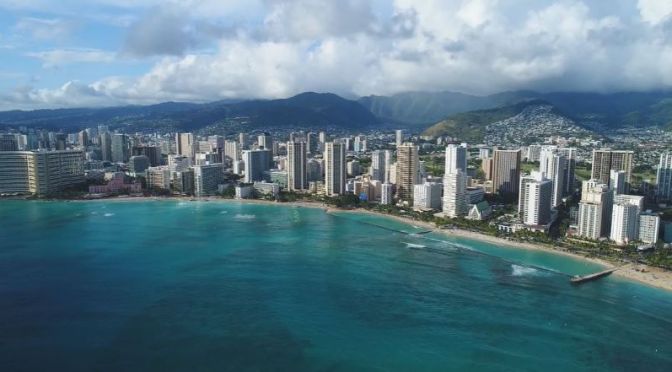
Skyline Views: ‘Honolulu’ – Oahu, Hawaii (4K Video)

Honolulu, the capital of Hawaii, is a U.S. city that currently contains over 470 high-rises. In 2011 it ranked fourth among U.S. cities in the number of high rise buildings, after New York City, Chicago and Los Angeles, and just ahead of San Francisco.[1] In 2017, it ranked sixth, having fallen behind Houston and Washington, D.C.[2]

The first high rise that exceeded 350 ft was the Ala Moana Hotel built in 1970. The next high rise was the Yacht Harbor Towers followed by the Hawaii Monarch Hotel and the Discovery Bay Center. This was the beginning of the construction boom in the city. At the same time business and finance also boomed. During the 1990s new Residentials were built, including the One Waterfront Mauka Tower, Imperial Plaza, Nauru Tower and the Hawaiki Tower. There is still construction today on high rises such as the Moana Pacific East Tower and Moana Pacific West Tower twin towers, Keola Lai, Hokua at 1288 Ala Moana, Pacifica Honolulu, and The Watermark Waikiki.
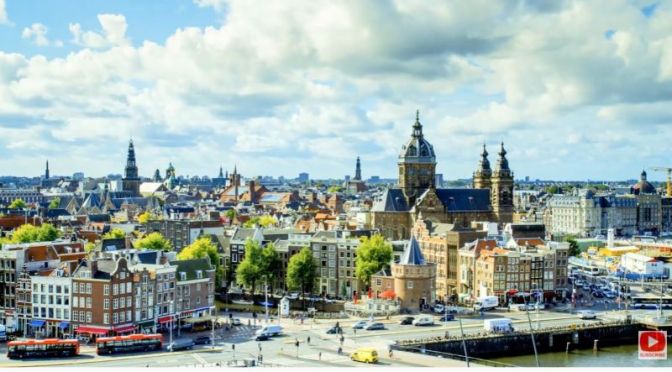
Timelapse: ‘Amsterdam – Netherlands’ (4K Video)

Amsterdam is the Netherlands’ capital, known for its artistic heritage, elaborate canal system and narrow houses with gabled facades, legacies of the city’s 17th-century Golden Age. Its Museum District houses the Van Gogh Museum, works by Rembrandt and Vermeer at the Rijksmuseum, and modern art at the Stedelijk. Cycling is key to the city’s character, and there are numerous bike paths. 

Morning News Podcast: Latest News From Around The World (Jan 23)

We flick through the weekend’s papers across the Middle East and North Africa and examine the future relationship between the UK and the US under Joe Biden. Plus: Andrew Tuck’s Saturday column.

Views: ‘Transylvania – Central Romania’ (Video)

Transylvania is a region in central Romania. It’s known for medieval towns, mountainous borders and castles like Bran Castle, a Gothic fortress associated with the legend of Dracula. The city of Brașov features Saxon walls and bastions, as well as expansive Council Square, ringed by colorful baroque buildings, the towering Gothic Black Church and cafes. Nearby Poiana Brașov is a popular ski resort. 

Video timeline: 00:23 – The Ciucas Mountains 01:25 – Herd of sheep 03:10 – Ruins of a medieval fortress 05:29 – Transfagaras mountain road 06:50 – Colibita lake 11:28 – Aerial of autumn forest 14:06 – Apuseni Mountains 16:01 – Corvin Castle 17:23 – Bran Castle (Dracula’s Castle)

Walking Tour: ‘Chania’ On Crete, Greece (4K Video)

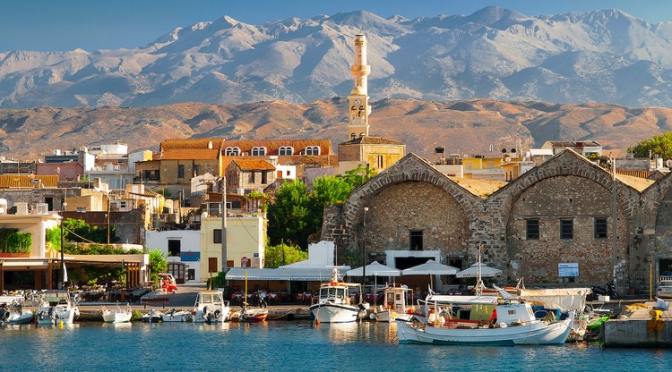
Chania is a city on the northwest coast of the Greek island of Crete. It’s known for its 14th-century Venetian harbor, narrow streets and waterfront restaurants. At the harbor entrance is a 16th-century lighthouse with Venetian, Egyptian and Ottoman influences. Opposite, the Nautical Museum has model ships, naval objects and photographs. The former monastery of St. Francis houses the Archaeological Museum of Chania. 

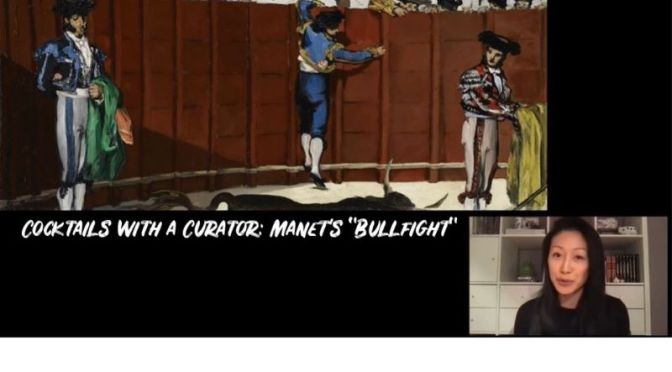
Cocktails With A Curator: Manet’s “Bullfight” (Video)

n this week’s episode of “Cocktails with a Curator,” Curator Aimee Ng explores the turbulent history behind Édouard Manet’s “Bullfight,” once part of a larger work that the artist exhibited at the Salon of 1864. The original canvas was derided and caricatured by critics, prompting Manet to cut it into pieces. The two surviving fragments were brought together for the first and only time during a 1999 exhibition at the Frick. This week’s complementary cocktail is, fittingly enough, the Toreador.

To view this painting in detail, please visit our website: https://www.frick.org/manetbullfight

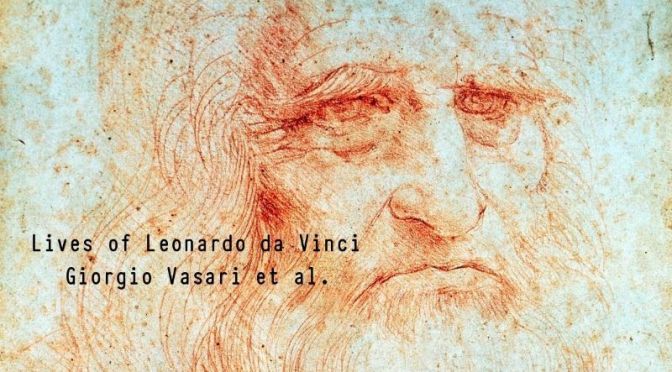
Arts Podcast: ‘Lives Of Leonardo da Vinci’ (Getty)

In this episode, Getty curator Davide Gasparotto discusses early accounts of Leonardo’s life and how they shaped our understanding of the artist. Passages from these biographies were recently collected in the Getty Publications book Lives of Leonardo da Vinci.

“He was a great artistic personality, crucial for the development, in some way, of what we think as the modern science. But he was not alone.”

Leonardo da Vinci died more than 500 years ago, but he is still revered as a genius polymath who painted beguiling compositions like the Mona Lisa, avidly studied the natural sciences, and created designs and inventions in thousands of journal pages. Even during Leonardo’s lifetime, contemporaries marveled at the artist’s great skill and wide-ranging pursuits, but many also noted his perfectionism and difficulty completing projects. Since his death, the legends surrounding his life and personality have continued to grow. Today Leonardo’s story inspires novels and his work brings record-breaking prices, demonstrating his enduring relevance and mystique.

Read more at Getty Museum Store

Travel: ‘Top Ten Places To Visit In Portugal’ (Video)

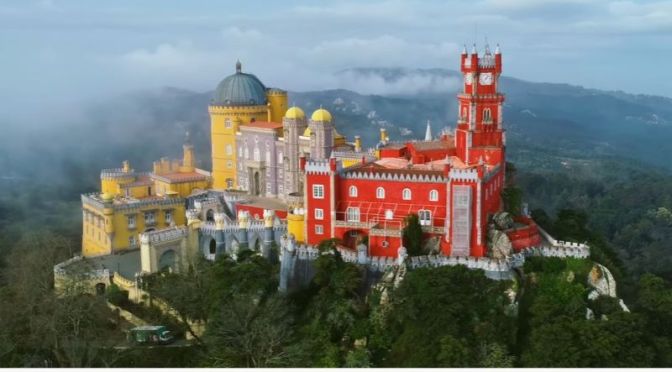
Portugal is one of the world’s most beautiful countries! From boating on the Algarve Coast to exploring the castles of Sintra, Portugal offers so much variety to experience and witness!

Portugal is a southern European country on the Iberian Peninsula, bordering Spain. Its location on the Atlantic Ocean has influenced many aspects of its culture: salt cod and grilled sardines are national dishes, the Algarve’s beaches are a major destination and much of the nation’s architecture dates to the 1500s–1800s, when Portugal had a powerful maritime empire.

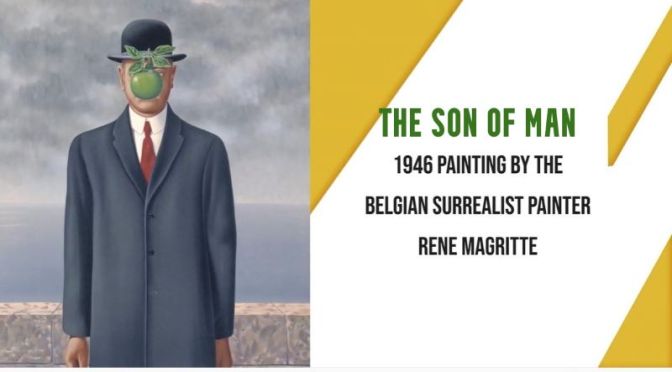
Paintings: ‘The Son Of Man’ By Belgian Surrealist Rene Magritte In 1946 (Video)

The “Son of Man” is an iconic painting by Belgian Surrealist artist Rene Magritte.

Rene Magritte was an internationally acclaimed surrealist artist of all time, yet it was not until his 50s, when he was finally able to reach some form of fame and recognition for his work. Rene Magritte described his paintings saying, “My painting is visible images which conceal nothing; they evoke mystery and, indeed, when one sees one of my pictures, one asks oneself this simple question, ‘What does that mean?’ It does not mean anything, because mystery means nothing, it is unknowable.”

Magritte was born in 1898, to a wealthy manufacturer father. In 1912, his mom was found drowned in the River Sambre. She had committed suicide, and the family was publicly humiliated because of it. From 1916 to 1918, Rene decided to study at the Academie des Beaux-Art, which was located in Brussels. He left the school, because he thought that it was a waste of time. All his paintings afterward reflect cubism, the movements which were introduced by Pablo Picass and was very popular at the time. In 1922 he married Georgette, and took a number of small jobs, including painting cabbage roses for a wallpaper company, in order to be able to pay the bills.

During the early period of his career, shortly following his marriage, Rene Magritte would spend the free time that he had, creating art forms and worked on a number of pieces; it was during this time period that he realized surrealism was the art form which he most enjoyed. The Menaced Assassin was one of his earliest pieces in 1926, which showcased the surrealist style which he had been working on; The Lost Jockey was another piece that he introduced in 1925, which also showcased this art form. Over the course of his career, he produced a number of variants on this piece, and changed the format to recreate what the viewer was experiencing.