

The global pandemic triggered sky-high spending on manufactured goods. This increased spending created a huge bottleneck in the supply chain that could last for years. WIRED takes a look at the journey of a single shipping container; and with the help of supply chain analyst Lora Cecere, breaks down all the roadblocks a shipping container will encounter in 2021 and beyond.
Monthly Archives: December 2021
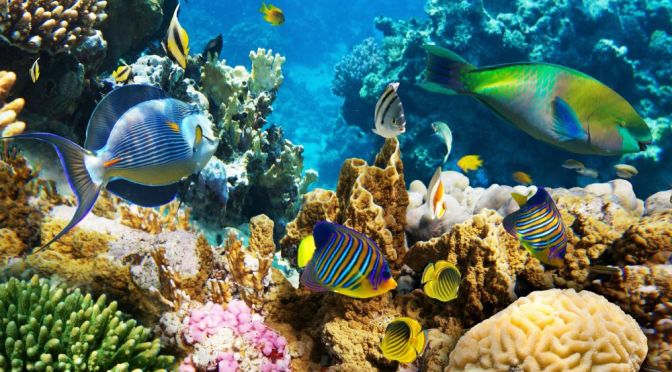
Underwater Views: Marine Coral Reef Wildlife (8K)
A coral reef is an underwater ecosystem characterized by reef-building corals. Reefs are formed of colonies of coral polyps held together by calcium carbonate. Most coral reefs are built from stony corals, whose polyps cluster in groups.
Video timeline: 00:00–00:05 Intro 00:06–00:13 Seahorse 00:14–00:21 Coral reef 00:22–00:28 Sea turtle 00:29–00:40 Shark 00:41–00:48 Octopus 00:49–01:00 Lion Fish 01:01–01:08 Moray 01:09–01:17 Clown Fish and Sea Anemone 01:18–01:29 Manta Ray 01:30–01:37 Red shrimp 01:38–01:48 Jelly Fish 01:49–01:58 Sea horse 01:59–02:26 Coral reef 02:27–02:38 Clown Fish and Sea Anemone 02:39–02:50 Turtle eating 02:51–03:11 Octopus 03:12–03:21 Dolphin 03:22–03:31 Sea Turtle 03:32–03:42 Star Fish 03:43–03:51 Long Arm Octopus 03:52–04:04 Scorpion Fish 04:05–04:35 Coral reef 04:36–04:58 Sea Turtle
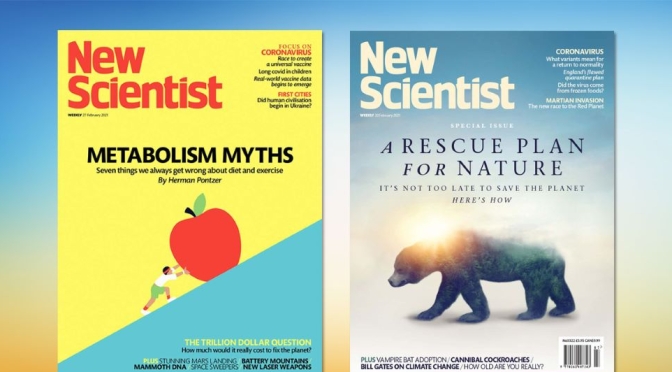
Previews: New Scientist Magazine – December 18
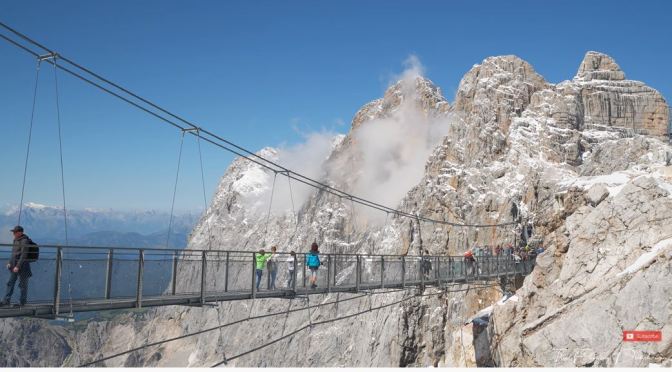
Austria Views: Dachstein Glacier Skywalk Bridge
The highest suspension bridge in Austria is located on the Dachstein glacier – Dachstein SkyWalk Bridge. It was opened at the beginning of July in 2013. This stunning 100-meter bridge is located near the town of Schladming. “Bridge to nowhere” will give you a dizzying view of the mountain landscape, but if you dare to walk on it. Then, you need to pass through the narrow staircase with 14 steps and you’ll see its main feature. It lies in that the bridge ends with glass platform. This is a small transparent observation deck which seems to be hanging over the abyss between the steep cliffs on the height of 400 meters. It is one of the most breathtaking viewing platform in the Alps!

Morning News: Elections In UK & Hong Kong, Dutch Vote, Italian Art Galleries
We preview the long-delayed Hong Kong legislative elections and explore whether Boris Johnson’s mistakes are starting to take an electoral toll. Plus: Mark Rutte’s record-breaking Dutch coalition and an initiative bringing major art works to regional Italian galleries.

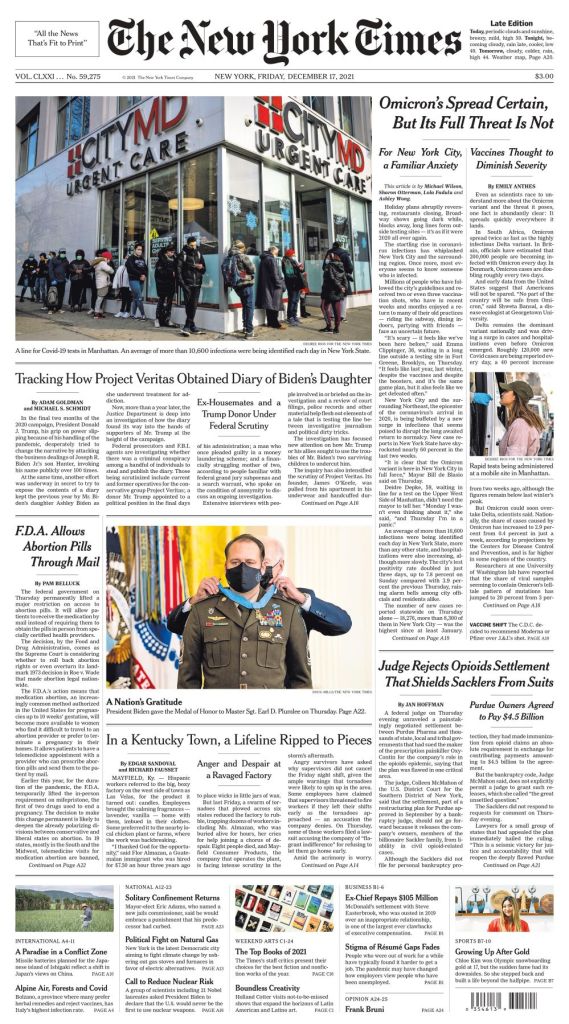
Front Page Views: The New York Times – December 17

Walking Tour: Nanjing In Jiangsu, Eastern China (4K)
Nanjing, capital of China’s eastern Jiangsu province, is roughly 300km up the Yangtze River from the city of Shanghai. It was the national capital during part of the Ming dynasty. Many monuments and landmarks remain, including Zhonghua Gate (Gate of China), a preserved 14th-century section of the massive wall that contained the old city’s southern entrance.
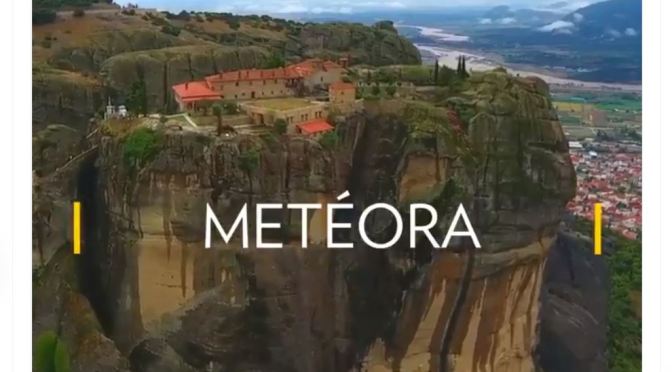
Aerial Views: Meteora Monasteries In Greece
The Meteora is a rock formation in central Greece hosting one of the largest and most precipitously built complexes of Eastern Orthodox monasteries, second in importance only to Mount Athos. The six monasteries are built on immense natural pillars and hill-like rounded boulders that dominate the local area.
The word “meteora,” means “hovering in the air” which, whist a literal description of the famous monasteries, also shows just how otherworldly they seem.
The complex is made up of twenty-four Eastern Orthodox monasteries that were built on giant sandstone rock pillars between the 14th and 16th centuries.

Medicine: Kidney Disease Explained (Mayo Clinic)
Chronic kidney disease, also called chronic kidney failure, involves a gradual loss of kidney function. Your kidneys filter wastes and excess fluids from your blood, which are then removed in your urine. Advanced chronic kidney disease can cause dangerous levels of fluid, electrolytes and wastes to build up in your body.
Video timeline: 0:31 What is kidney disease? 1:09 Who gets kidney disease/risk factors? 2:24 Kidney disease symptoms 3:03 How is kidney disease diagnosed? 3:53 Treatment options 5:23 Coping methods/ What now? 6:16 Ending
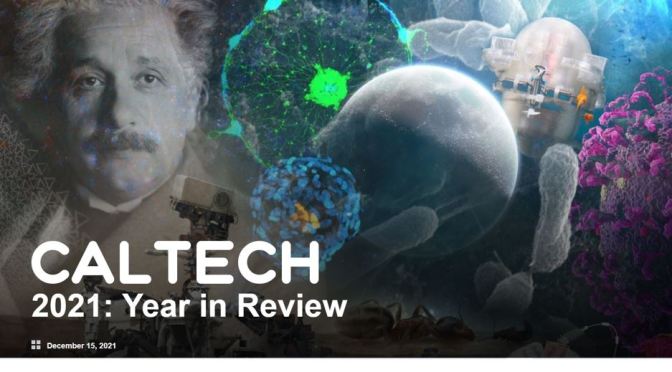
Technology: Caltech In 2021 – The Year In Review

In January, researchers developed a cage-like vaccine platform called a mosaic nanoparticle that could help protect against multiple strains of coronavirus; obtained new insights into human decision-making using AI-trained networks playing video games; learned how tiny plants changed the planet nearly half a billion years ago; and studied chaotic systems using a camera that can take up to 70 trillion frames per second.
Meanwhile, the Institute announced that it would remove the names of known eugenics proponents from its buildings, honors, and assets.
February saw the historic landing of NASA’s Mars rover Perseverance on the Red Planet. The 2,263-pound rover, designed and operated by JPL, which Caltech manages for NASA, will spend two years investigating Mars’s Jezero crater, and will collect and cache samples of rocks and sediment for recovery by a subsequent mission.
Here on Earth, seismologists worked with optics experts to develop a method to use existing underwater telecommunication cables to detect earthquakes; physicists advanced the use of exotic materials for future ultrafast computers; and engineers perfected methods to place molecules in particular orientations at specific locations—work that paves the way for the integration of molecules with computer chips.
In March, Caltech researchers announced a non-invasive method that uses ultrasound to read and interpret brain activity related to the intent to move, a major step toward the creation of noninvasive brain–machine implants that can restore movement to paralyzed individuals; located Mars’s missing water; described a long-sought solution to “one of the most stubborn problems in math”; and explained how bacteria evolve resistance to antibiotics and how antibiotics help bacteria eat when nutrients are scarce.
 Boomers Daily