Medical Technology: The ‘3D-Printed Heart’ (Video)

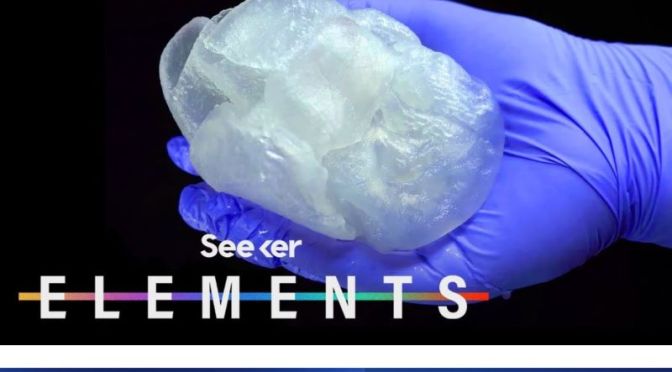
Imagine having the option to get a 3D-printed organ. Well, a team of biomedical engineers from Carnegie Mellon University has just developed the first flexible, full-size, 3D-print of a human heart, bringing us one step closer to that reality.

Additive manufacturing printers are popular, but are typically known to build hard objects using materials like plastic or metal. But rigid plastic organs aren’t very practical. These printers could be used with softer materials, like biological hydrogels — you know, to make a heart — but those tend to collapse mid-print. But this new method can change the game.

The 3D-printing technique is called Freeform Reversible Embedding of Suspended Hydrogels or FRESH. It can print biological structures with soft squishy materials like alginate, a biomaterial made from seaweed, which feels like human tissue. AND it cleverly solves that collapsing problem during print by suspending flexible materials inside a container of gelatin.

For this team of researchers it all starts with a MRI scan from a real heart. The scan gets “chopped-up” digitally into horizontal slices by a program which then translates them into code that a printer will understand. A needle-like nozzle moves through the gelatin support bath, extruding thin layers of alginate. The layers stack on top of each other to build the shape. When the print is complete, it’s put in an incubator overnight, where the temperature is raised to 37°C to gently melt away the gelatin support structure, leaving only the 3D-printed heart.


Read more

Aerial Travel: ‘Toronto’ In Ontario, Canada (Video)

Toronto, the capital of the province of Ontario, is a major Canadian city along Lake Ontario’s northwestern shore. It’s a dynamic metropolis with a core of soaring skyscrapers, all dwarfed by the iconic, free-standing CN Tower. Toronto also has many green spaces, from the orderly oval of Queen’s Park to 400-acre High Park and its trails, sports facilities and zoo.

Morning News Podcast: President Trump Veto & Pardons, Winter Storms

President Trump vetoes bipartisan Defense bill, Christmas week winter storm will bring snow, high winds and heavy rain, and Boston startup delivering holiday spirit during pandemic. 

Future Of Trucks: Inside The ‘Tesla Electric Semi’

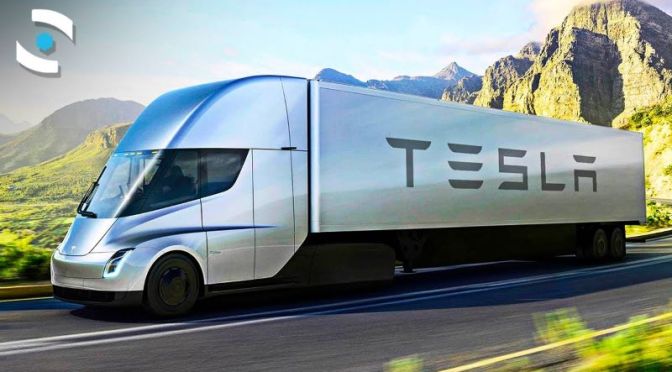
The personal transportation industry has been shaken up over the past decade or so, with the introduction of electric cars proving to be more environmentally friendly, and importantly, cheaper to run, than their petrol or diesel counterparts. Bike manufacturers are also working on the transition in the motorcycle segment. While this change has been taking place, trucking has been continuing unchanged in the background. Our food, household goods, and even electric car parts, have been transported by diesel power just like they have been from the start, while the industry has grown to be worth $700 billion in the US alone, more than many of the world’s countries’ GDPs. With the huge weights involved, electrifying the trucking industry has taken a back seat due to the impracticality, but at the end of 2017, 3 years ago, Tesla announced plans to change this with the Semi, a fully electric truck designed to shake up the shipping industry. Why The Tesla Semi Is The Future of Trucks

Travel Guides: ‘Sapporo – Japan’ (Expedia Video)

Sapporo – From ski slopes to beer gardens, this dynamic destination is one of the best in Japan.

Sapporo, capital of the mountainous northern Japanese island of Hokkaido, is famous for its beer, skiing and annual Sapporo Snow Festival featuring enormous ice sculptures. The Sapporo Beer Museum traces the city’s brewing history and has tastings and a beer garden. Ski hills and jumps from the 1972 Winter Olympics are scattered within the city limits, and Niseko, a renowned ski resort, is nearby.