Dexamethasone, a steroid that appears promising for COVID-19 patients, has a long and storied history in medicine. We talk with experts about its many uses, and explore how it might save lives in this pandemic. Writer, Reporter, Editor, Narrator: Sara Reardon Animator: Donald Pearsall
Every spring bright yellow fields occur for a few weeks all over the world. These beautiful carpets of yellow are the Rapeseed crop blooming. Many may be familiar with this crop under its other name of Canola.
The crop grows to 100 cm (39 in) in height and the flowers are about 17 mm (0.67 in) across.
Crops from the genus Brassica, including Rapeseed, were among the earliest plants to be widely cultivated by mankind as early as 10,000 years ago.
Today Rapeseed is used for production of animal feed, edible vegetable oils, and biodiesel.
Why are there so many attempts to get to Mars at the moment? The United Arab Emirate’s Hope satellite was despatched last week and now China has launched its first rover mission to the red planet. Nasa’s Perseverance Rover is scheduled to take off on 30th July. Well, summer 2020 is a popular time for missions to the red planet because of the way the planets align – but how long does it take to get there? Landing on Mars is known as the “seven minutes of terror”, and there are lots of reasons why. Here BBC Science Correspondent Laura Foster explains how long it takes to get there and why it’s so difficult. Video by Megan Fisher, Terry Saunders and Laura Foster
Unseen since 1949 and set to appear at auction for the first time, this beautiful work is a quintessential example of Henri Matisse’s sensuous odalisques. The elegant model is Italian countess Carla Avogadro, reclining on an extravagant Venetian Rococo armchair that Matisse bought on a whim and, in his own words, became “obsessed” with. ‘Danseuse dans un intérieur, carrelage vert et noir’
Henri Émile Benoît Matisse was a French artist, known for both his use of colour and his fluid and original draughtsmanship. He was a draughtsman, printmaker, and sculptor, but is known primarily as a painter.
In this week’s episode of “Travels with a Curator,” journey to the Spanish town of Osuna, most famously known as one of the film locations for “Game of Thrones” but also the title lands of the 9th Duke of Osuna, whose portrait by Goya is in the collection at the Frick. Join Xavier F. Salomon, Deputy Director and Peter Jay Sharp Chief Curator, as he recounts his trip to rural Andalusia in search for the tomb of the Duke.
Dating to the 1630’s this magnificent, historic property, ennobled by King Louis XIII in 1634, was discovered in 2006, entirely hidden beneath brambles and woodlands, by an intrepid local couple wanting to restore an important building of historical significance to the Béarn region.
E-gravel is about escaping your routine. Getting off-grid and back again. Fast. With its powerful Bosch Performance Line CX Gen4 motor, the Grail:ON surges over any terrain, turning day-long outings into hour-long blasts. Take the fastest line to the highest point. Experience Electrified Escape. Experience the Grail:ON.
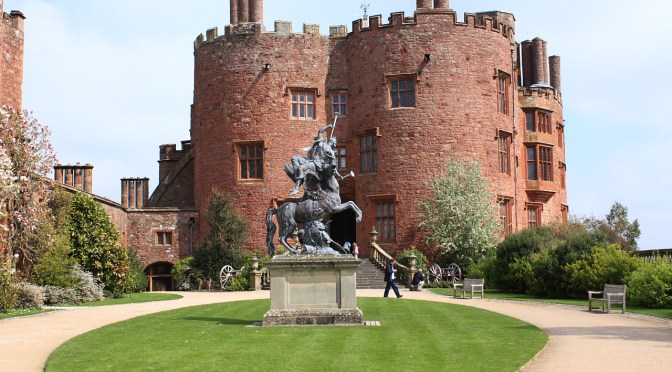
Powis Castle and Gardens has many stories to tell. The Castle near Welshpool in Powys, Wales is the seat of the Earls of Powis and is now cared for by the National Trust. In this behind-the-schnes tour, we’re shedding more light on the castle’s links to colonialism in India by looking at items in the collection and telling the stories of how they came to be here. You can also discover how this medieval fortress is embracing renewable energy and experience an unmissable and rarely-seen view from the castle’s roof.
Tourism in Portugal has been cruising on a wave of success and despite its popularity it continues to be one of the best value destinations. It has it all—a rich history, innovative art, stunning views and super friendly, laid-back locals.
It’s one of the tiniest machines on the planet — about a hundred times smaller than the average cell. It’s so small that no scientist can spot it through a typical light microscope. Only with an electron microscope can we see its spiky surface. It’s not alive, and it’s not what most of us would think of as “dead.” This teensy machine seems to survive in a kind of purgatory state, yet it has traveled across continents and oceans from host to host, and brought hundreds of nations to a standstill. Despite its diminutive size, the novel coronavirus, dubbed SARS-CoV-2, has seemingly taken the world by surprise with its virulence.

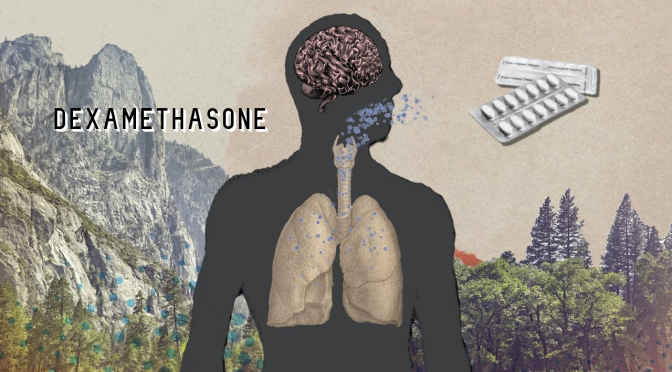
 Dexamethasone, a steroid that appears promising for COVID-19 patients, has a long and storied history in medicine. We talk with experts about its many uses, and explore how it might save lives in this pandemic. Writer, Reporter, Editor, Narrator: Sara Reardon Animator: Donald Pearsall


 Unseen since 1949 and set to appear at auction for the first time, this beautiful work is a quintessential example of Henri Matisse’s sensuous odalisques. The elegant model is Italian countess Carla Avogadro, reclining on an extravagant Venetian Rococo armchair that Matisse bought on a whim and, in his own words, became “obsessed” with. ‘Danseuse dans un intérieur, carrelage vert et noir’




 Boomers Daily