Videos

Insights: The Lucrative Business Of Diabetes (2022)

In our modern consumer society, Type 2 diabetes has become a widespread disease. Companies are developing drugs that are increasingly expensive, but not necessarily more effective. Health authorities are powerless. Diabetes is spreading rapidly, all over the world. The disease destroys lives and puts a strain on public budgets.

The UN is calling on governments to take action. Diabetes is proof that modern societies are incapable of adequately treating chronic disease. It affects around 430 million people worldwide, with two main metabolic disorders falling under the name diabetes. Type 1 is an autoimmune disease that must be treated with lifelong doses of insulin, while type 2 can develop when a person’s diet is too high in fat and sugar and they do not engage in enough physical activity.

With turnover of $46 billion, diabetes is a massive and extremely lucrative market. Constantly promised miracle cures have not led to satisfactory treatment, with patients either taking too many drugs or no longer being able to afford them. It’s a desperate situation, and the only ones benefiting seem to be pharmaceutical companies. A medical focus on blood glucose levels has led to an overreliance on medication, sometimes without due concern for dangerous side effects.

Patients become trapped in a cycle of treatment, which in many cases still does not halt the disease’s progression. This can lead to amputations, blindness and heart attacks. And yet there are alternatives that could flatten the curve of the type 2 diabetes epidemic, while reducing health care spending. Improved diet can be a preventative measure, and a strict adherence to diet can also bring about remission in the case of Type 2 diabetes.

But these solutions require effort, as well as a complete rethinking of chronic disease management. Filmed on three continents, this documentary features industry whistleblowers, patients, researchers and medical professionals. It also confronts pharmaceutical companies about their responsibility for the situation.

Museum Insider: ‘Caligula’ Marble Bust’s True Colors

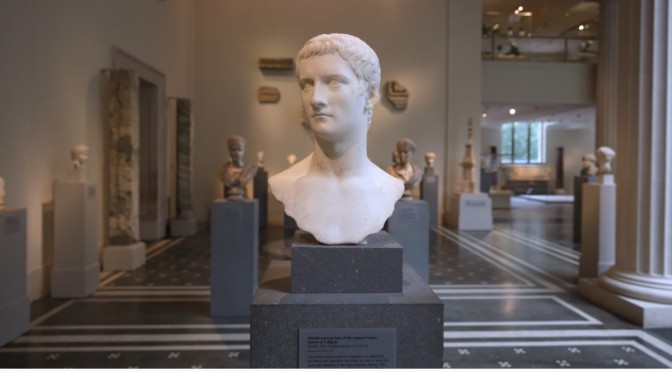
Archaeologists Vinzenz and Ulrike Koch Brinkmann have spent the last 40 years dedicated to the study of polychromy—or “many colors” in Greek—in ancient sculpture. Once a fringe area of study, their research combats the misconception of white purity in ancient Greece and Rome. They reflect on the marble bust of Caligula and how the reconstruction of its former color can help us better understand history.

Explore more perspectives on Caligula: https://www.metmuseum.org/perspective…

Cinematic Views: ‘Islandia Symphonia’ In Iceland (4K)

“Describing Iceland in words or pictures would be so reductive. You have to live these wide open spaces, feel the heat of its soil, the air coming from these glaciers, hear the creaking of the lapilli under your feet and the rumbling of its volcanoes. We had discovered Iceland more than 10 years ago. As I often say, I left a part of my soul there. A revelation as a traveler and as an creator. But so many years later, the feelings have not changed. At the time, I was just discovering photography. I came back to it as a filmmaker to capture this symphony of wonders.”

Filmed and Directed by: Gilles Havet

facebook.com/gilleshavet.visuals

Village Walks: Varenna On Lake Como, Northern Italy

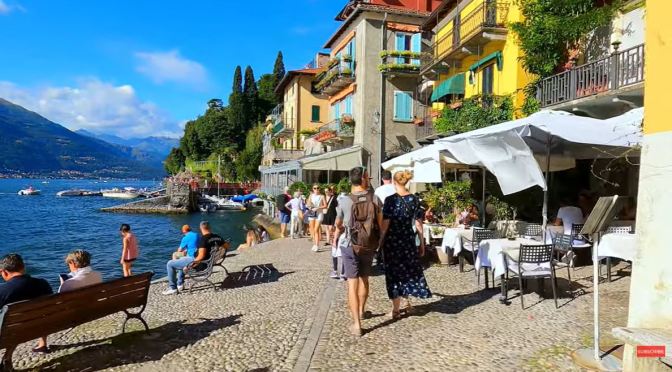
Varenna is a very romantic and suggestive place, overlooking the waters of the Lario. In Lombardy, it is perhaps the most suitable destination if you want to treat yourself to an alternative weekend. Varenna, just over 700 inhabitants, is a village located in the province of Lecco, about 20 minutes from the city.

The beating heart of the village is its central square, overlooked by the Church of San Giorgio. The building, dating back to the thirteenth century, was built on the foundations of an ancient Roman temple and is a splendid example of medieval Lombard architecture. A few steps away, on the opposite side of the square, we can admire the Church of San Giovanni Battista, dating back to the 11th century. Both religious buildings preserve, inside them, precious frescoes and some pictorial fragments of ancient origins.

Aerial Views: Ha Long Bay In Eastern Vietnam (4K)

Hạ Long Bay, in northeast Vietnam, is known for its emerald waters and thousands of towering limestone islands topped by rainforests. Junk boat tours and sea kayak expeditions take visitors past islands named for their shapes, including Stone Dog and Teapot islets. The region is popular for scuba diving, rock climbing and hiking, particularly in mountainous Cát Bà National Park. 

Travel Guides: Top Places To Visit In South Carolina

South Carolina is a southeastern U.S. state known for its shoreline of subtropical beaches and marshlike sea islands. Coastal Charleston is a historic city, defined by pastel-colored houses, Old South plantations and Fort Sumter, where the Civil War’s opening shots were fired. To the north is the Grand Strand, a roughly 60-mile stretch of beachfront known for golf courses and the vacation town Myrtle Beach.

Wildlife Views: Sea Otters Feeding In Seaweed Beds

The charismatic otter, a member of the weasel family, is found on every continent except Australia and Antarctica. Most are small, with short ears and noses, elongated bodies, long tails, and soft, dense fur.

There are 13 species in total, ranging from the small-clawed otter to the giant otter. Though most live in freshwater rivers, lakes, and wetlands, the sea otter and the smaller marine otter are found in the Pacific Ocean.

Design Tour: Queens Park House In Sydney, Australia

Queens Park House is an architect’s own minimalist oasis. Designed by Kyra Thomas Architects, the calming suburban home strongly contrasts its previous iteration as a storage warehouse.

Video timeline: 00:00 – The Local Project’s Print Publication 00:10 – Introduction to the Architect’s Own Home 00:49 – Warehouse Conversion 01:23 – The Brief 02:41 – Green Spaces 03:05 – Lighting 03:31 – Materiality 04:15 – The Architect’s Favourite Room 04:43 – The Finished Project 05:06 – Subscribe to The Local Project’s Print Publication

Located in Sydney, Queens Park House was originally a storage warehouse with brick walls built to the boundary of its site. Converting the commercial property into an architect’s own minimalist oasis required opening up the building and rewriting its internal character.

Structurally, turning the warehouse into an architect’s own minimalist oasis involved removing the pre-existing roof and inserting walls into the interior of the building. The brick boundary walls are retained, enabling a sense of privacy within the suburban setting and paying homage to the history of the building. As an architect’s own minimalist oasis, Queens Park House embraces natural light and fresh air.

Four courtyards punctate the spatial plan, creating green space for different aspects of the house to relate to, as well as facilitating internal lighting and ventilation. Responding to the residential needs of the client, Queens Park House stands as an architect’s own minimalist oasis. Custom and considered, the home testifies to the skill of Kyra Thomas Architects in transforming a commercial space.

Venice Walks: Santa Croce To Cannaregio District

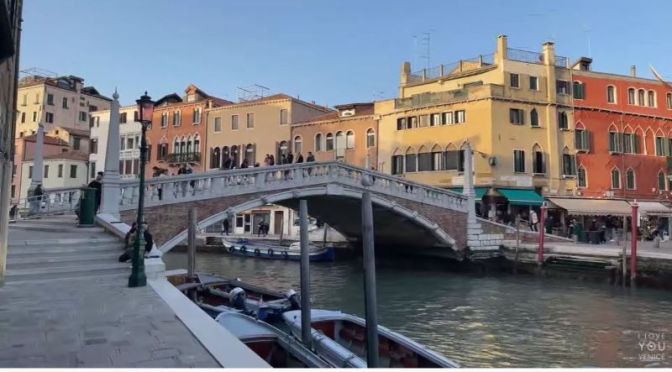
Santa Croce is a laid-back, slightly off-the-beaten-track area with a local vibe. After school, kids play in Campo San Giacomo dall’Orio, and this square and nearby streets are home to casual eateries serving global cuisine. On the Grand Canal, the imposing Fondaco dei Turchi features exhibits on natural history while the nearby Ca’ Pesaro palace showcases contemporary art and Asian decorative arts.

Lively Cannaregio is known for the 16th-century Jewish Ghetto. The Strada Nova is a popular local shopping thoroughfare, and the backstreets are a destination for crafts and vintage goods. Casual canalside restaurants and bars line nearby Fondamenta della Misericordia and Fondamenta dei Ormesini. The stately Ca’ d’Oro palace displays a Renaissance art collection. 

Surrealist Art: Max Ernst’s ‘Attirement Of The Bride’

Attirement of the Bride is an example of Max Ernst’s veristic or illusionistic Surrealism, in which a traditional technique is applied to an incongruous or unsettling subject. The theatrical, evocative scene has roots in late nineteenth-century Symbolist painting, especially that of Gustave Moreau. It also echoes the settings and motifs of sixteenth-century German art. The willowy, swollen-bellied figure types recall those of Lucas Cranach the Elder in particular. The architectural backdrop with its strong contrast of light and shadow and its inconsistent perspective shows the additional influence of Giorgio de Chirico, whose work had overwhelmed Ernst when he first saw it in 1919.